China Spearheads Formulation! World's Pioneering Global Technical Regulation for Automated Driving Systems Greenlit and Unveiled
 06/25 2026
 514
514
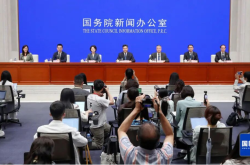
Kuaikeji, June 25 - At the recent 199th plenary session of the United Nations World Forum for Harmonization of Vehicle Regulations (WP.29) in Geneva, Switzerland, the Global Technical Regulation for Automated Driving Systems (ADS GTR), a collaborative effort among China, the European Union, the United Kingdom, the United States, Canada, and Japan, was officially approved and released following a vote.
This marks the world's inaugural unified technical regulation encompassing the entire lifecycle of automated driving.
As per the Ministry of Industry and Information Technology (MIIT), the global industrialization of automated driving is gathering pace, yet previously, nations lacked harmonized standards. In China, the adoption rate of new vehicles equipped with assisted driving systems has surpassed 60%, with L3-level automated driving models already on the market. Several countries have also progressively permitted high-level automated driving on public roads, underscoring the pressing need for unified international regulations within the industry.
Since 2018, China has held the position of vice-chair of the pertinent working group and co-chair of the specialized team, dedicating five years to laying the technical groundwork for the regulation and over two years to finalizing the regulatory text through more than twenty rounds of deliberations. The MIIT led the entire process, with institutions such as the China Automotive Technology and Research Center (CATARC) and the China Academy of Information and Communications Technology (CAICT) actively participating in discussions and hosting specialized meetings.
China took the helm in drafting the core content of the regulation, harnessing the collective strength of domestic industry, academia, and research to generate a wealth of real-world data from road testing and vehicle-road coordination. It put forward numerous technical proposals on human-machine interaction, dynamic driving, testing methodologies, and more, offering vital support for the regulation's implementation.
This ADS GTR explicitly outlines core technical benchmarks for automated driving, establishing a comprehensive framework that spans safety control, record-keeping, full-process verification, and ongoing post-market supervision. It harmonizes compliance standards for global automated driving R&D, testing, and mass production, effectively fostering the standardized growth of the global intelligent vehicle sector.
Simultaneously, China's mandatory national standards for automated driving have been finalized and are currently under approval. These national standards comprehensively address all core aspects of the international regulation and, in response to domestic industry and regulatory requirements, introduce more intricate safety provisions for L3 and L4 automated driving, refine user guidance clauses, and innovatively propose standardized unified testing scenarios, offering supportive measures for the international regulation's enforcement.
Looking ahead, the MIIT will persist in participating in the revision and coordination of global regulations and standards for intelligent connected vehicles, promoting the alignment of domestic standards with international norms, and concurrently advancing various pilot projects, including automated driving road testing, vehicle-road-cloud integration, and vehicle market access.
-
![]()
Jitian Xingzhou: A Pioneer in Optical Payloads Secures Hundreds of Millions in Series B Funding!
-
![]()
Orders Secured Through to the Second Half of the Year! The Rationale Behind the 'Surge' in Demand for This Company’s Optical-Grade Base Films
-
![]()
Beyond Patents: The Retail Rivalry of Insta360 and DJI Unfolds
-
![]()
180 Billion Market Cap Vanished! How Did Seres Fall So Far?
-
![]()
Blockbuster! Domestic storage takes the global double crown for the first time, from an AI company
-
![]()
China Spearheads Formulation! World's Pioneering Global Technical Regulation for Automated Driving Systems Greenlit and Unveiled
-
![]()
Farewell to Pulsed Support Policies: Three Major Auto Policy Directions from Multiple Departments Take Effect on the Same Day
-
![]()
Embercore AI’s Accelerated Funding: The Robot Industry’s Shift Toward ‘Learning Systems’