Why is BYD going against the trend when the entire industry is streamlining?
 06/26 2026
 544
544
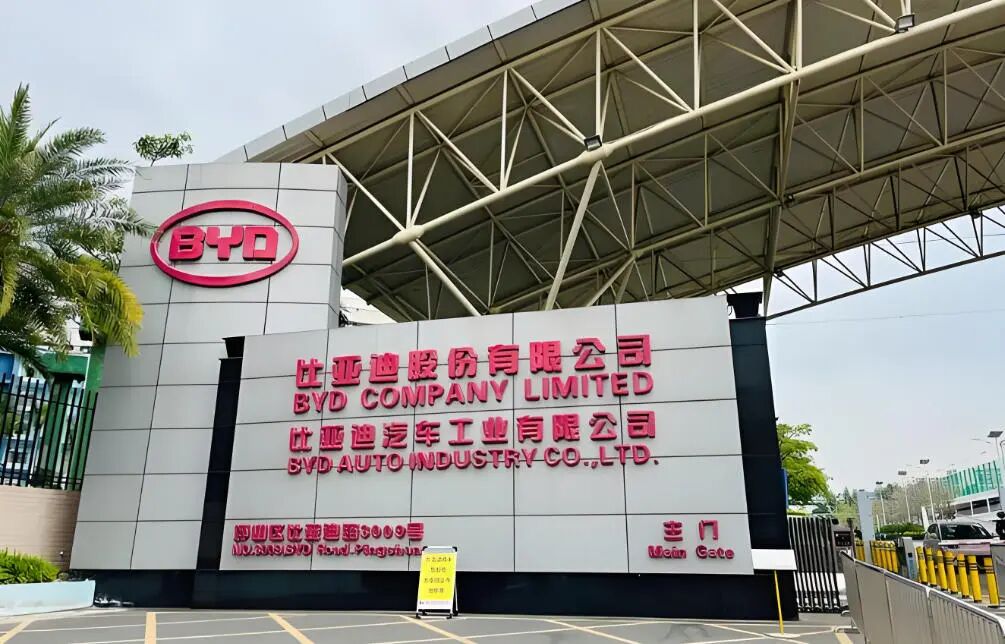
From mid-June, news began to emerge within the industry that BYD was undergoing what insiders are calling the "most thorough" organizational restructuring in two decades. This is not just about replacing a few executives or shuffling departments—it involves a direct overhaul of the R&D system and financial mechanisms. The overarching Automotive Engineering Institute is being split into five parts, enabling the four major brands—Wangchao, Ocean, Denza, and Fangchengbao—to operate with full financial autonomy.
The news has sparked much discussion in the automotive circle. Some say this is Wang Chuanfu's bold move to 'cut off the arm to save the body,' while others see it as an inevitable upgrade of the multi-brand strategy. Some even compare it to Geely's consolidation approach under 'One Geely,' arguing that BYD is swimming against the industry tide. Let's break this down to understand what exactly is being reformed, why now, and what potential pitfalls lie ahead.
The Engineering Research Institute Steps Back Behind the Scenes
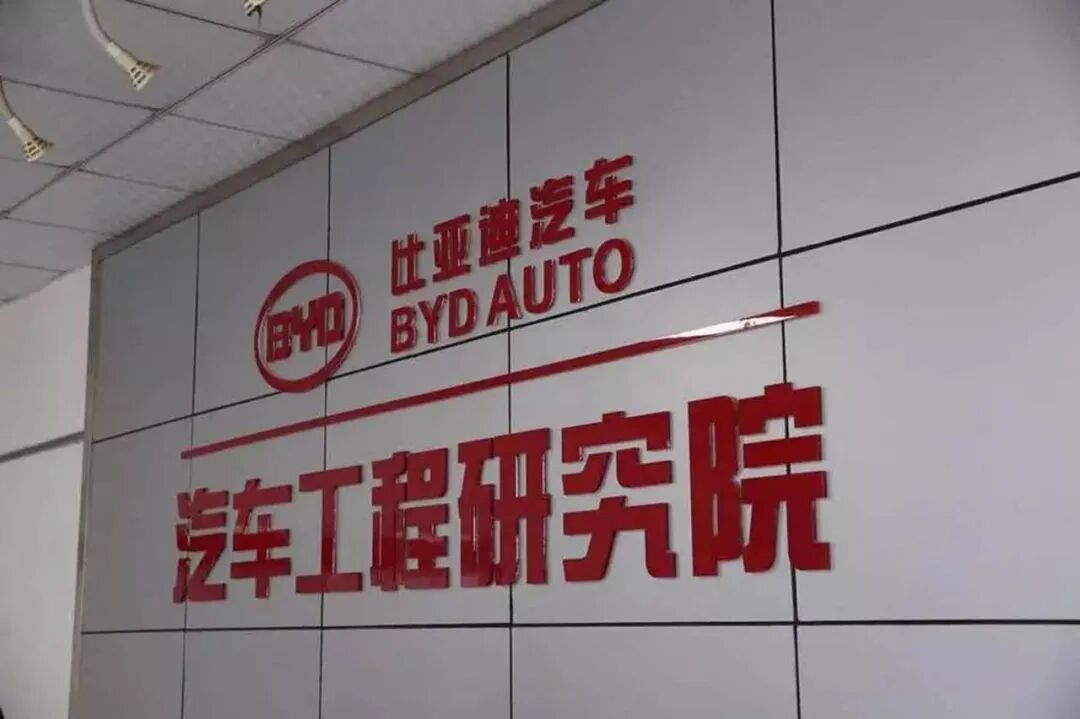
The core of this reform involves two key actions: splitting R&D and financial control. Let's start with R&D. Previously, BYD's Automotive Engineering Research Institute was the absolute power center, overseeing chassis development, 'three electric' systems (battery, motor, controller), and complete vehicle development for all models. The research institutes under the five brands were merely secondary departments, essentially acting as messengers—collecting user needs at the terminal level and passing them up to the Engineering Institute. All decisions on whether, how, and when to make changes rested solely with the engineers.
This model was highly efficient when the company was smaller and had fewer brands. However, as the scale expanded, problems emerged: Wangchao and Ocean are similarly positioned, leading to 'clone' models from the same R&D system. This resulted in internal competition among similarly priced models, confusing consumers and causing sales teams to poach customers from each other, ultimately diluting the group's economies of scale.
Now, the Engineering Institute is being split into five dedicated research institutes for Wangchao, Ocean, Denza, Fangchengbao, and Yangwang, all now at the same level as the former Engineering Institute. The Engineering Institute retreats behind the scenes to serve as a technical platform, focusing only on foundational technologies like blade batteries, hybrid platforms, and electronic electrical architectures. Meanwhile, the brand-specific research institutes take full control over product definition, model planning, feature selection, and even pricing, directly accountable for market performance. In simple terms, decisions on whether a model should have a sunroof, what interior materials to use, pricing, and facelift timing will now be made by the brands themselves, along with full responsibility for sales performance.

Accompanying this is the financial 'weaning.' Previously, R&D, production line, and procurement costs were uniformly shared across the group. Now, all costs will be settled separately at internal market prices. Using group production lines, sourcing batteries from FinDreams, or utilizing Engineering Institute technologies will all come with explicit price tags factored into each brand's costs, with no more group-level safety nets.
The only exception is Yangwang, positioned as a million-yuan brand and technology testbed, which will temporarily remain outside profitability assessments and continue to receive group resource support. This arrangement is quite pragmatic, as luxury brands inherently have longer cultivation cycles, and imposing short-term profitability targets would distort development.
Ultimately, this restructuring targets the long-standing issue of mismatched authority and responsibility. Previously, engineers built cars while sales teams sold them, leading to mutual blame when sales fell short, with no genuine concern for costs. Now, by tying decision-making authority to profit and loss, brand teams are forced to make cost-constrained decisions, shifting from 'parameter-first' to 'market-first' thinking.
Why is BYD Choosing to Expand?
Interestingly, almost in parallel with BYD's reform, Li Shufu stated at the Chongqing Forum that Geely aims to strengthen 'One Geely' by orderly shutting down, merging, or transferring redundant entities. Earlier, Changan integrated the middle and back offices of Deepal and Avatar, while Zeekr and Lynk & Co completed their merger, and Chery is also streamlining its brand matrix. The entire industry seems to be moving toward consolidation, making BYD's decision to 'split' appear counterintuitive.

However, upon closer inspection, the two approaches are not contradictory and even share underlying logic. Geely and Changan's consolidation focuses on back-office functions like R&D, procurement, and manufacturing to eliminate redundancy and improve efficiency. BYD's 'splitting' targets front-office product decision-making and operational responsibilities, while keeping foundational technologies under the Engineering Institute. Essentially, both follow a 'big middle platform, small front office' philosophy but start from different points—others had fragmented front and back offices and first consolidated the back office, while BYD had an overly centralized back office stifling front-office vitality, necessitating front-office liberalization.
BYD's timing for this restructuring is directly related to current performance pressures. According to BYD's production and sales reports, the company sold approximately 1.405 million new energy vehicles from January to May 2026, down 20.32% year-on-year. Although May saw a return to positive growth, the cumulative decline indicates that the era of rapid growth through scale alone has temporarily passed. Transitioning from 'scale-driven' to 'quality and efficiency-driven' growth is now unavoidable.
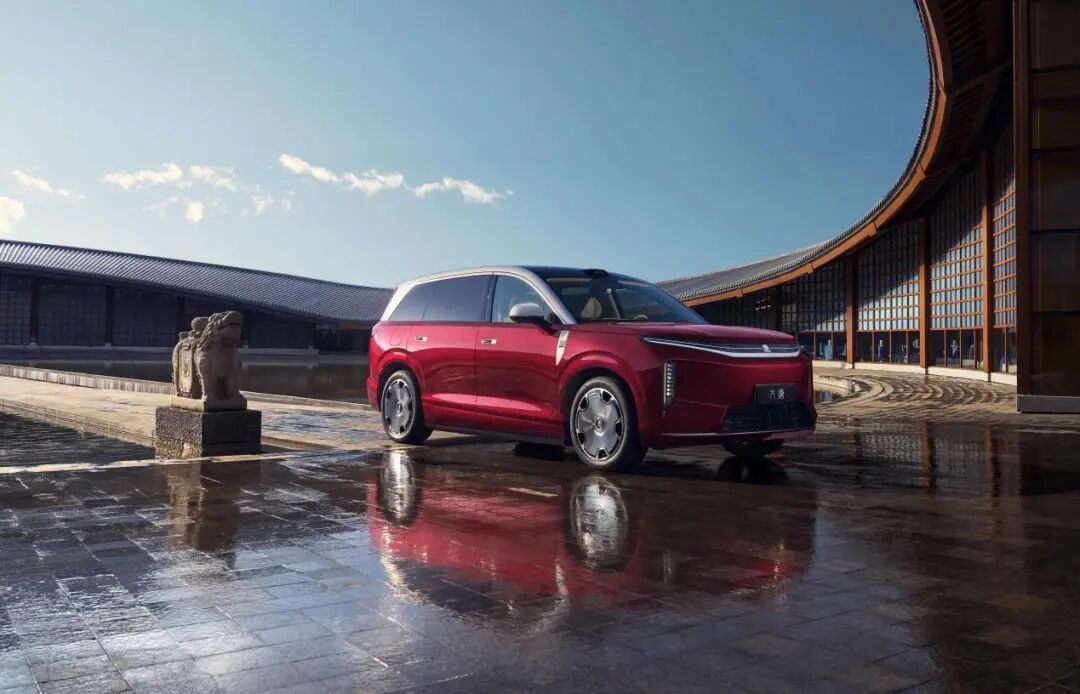
Deeper still, this reflects the inevitable choice as BYD's multi-brand strategy advances into deeper waters. Wangchao and Ocean target the mainstream 100,000-250,000 yuan market, while Denza and Fangchengbao aim for the mid-to-high end, and Yangwang anchors the million-yuan segment. The customer bases, pricing, and operational logic for these five brands differ completely. Managing them with a single R&D system and cost accounting approach would inevitably lead to favoritism. Allowing each brand to operate independently and make its own decisions simulates market competition within the group, enabling brands that can sustain themselves to thrive while those that cannot will naturally contract, ultimately proving more efficient than the group artificially propping them up.
An industry analyst's perspective is worth noting: The success of an automaker's multi-brand strategy never hinges on brand quantity but on whether each brand can survive independently. Many automakers' past multi-brand efforts were 'pseudo-multi-brand' setups, sharing R&D, channels, and teams while merely rebadging vehicles, inevitably leading to internal friction. BYD's current split aims to transform these 'pseudo-multi-brand' efforts into 'genuine multi-brand' operations.
Inevitable Risks Remain in the Reform
Of course, we need not overhype this reform. Organizational restructuring is always a double-edged sword, resolving old issues while creating new ones.

The most immediate challenge is internal transfer pricing. Determining prices for R&D resources, production lines, and components involves significant negotiation. Setting prices too high will draw complaints from brand teams, while prices too low will demotivate the middle platform, leaving ample room for game theory (gameplaying/negotiation). This is particularly true for FinDreams' supply chain, which previously operated through internal allocations but must now settle at market prices. Pricing standards for core components like batteries and motors could become major sources of internal conflict. If pricing mechanisms are not smoothed out, internal friction could worsen.
Second is the short-term rise in collaboration costs. After the five brand research institutes become independent, might redundancies emerge? For example, similar-level models might undergo separate adaptations and testing. While sharing foundational platforms, engineering verification and adaptation work at the front end will inevitably overlap. In the short term, R&D efficiency per capita might decline, weakening some economies of scale.
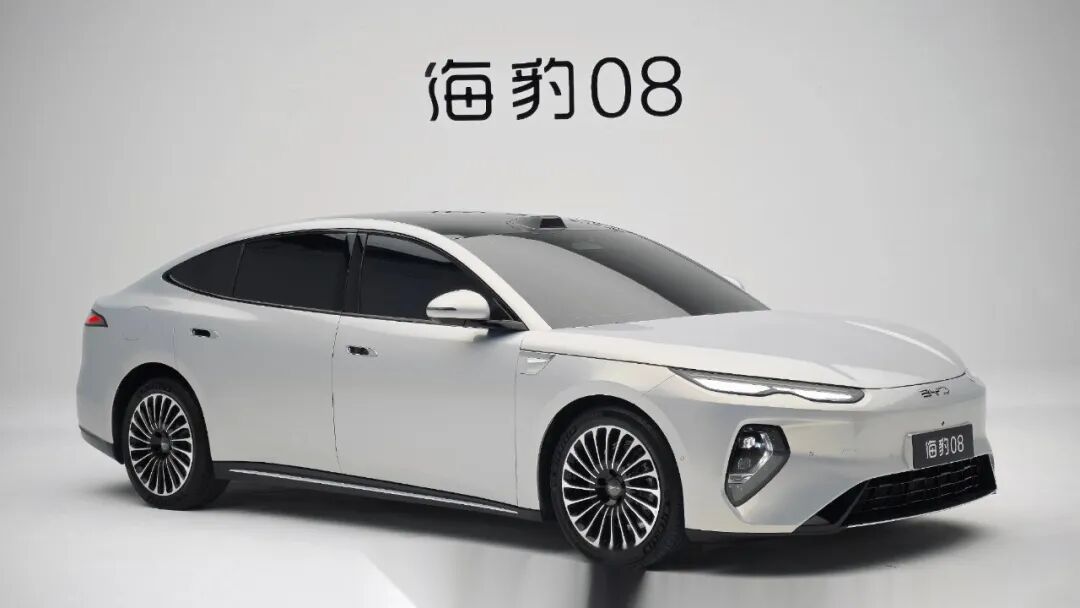
Third is the profitability pressure on high-end brands. While Wangchao and Ocean have stable foundations and large volumes, likely remaining profitable after independent accounting, Denza and Fangchengbao face more precarious situations. Denza currently relies on the D9 model for most of its sales, with other models performing poorly. Fangchengbao initially struggled with high positioning before gaining traction after lowering prices, leaving its brand positioning still wavering. After independent accounting, these two brands must balance brand positioning with profitability targets, leading to indecision on pricing strategies and product rhythms—whether to prioritize premium positioning or volume sales will become more hesitate (tormenting/challenging) than before.
Finally, there's the human element. The Engineering Institute's split involves transferring large numbers of personnel and redistributing power, with significant Break in cost (integration costs) not to be underestimated. BYD's engineering-driven culture has long been its foundation, but shifting to a market-oriented approach requires changing the organization's mindset—a transformation that cannot be achieved with a single policy document.

That said, pointing out these potential pitfalls is not to negation (deny) this reform. Precisely because this adjustment tackles real issues and touches real interests, these integration costs are unavoidable. Internal pricing negotiations, short-term collaboration inefficiencies, and high-end brand dilemmas are typical growing pains in the transition from 'centralized control' to 'internal marketization' and do not constitute fatal flaws.
Over its two-decade development, BYD has excelled at adjusting its posture while in motion. The true value of this organizational transformation lies not in perfectly resolving all issues immediately but in finally instilling a 'market-driven' mindset across every brand team. Whether this restructuring ultimately creates five independent, combat-ready units or evolves into new forms of internal friction remains to be seen. In one to two product cycles, we'll know the answer by whether each brand's models still resemble 'clones' or if pricing strategies still undercut each other.
-
![]()
ByteDance, DJI, and Xiaohongshu Secure Top Three Positions Among China’s Fastest-Growing Unicorns
-
Tesla's in-car voice system in China is finally learning to 'understand human language'
-
![]()
Foreigners Are Amazed: Chinese Electric Vehicle Drive Systems Unveil Innovative 'Poses'
-
![]()
700,000 Brothers and the Future of Robots: Behind JD.com's 'Nirvana Plan'
-
![]()
Zhipu's Trillion-Dollar Valuation: A New Chapter for China's AI
-
![]()
Is Laifen, a 'Dyson Alternative' on the Rise, Now Ensnared by the 'Alternative Curse'?
-
![]()
Beyond Patents: Insta360 and DJI Compete in Retail
-
![]()
Piercing Through Industry Chaos: The Curtain Rises on Compliance for Autonomous Driving