Changan Automobile Encounters Triple Challenges: Declining New Energy Vehicle Adoption, Sharp Profit Drops, and All-Time Low Stock Price
 06/26 2026
 532
532
Since 2026, the stock price of Changan Automobile (000625.SZ) has been in a downturn. On June 26, it briefly touched RMB 6.83 per share, marking an intra-year decline of over 40% and hitting a near four-year low.
The bearish sentiment in the capital market reflects deep-seated concerns about Changan Automobile's operational fundamentals. Amid fierce competition across the automotive sector, Changan Automobile continues to grapple with declining net profits. In international markets, its strategy of sacrificing margins for volume has led to reduced gross profit margins, while exchange rate volatility has further exacerbated performance instability, with the company's Q1 2026 profits plummeting by over 70%.
Securities Star observed that, amid an intensifying shakeout in the industry, Changan Automobile's two newly appointed vice presidents, both born in the 1980s, face formidable challenges. The company's heavily invested new energy brands, Avita and Shenlan, have become significant profit drains, with confirmed losses exceeding RMB 2 billion for each brand alone in 2025. From January to May 2026, Changan Automobile's new energy vehicle penetration rate has declined, bucking the broader industry's accelerated shift towards electrification and underscoring the company's transformation challenges.
01. Profit and Sales Diverge, Overseas Expansion Struggles with 'Increased Volume but Reduced Profitability'
In recent years, heightened competition in the automotive industry has left many automakers in the precarious position of 'rising sales but shrinking profits,' a dilemma Changan Automobile has not escaped. In 2024, the company's revenue increased by 5.58% year-on-year, while net profit attributable to shareholders declined by 35.37%. In 2025, vehicle sales reached 2.913 million units, up 8.54% year-on-year, with revenue hitting RMB 164 billion, a 2.67% increase, marking the seventh consecutive year of steady revenue growth.
However, profitability came under significant pressure, with net profit attributable to shareholders at RMB 4.075 billion in 2025, a 44.34% year-on-year decline. The profit shrinkage was primarily due to a substantial reduction in non-recurring gains and losses, which fell from RMB 4.734 billion in 2024 to RMB 1.28 billion. Specifically, gains from the disposal of non-current assets dropped by RMB 2.377 billion to RMB 173 million, while government subsidies decreased by RMB 1.068 billion to RMB 559 million, resulting in a combined reduction of approximately RMB 3.445 billion in these two income streams. After excluding non-recurring items, the company's net profit after tax increased by 8.03% year-on-year to RMB 2.795 billion, indicating sustained growth in the profitability of its core business.
In terms of globalization, Changan Automobile has transitioned from a domestic-centric, overseas-radiating approach to a globally integrated layout. In 2025, overseas sales reached 637,300 units, up 18.85% year-on-year, while domestic sales hit 2.2758 million units, a 5.97% increase. However, revenue growth in both markets lagged behind sales growth, with overseas and domestic revenues reaching RMB 130.796 billion and RMB 33.204 billion, respectively, up 2.74% and 2.4% year-on-year. Notably, overseas revenue growth slowed significantly, having once reached a high of 57.9% in 2024.
Based on sales revenue and volume, Changan Automobile's average vehicle price in 2025 was approximately RMB 53,500, down about 5.72% year-on-year. The downward pressure on product pricing was more pronounced in overseas markets, where the average price fell from RMB 60,500 in 2024 to RMB 52,100 in 2025, a decline of about RMB 8,372 per unit. The overseas market's reliance on price cuts to gain market share meant that sales growth failed to translate into revenue and profit gains. In 2025, the overseas gross profit margin decreased by 6.71 percentage points year-on-year to 19.49%, indicating a significant weakening in profitability.
Behind the profitability challenges in the overseas segment, Changan Automobile faces multiple operational hurdles. On one hand, intense competition in overseas markets has heated up, with independent brands like BYD (002594.SZ), Geely, and Chery Automobile (09973.HK) also aggressively expanding overseas, leading to sustained price competition for models in the same price range. On the other hand, trade protectionism has raised export costs, further squeezing profits.
Securities Star noted that exchange rate fluctuations pose an unpredictable 'invisible killer' to overseas operations. In Q1 2026, Changan Automobile reported revenue of RMB 32.706 billion, down 4.26% year-on-year; corresponding net profit attributable to shareholders was RMB 351 million, a 74.09% plunge; and net profit after tax was RMB 242 million, a 69.06% decline. The significant profit volatility was primarily driven by foreign exchange losses, which caused financial expenses to surge by 129.26% year-on-year to RMB 314 million, compared to RMB -1.074 billion in the same period of 2025, a difference exceeding RMB 1.3 billion.
02. Shenlan and Avita 'Bleed,' Personnel Reshuffle Aims to Turn the Tide
Amid sustained performance pressure and intensifying pain from the new energy transformation, Changan Automobile is seeking breakthroughs at the organizational level. In June, the company appointed Chen Zhuo and Di Zhirui as vice presidents, both long-serving members of the company and core leaders in the new energy business.
According to their resumes, Chen Zhuo, born in 1984, has long been responsible for brand public relations and later served as Avita's Senior Executive Vice President, General Manager, Party Secretary, and President. Di Zhirui, born in 1981, has deep expertise in product lines, having worked across multiple business segments, including product planning, Shenlan, Oushang, Changan brand business unit, and Qiyuan marketing department, and is the CEO (General Manager-level) of Qiyuan products.
With their appointments, the number of executives born in the 1980s among Changan Automobile's vice presidents has increased to eight, accounting for over 60%. However, this personnel adjustment is not merely a generational shift; both individuals rose through Changan's internal system, focus on the new energy sector, and assumed their roles at a critical juncture of integrating the Avita and Shenlan brands. This move is interpreted by outsiders as bringing the core new energy subsidiary brand leaders directly into the company's decision-making core to compete in the fiercely contested new energy sector.
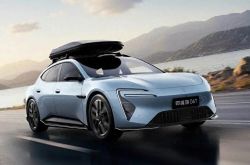
Public information shows that Changan Automobile is actively developing intelligent connected new energy vehicles, having established three major brands: Changan, Shenlan, and Avita. Under the Changan brand, it has created three brand sequences—Changan Gravity, Changan Qiyuan, and Changan Kaicheng—forming a differentiated independent brand matrix.
The challenges facing Chen Zhuo and Di Zhirui are daunting. During the transition to new energy vehicles, Changan Automobile's performance has been dragged down by losses in the new energy segment. Avita, operated under Chen Zhuo's leadership, sold over 120,000 units in 2025, a more than 60% year-on-year increase. However, under the equity method of accounting, Changan Automobile recognized an investment loss of RMB 1.212 billion. Since 2022, Avita's cumulative losses have exceeded RMB 10 billion.
Entering 2026, Avita's growth momentum has rapidly diminished. From January to May this year, Avita's cumulative sales were only about 24,000 units, nearly halving year-on-year, indicating that the brand has yet to establish a stable and sustainable growth logic in the premium market, with brand premium and scale effects remaining unrealized, making a high-end breakthrough urgent.
On the other hand, Shenlan, as the mid-range mainstay, sold over 325,000 units in 2025, a 44.4% year-on-year increase, but still recorded a net loss of RMB 899 million for the year. Both major new energy brands are mired in losses, continuously eroding the listed company's profits.
Securities Star noted that the pressure on Changan Automobile's new energy sales is already evident. From January to May 2026, Changan Automobile sold 916,900 units, down 18.14% year-on-year. Among them, sales of independent brands were 753,400 units, and new energy vehicle sales were 321,700 units, down 21.14% and 8.31% year-on-year, respectively. The new energy business lacks growth momentum, failing to serve as a core pillar for stabilizing overall performance and instead dragging down the overall results.
More worryingly, from January to May 2026, Changan Automobile's new energy vehicle penetration rate was 35.09%, not only retreating from the 38.1% recorded throughout 2025 but also forming a stark contrast to the broader industry trend. Data from the China Passenger Car Association shows that from January to May this year, the retail and wholesale penetration rates in the domestic new energy vehicle market were both about 52.1%. In May, the retail penetration rate in the new energy vehicle market reached 62.9%, a record high. (This article is first published by Securities Star, Author | Lu Wenyan)
- End -
-
![]()
ByteDance, DJI, and Xiaohongshu Secure Top Three Positions Among China’s Fastest-Growing Unicorns
-
Tesla's in-car voice system in China is finally learning to 'understand human language'
-
![]()
Foreigners Are Amazed: Chinese Electric Vehicle Drive Systems Unveil Innovative 'Poses'
-
![]()
700,000 Brothers and the Future of Robots: Behind JD.com's 'Nirvana Plan'
-
![]()
Zhipu's Trillion-Dollar Valuation: A New Chapter for China's AI
-
![]()
Is Laifen, a 'Dyson Alternative' on the Rise, Now Ensnared by the 'Alternative Curse'?
-
![]()
Beyond Patents: Insta360 and DJI Compete in Retail
-
![]()
Piercing Through Industry Chaos: The Curtain Rises on Compliance for Autonomous Driving