Great Wall Motors Takes a Stance Contrary to GAC Group
 07/01 2026
 438
438

On one hand, there is the 'conservative approach' of adhering to volume control, refining product structure, and prioritizing cash flow stability. On the other hand, there is the 'investment rationale' that focuses on stabilizing scale first before seeking profits.
One era, two strategies—this is a rare sight in China's industrial economic history over the past few decades. This situation became even more striking and contrasting at the shareholder meetings of Great Wall and GAC in the first half of this year:
At Great Wall's shareholder meeting, the annual business strategy was unanimously approved, with shareholders rejecting no proposals. At GAC Group's shareholder meeting, retail shareholders expressed quiet dissatisfaction, while those heavily invested and suffering a 30% loss broke down in distress.
When questioned about when the trillion-yuan market capitalization would be achieved, GAC's management team exchanged awkward glances and remained silent. After Mu Feng proposed six value evaluation criteria, all questions from Great Wall's investors centered on three moderate topics: What is the progress on overseas factory construction? When will new models from Tank and WEY be launched? How will pure electric products be balanced to avoid internal competition?
The varying attitudes among shareholders indirectly reflect the difference in whether the automotive industry is prioritizing profitability or quality in its operations today. The reason people are interested in Great Wall and skeptical of GAC is that, as corporate shareholders, they recognize Great Wall's approach of 'safeguarding profits, controlling low-end markets, and focusing on the long term' in this era of fierce competition, while opposing a state-owned enterprise's short-sighted strategy of entering the market with low prices.
This reflects the true microcosm of China's automotive industry entering a mature market phase.
Over the past 30 years, China's automotive industry has transitioned through three critical stages: 'being able to produce, being able to sell, and being able to make money.' When we place these two companies in similar contexts, we see that today's corporate competition is no longer just about manufacturing capabilities but about who can navigate market volatility and build resilience for long-term success.
Now, these two companies standing on 'opposite sides' help us better understand a reality: Proactively managing risks may lead to a way out, but passively responding to problems will inevitably come at a heavy cost!
Edited by | Li Jiaqi
Image Source | Internet
1. For Every Additional Vehicle Sold Compared to Great Wall, GAC 'Loses' Over 20,000 Yuan
At the crossroads of scale-oriented and quality-oriented operations, GAC and Great Wall in 2025 represent two divergent paths in China's automotive industry. Last year, relying on joint-venture products and GAC Aion to drive scale, GAC Group achieved annual sales of 1.72 million units. Although this fell short of its initial target of 2.3 million, it was still nearly 400,000 units more than Great Wall Motors, which also operates in a fluctuating market.

What does 400,000 units mean? To put it in perspective, with Huawei's deep involvement, Seres delivered exactly 400,000 units last year. Comparatively, brands like Deepal, NIO, and Zeekr—if we only consider scale without contribution—are barely in the next tier. Excluding BYD, Tesla, and a few other million-unit giants, only five independently operated new energy brands—Leapmotor, Huawei (AITO), Xpeng, Xiaomi, and Li Auto—surpassed the 400,000 production and sales threshold by the end of last year. Most other well-known new energy brands on the market today sell less than half that number annually.
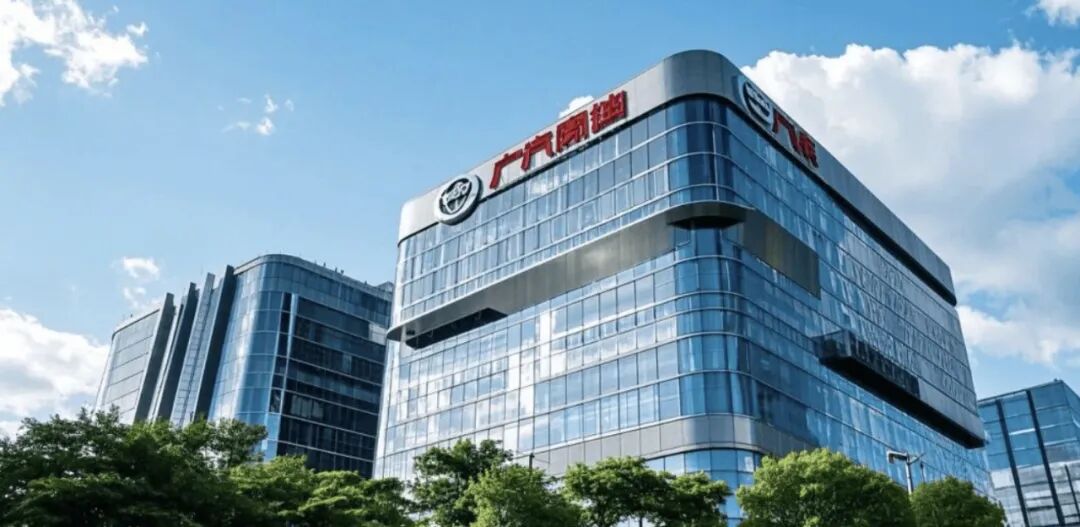
However, unlike new energy startups, where selling over 400,000 units often means turning losses into profits, the logic of conglomerate automakers like GAC defies the notion that 'selling more means earning more.' A closer look at the data reveals that last year, Great Wall Motors reported a net profit attributable to shareholders of 9.865 billion yuan, with an average profit of 7,460 yuan per vehicle. In contrast, GAC Group reported a net loss attributable to shareholders of 8.784 billion yuan, with an average loss of 5,100 yuan per vehicle. The difference in net profit per vehicle between the two companies was 12,560 yuan. Excluding investment income and focusing solely on gross profit from vehicle manufacturing, Great Wall's gross margin was 18% last year, with a gross profit of 16,000 yuan per vehicle. GAC's gross margin was -8,300 yuan per vehicle, meaning that for every additional vehicle sold compared to Great Wall, GAC lost at least 20,000 yuan more.
Unlike those who actively create industry competition, both Feng Xingya and Wei Jianjun are entrepreneurs unwilling to bow to internal competition. To some extent, both share the same dream: to break free from internal competition and build a truly sustainable, healthy enterprise. However, differences in system and ownership dictate that Wei Jianjun must be hands-on, while Feng Xingya can take charge behind the scenes. Often, ideology shapes actions, and methods alter outcomes.
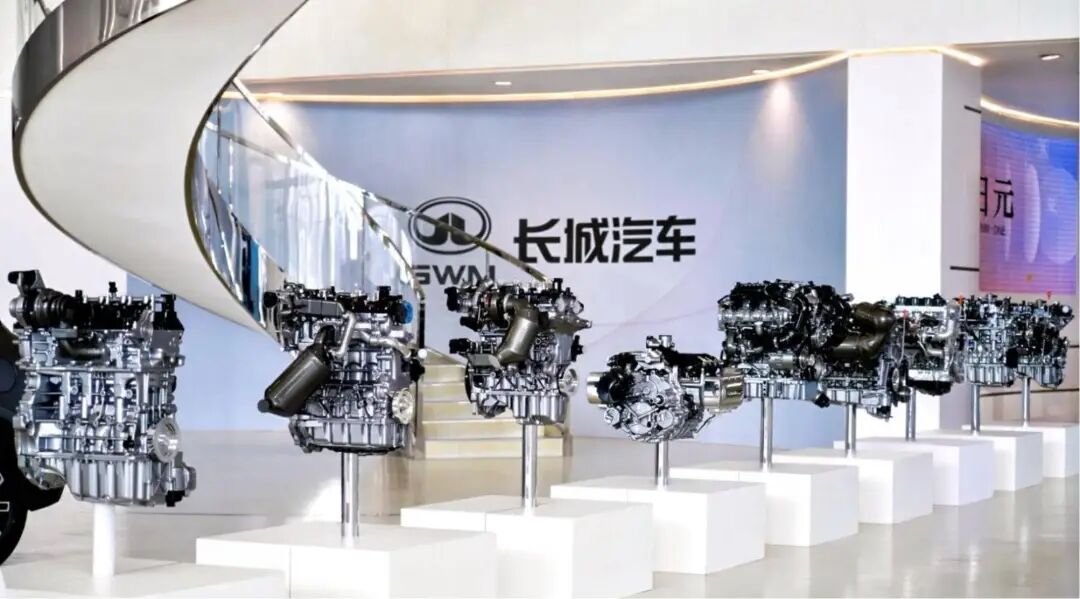
Last year, Great Wall Motors invested 10.432 billion yuan in R&D, exceeding 10 billion yuan for the fourth consecutive year. Meanwhile, GAC Group's reported R&D investment for the year was 1.639 billion yuan, with 85% capitalized, resulting in even lower actual expenses. Behind GAC's lack of large-scale fixed asset investments lies the significant hidden costs of organizational, personnel, and management changes brought about by the Panyu Initiative. This does not include Great Wall's annual cash outlay of over 20 billion yuan for R&D, overseas factories, testing hardware, and testing centers. When factoring in capitalized operational inputs and outputs, the gap in operational efficiency between the two companies' core businesses widens further.
No wonder, at their respective annual shareholder meetings, Great Wall maintained a calm atmosphere, while GAC could only leave silence to its management. After all, calm requires prerequisites, and silence itself is a cost. Just as when Feng Xingya personally visited Ren Zhengfei to finalize Huawei's cooperation with GAC, internal voices raised concerns about an unequal partnership. But Feng Xingya's remark—'Our market above 300,000 yuan is still wide open'—revealed the phased helplessness of the enterprise. Perhaps for Feng Xingya, GAC Group has long passed the era of being a darling of capital.
2. As Long as High-End Markets and Dual Circulation Are Maintained, Great Wall Won't Lose Money!
Reviewing Great Wall's operational journey over the past year reveals that the reason for achieving 'fewer sales but higher profits' compared to GAC lies in its ability to profit from high-margin vehicles. This is driven by the advantages of a shared underlying platform, which dilutes R&D costs and grants exclusive pricing power, combined with a dual-market (domestic and international) circulation strategy. This forms a competitive edge based on a streamlined cost structure.
Those familiar with the business logics of Great Wall and GAC comment that if Great Wall is compared to DJI in the digital sector, then GAC follows a model more akin to traditional digital players like Nikon. Rather than saying Great Wall and GAC stand on opposite sides, it is more accurate to say that after market rules are restructured, people see no new opportunities for Nikon to compete in the intelligent digital sector.
Take the average selling price (ASP) of vehicles from both companies as an example. Last year, GAC Group's ASP was 113,000 yuan, with few high-margin models propping up profits. Over 33% of its lineup consisted of low-priced commuter cars under 100,000 yuan, while its self-owned brand segment had nearly half (48%) of its models priced below 100,000 yuan. In contrast, Great Wall's ASP was 168,000 yuan, with 41% of its vehicles being high-margin models priced above 200,000 yuan. Models like Tank, WEY, and pickups generated at least 10 times the profit of GAC's low-priced vehicles. Last year, amid a sharp decline in the joint-venture market and shrinking profits for GAC Toyota and GAC Honda, GAC was inevitably dragged into a vicious cycle of 'selling more but losing more' due to persistent losses from low-priced vehicles.
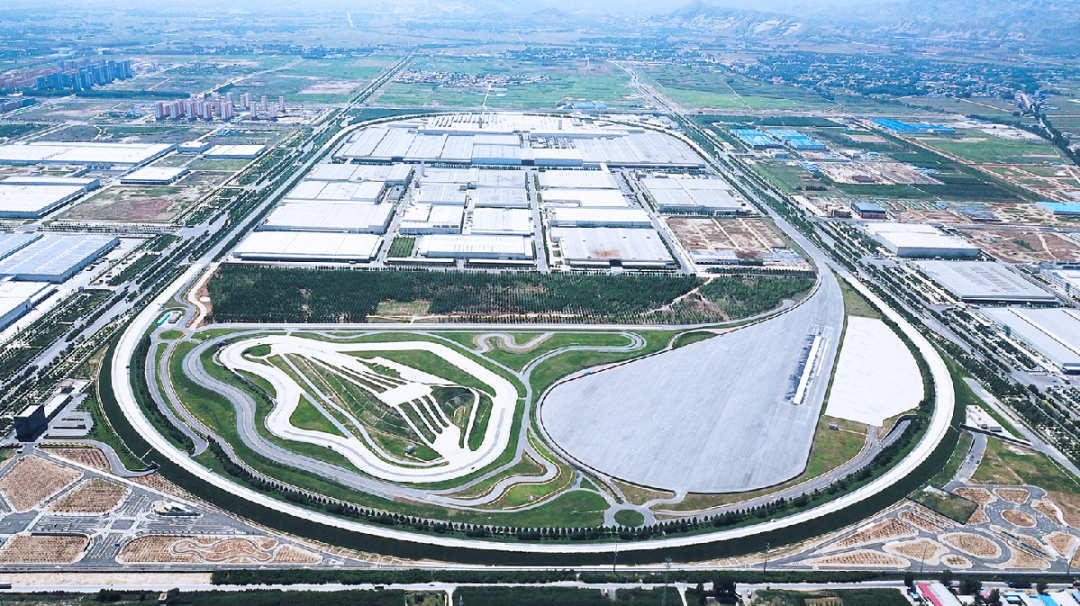
Of course, Great Wall's escape from the low-priced vehicle trap did not happen overnight. As early as 2020, Great Wall began phasing out low-priced fuel-powered compact cars under its Haval brand and discontinued sub-100,000 yuan new energy products two years later. By early last year, after the industry-wide price war erupted, Wei Jianjun publicly set an ironclad rule: Not to develop or promote cost-competitive models priced below 100,000 yuan. Great Wall would rather sacrifice sales volume than produce low-margin or loss-making models.
From a financial perspective, scaling back low-end operations led to five consecutive years of rising ASPs for Great Wall, increasing from just over 100,000 yuan to 168,000 yuan. Its vehicle gross margin remained stable at 18–20%. From a long-term business perspective, abandoning the low-priced segment allowed Great Wall to concentrate its technology and resources on high-margin products like Tank and WEY. Coupled with higher selling prices in overseas markets and significantly better gross margins per vehicle abroad, Great Wall leveraged dual domestic and international circulation to avoid getting trapped in domestic price wars.
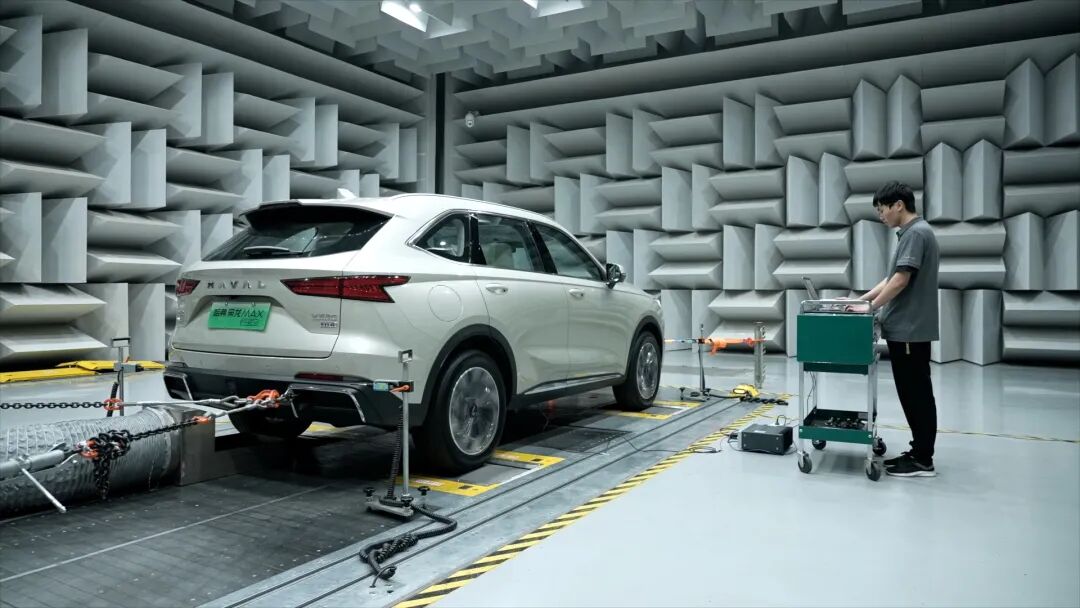
As emphasized repeatedly at the shareholder meeting, 'Sales volume is the facade, while financials are the substance. Scale determines short-term rankings, but financial health truly determines survival.' Behind Great Wall's financial resilience lies its full-stack self-developed supply chain and the supporting forest ecosystem. First, technologies like Hi4 hybrid, all-terrain four-wheel drive, and the modular Guiyuan platform are reused across multiple brands, significantly diluting R&D, mold, and production line costs. According to data shared by Mu Feng, Great Wall's modular architecture directly saves 70% in R&D costs and nearly 80% in mold expenses. Second, in-house production of core components like batteries, electrified powertrains, chassis, and electronic controls by subsidiaries such as Svolt, Nobo, Mand, and Jinggong means Great Wall does not need to outsource profits to external suppliers. The premium pricing of its high-end models can be fully retained in-house.

Compared to Great Wall's ecosystem, GAC's operational structure is more suited to traditional automotive logic. During the fuel vehicle era, the hybrid systems, Aisin transmissions, and Denso electronic controls of models like the Camry and Accord were highly dependent on Japanese suppliers. Nearly half of the component profits from each joint-venture vehicle flowed into the pockets of Japanese companies like Denso and Aisin. GAC's procurement costs for similar specifications were nearly 20% higher than Great Wall's, leaving it with only meager assembly and processing margins on traditional joint-venture models. Entering the new energy era, where the powertrain accounts for over half of a vehicle's cost, GAC's Aion and Trumpchi new energy businesses started slowly and relied heavily on outsourced battery cells from CATL and CALB for PACK assembly. Due to limited scale advantages, GAC had relatively weak bargaining power, as cell procurement prices were controlled by upstream raw material suppliers and battery manufacturers.
Given this lack of strategic manufacturing depth, even if GAC continues to adjust for the long manufacturing cycle ahead, it will be difficult to play a strong hand like Great Wall in the short term. This is why, when Feng Xingya boldly announced the goal of selling 3 million units and 'rebuilding GAC,' the trillion-yuan market cap bubble quickly burst into an unpalatable reality for shareholders.
As Wei Jianjun initially warned the industry and investors, only reasonable profits can sustain R&D investment, improve supply chains, and create a virtuous cycle. Pursuing low prices to heap sales volume will only squeeze suppliers and trap the company in a dead end of 'selling more but losing more.'
3. The Collapse of Sales Volume Logic: The End of the Pseudo-Bull Market in Stock Expansion
For over a decade, the automotive industry has been in a bull market driven by first-time car buyers, with a continuously growing market. Scale effects inevitably diluted costs, and high profits naturally meant capital premiums. Even if companies prioritized short-term thin margins for higher volume, they could still recover in the long run through scale. The logic of 'sales volume equals value' was perfectly self-consistent in the automotive market for over a decade. However, by the first half of 2025, when price wars intensified and industry profits plummeted to a historic low of 4.4%, nine consecutive years of market stagnation forced domestic and international investment institutions to concede—automobile sales in China have truly hit a ceiling!
Since late last year, I've noticed an interesting phenomenon: Investment institutions that once judged companies solely by sales volume have become hesitant. Their research reports now feature more cautious and even convergent analysis and conclusions—praising scale at the beginning, discussing pricing pressure and promotions in the middle, and ending with a compromise to 'maintain a buy rating' as a buffer.
In truth, everyone is well aware that a company's available cash is its real trump card. Yet, some arguments seem to desperately cling to the narrative centered around sales volume! Even investment institutions have stooped to the level of assisting companies in staging farcical scenes, such as crying out, "Big Brother, don't leave! Come and play with us, fellow townsfolk (or fellow villagers)."
The underlying reason why some attempt to obscure the substantive reversal of the fundamental logic in the automotive industry and market is straightforward—to delay those who are preparing to exit and to entice those who are hesitating to enter. Companies that are still adhering to traditional paths are terrified of people walking away. Although these corporate analyses and rhetoric, claiming "short-term pauses with long-term trends remaining unchanged," may seem innocuous at present, they are ultimately meaningless nonsense!
However, it is undeniable that the stringent regulatory red lines for investment research will soon lay bare the flawed logic of prioritizing sales above all else. A securities expert pointed out that situations where sales surge while operating cash flow remains negative and core business segments suffer structural losses represent significant adverse fundamental risks. If research firms persist in hyping up scale while downplaying persistent financial losses, they are either drawing unprudent conclusions or failing to adequately disclose key investment risks. Such behavior contravenes the misleading statement provisions of the Securities Law and Article 9 of the Interim Provisions on the Issuance of Securities Research Reports, which mandates that "conclusions must have a reasonable basis and fully disclose risks."
In the realm of investment banking, a single-quarter loss can typically be vaguely attributed to industry disruptions, a compromise approach within the industry that generally does not attract regulatory scrutiny. However, if a company's main business experiences two consecutive quarters of a permanent collapse in gross profit due to low-price, high-volume sales, while deliberately emphasizing sales volume and obscuring the company's significant ongoing financial losses, the corresponding securities firm will receive a compliance warning from regulators. After verification, regulatory authorities will directly determine that the research report contains misleading statements.
To this end, I specifically compared the monthly report comments on Great Wall over the past year and discovered that similar evaluations—such as slowing short-term domestic retail growth, robust operating cash flow, and exceptional quality—have been consistently maintained for at least 17 months. This signal at least indicates that within the next six months, securities firms will uniformly prioritize evaluating companies based on their operating cash flow, gross profit margins, and product mix, rather than engaging in short-sighted behaviors that rely on low-priced products to disrupt the market, which will ultimately be exposed. Ultimately, this will propel the entire industry to transition from "scale-based internal competition" to a phase focused on "profitability, product mix, and cash flow value."
One approach is overt, the other covert; one is transparent, the other obscured; one treats car manufacturing as a serious endeavor, while the other employs embellishment as a tactic... Amidst this contrast between strength and weakness, substance and emptiness, the two diverging narratives are finally reaching a climax.
End
-
![]()
Apple’s Prices Skyrocket Up to 3,500 Yuan! Who Empowered Cook to Hike Prices?
-
![]()
ByteDance Executives Go Viral!
-
![]()
ByteDance Executives Dominate Headlines!
-
![]()
Perspective | An Ke Cashes Out from the Computing Power Support Sector Under His Flagship, Jin Jing New Energy Faces Four Real Challenges in Its HK$2.5 Billion Acquisition
-
![]()
Selling Cars No Longer Profitable: Guanghui Transforms into a 'Landlord'
-
![]()
Anchoring Physical AI, Momenta Passes Public Verification
-
![]()
The Era of Self-Reflection: Internet Titans Face Internal Critique
-
![]()
Storage Surges 386%: AI Fuels a 'Structural Inflation'