Apple’s Prices Skyrocket Up to 3,500 Yuan! Who Empowered Cook to Hike Prices?
 07/01 2026
 444
444
Frankly speaking, the moment I witnessed Apple’s price surges, I couldn’t help but question Cook: What gives you the audacity? The MacBook Air leaped from 8,499 yuan to 9,999 yuan, the 16-inch Pro soared by 2,500 yuan, the iPad Air climbed by 1,500 yuan, the iPad Pro by 2,000 yuan, and the Mac Studio witnessed the steepest hike, skyrocketing by 3,500 yuan. Although iPhone prices remained steady, the public is already in an uproar!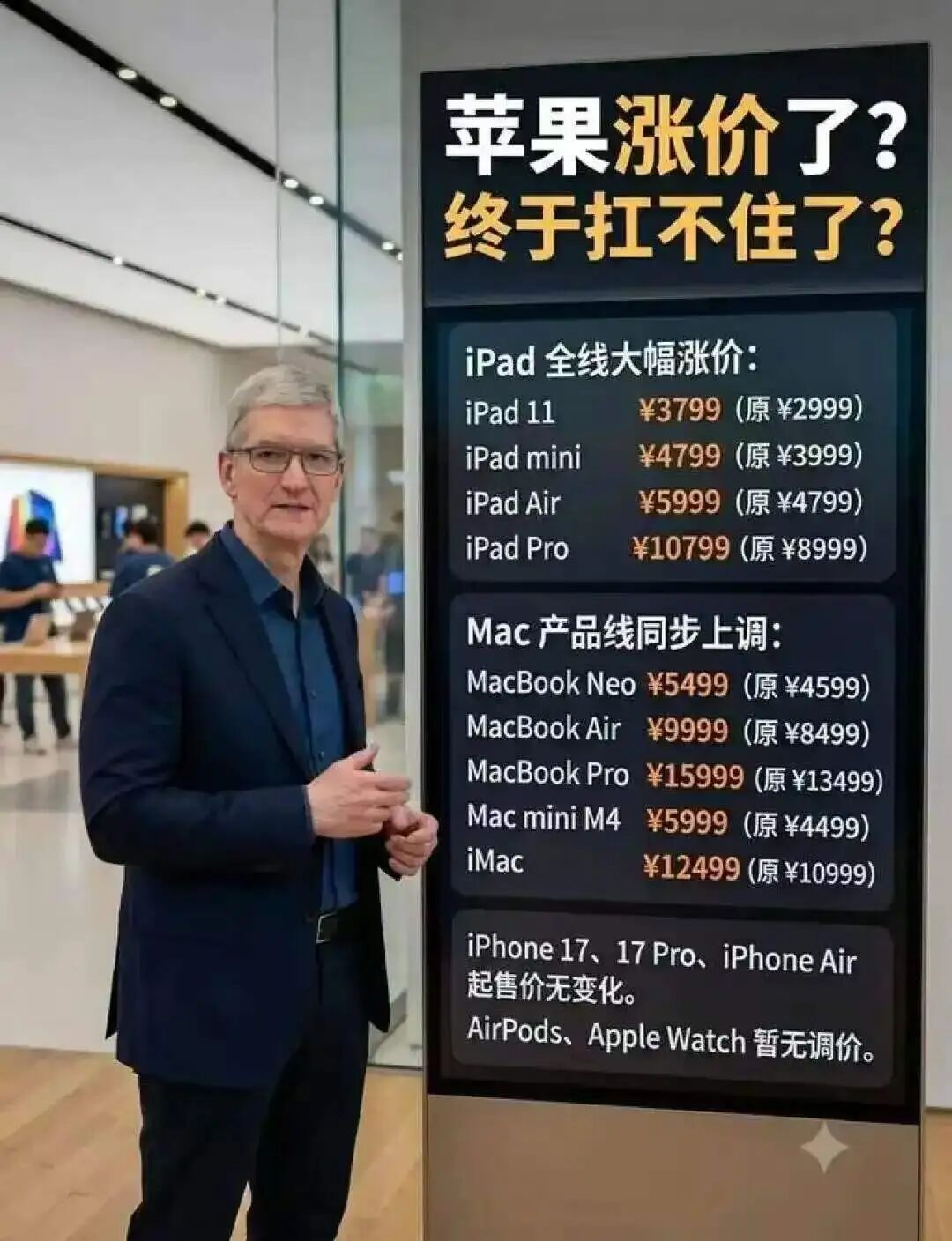
My friend Lao Zhang, who works in the hardware sector, sent me a screenshot with a single comment: “Fortunately, I don’t use Apple.” I informed him that the iPhone prices are also on the rise. He responded, “Then I won’t buy it either.” But then he posed a question: “What do chip price hikes have to do with me?” Indeed. If you don’t purchase Apple products, what does it matter if their prices soar? The issue is, this price-hiking blade ultimately slices into every ordinary person’s budget.
Apple is merely the sharpest edge of this blade. Lao Zhang is also feeling the cut. Last month, he was negotiating BOM (Bill of Materials) costs when suppliers notified him that power management chips would rise by 15%, isolation chips by 10%, and if he didn’t accept these increases, they would cut off the supply. Last year’s price-lock contracts were now rendered meaningless. He lamented, “I can’t tell customers that costs have risen and products are now 15% more expensive, can I? Who would buy them?” His list of chip suppliers wasn’t limited to one or two. Nearly 20 companies, including Texas Instruments, Infineon, and STMicroelectronics, uniformly raised prices on July 1st. AI servers and data center chips saw hikes of 15% to 25%, while industrial automation and energy storage chips rose by 10% to 15%. What about low-end consumer goods? “Price adjustments are mild, with some maintaining original prices due to sufficient inventory.” In simpler terms: AI gets the lion’s share, consumer electronics get the scraps, and hardware startups get kicked out of the game.
01 The Dual Layers of Logic Behind Price Hikes
The official explanation for the price hikes is that “the high prosperity of the AI supercycle is being passed upstream.” Let’s dissect this into two layers. The first layer: costs have genuinely increased. Wafer foundry costs have risen by 5% to 20%, gold and copper prices for packaging have surged, and specialty gases are in short supply. Yangjie Technology’s price hike notice made it clear: “Upstream chip wafers, bulk metals, and packaging raw materials have all continued to rise, with cost increases exceeding expectations.” The second layer: AI is insatiable. NVIDIA’s Rubin platform popularizes 800V power supply architectures, with a single data center consuming as much power as a small city. Power chip orders have exploded. One manufacturer said, “We can’t keep up with AI-related power supply orders.” When demand outstrips supply, prices rise. Whoever pays more gets priority. China Resources Micro’s order visibility has stretched to 9 months, with mainstream power semiconductor lead times extending from 8-12 weeks to over 30 weeks.
Is this even a price hike? Price increases, shortages, and allocation—the trifecta is complete. Who’s laughing? Leading IDM (Integrated Device Manufacturer) manufacturers, the ones that handle everything from design to manufacturing to packaging in-house. With production capacity and pricing power, their order books are full until next year. Who’s crying? Downstream smaller factories like Lao Zhang’s, with no bargaining power, unable to pass on costs, and profits being eroded inch by inch. Institutions refer to this as “market share concentration toward the top.” In plain terms: the strong get stronger, the weak get weaker.
02 Where Is the Breakthrough?
So, how do we break this deadlock?
Xiang Ligang, a seasoned observer in the telecommunications circle, made a point—China now has Yangtze Memory, ChangXin, and JinHua, and he suspects Huawei might build its own factories too. Consider this: in 2020, when Huawei was under severe pressure, there were fewer than 10 chip factories nationwide. In just three years, over 40 new factories have emerged, with another 20+ under construction. If Huawei really builds its own factories, it would achieve full vertical integration from design to manufacturing to packaging. Short on chips? Make your own. High costs? Control them yourself.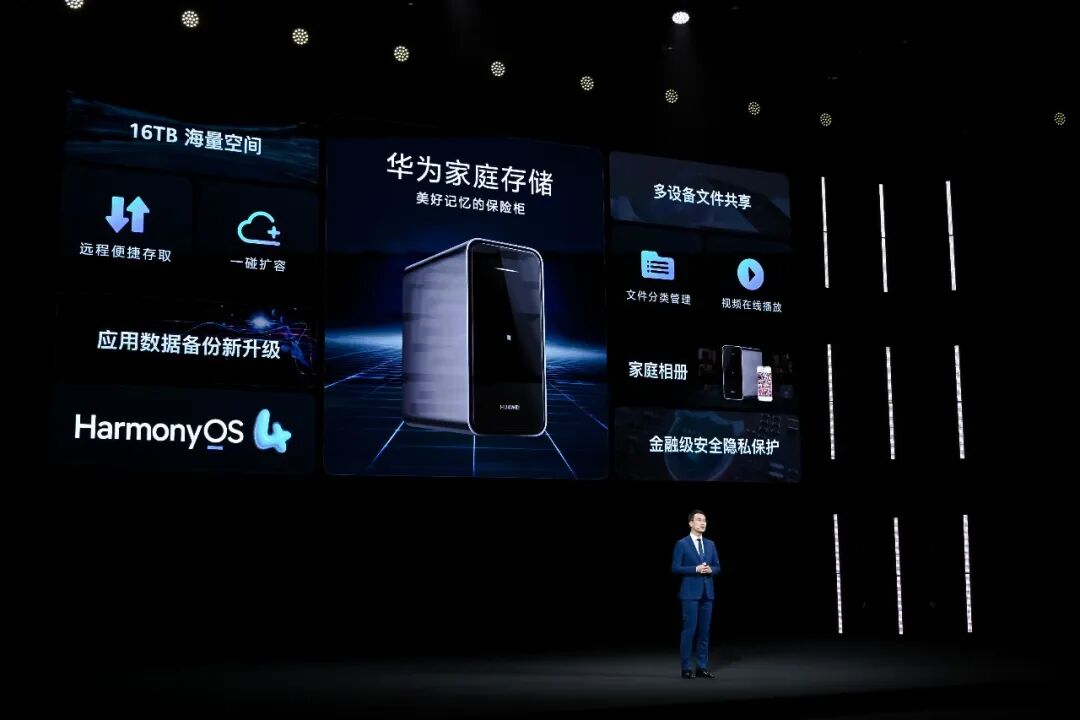
Not for profit, but to avoid being strangled. However, this is a long-term solution. Gartner predicts that by the end of 2026, DRAM and SSD prices will rise by a combined 130%, pushing PC prices up by 17% and smartphones by 13%.
03 Why Hold Off on Buying Apple?
Apple is the first to wield the price-hiking blade at consumers. Their statement reads, “The consumer electronics industry is facing unprecedented challenges.” Translation: chips cost more, so you pay more. But Apple’s gross margin is still around 40%—can they really not absorb these costs? The MacBook Air rose by 17.6%, iPads by 15% to 25%. If costs rose by 15% but prices went up by 25%, what’s the extra 10% for?
Compare that to domestic smartphones. The Honor Magic8 Pro Air boasts 17 hours of battery life, while the iPhone 17 Pro only has 13.7 hours—with a 3,000-yuan price difference. The Huawei Mate80 and iPhone 17 standard models have similar specs, but Huawei’s is cheaper. Domestic brands are also raising prices—no one escapes chip hikes—but they’re raising them less and offering more. An industry insider put it bluntly: “Consumers are unwilling to buy new phones. Storage chip price hikes are turning phones into luxury items, hurting the entire industry.”
So, my advice is straightforward: hold off on buying Apple. The iPhone 17 Pro series is going up by $99, with the Pro Max potentially starting above 10,999 yuan. Buying now means helping Cook absorb chip price hikes and letting him pocket an extra 10% premium. Wait until domestic chip production capacity fully ramps up, wait until lithography machine costs drop—then we’ll see who’s overpricing and who’s being honest. Lao Zhang says he can hold out for another six months.
“Once domestic production capacity increases, prices should stabilize.” I’m not sure if he can hold out that long. But I know one thing: the chip war is between nations, but the spending is between you and me. Apple has already raised its blade. Don’t rush to hand over your wallet. Who gave Cook the courage to raise prices? People like you and me, who habitually pay up. Wait, let the dust settle a bit longer. (This article does not constitute any investment advice.)
-
![]()
Alibaba's AI 'Crucible': Navigating Overseas Blockades, Organizational Upheaval, and the Lag in Commercialization
-
![]()
Global Electric Vehicles Enter the '23 Million Unit Era': China Maintains Edge, Emerging Markets as New Growth Pole
-
Meituan Triumphs with Domestic Computing Power: Running a Trillion-Parameter Model, Exploration Initiated in 2023
-
![]()
Embodied Intelligence and Mobile Robots: Why the Intensified Focus on Factories This Year
-
"Chip" Radiance Persists: Is the Semiconductor Sector Still a Magnet for Investors?
-
![]()
Robots Embark on 200-Hour Factory Trials: Is AI Truly Ready for Industrial Deployment?
-
![]()
Another Bionic Robot Company Secures $7 Million in Funding
-
![]()
UBTECH U1 Launch: Pre-sale Excitement Creates Unrealistic Hopes, Resulting in Disappointment at the Event