Anchoring Physical AI, Momenta Passes Public Verification
 07/01 2026
 569
569
Source | Benyuan Finance
Author | Li Youshan
The Hong Kong stock market is about to welcome the "first physical AI stock," as Momenta, a provider of intelligent driving solutions, successfully passed the listing hearing of the Hong Kong Stock Exchange, staying ahead of embodied AI.
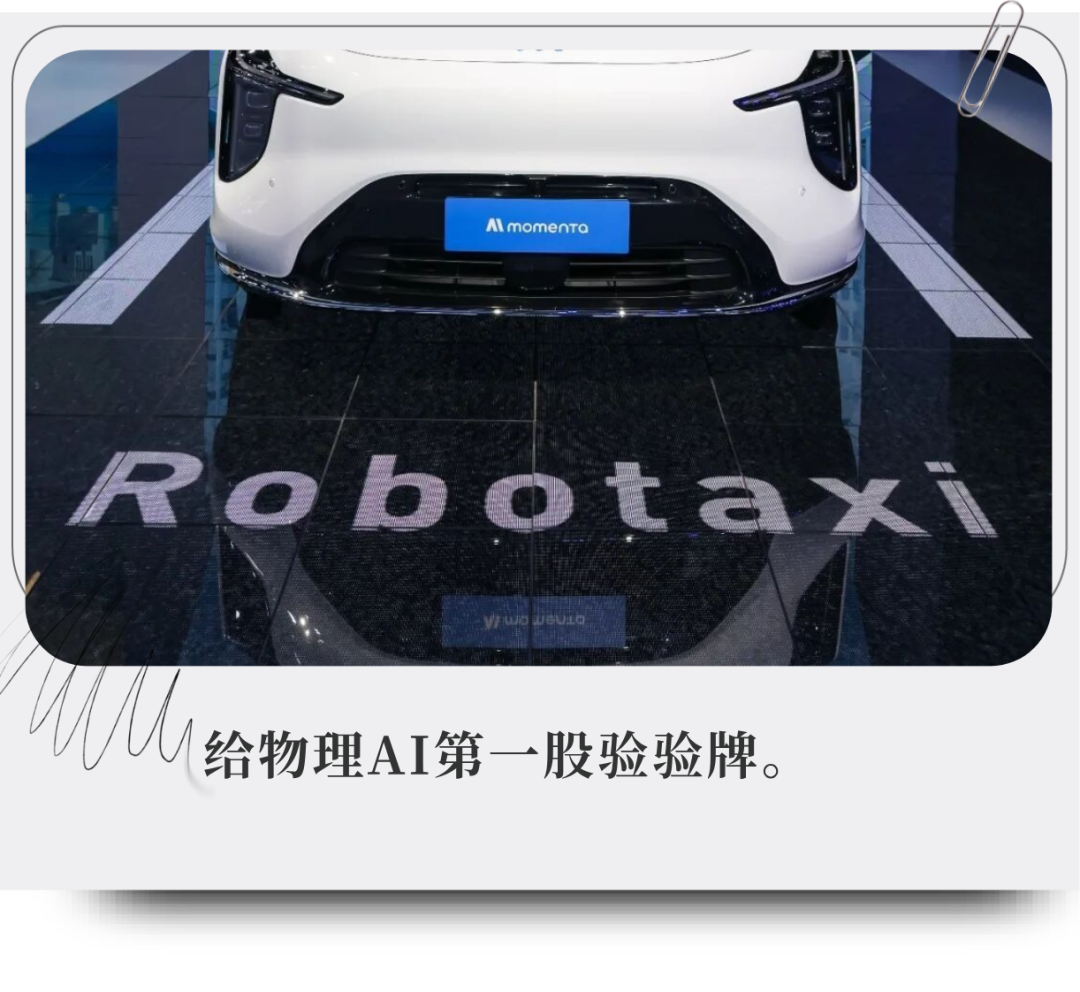
Flipping through Momenta's 430-page Prospectus (PHIP) document, the two keywords repeatedly discussed are Robotaxi and Physical AI.
Momenta's circle of partners in intelligent driving is quite impressive, with collaborations with Mercedes-Benz, BMW, and Audi, the three major German luxury automakers. Its advanced driving assistance solutions can also be found in models sold by BYD, GAC Group, Hyper GT, Chery, SAIC Motor, FAW Group, and Dongfeng Nissan.
Momenta CEO Cao Xudong positions the company as a "builder of physical AI foundation models." According to Cao's judgment, after 2026, only three domestic intelligent driving companies will remain, and Momenta's competitors will be Huawei, Horizon Robotics, Zony, and Yuanron.
1. Understanding Physical AI and World Models
Before delving into Momenta's financial performance, let's clarify a few key concepts related to physical AI.
The large language models, agents, and "lobsters" we use daily, where AI functions like a "superbrain" on-screen to process information and assist decision-making, fall under the category of "Digital AI." When AI steps out of the screen to perceive and act in the real world, resembling a "mobile body," it can be understood as "Physical AI."
Typical application scenarios for physical AI include embodied intelligence and autonomous driving. Jensen Huang believes that autonomous driving is the first stop for the large-scale implementation of physical AI.
Cao Xudong shares Huang's view: the core of physical AI lies in data scaling and commercial scaling. Currently, autonomous driving is the only field that has successfully achieved both.
The foundation model of physical AI is the World Model, which can predict the consequences of actions based on imagined action sequences proposed by an agent and enable AI to take real-world actions. This allows machines to overcome the limitation of "only recognizing, not predicting" and gain a causal understanding of the physical world.
To succeed in physical AI, Momenta directly applies world models to the pre-training of end-to-end foundation models, with the R7 world model successfully delivering results.
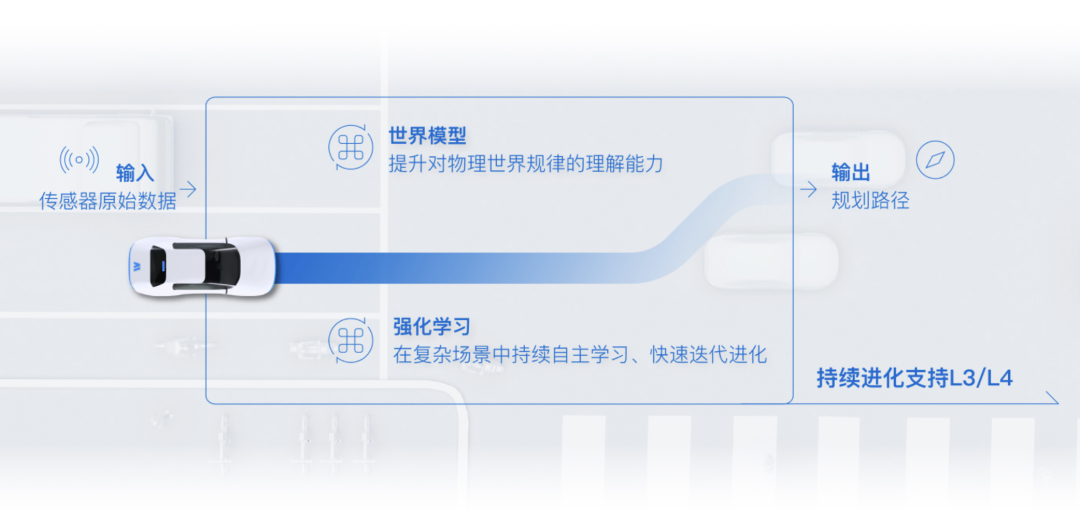
Technically, Momenta R7 features a unique three-tier architecture:
The first tier is world model pre-training, forming a foundational understanding of the physical world; the second tier is world model simulation, conducting closed-loop testing of extreme and rare long-tail scenarios; the third tier involves reinforcement learning within the model, using reward and punishment mechanisms to enable large models to explore, learn from mistakes, and rapidly iterate and evolve.
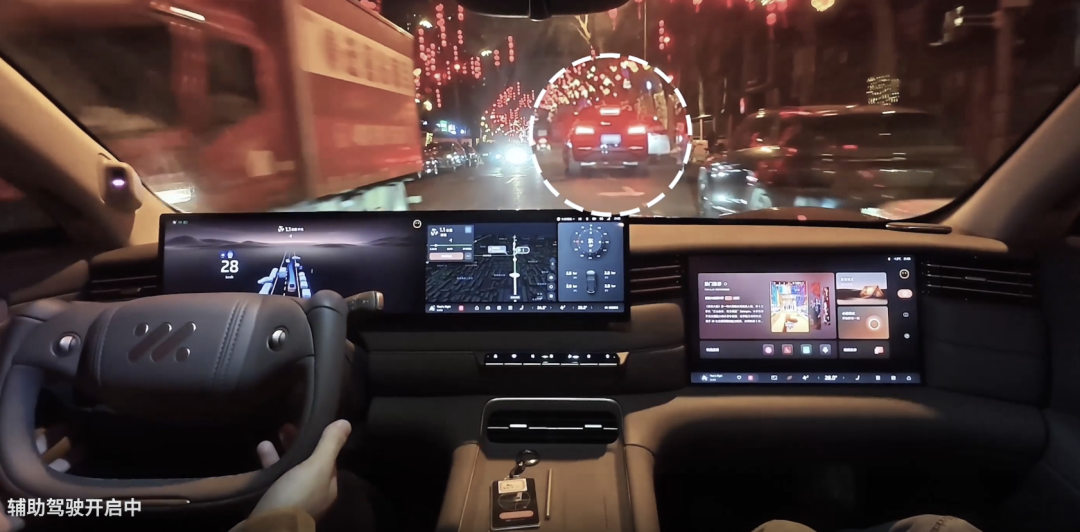
A typical example is when the cargo of a vehicle ahead suddenly falls, bounces, and rolls on the ground. Based on real-time reasoning of physical knowledge, R7 can dynamically think, predict the trajectory, and take evasive actions in real-time.
Through R7, even in narrow and more complex road conditions, users can experience driving performance close to or even surpassing that of human veteran drivers, transitioning from "data-driven" to "cognition-driven."
The concept of world models is the entry ticket, and Momenta also has a famous "One Flywheel, Two Legs" strategy. The flywheel refers to the closed-loop algorithm iteration driven by real driving data, while the two legs are L2-level mass-produced assisted driving and L4-level fully autonomous driving.
The core challenge of autonomous driving lies in solving millions of long-tail scenarios, and massive real-world road data is the key to breaking through the long-tail bottleneck. Momenta's confidence comes from over 12 billion kilometers of real-vehicle and simulation mileage, as well as more than 100 million segments of refined golden data.
Additionally, Momenta's R7 world model has reached the mass production stage, with over 900,000 mass-produced vehicles and successful delivery in over 100 mass-produced models. The first model to feature it is the SAIC Volkswagen ID. ERA 9X.
Based on the same R7 world model, L4 supports L2 capabilities, and mass-produced assisted driving feeds back into high-level autonomous driving. This can extend to Robo scenarios such as robotaxis (Robotaxi), autonomous logistics vehicles (Robovan), and autonomous trucks (Robotruck), expanding imagination and achieving commercial closed loops.
2. Momenta's Financials
As Momenta raises the banner of physical AI and steps into the public market, facing the scrutiny of capital, its financials are also laid bare to the public. According to the prospectus, for the twelve months ending February 28, 2026, Momenta ranked first among global independent solution providers with a 64.5% market share based on vehicle sales equipped with urban NOA solutions, higher than the combined market share of the second to fifth-ranked companies.
From an overall revenue perspective, Momenta's growth curve is impressive.
Revenue grew from RMB 743 million in 2023 to RMB 2.413 billion in 2025, tripling in three years. In 2025, revenue increased by 82.1% year-on-year, performing well among intelligent driving suppliers. As of the end of 2025, the company's cash reserves exceeded RMB 10 billion.
Momenta's revenue consists of two main segments: technology development service fees for collaborating with automakers to develop intelligent driving solutions for specific models, and licensing revenue charged based on the actual number of mass-produced vehicles equipped with the solutions.
In terms of revenue structure, in 2023, technology development service revenue was RMB 719 million, accounting for 96.8%; licensing service revenue was only RMB 23.18 million, accounting for 3.1%. By 2025, technology development service revenue was RMB 1.445 billion, decreasing to 59.9%; licensing service revenue increased to RMB 968 million, rising to 40.1%.
Technology development services are project-based with lower gross margins; licensing services, with R&D costs already invested upfront, are closer to pure software licensing and have higher gross margins, with revenue increasing with more installations.
Momenta's revenue structure shifting from project-based to scalable has led to a surge in gross margins. From 2023 to 2025, the company's gross profits were RMB 130 million, RMB 649 million, and RMB 1.727 billion, respectively, with gross margins increasing from 17.5%, 49.0%, to 71.6% over the same period.

Another financial metric to note is the loss situation: data is improving, but pressure remains. From 2023 to 2025, the company's annual losses were RMB 2.57 billion, RMB 3.206 billion, and RMB 3.458 billion, totaling approximately RMB 9.234 billion over three years. The expansion of book losses is mainly due to accounting standards. Excluding the impact of fair value changes in preferred shares due to the impending listing, the company's adjusted net losses for the periods narrowed to RMB 1.09 billion, RMB 960 million, and RMB 300 million, respectively, indicating improving profitability.
The fundamental reason for the losses is the high R&D investment in intelligent driving. Over the past three years, Momenta's R&D expenditures were RMB 1.281 billion, RMB 1.508 billion, and RMB 1.869 billion, totaling nearly RMB 4.7 billion, accounting for 77.5% of total revenue in 2025.
The prospectus shows that Momenta has 1,157 R&D personnel, accounting for nearly 82% of the total workforce, with high labor costs. Coupled with the accelerated iteration of autonomous driving, Momenta's R&D expenses are likely to remain high, and profitability pressure will remain significant in the short term.
Additionally, Momenta still faces the issue of high customer concentration. In 2025, the top five customers contributed RMB 1.508 billion, accounting for 62.6% of total revenue. For example, SAIC Group is both Momenta's largest institutional shareholder and its most important mass production customer. From January to May 2026, the cumulative sales of all IM Motors brands were just over 30,000, quite passive among new energy companies. Another major customer, BYD, is a typical representative of automakers pursuing "full-stack self-research." As automakers deepen their self-research efforts, suppliers' bargaining power will further decrease.
The ceiling for mass-produced vehicle solutions is clear. Relying on collaborations with automakers, Momenta is betting its second growth curve on Robotaxi.
Momenta's Robotaxi business has landed in cities such as Shanghai and Suzhou in China, Munich in Germany, and Abu Dhabi in the UAE, establishing strategic partnerships with global leading mobility platforms such as Uber, Grab, Lumo, and ShenDao Travel, as well as automakers like Mercedes-Benz.
Currently, the contribution of the Robotaxi business to total revenue is not significant. However, the prospectus shows that its operating cost is RMB 1.21 per kilometer, and the bicycle cost is RMB 0.25 per kilometer, comparable to first-tier players such as Apollo Go, WeRide, and Pony.ai.
3. Becoming a Platform Company
Momenta founder Cao Xudong is a Tsinghua University alumnus who previously worked at Microsoft Research Asia and SenseTime. In September 2016, he founded Beijing Initial Speed Technology Co., Ltd. The early team members were largely from the fields of computer vision and deep learning, resembling an autonomous driving research institution.
In 2018, Cao Xudong developed a driver monitoring system (DMS) for commercial vehicles and launched a collision warning system product, attracting the attention of Suzhou Xiangcheng District. Several core business segments were established in Suzhou High-Speed Railway New City at the cost of losing about a quarter of the employees.
Later, Momenta entered the passenger vehicle market and partnered with SAIC Group, collaborating on memory parking and eventually the entire assisted driving solution, subsequently working with Buick, Cadillac, and SAIC Audi under the group. Currently, nine of the top 10 global automakers have established collaborations.
In its ten years of existence, Momenta has thrived in the capital market. According to Tianyancha data, the company has secured nine rounds of financing, totaling over US$1.7 billion. Its investors include the world's top investment institutions such as Temasek and IDG, tech giants like Tencent, Alibaba Cloud, Ant Group, and JD.com, and domestic and foreign automakers such as SAIC Group, Mercedes-Benz China, General Motors, and Toyota.
However, Momenta's journey to listing has not been smooth. In June 2024, Momenta obtained overseas listing filing from the China Securities Regulatory Commission, but its plan to list in the U.S. was shelved. By the end of 2025, Momenta officially shifted to the Hong Kong stock market and passed the Hong Kong Stock Exchange's hearing in June 2026. Alongside Momenta, Yuanrong Qixing and Qingzhou Zhihang are also in the queue.
Momenta's decision to launch its Hong Kong IPO at this time is an inevitable choice under dual pressure from inside and outside the industry.
Externally, Tesla FSD is about to enter China, hanging like a sword over the heads of intelligent driving companies. Once FSD lands in the Chinese market, it could directly change the competitive landscape of the domestic intelligent driving market.
Domestically, there are players like Huawei with significant influence in the assisted driving field, as well as mainstream domestic brands like Xpeng and Li Auto that insist on self-researching assisted driving, intensifying internal competition.
The third-party intelligent driving industry has entered a knockout phase, and intelligent driving companies are collectively listing during this window period to secure sufficient ammunition for the more brutal final round.
Momenta positions itself as a platform company, emphasizing the narrative of physical AI. The funds raised will be used to strengthen R&D capabilities, with mass production business supporting cash flow in the short term and long-term hopes pinned on the growth engine of Robotaxi.
The "first physical AI stock" is now openly tested. Will Momenta become one of the survivors in Cao Xudong's words?
Operations / Yu Shuya Design / Yanweier Data / Tianyancha *All rights reserved, unauthorized reproduction prohibited
end
Thank you for subscribing
Please contact us first if you have any suggestions
-
![]()
Big Company HR Departments Are Overwhelmed: Young Job Seekers Harness Agents, AI-Assisted Interviews Spark Controversy
-
![]()
SAIC MG General Manager Overwhelmed by Online Backlash, Ends Livestream Prematurely: A Blend of Unfairness and Fairness
-
![]()
Hong Kong Stock IPO丨Recon Technology: The First Embodied Visual Intelligence Stock in Hong Kong Stock Market Launches Offering Without Cornerstones or Green Shoe Option
-
![]()
Avita Reapplies for Listing: Reports 25.6 Billion Yuan in Revenue and 3.49 Billion Yuan in Net Loss for the Previous Year, with 182 Million Yuan in Dividends from Yinwang | MIRROR Pro
-
![]()
DataStory's Controversial Hong Kong IPO: 5 Billion Valuation Hangs in the Balance Amid 866 Million Debt Pressure
-
![]()
Apple’s Prices Skyrocket Up to 3,500 Yuan! Who Empowered Cook to Hike Prices?
-
![]()
ByteDance Executives Go Viral!
-
![]()
ByteDance Executives Dominate Headlines!