Navigating the Electric Wave: Mercedes-Benz Embraces the Three-Pointed Star, Audi Sheds the Four Rings
 07/01 2026
 491
491
Lead | Introduction
The Mercedes-Benz Electric C-Class adorns its front end with 942 three-pointed star emblems, while Audi has completely removed the four rings from its electric vehicles. These two divergent design philosophies mirror the underlying brand anxieties of traditional luxury automakers as they transition into the electric era.
Produced by | This article is produced by Heyan Yueche Studio
Written by | Cai Yan
Edited by | He Zi
Full text: 2,497 characters
Reading time: 4 minutes
In the latest batch of vehicle declaration directories released by the Ministry of Industry and Information Technology in June, the domestically produced Beijing Benz C 350L Electric Long-Wheelbase Version emerged as a focal point. Just over a month earlier, the new model made its global debut in South Korea, touted as the "most sporty C-Class in history." Now, the domestically produced version is swiftly advancing towards mass production and market launch.
As Mercedes-Benz's first mid-size sedan built on the MB.EA native electric architecture, the Electric C-Class is also the second model in China to adopt this electric platform. The arrival of these two consecutive "true electric vehicles" signifies that Mercedes-Benz has finally bid farewell to the era of retrofitting internal combustion engine models into electric ones, as BBA (Benz, BMW, Audi) strives to carve out a mainstream presence in the new energy market.
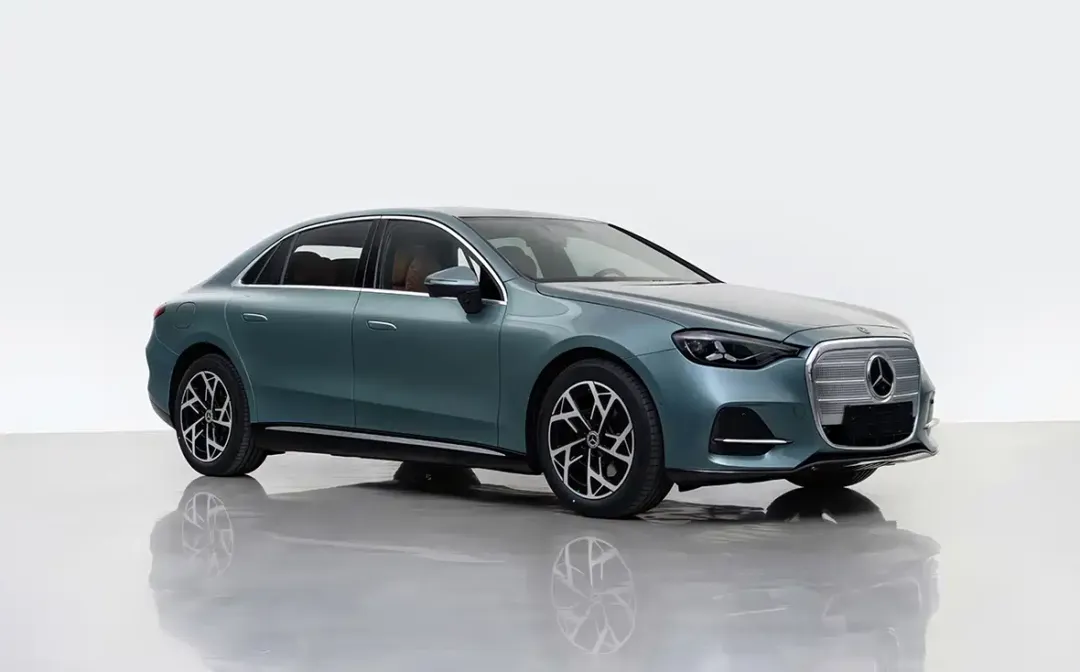
From the declaration images, the new car's design is notably striking. The front fascia adheres to the "Källenius + Wagner" design philosophy, emphasizing Monogram aesthetics. A large, closed shield-shaped grille dominates the front end, densely packed with 942 illuminated LED three-pointed star emblems. While aesthetic preferences may vary, its recognizability is undeniable.
Another standout feature of the Electric C-Class is its wheelbase. The domestically produced long-wheelbase version boasts a wheelbase of 3,051 mm, an increase of 97 mm compared to the current internal combustion engine C-Class, and only 43 mm shorter than the E-Class (current E-Class wheelbase: 3,094 mm). This means that, like the Electric GLC, the Electric C-Class benefits from the native electric architecture in terms of spatial dimensions.
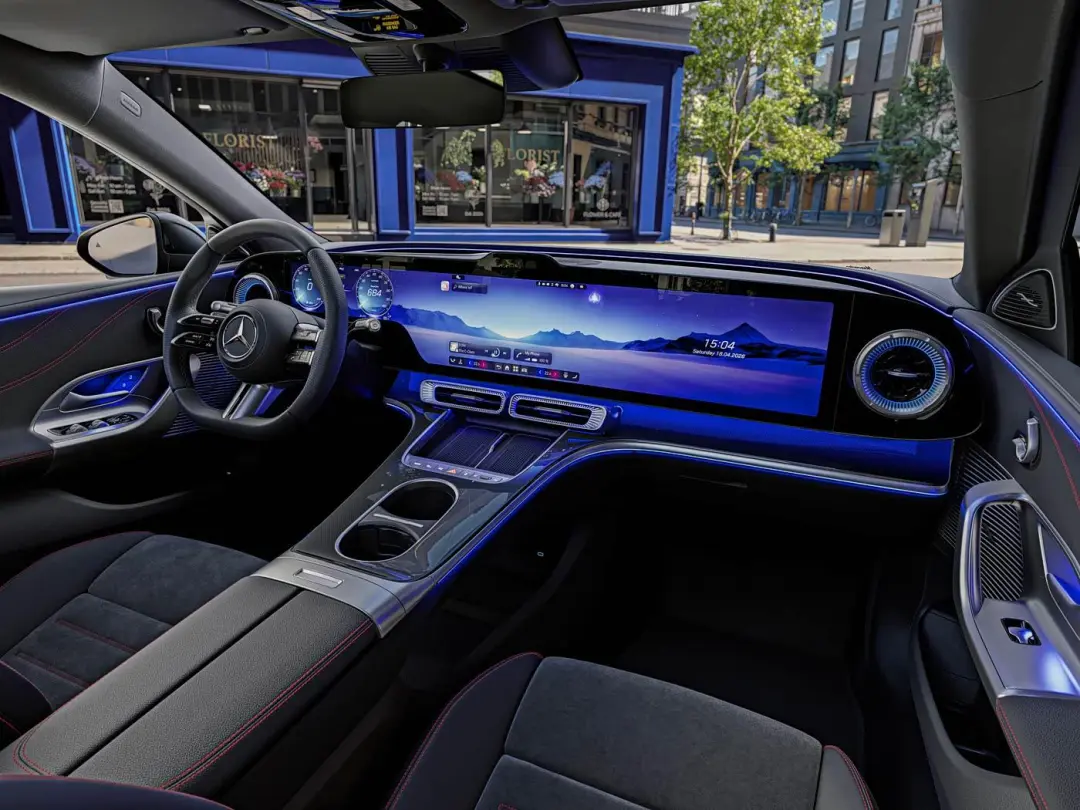
In terms of the three-electric system (battery, motor, and electric control), intelligent driving, and personalized configurations, Mercedes-Benz has fully integrated the entire three-electric system and intelligent driving solutions from the Electric GLC into the Electric C-Class. This includes the 800V high-voltage architecture, dual permanent magnet synchronous motor four-wheel drive, Momenta intelligent driving, and S-Class chassis technology. This approach of combining mainstream intelligent electric technologies with Mercedes-Benz's exclusive configurations can be seen as a "dimensional reduction strike" when applied to the C-Class.
Beyond the product strength of the Mercedes-Benz Electric C-Class, another noteworthy aspect is why Mercedes-Benz and Audi, both luxury brands, have taken such starkly different paths.
Mercedes-Benz once attempted to segment its new energy products with the "EQ" series, but now, both in terms of product lineup and brand design, it is reinforcing the "I am Mercedes-Benz" brand identity. In contrast, Audi has officially stated that its strategy of introducing letter-series brands has been in the works for nearly three years.
Facing the reconfiguration of the luxury market in the new energy era, Mercedes-Benz emphasizes "holding on," while Audi stresses "disruption," reflecting their deep-seated brand anxieties.
The Two Approaches of Mercedes-Benz and Audi
Although Mercedes-Benz's electric products will return to traditional model naming conventions by 2026, the painful lessons of the EQ series and the downturn in the automotive market continue to influence Mercedes-Benz's brand image and market positioning for new energy products.
Therefore, to solidify its luxury brand positioning and reclaim its brand identity in the new energy market, Mercedes-Benz has begun to prioritize brand-serving exterior design and market-concessive personalized configurations in its new generation of products.
Taking the two models built on the MB.EA electric architecture as examples, the overall exterior designs of the Electric GLC and C-Class are hardly associated with "universal aesthetics." Although there is a clear improvement compared to the EQ series' "electric soap bars," the design focus remains on highlighting brand recognizability.
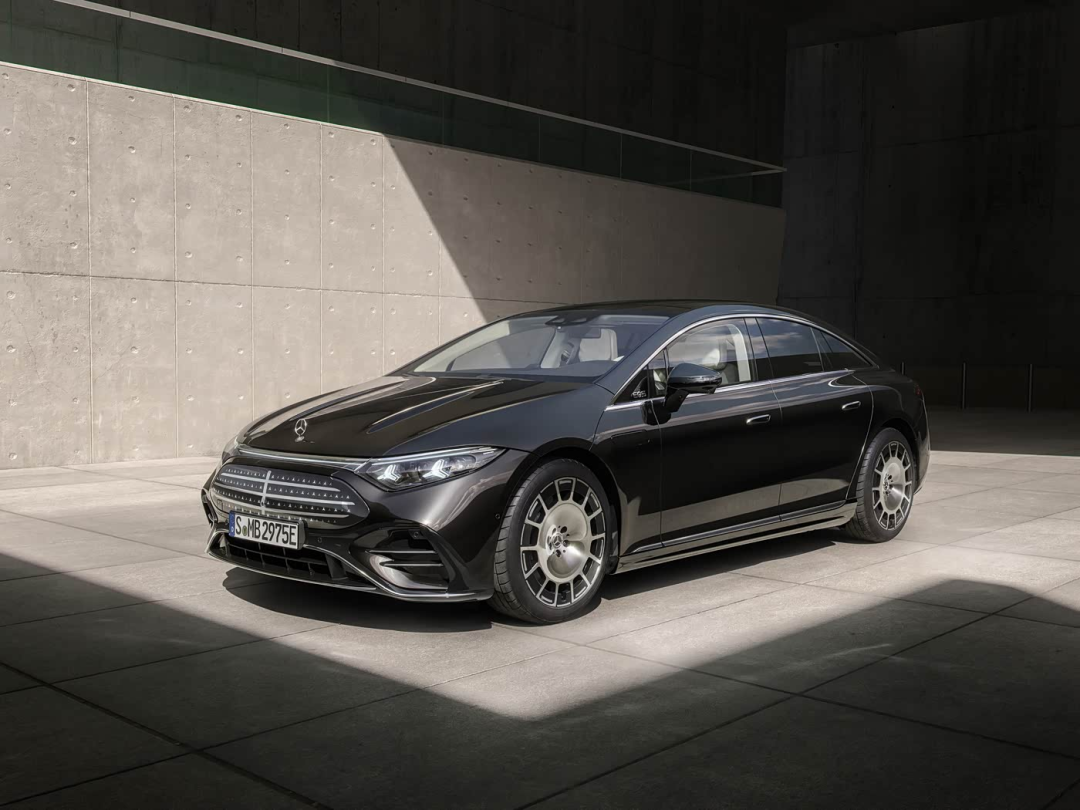
In the context of the redefinition of luxury vehicles in China's new energy market, Mercedes-Benz's anxiety lies in its fear that users may not immediately perceive that this new energy vehicle is a Mercedes-Benz. Therefore, it relentlessly stacks three-pointed star emblems, a massive shield-shaped grille, and illuminated large emblems on every electric vehicle, using visual bombardment to enhance brand recognizability.
Of course, Mercedes-Benz's conservative brand strategy primarily serves to stabilize its existing user base. On the one hand, Mercedes-Benz only needs to demonstrate "sincerity" in product development and "brand identity" in design to complete its electrification transition in the safest manner possible. On the other hand, Chinese consumers in the high-end pure electric SUV market have now developed a mature framework for comparison, trained by various brands. Mercedes-Benz now faces not only traditional competitors like BBA + T (Toyota) but also a large number of domestic innovative second-generation brands and new energy startups.
In contrast to Mercedes-Benz's "brand reinforcement," Audi has chosen a more aggressive and decisive path in the new energy market.
In November 2024, Audi and SAIC Motor jointly unveiled the full English AUDI logo, replacing the four-ring emblem that SAIC Audi had used for years. In May 2026, Audi further advanced its "dual-track strategy," with FAW-Audi taking full responsibility for four-ring-branded internal combustion engine and new energy vehicles, while SAIC Audi ceased sales of four-ring internal combustion engine models to concentrate resources on developing the new energy brand AUDI.
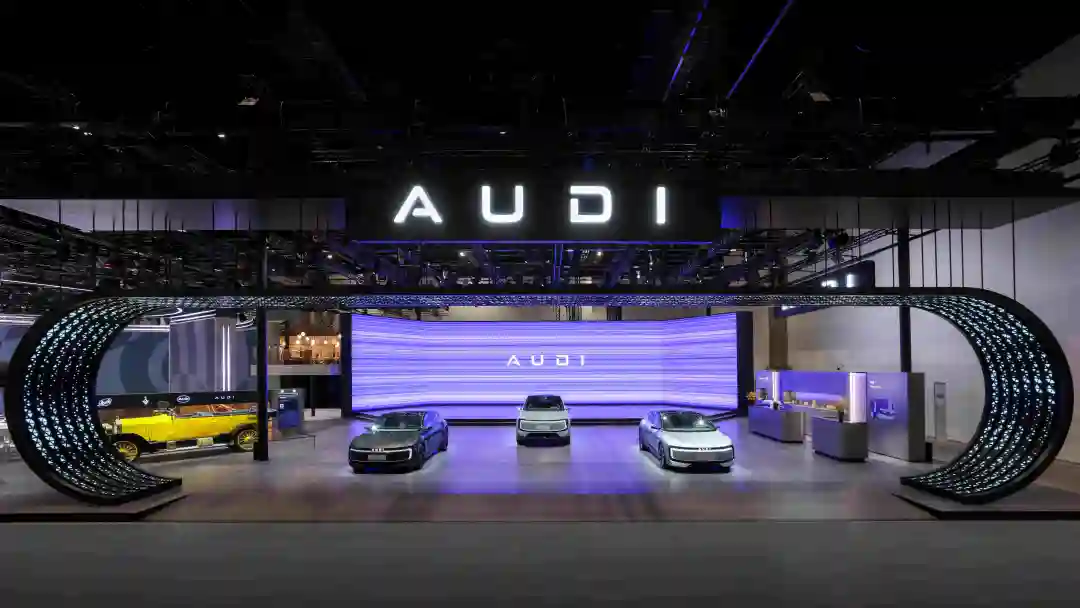
This creates a clear brand segmentation between the four rings and AUDI, with FAW holding the four rings and SAIC attacking with AUDI. Even though Audi has left room for future market strategic布局 (layout), its proactive brand segmentation and "starting from scratch" with letter-series branding is indeed a bold move unique to Audi among BBA.
The core reason for Audi's choice of brand segmentation is the anxiety over the significant dilution of the four rings' premium value in the new energy era.
After SAIC Audi voluntarily abandoned the four rings and opted for a lightweight approach, the two new models, E5 and EX7, launched since the end of 2025, although still in the climbing phase in terms of sales, have received relatively positive market feedback online due to their unique design language, technology solutions deeply integrated with domestic tech companies, and gradually improving dealership structure.
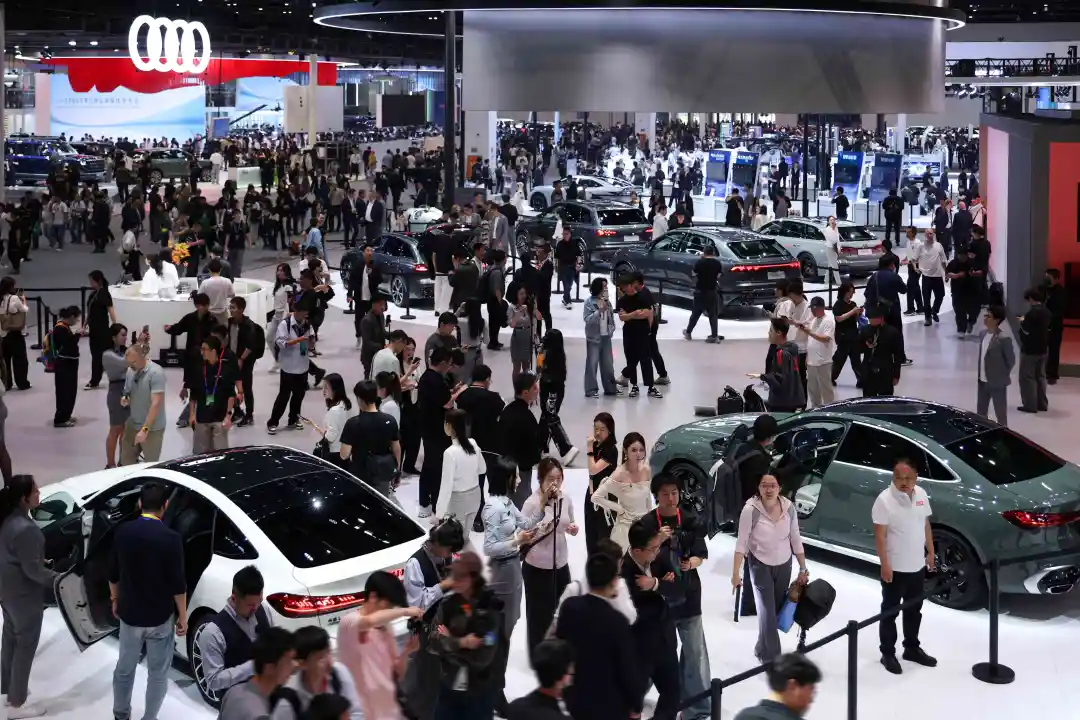
However, the cost (trade-off) of Audi's approach is also evident. By abandoning the four-ring logo, SAIC Audi may freely explore tech-driven and intelligent brand narratives, but it also severs its connection to Audi's internal combustion engine customer base.
The reason is simple: even though China's new energy vehicle penetration rate will exceed 60% by 2026, a significant portion of consumers still prefer internal combustion engine vehicles. As luxury representatives in the internal combustion engine market, BBA's "three-pointed star, blue and white propeller, and four rings" are deeply ingrained in consumers' minds. When purchasing luxury brands, consumers are not only paying for the product but also for the sense of ritual and social status it conveys.
The challenge for Audi without the four-ring logo is twofold: on the one hand, it must start from scratch to communicate the story of Audi's electric vehicles to Chinese consumers, encompassing hard strengths like the three-electric system, intelligent driving, and brand-specific configurations, as well as soft strengths like dealership networks and brand marketing. On the other hand, AUDI must also figure out how to skillfully convert its existing internal combustion engine customers into AUDI customers. After all, for most joint-venture brands, including Volkswagen, Toyota, Nissan, BMW, and Mercedes-Benz, the initial customers for new energy products are largely converted from existing internal combustion engine customers.
Which Path Is Correct?
In the first quarter of 2026, BBA's combined sales in China reached approximately 382,700 units, a year-on-year decline of 15%, with Mercedes-Benz plummeting by 27%, Audi dropping by 12%, and BMW declining by 10%.
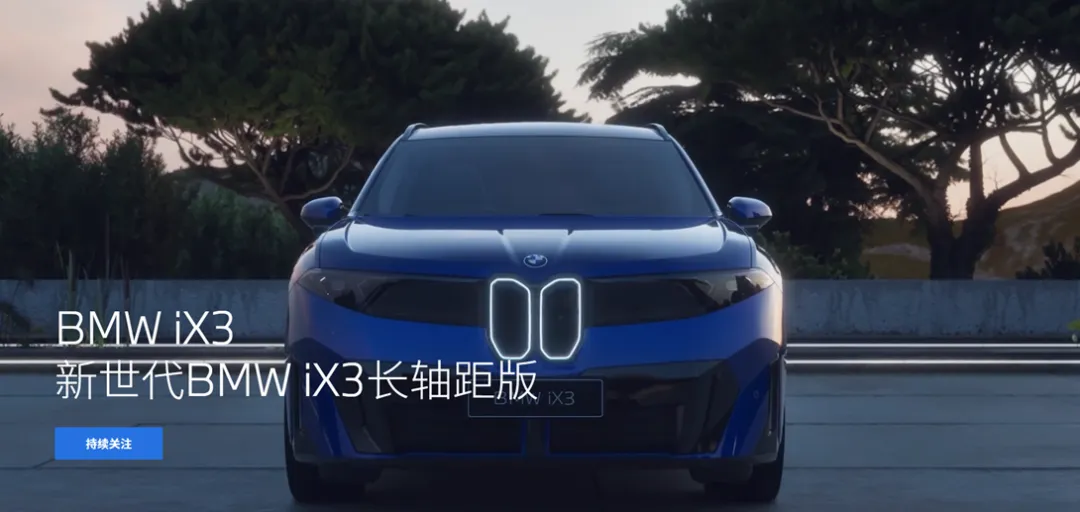
Against this backdrop, BBA's strategies in the new energy market—whether Mercedes-Benz's brand reinforcement, Audi's brand segmentation, or BMW's model blitz—represent steps "forward."
In terms of effectiveness, while Mercedes-Benz's "brand reinforcement" has not significantly boosted sales in China, the Electric CLA and GLC have become bestsellers overseas. SAIC Audi's terminal sales reached 10,000 units in the first quarter, a year-on-year increase of 28%. BMW's new platform and i-series models are also making their debuts.
In terms of challenges, current players in the high-end new energy market are vying for consumer mindshare in an almost extreme manner. Zeekr has established itself as the "King of the Road" in the new energy era through hardware and quality. Li Auto continuously refines family travel scenarios, transforming SUVs into mobile family spaces with features ranging from "refrigerators, TVs, and sofas" to "convenient energy replenishment." Harmony Intelligent Mobility's "Three Mirrors and Five Realms" emphasize intelligent driving experience and channel services. Xiaomi leverages performance and design to build a differentiated advantage among young consumer groups.
Currently, each brand is striving to answer the question, "Why should you buy me?" with a clear label. However, BBA has yet to address this core issue of market positioning in the new energy market.
Commentary
In the short term, it is difficult to determine which of the two paths is superior. After all, what BBA lacks in today's new energy market is not a good car but a reason for consumers to remember it. For traditional luxury giants to rebuild brand narratives suited to the intelligent electric era, this process of catching up and restructuring will be far longer and more challenging than expected.
(This article is original to Heyan Yueche and may not be reproduced without authorization.)
-
![]()
It's Kunlunxin's Turn to Play
-
![]()
Is the New Performance Peak Just the Starting Point? What Will Be Crystal-Optech's Next Destination?
-
![]()
Goertek Pours 69 Million Yuan into Elite Precision: Ramping Up Optical Precision Manufacturing and R&D Capabilities
-
![]()
Avatr Attempts HKEX Listing Again, With 20,000 Vehicles Sold in First Five Months
-
![]()
NVIDIA Announces 10-Fold Production Capacity Increase in 2 Years, Disrupting the Energy Storage Industry
-
![]()
AI Enters the Second Half: Models Are No Longer Scarce, What’s Truly Scarce Are Computing Power, Scenarios, and Trust
-
![]()
Rediscovering Momentum After Years of Obscurity: What Fuels Changhong TV's Resurgence?
-
【In-depth】Current Market Status and Key Enterprise Analysis of Confocal Fluorescence Microscopes in 2026