It's Kunlunxin's Turn to Play
 07/01 2026
 499
499
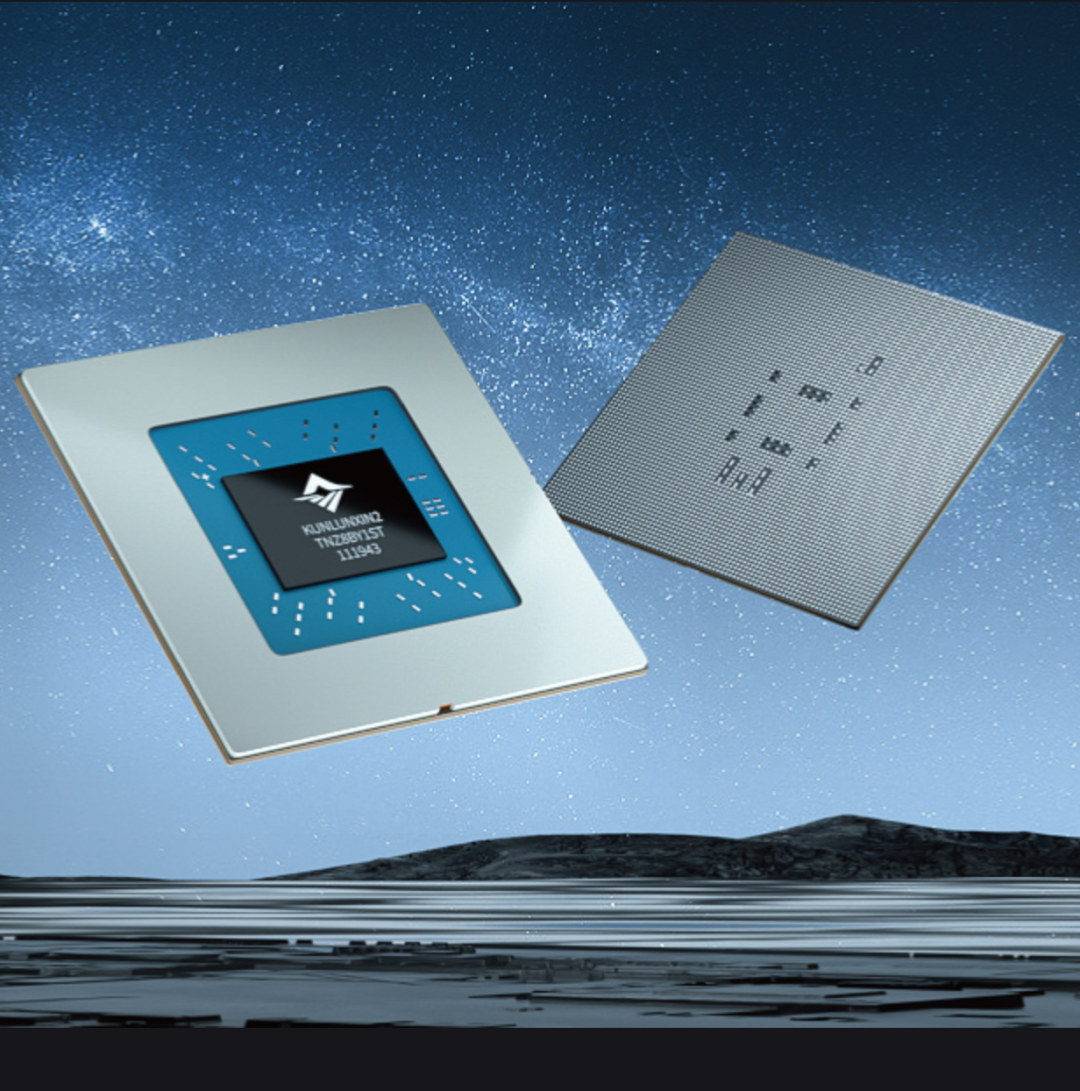
Produced by | Zhixie Island
In the summer of 2011, in an unassuming conference room at Baidu's headquarters, a dozen engineers huddled around a long table scattered with several FPGA development boards.
The project leader cut to the chase: The computing power bills for our search business are getting outrageous. NVIDIA charges tens of thousands of dollars per chip. Let's see if we can save that money ourselves.
None of the engineers present took the task seriously. In China's internet industry, chip development was considered a lost cause. The idea of a search engine company venturing into this field sounded like laymen trespassing into forbidden territory.
Moreover, Baidu was far from desperate. The cash flow from search advertising remained robust, with billions of RMB in the bank. While NVIDIA's chips were expensive, they were hardly unaffordable.
A chip engineer who later left Baidu recalled on social media: "We thought this was unreliable. The company had no talent pool in chip design, no tape-out experience, and we even had to learn EDA tools from scratch."
But Li Yanhong saw it differently. Years later, at a public forum, he recounted this episode matter-of-factly: "When we started search, buying others' chips cost $10,000 each. Doing it ourselves cost 20,000 RMB. So we pushed ourselves."
Thus, this cost-saving internal project stumbled along, surviving year after year despite constant threats of cancellation, for a full decade.
Fourteen years later, on June 29, 2026, news broke that Kunlunxin planned to go public in Hong Kong with a target valuation of $50 billion. Consider that its parent company Baidu's market cap was only about $35.5 billion.
A subsidiary valued 40% higher than its parent is extremely rare among Chinese concept stocks and Hong Kong-listed companies.
Those skeptical engineers back then probably never imagined that their shaky project would become Baidu's most valuable asset.
1. Cost-Saving Tool and Valuation Powerhouse
Kunlunxin's story is essentially a chronicle of survival.
The chip industry follows a brutal law: From project initiation to tape-out to mass production takes at least 3-5 years. Any failure along the way can cancel the entire project.
Baidu's internal attitude toward this chip project remained ambivalent for years. While supporters existed, doubts never faded. The team's biggest fear in early years was annual budget reviews. A single phrase like "let's pause this" could erase years of work.
To survive, the team chose the lowest-risk path: starting with FPGA accelerators. FPGAs don't require expensive one-time tape-outs, have lower R&D costs, and shorter design cycles—ideal for companies without chip design experience.
Baidu's search, recommendation, and advertising systems—with their energy-hungry AI workloads—became perfect testing grounds. By 2017, Baidu had deployed over 12,000 FPGAs in its data centers, unique among Chinese internet companies.
But FPGAs were just a temporary solution. In 2018, Baidu officially launched the Kunlun chip project using its proprietary XPU architecture.
On project initiation day, everyone understood the challenges. Chip design isn't like writing code where mistakes can be rolled back. A failed tape-out means tens of millions of RMB down the drain and another six-month wait for production slots.
An industry joke goes: Chip engineers need at least triple the psychological resilience of regular programmers, because your errors won't show up during compilation—they'll only become visible months later when the waste silicon arrives from the foundry.
Kunlunxin's true breakthrough came in 2025. That year, the P800 chip completed validation in a 10,000-card cluster, followed by lighting up China's first fully self-developed 32,000-card AI cluster.
At Baidu Create 2026, the company revealed that Wenxin Large Model 5.1 trained entirely on this domestic cluster achieved 97% effective training efficiency. For domestic chips, this meant they were no longer just laboratory curiosities—they could now handle production workloads for trillion-parameter models without crashing after a few test cases.
Previously, only Huawei and a handful of others could manage 10,000-card clusters. Kunlunxin became the first outside Huawei to demonstrate a 30,000-card cluster.
But crossing the technical threshold only solved half the problem. The gap between making chips and selling them remains vast. In its early days as a spin-off, over 90% of Kunlunxin's revenue came from Baidu's internal purchases. Essentially, it remained Baidu's tech support department with just one client: Baidu itself.
External clients viewed Baidu-affiliated chips with suspicion: Would you prioritize your own group's computing needs? How could we ensure data security when running our business on your chips? This trust gap could only be filled with real orders.
The breakthrough came in August 2025 when Kunlunxin won a billion-yuan tender from China Mobile. In China Mobile's 2025-2026 AI inference server procurement, Kunlunxin-based solutions secured 70%, 70%, and 100% shares across three bidding packages. Then China Merchants Bank, China Southern Power Grid, and Geely Automobile joined the client list.
External revenue now exceeds internal supply to Baidu—a transition that took four full years.
Yet the $50 billion valuation remains highly controversial.
For comparison: Cambricon had about 6.5 billion RMB in revenue in 2025 with a market cap exceeding 1 trillion RMB by June 2026. Hygon Information had about 9 billion RMB in revenue in 2024 with a market cap around 300 billion RMB.
Investment banks predict Kunlunxin's 2026 revenue could reach 6.5-8 billion RMB. Its 50x price-to-sales valuation significantly exceeds domestic peers.
The high valuation rests on three narratives: AI chips represent the core hard tech for import substitution; Baidu's ecosystem provides stable revenue; and external commercialization is accelerating.
However, Kunlunxin holds only about 3% market share overall. Its small base makes high growth sustainability questionable. If technical iterations fall short or major internet companies slow adoption, the valuation logic collapses.
More intriguing is Kunlunxin's IPO structure: Some participating institutions must purchase chip volumes worth 3-7x their investment amount.
This "become a shareholder by first becoming a customer" design is unprecedented among Chinese tech IPOs. Given the chip industry's long customer validation cycles and high switching costs, this "promotion through financing" approach trades equity scarcity for order certainty.
Kunlunxin has no shortage of investors willing to pay, but what it needs are real customers willing to make large purchases. Whether this model can last depends on a fundamental question: Are customers buying because of product competitiveness or investment ties? If the latter, repurchase willingness will plummet once investment returns materialize.
2. The Cost of Baidu's AI Transformation
On the day Kunlunxin's IPO news broke, Baidu's Hong Kong stock rose about 6%. Markets voted with their wallets, but boosting stock prices is easier than fixing fundamentals.
Baidu's traditional search advertising business faces endless deceleration.
Full-year 2025 revenue was 129.1 billion RMB, down 3% YoY—the third consecutive year of stagnation or decline. Q3 2025 online marketing revenue was about 15.3 billion RMB, down nearly 20% YoY, marking the sixth straight quarterly decline.
The crisis stems from user attrition. Travel guides now go to Xiaohongshu, short videos to Douyin, instant answers to WeChat. Search engines no longer hold exclusive gateway status.
Baidu's "traffic distribution-click advertising" model, which sustained it for two decades, is collapsing against AI's direct answer delivery. This will drastically reduce pay-per-click ad inventory.
Baidu hasn't been blind to the crisis.
Since 2023, the company has pivoted fully to AI, reorganizing structures and product lines. In November 2025, Baidu established Foundation Model R&D and Application Model R&D departments reporting directly to Li Yanhong, with former CTO Wang Haifeng no longer overseeing core large model development. In early 2026, Baidu reorganized Wenku and Netdisk into a Personal Super Intelligence Business Group, embedding AI capabilities across businesses rather than relying on a single unified portal against competitors like Doubao and Yuanbao.
These adjustments are showing results. According to Q1 2026 earnings, AI revenue reached about 13.6 billion RMB, accounting for 52% of general business revenue—surpassing traditional advertising for the first time.
Smart cloud infrastructure revenue was about 8.8 billion RMB, up 79% YoY, with GPU cloud revenue surging 184%. Li Yanhong stated at the earnings call: "The true potential of AI applications remains to be fully unlocked."
But the transition's costs are very real. Q1 net profit fell sharply YoY—high-margin traditional advertising shrinks while high-investment AI expands, creating a profit gap that must be endured.
The strategic dilemma is acute: Baidu's "chip-cloud-model-application" strategy forms a complete stack with Kunlunxin, smart cloud, Wenxin large models, and application layers.
This logic holds, but execution faces problems: Kunlunxin must remain "neutral" to win external clients, yet Baidu needs it for AI computing. This "parent and customer" duality makes other tech giants hesitant.
According to New Yellow River, Tencent now uses Kunlunxin chips, but ByteDance publicly denies cooperation plans. Investors told Zhixie Island that ByteDance would never entrust core computing to Baidu's chips unless Kunlunxin became fully independent with Baidu relinquishing control.
But would Baidu give up control? Its AI transformation has opened a crack.
Whether that crack becomes a pathway depends on Kunlunxin escaping Baidu's shadow and whether AI revenue can offset traditional business declines.
3. Tech Giants' Computing Power Wars: Alliances and Solo Acts
Chinese tech giants' chip strategies are evolving into independent commercial weapons, though paths differ based on their computing anxiety solutions.
Among all big tech chips, Alibaba's Pingtouge is the quietest and most surprising. In 2018, Alibaba acquired C-Sky Microsystems and merged it with its DAMO Academy chip team to form Pingtouge.
Legend says "Pingtouge" (honey badger) was named by Jack Ma after his African safari, impressed by the animal's "live-or-die, just fight" attitude. After formation, Pingtouge maintained near-total silence. The outside world only knew it made some chips but had no idea of their performance.
Not until January 2026, when the Zhenwu 810E PPU chip officially launched on its website, did markets realize tens of thousands had already shipped.
IDC data shows Pingtouge shipped about 256,000 AI chips in 2025, ranking second among domestic vendors with revenue exceeding 10 billion RMB. By February 2026, cumulative Zhenwu 810E shipments reached 470,000 units. JPMorgan estimates Pingtouge's potential valuation at $25-62 billion.
Alibaba pursues a "Tongyunge" (Tongyi LLM-Alibaba Cloud-Pingtouge) strategy. Its core advantage: Alibaba Cloud, one of China's largest cloud providers, generates sufficient internal demand to mature products before external rollout.
This internal patience is hard for independent chip firms to replicate. However, Pingtouge faces the same "Alibaba-affiliated" stigma.
Tencent took a different path, betting heavily on external partners with Enflame Technology as its cornerstone.
Founded in 2018 by two AMD veterans Zhao Lidong and Zhang Yalin, Enflame chose a "non-mainstream" DSA architecture incompatible with CUDA ecosystems.
This approach had little chance in training markets, but Tencent saw value in inference as large models moved from training to deployment, creating explosive demand for inference computing. DSA's sacrificed generality for higher energy efficiency—perfectly matching needs.
According to Enflame's prospectus, Tencent invested from Pre-A round onward, holding 20.26% pre-IPO—both largest shareholder and client.
This "invest and support" deep binding (binding) saw Tencent's revenue share rise from 33% in 2023 to 84% in 2025. On June 15, 2026, Enflame passed SSE STAR Market listing review, seeking 6 billion RMB in funding.
But heavy dependence means extreme vulnerability should Tencent start in-house chip development.
ByteDance's chip strategy remains the most enigmatic. It neither builds teams for spin-offs like Baidu nor bets heavily on external firms like Tencent.
Media reports suggest ByteDance's approach: Core components in-house while leveraging external supply chains. In early July 2026, news broke of ByteDance's deep cooperation with Qualcomm to secure advanced process capacity through TSMC. Meanwhile, ByteDance plans to finalize self-developed server CPU designs by early 2027, with early versions already in internal testing since late 2025.
With AI infrastructure too large to tolerate single-supplier pricing power, ByteDance must control core components to avoid exploitation.
For AI training chips, ByteDance supports Cambricon. Sources close to Cambricon told Zhixie Island that ByteDance's support goes beyond purchases—engineers on-site (station) to optimize operators, tune parameters, and adapt business scenarios, making Cambricon's chips cost-effective in ByteDance's recommendation systems.
This self-developed CPU plus external AI chip combination preserves core autonomy while diversifying supply risks.
4. Conclusion
The domestic AI chip market landscape has taken shape.
IDC data shows domestic vendors shipped about 1.65 million units in 2025, capturing over 40% market share for the first time. Huawei Ascend leads with 812,000 units, followed by Alibaba Pingtouge at 256,000, and Baidu Kunlunxin and Cambricon tied at 116,000 each.
More profound changes are underway: Tencent now buys Baidu's Kunlunxin chips. ByteDance may use Qualcomm capacity for self-developed CPUs. Alibaba plans to spin off Pingtouge. For the first time, China's internet giants have formed meaningful computing power divisions.
In the past two decades, these companies avoided infrastructure cooperation. But AI infrastructure proves too expensive—trying to build everything in-house leads to mediocrity across the board.
The upsurge of capital will eventually recede, and the bubble of high valuations will inevitably burst. In the end, the survivors will be those companies that have stabilized their products in real business scenarios, achieved cost advantages, and made their customers indispensable to them.
Looking back, it is found that it took Cambricon a decade to surpass a market capitalization of one trillion yuan, it took Kunlunxin fifteen years to reach a valuation of 50 billion US dollars, it took T-Head eight years to deliver a cumulative total of 470,000 units, and it took Enflame Technology eight years to pass its review.
Behind these numbers lies the same story: China's Internet giants have invested over a decade and hundreds of billions of yuan in R&D to traverse the most challenging path of chip development, starting from scratch to reach where they are today.
NVIDIA's CUDA ecosystem barrier remains robust, the blockade on advanced manufacturing processes persists, and customer concerns stemming from the labels of big companies are still real. However, the landscape has changed. The barriers deemed insurmountable just three years ago are now being gradually dismantled by domestic chips.
Domestic chips are no longer lacking in core components or souls; instead, they are now engaged in a fierce competition among many players. The most arduous journey has been completed, and every player that has reached this point bears more than one scar on their body.
Cover source: "Casino Royale"
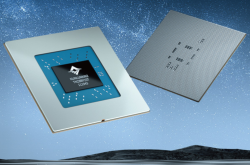
Featured image source: Kunlunxin official website
Copyright of Robo Island. Reproduction without authorization is prohibited.
-
![]()
Market Share Dilemma: DJI vs. Insta360—Is It '40-40' or '60-30'?
-
![]()
Market Share Dilemma: DJI vs. Insta360 – A '40-40 Split' or '60-30 Split'?
-
![]()
It's Kunlunxin's Turn to Play
-
![]()
Is the New Performance Peak Just the Starting Point? What Will Be Crystal-Optech's Next Destination?
-
![]()
Goertek Pours 69 Million Yuan into Elite Precision: Ramping Up Optical Precision Manufacturing and R&D Capabilities
-
![]()
Avatr Attempts HKEX Listing Again, With 20,000 Vehicles Sold in First Five Months
-
![]()
NVIDIA Announces 10-Fold Production Capacity Increase in 2 Years, Disrupting the Energy Storage Industry
-
![]()
AI Enters the Second Half: Models Are No Longer Scarce, What’s Truly Scarce Are Computing Power, Scenarios, and Trust