Volkswagen Group to Slash Model Range by Half, Cut 1 Million Units of Production Capacity in China and Europe
 07/13 2026
 492
492
For a considerable time, there have been persistent rumors suggesting that Volkswagen Group is on the verge of implementing the most extensive restructuring initiative in its history. This plan reportedly includes laying off 100,000 employees and shutting down multiple factories.
Now, after a recent series of board meetings, Volkswagen's official media has unveiled details about its future strategies: Volkswagen Group is embarking on a new phase of transformation. The key aspects are as follows:
Streamlining the Model Lineup and Reducing Product Complexity: The company intends to gradually concentrate on the most appealing market segments. It may potentially streamline its product range by up to 50%. Moreover, the complexity of product configurations, such as the variety of optional features, will be decreased by up to 75%.
Adjusting Production Capacity: As previously mentioned in our article "Volkswagen Prepares to Operate at 9 Million Units of Production Capacity," the company aims to scale down its global production capacity to 9 million units in the future. Currently, Volkswagen Group boasts a global capacity of 10 million units, indicating that a reduction of 1 million units is necessary, primarily in Europe and China. 
Which Factories Are Under Consideration for Closure?
According to a recent report by Manager Magazin, Volkswagen's German factories in Hanover, Zwickau, and Emden, along with Audi's factory in Neckarsulm, were already flagged during a supervisory board meeting in April due to "excessive costs."
Based on information gathered by Germany's Der Spiegel from Volkswagen's supervisory board meeting on the 9th:
Volkswagen's executive board plans to progressively shut down its Zwickau and Emden factories by 2031, the Hanover factory by 2032, and Audi's Neckarsulm factory by 2034.
The Zwickau and Emden factories specialize in manufacturing battery electric vehicles (BEVs).
The Zwickau factory produces the Volkswagen ID.3, ID.4, and ID.5, as well as the Cupra Born and Audi Q4 e-tron.
The Emden factory is responsible for producing the Volkswagen ID.4, ID.7, and ID.7 Tourer. To tackle overcapacity, Volkswagen has reduced the number of production lines at both factories from two to one (with each line operating two shifts).
The Volkswagen factory in Hanover serves as the headquarters for Volkswagen Commercial Vehicles. It produces the all-electric ID. Buzz and ID. Buzz Cargo models, as well as the T-series (Multivan) models. Additionally, the factory houses a battery assembly line.
Audi's factory in Neckarsulm currently primarily manufactures internal combustion engine and hybrid models. However, the Bollingerhof plant within the complex produces the all-electric Audi e-tron GT sports car.
At present, production at these four factories is confined to the current generation of models, after which all factories will halt production. "Subsequent models produced at these factories will either be canceled or manufactured at lower-cost facilities." These four factories employ approximately 40,000 people and have an annual production capacity of around 750,000 units. Does this imply that nearly 300,000 units of capacity will still need to be cut elsewhere, presumably in China? 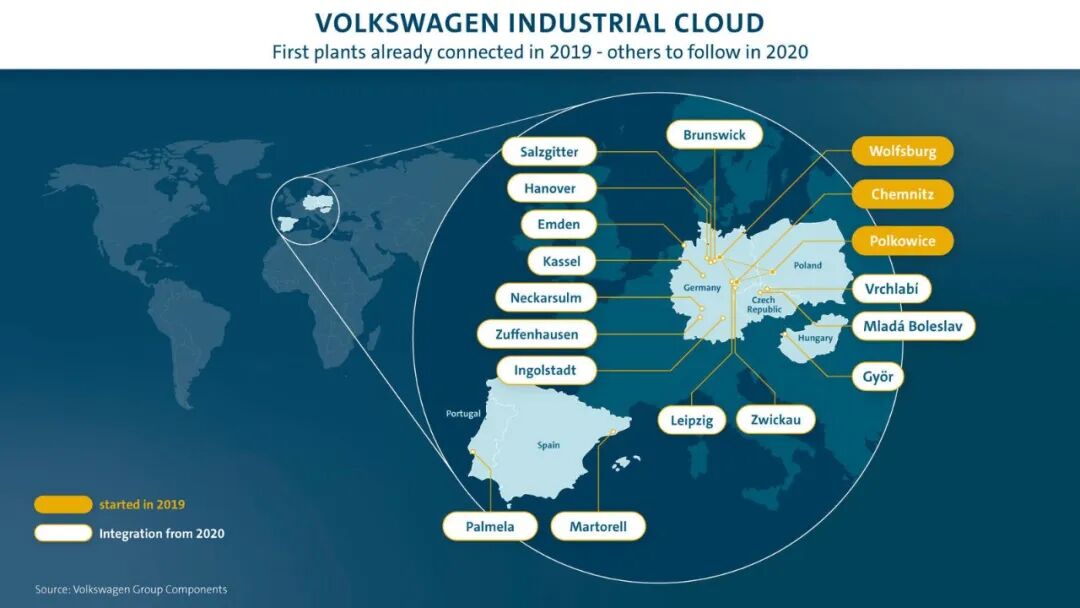
What Could Be the Alternative Uses for These Factories if Closed?
Producing Military Products? In fact, Germany is home to numerous military enterprises, such as:
1. Missile and Air Defense Systems
MBDA Deutschland: Headquartered in Schrobenhausen, Bavaria, it is Europe's leading missile system developer. It leads the development of the "Patriot" air defense missile system and the "Meteor" air-to-air missile.
Diehl Defence: Based in Überlingen, Baden-Württemberg, it is globally recognized for developing and manufacturing the "IRIS-T" infrared-guided air-to-air and surface-to-air missile systems.
2. Aerospace and Radar Electronics
Airbus Defence and Space: Its main military aircraft and satellite communications base is located in Bavaria (primarily in Manching and around Munich). Its operations encompass the development of the Eurofighter and military satellite projects.
Hensoldt: Headquartered in Taufkirchen, Bavaria, it is an independent sensor giant spun off from Airbus. It specializes in providing high-performance radar, electro-optical sensors, and electronic warfare equipment for military aircraft and air defense systems.
3. Advanced Defense Technologies and Artificial Intelligence
Helsing: Headquartered in Munich with a branch in Berlin, it is Europe's top defense technology unicorn valued at over €10 billion. It specializes in providing artificial intelligence software and battlefield reconnaissance analysis technology for military platforms such as the Eurofighter.
ARX Robotics: Based in Munich, it focuses on developing unmanned ground vehicles (UGVs) and modular autonomous defense robot systems.
If these factories were to transition to producing weapons, one can only speculate on the potential implications for the future... 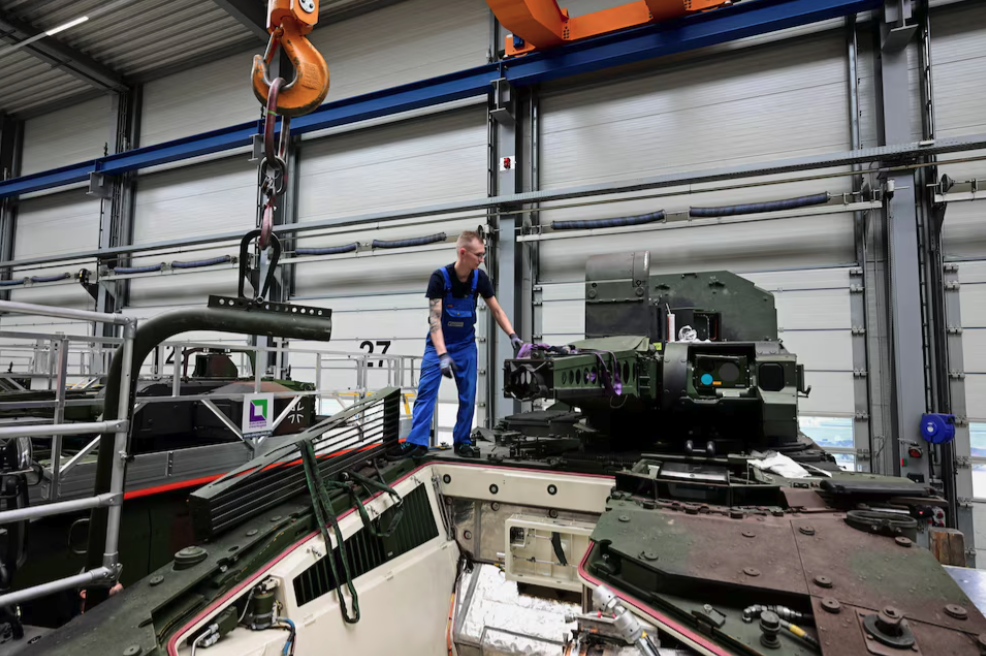
Acquisition or Leasing by Chinese Automakers?
Chinese automakers have achieved a 10% market penetration rate in Europe's new car market with their new energy vehicles over the past two years. However, as discussed in our previous article "In-Depth Analysis of the EU's 'Industrial Acceleration Act': Rewriting the 'Game Rules' for China's Auto Industry Going Global," issues such as the Industrial Acceleration Act and tariffs are prompting automakers to localize production.
There have also been various rumors circulating that XPENG, BYD, and Chery are considering purchasing Volkswagen's already-closed Dresden factory. Of course, these rumors are likely unfounded, and the factories slated for closure this time will not shut down until around 2030, leaving ample time for various possibilities to unfold.
In Conclusion
At present, we are only privy to the broad outlines of this information, with other details remaining speculative and based on unofficial sources. Nevertheless, it is undeniable that change is afoot. The transformation of a major industry player will trigger macro-level shifts in geopolitical policies, supply chains, and the business landscape. Simultaneously, micro-level impacts will reverberate through the economic lives of industry professionals.
No one can predict with certainty what will transpire, but the changes are happening, and everyone will be directly or indirectly affected.
*Unauthorized reproduction or excerpting is strictly prohibited.
-
![]()
Nubia’s AI-Powered Smartphone Agent is on the Horizon: Can ZTE Make a Triumphant Return with Doubao?
-
China's Private Commercial Rockets: The Next Challenge Post-Long March 10B
-
![]()
New Energy Vehicle Owners: How Much More Will You Pay in Vehicle and Vessel Tax?
-
![]()
The next generation of robots may not necessarily resemble humans
-
Hikvision Makes Its Grand Debut at the World Artificial Intelligence Conference, Unveiling the All-Encompassing Guanlan Large Model Technology System
-
![]()
GPT-5.6 Deletes a Tech Mogul's Files: Before Granting AI "Full Access," Ensure You Have a Backup Plan
-
![]()
120,000 Layoffs in Silicon Valley Due to AI
-
![]()
Volkswagen Group to Slash Model Range by Half, Cut 1 Million Units of Production Capacity in China and Europe