Anticipated Losses Reach Nearly 2.3 Billion Yuan! How Long Can Seres Sustain Its 'Contract Manufacturing' Predicament?
 07/14 2026
 410
410
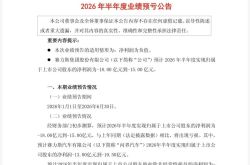
On July 12, Seres (09927.HK) unveiled its performance loss forecast for the first half of 2026.
The forecast indicates that the company anticipates a net loss attributable to shareholders of listed companies from January to June 2026 to range between RMB 1.5 billion and RMB 1.8 billion. Additionally, it expects a non-recurring profit and loss net loss between RMB 2.2 billion and RMB 2.5 billion, both marking a shift from profit to loss compared to the same period last year.
Reacting to the news of the anticipated loss, Seres' shares listed in Hong Kong opened lower and continued to decline on July 13, closing at HKD 41.32, down 13.56% for the day.
[Hong Kong Stock Value Line] opines that although a significant portion of Seres' second-quarter losses can be attributed to one-time impairment factors, the company's operating cash flow already showed a net outflow of RMB 20.95 billion in the first quarter. Furthermore, the company's annual sales target completion rate stands at only about 32%, with Huawei's HarmonyOS Intelligent Auto diverting internal resources to multiple brands and external competition intensifying. These factors have collectively contributed to Seres' high cost ratios and declining profitability.
01 Anticipated Losses and Tightening Cash Flow
The performance of Seres' A-shares (601127.SH) has been even more dismal, with the A-share price plummeting from a high of RMB 173.55 in July 2025 to RMB 53.91 on July 13, 2026, marking a drop of over 68.94%. Its market capitalization has dwindled from a peak of nearly RMB 300 billion to RMB 93.91 billion, evaporating by nearly RMB 200 billion.
Notably, Seres still reported a profit of RMB 754 million in the first quarter of 2026, but it is expected to incur a massive net loss of RMB 2.254 billion to RMB 2.554 billion in the second quarter alone.
Its core subsidiary, AITO, is projected to report a net loss of RMB 1.05 billion to RMB 1.3 billion for the first half of the year, with a staggering loss of RMB 1.9 billion to RMB 2.15 billion in the second quarter alone. This indicates that after a slight profit of about RMB 600 million to RMB 850 million in the first quarter, AITO experienced a sharp performance decline in the second quarter.
The announcement points out that the performance losses are primarily influenced by two factors. Firstly, rising prices of key raw materials such as memory chips, industrial metals, and lithium carbonate have driven up production costs. Secondly, based on the principle of prudence and considering the expected future returns on assets, the company has adjusted the book value of certain existing assets with limited adaptability due to technological iterations and model updates, thereby further solidifying its overall asset quality.
Despite these challenges, Seres stated that it currently maintains ample cash reserves and a robust asset-liability structure, capable of providing solid support for business development, technological research and development, and strategic investments. The company boasts good sustainable operating capabilities and risk resistance.
According to Seres' June production and sales report, the company sold 178,800 new energy vehicles in the first half of 2026, a year-on-year increase of 3.87%, including 160,800 AITO series vehicles, up 5.60% year-on-year.
It should be noted that AITO's annual sales target for 2026 is 500,000 vehicles, but only 160,800 vehicles were sold in the first half, achieving a completion rate of only about 32%, placing immense sales pressure on the second half of the year.
Meanwhile, the company is in a period of high-intensity R&D investment.
The annual report reveals that R&D investment for the full year of 2025 was RMB 12.51 billion, while the first-quarter 2026 report indicates that R&D expenses for the first quarter of 2026 were RMB 1.79 billion, a year-on-year increase of 70.7%. The R&D expense ratio has risen from 4.8% in 2025 to 7.0% in the first quarter of 2026. High-intensity R&D is one of the key factors eroding profits.
In terms of revenue structure, from 2023 to 2025, Seres' new energy vehicle business revenue was RMB 28.948 billion, RMB 135.491 billion, and RMB 155.611 billion, respectively, while fuel vehicle business revenue was RMB 4.609 billion, RMB 3.448 billion, and RMB 1.903 billion, respectively.
In terms of proportion, revenue from new energy vehicles increased from 80.88% in 2023 to 94.37% in 2025, with the majority of this revenue coming from the single brand AITO.
Looking at regional revenue, Seres' overseas business continues to shrink, with all incremental revenue coming from domestic sources. From 2023 to 2025, Seres' revenue in China was RMB 30.813 billion, RMB 140.903 billion, and RMB 162.490 billion, respectively, while revenue from overseas regions was RMB 4.976 billion, RMB 4.211 billion, and RMB 2.398 billion, respectively.
It is worth noting that overseas revenue decreased from RMB 4.976 billion in 2023 to RMB 2.398 billion in 2025, a drop of about 51.8%, not due to a passive reduction in proportion caused by faster domestic growth but an absolute contraction.
This indicates that Seres' overseas business has not kept pace with domestic operations but has instead contracted. The company's total revenue increased from RMB 35.8 billion in 2023 to RMB 164.9 billion in 2025, a net increase of about RMB 129.1 billion. However, the overseas business not only failed to contribute to this increase but also saw a net decrease of about RMB 2.58 billion.
Overseas revenue accounted for 13.90% of total revenue in 2023 but dropped to 1.45% in 2025.
In terms of cooperation with Huawei, Seres has been collaborating with Huawei on vehicle manufacturing since 2021. According to Seres' Hong Kong stock prospectus, the company paid Huawei procurement fees of up to RMB 20 billion in the first half of 2025, accounting for about one-third of the total revenue for the same period.
From 2022 to the first half of 2025, Seres paid Huawei cumulative procurement fees exceeding RMB 75 billion. Based on the approximately 147,000 AITO vehicles delivered during the same period, about RMB 136,000 flowed into the Huawei ecosystem for each AITO sold.
Seres' procurement from Huawei covers components, accessories, development services, software, sales, and promotional services, among others. Seres explicitly emphasized in the prospectus that its cooperation with Huawei does not involve any profit-sharing arrangements.
However, in a period of declining profits, this high-cost cooperation model is facing increasing market skepticism.
Meanwhile, Seres' cash flow situation is also not optimistic. According to Seres' first-quarter 2026 report, the net cash flow from operating activities was -RMB 20.95 billion, compared to -RMB 7.63 billion in the same period last year.
The company explained that this was mainly due to the lower scale of new energy vehicle sales receipts compared to payments to suppliers in the first quarter. During the same period, non-recurring profit and loss net profit plummeted by 73.87% year-on-year to RMB 103 million, with RMB 628 million of the RMB 754 million net profit attributable to shareholders coming from non-recurring items such as government subsidies.
The significant net outflow of operating cash flow and declining profits indicate that Seres is depleting its cash reserves to sustain operations.
02 Profitability Weakens
Currently, Seres' profitability is on the decline. The gross profit margin in the first quarter of 2026 was 26.24%, nearly unchanged from the 26.88% for the full year of 2025, but the net profit margin dropped from 3.73% to 2.37%, and the operating profit margin fell from 4.60% to 3.13%.
This means that the profit margin from selling cars has not decreased, but expenses for R&D, channels, and marketing have increased, eating into profits. The peak in profitability may have passed, and whether it can reach new heights depends on whether the expense ratio can be effectively diluted after new product launches.
Furthermore, the company's ability to return value to shareholders is also diminishing. ROE dropped from 45.43% in 2024 to 22.53% in 2025 and further to an annualized 1.83% in the first quarter of 2026.
It should be noted that the 45.43% ROE in 2024 was due to the surge in net profit from a loss of RMB 2.45 billion to a profit of RMB 5.946 billion after AITO's sales explosion, while the net assets attributable to shareholders were still relatively small.
By 2025, although net profit increased to about RMB 6.1 billion, net assets had swelled to RMB 27.29 billion, causing ROE to naturally decline to 22.53%. The issue is not the drop from 49% to 22% but the decline from 22% to an annualized 7%, indicating that the company's efficiency in generating profits from shareholders' funds is indeed declining.
As HarmonyOS Intelligent Auto's 'Five Brands' matrix continues to expand, AITO's resource position within the Huawei ecosystem is evolving.
According to official monthly sales data, AITO accounted for about 87% of HarmonyOS Intelligent Auto's share in 2024, dropping to 71% in 2025, and further to about 60% in June 2026. Marketing and store resources are being diverted to more 'boundary' brands, while AITO shoulders nearly 70% of HarmonyOS Intelligent Auto's sales volume alone, putting continued pressure on profits.
Meanwhile, the external competitive environment is also rapidly deteriorating. The threshold for entering the top tier of new energy vehicle startups has increased from about 100,000 vehicles in the same period of 2025 to 190,000 vehicles in 2026, nearly doubling.
Source/Hong Kong Stock Value Line
-END-
-
![]()
The Stock Competition Era Unveils the True Nature of All Brands
-
![]()
India's New Energy Vehicle Dream: From Tata Leak to Tesla's Exit - A Closing Argument
-
![]()
The 'Last Millimeter' of Interaction Between Robots and the Physical World
-
![]()
Every AITO Sold Contributes 136,000 Yuan to Huawei: Seres Faces Its Compaq Moment
-
![]()
Huang Renxun's Gambling
-
![]()
Is Seres Truly Being 'Bled Dry' by Huawei?
-
![]()
Robot Brain: A Lucrative Business or a Challenging Pursuit?
-
It's Official! Shanghai's July AI Extravaganza: A Gateway to Future Industry Trends and Global Consensus