Volkswagen Job Cuts: Pointing Fingers at China
 07/16 2026
 540
540

Lead-in
Introduction
In July 2026, the European automotive sector is engulfed in a somber mood. A sweeping transformation, initiated by Volkswagen, is propelling the century-old 'Made in Germany' emblem to a pivotal juncture in its fight for survival.
On July 9, 2026, within the conference room of Volkswagen's headquarters in Wolfsburg, Germany, the atmosphere was thick with tension. This pivotal meeting, destined to be etched in the annals of automotive history, cemented Volkswagen Group's most drastic restructuring strategy to date, offering just a glimpse into the looming crisis within the German automotive industry.
Throughout the meeting, the restructuring blueprint presented by CEO Oliver Blume cast a long shadow over all attendees.
At the heart of this plan, crafted with input from the Boston Consulting Group, lies a focus on downsizing, cost-cutting, and 'de-Germanization.' The most striking element was the layoff strategy: Volkswagen has doubled its initial target of 50,000 job cuts by the end of 2026, with 100,000 to potentially 120,000 employees globally facing unemployment. This move represents one of the most significant workforce reductions in Volkswagen's, and possibly the global automotive industry's, history.
Beyond layoffs, four iconic factories, once symbols of German manufacturing prowess, are earmarked for closure. Volkswagen's assembly plants in Hanover, Zwickau, and Emden, along with Audi's Neckarsulm facility, will halt automobile production by the end of 2034 at the latest, jeopardizing the livelihoods of 40,000 frontline workers across these sites.
Concurrently, Volkswagen has trimmed its overall investment budget by 15% to €130 billion, intending to gradually relocate high-cost production capacities from Germany to regions with lower labor expenses, such as Slovakia, Poland, and Hungary.
These staggering numbers unequivocally signal that this restructuring is not a mere business adjustment but a desperate bid for Volkswagen's survival. For Europe's automotive behemoth, July 9, 2026, marks a watershed moment that will shape its trajectory for decades and serves as a milestone for the future of the German automotive industry.
01 China's Metamorphosis from 'Customer' to 'Competitor'
Volkswagen's predicament is not an isolated incident.
A report by the think tank Centre for European Reform (CER) introduces the notion of 'China Shock 2.0: The Price of German Complacency.' The report explicitly states that Germany's four industrial pillars—automotive, machinery manufacturing, chemicals, and aviation—are facing comprehensive market squeeze in China's domestic market, overseas third-party markets, and Europe itself.
Flashing back to 2001, when China joined the World Trade Organization, the initial wave of the 'China shock' posed no threat but rather presented opportunities for German manufacturing.
At that time, China mainly exported low-end products like textiles and toys, incapable of posing a threat to Germany's high-end manufacturing. Instead, China's industrial upgrading spurred massive imports of German machine tools and precision equipment, directly fueling Germany's two-decade-long golden era as an 'export powerhouse' and lulling German industry into the illusion of 'unassailable high-end manufacturing.'
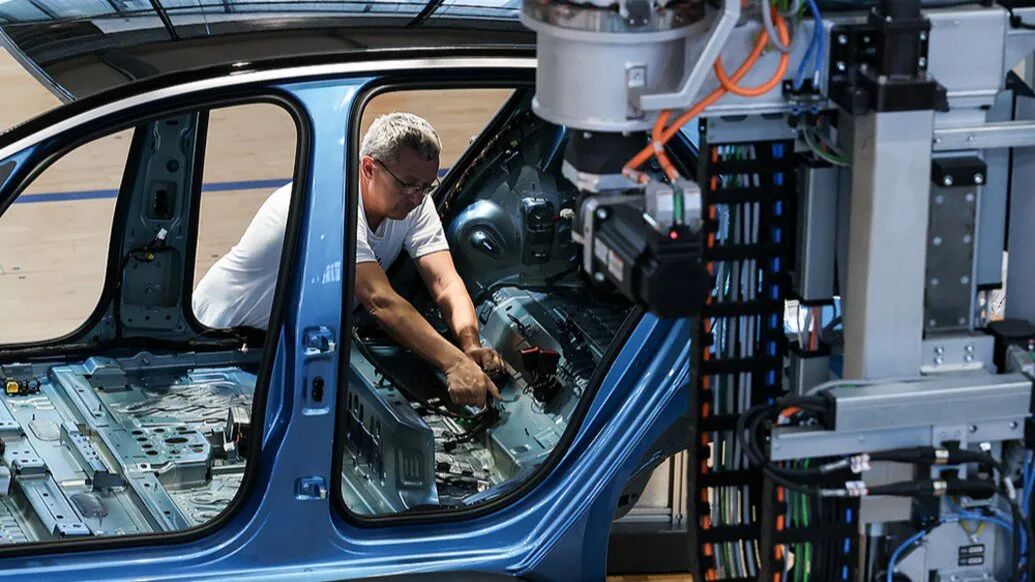
Now, the second wave of the 'China shock' has arrived, striking with even greater ferocity. The once Germany-reliant 'customers' have transformed into 'competitors' armed with core technologies, directly targeting high-value-added sectors of German manufacturing and eroding its foundation of 'high profit margins.'
The automotive industry has become the most brutal battleground.
The data speaks volumes. In 2025, China's automotive export growth rate more than doubled the global average trade growth rate, with a high likelihood of surpassing 10 million annual vehicle exports that year.
According to the European Automobile Manufacturers Association (ACEA), from January to April 2026, Chinese brands' market share in EU new car registrations surged from 3.2% year-on-year to 6%, nearly doubling.
Notably, BYD achieved a staggering 152.9% year-on-year growth, while Leapmotor, through its joint venture with Stellantis, experienced explosive growth of over 500%. Remarkably, these feats were accomplished despite the EU imposing a 35% punitive tariff on Chinese electric vehicles.
The root causes lie in China's automotive industry's established production and sales scale of 30 million vehicles annually—a colossal capacity where only half can be absorbed domestically, necessitating exports. The EU, as one of the world's largest and most open automotive markets, naturally became the primary destination.
Meanwhile, European domestic new car sales have plummeted nearly 16% since the pandemic, continuously shrinking the market pie. Berlin's political circles, long intoxicated by the 'export powerhouse' aura, overlooked their balance of payments imbalance and missed the critical window for new energy vehicle transformation, ultimately leaving the German automotive industry in a passive position.
02 German Manufacturing Under Siege from All Fronts
The collapse of the German automotive industry, while seemingly a result of market competition, is actually a systemic breakdown of underlying technological frameworks.
In modern industrial systems, the 'electrical industrial framework' is the core lifeline, encompassing five key sectors: critical minerals, power batteries, power electronics, drive systems, and core computing power. Whoever masters this framework holds the initiative in industrial development. The reality is that China now dominates most segments in this field.
In contrast, Germany has effectively retreated from this core technology competition.
For instance, in the battery sector, the once-promising Northvolt declared bankruptcy. Despite massive losses, Volkswagen persisted in building three local battery factories but failed to attract third-party investors willing to share risks. In power electronics and drive systems, German companies lack long-term technological strategies, with insufficient R&D investment and far slower technological iteration than China.
Software R&D shortcomings further exacerbate German automakers' predicament.
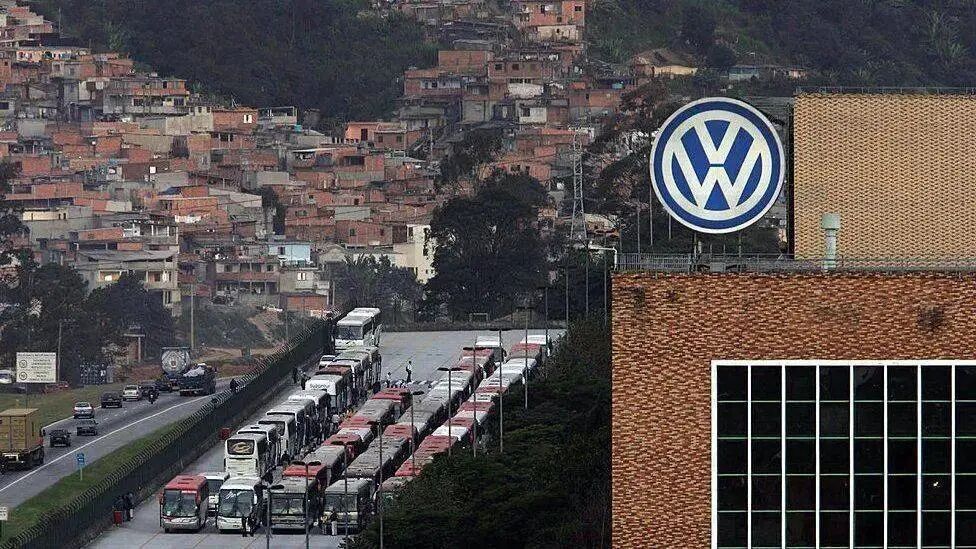
Volkswagen's heavily invested software subsidiary Cariad ultimately sank into a technological quagmire, with repeated R&D delays. Unable to endure further, Volkswagen recently terminated its intelligent driving strategic alliance with Bosch, launched in 2022. Despite investing €1.5 billion and gathering over a thousand experts, the alliance disbanded due to a lack of core competitiveness in its R&D outcomes.
Now, Volkswagen must procure intelligent driving solutions from other companies, completely losing its independent R&D voice in this field.
To compound matters, the global computing power arms race triggered by the AI boom has plunged German industry into a chip shortage crisis.
As global semiconductor giants shift production capacities to higher-margin AI server high-bandwidth memory (HBM), prices for traditional industrial memory have skyrocketed, and supplies have tightened.
By May 2026, DDR5 memory module prices in the German retail market had surged over 300% from July 2025, with server-grade memory prices spiking 90% to 98% in the first quarter. Wall Street investment bank Jefferies predicts this supply-demand tension will persist until at least 2028.
The automotive industry, accounting for only 3% of the global DRAM market, ranks lowest in chip suppliers' priority lists.
Data shows that storage chip procurement costs per vehicle have now doubled or even tripled. Since Germany lost its voice in the memory sector after the 2009 bankruptcy of its last large-scale memory giant, Qimonda, it now relies solely on Micron, SK Hynix, and Samsung, with zero bargaining power.
In summary, to survive, German manufacturing must embark on a series of self-rescue endeavors.
Take Volkswagen as an example: on one hand, it plans a cross-sector transformation, shifting ID.Buzz production from its Hanover factory to Poland, with the vacated space earmarked for military equipment production. On the other hand, rumors suggest it may even assemble models (like ID.Era) developed in China with Chinese supply chains in German factories, relabeling them for re-export to Europe.
Of course, this 'reverse OEM' model may temporarily preserve some workers' jobs but also admits to the world that in new energy and intelligent vehicle R&D core areas, German manufacturing no longer holds significant competitiveness. Century-old German manufacturing now faces an unprecedented dark moment under the dual assault of technological disconnections and external shocks.
Editor-in-Chief: Cao Jiadong Editor: He Zengrong

THE END
-
![]()
Is Tencent AI Heading in the Right Direction?
-
Latest Update! Jinding Optics’ GEM IPO Review Now “Under Inquiry”
-
![]()
VOYAH’s CBO Sets Ambitious Target: Secure Top 3 Spot in Luxury BEV Market Within Two Years, Launch 4 New Models to Cover All BEV Segments
-
![]()
Sehwa Technology Invests 740 Million Yuan, Eyeing the Lucrative Optical Film Market!
-
![]()
150 Million Users, $40 Million ARR: AIShige Technology Enters the Final Round of AI Video Competition
-
![]()
StepOn Star Forays into Smartphone Manufacturing: A Rationally Sound Yet High-Risk Endeavor
-
![]()
TCL Zhonghuan: Embracing a New Story Despite Anticipated Losses
-
![]()
Forty Years On: From Volkswagen’s State-Backed Entry into China to BYD’s Hiring of a Former European Foreign Minister