On the Surface, Sales Are Up, but Automakers' Profits Are Down—or Even Plunging. What’s Behind This Trend?
 07/16 2026
 520
520
As July arrives, many leading domestic automakers have released their financial results for the second quarter and the first half of the year. Overall, profits have generally declined compared to the first quarter, with some emerging EV makers even swinging from profitability to losses, according to the data.
Currently, among China’s mainstream traditional automakers and new EV players, only a handful remain profitable in the second quarter. Notable exceptions include BYD, Geely, Great Wall, FAW, SAIC, and Changan. Meanwhile, new entrants like Seres and Xiaomi have reported significant losses.
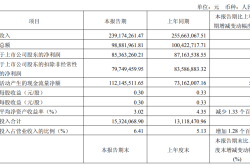
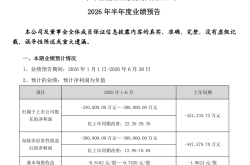
Of course, the most profitable companies remain BYD, Geely, Chery, and Great Wall. BYD’s profit ranges from 1.189 billion to 1.789 billion yuan, while Geely’s profit falls between 634 million and 1.134 billion yuan. Chery and Great Wall have reported nearly identical profits, with second-quarter earnings of 230 million to 730 million yuan and 455 million to 755 million yuan, respectively.
Among joint-venture automotive groups, FAW Group reported second-quarter profits of approximately 580 million to 870 million yuan, while SAIC Group’s profits ranged from 280 million to 580 million yuan. Changan Automobile’s profits stood at 130 million to 360 million yuan, with only GAC Group experiencing substantial losses.
It’s worth noting that among the traditional automakers mentioned above that achieved profitability, all saw a quarter-on-quarter decline compared to the first quarter. The profit performance of new EV makers in the second quarter can only be described as “dismal.” Surprisingly, NIO—often dubbed the “biggest loss-maker” among new EV players—actually reported the smallest losses in the second quarter and may even edge into slight profitability. Currently released data indicates NIO’s second-quarter profit ranged from -67 million to 133 million yuan.
Apart from NIO, other new EV makers, including Leapmotor, Li Auto, Seres, XPeng, and Xiaomi, are seeing their losses widen further—or even spiral into massive deficits.
Among these, Leapmotor is in a relatively better position, with second-quarter losses of 510 million to 810 million yuan, widening from the 390 million yuan loss in the first quarter. The other new EV players all incurred losses exceeding 1 billion yuan in the second quarter. Unexpectedly, the two new entrants with the highest losses were Seres and Xiaomi. Seres reported a loss of 2.254 billion to 2.554 billion yuan, despite being profitable by 754 million yuan in the first quarter. Xiaomi’s losses ranged from 2.4 billion to 3.4 billion yuan, potentially widening further from the 3.1 billion yuan loss in the first quarter.
This raises the question: Why are automakers’ profits continuing to slide despite seemingly robust monthly sales figures?
From CheKuaiping’s perspective, the two most critical factors driving this trend are intense competition and soaring raw material costs.
Data shows that the current annual production capacity demand in China’s automotive market stands at roughly 22 million vehicles, yet actual production capacity has surpassed 40 million vehicles—exceeding market demand by 45%. When the entire industry faces oversupply, fierce market competition becomes inevitable, and price wars are unavoidable. In 2026 alone, the average price reduction for new energy vehicles in China’s automotive market reached 12%, while fuel vehicles saw an even steeper average price drop of 14.1%.
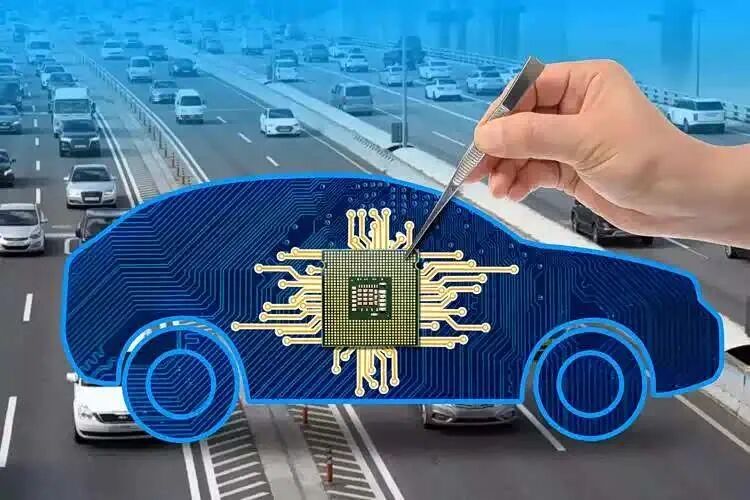
On the other hand, raw materials such as automotive-grade storage and computing chips have surged in price—by as much as fivefold. Additionally, the cost of lithium carbonate, a key component for power batteries, has risen from 80,000 yuan per ton to 180,000 yuan, increasing battery costs per vehicle by 6,000 to 10,000 yuan. It may sound hard to believe, but the net profit for an automaker on a 200,000-yuan car is less than 3,000 yuan.
Automakers are caught in a vicious cycle: purchasing raw materials at inflated prices during production while being forced to sell vehicles at discounted rates. Can automakers remain profitable under such conditions?
Copyright Notice: This article is original to CheKuaiping. Reproduction requires authorization. Unauthorized reproduction is strictly prohibited, and any form of plagiarism or misappropriation of the text and images will result in legal action. Some images in the article are sourced from the internet, with copyright belonging to the original authors. If your work is used, please contact us for royalties or removal.
-
![]()
Is Tencent AI Heading in the Right Direction?
-
Latest Update! Jinding Optics’ GEM IPO Review Now “Under Inquiry”
-
![]()
VOYAH’s CBO Sets Ambitious Target: Secure Top 3 Spot in Luxury BEV Market Within Two Years, Launch 4 New Models to Cover All BEV Segments
-
![]()
Sehwa Technology Invests 740 Million Yuan, Eyeing the Lucrative Optical Film Market!
-
![]()
150 Million Users, $40 Million ARR: AIShige Technology Enters the Final Round of AI Video Competition
-
![]()
StepOn Star Forays into Smartphone Manufacturing: A Rationally Sound Yet High-Risk Endeavor
-
![]()
TCL Zhonghuan: Embracing a New Story Despite Anticipated Losses
-
![]()
Forty Years On: From Volkswagen’s State-Backed Entry into China to BYD’s Hiring of a Former European Foreign Minister