Is It Too Late—Or Just Bold—to Enter the Car Manufacturing Industry Now? Dreame, Chunnan, Automotive Market Dynamics, Value Creation
 07/23 2026
 400
400
Introduction
Good food is never too late—but only if you can secure a seat at the table.
A decade ago, a company announcing its intention to manufacture cars would likely be seen as seizing the opportunity of the times, demonstrating initiative and responsibility. Today, however, when a company crosses over into car manufacturing, the first reaction may not be admiration but skepticism: What does it see? What does it want?
China's automotive industry has evolved dramatically over the past seven decades. From joint ventures dominating the market to the rise of domestic brands, new energy vehicles have become mainstream, and new car-making forces have disrupted the status quo. The entire automotive market has grown increasingly vibrant, but challenges have also multiplied—
Similar exterior designs, homogeneous functional definitions, cutthroat competition in feature stacking, and a sharp decline—or outright absence—of profitability... The automotive industry, once brimming with momentum, now seems to be frequently making "blunders" and "running out of steam," all suggesting the arrival of a new cycle.
According to data from the China Passenger Car Association, from January to June, cumulative retail sales in the domestic automotive market reached 8.701 million vehicles, a year-on-year decrease of 20.2%; wholesale sales hit 12.547 million vehicles, down 5.7% year-on-year. However, export volumes surged to 4.252 million vehicles, a 71% increase year-on-year.
It is evident that the composition of China's automotive market is shifting. In the past, Chinese automakers competed for new domestic consumers; now, they are vying for existing users and the global market. The market pie has not disappeared, but it has transitioned from "incremental competition" to "elimination competition."
This is the core reason why many automakers are desperately engaging in overcompetition. Everyone understands that if they fail to seize the last market opportunity, they will inevitably be left behind by the "carriage" of the times.
However, in this "battlefield-like" market environment, who would have thought that there are still dreamers willing to "dive in" and grab a share? These new entrants will face unprecedented scrutiny and harshness.
01 Dreame Retreats: There Are No Shortcuts in Car Manufacturing
"I believe that the world will not always be dominated by the strong; there will always be opportunities for latecomers." Lei Jun’s words have inspired many and imbued Xiaomi Group—and even Xiaomi Cars—with a spirit of "my destiny is in my own hands." Next, we will discuss Dreame, a company also deeply influenced by Xiaomi.
Founded in 2017, Dreame Technology specializes in intelligent cleaning appliances such as robotic vacuum cleaners and hair dryers. In its founding month, it joined the Xiaomi ecosystem and rapidly grew by leveraging Xiaomi's distribution channels. Four years later, in 2021, Dreame Technology secured significant financing and gradually reduced its reliance on the Xiaomi ecosystem, embarking on diversified expansion. Around this time, Dreame showed signs of venturing into car manufacturing.
It is reported that as early as the end of 2024, Yu Hao, the founder and CEO of Dreame Technology, confirmed long-term mass production plans for complete vehicles and divided them into three major car manufacturing project segments: the Starry Sky Project, Star Imperial Future, and Interstellar Crossing, corresponding to the hypercar technology line, the commercialization platform for complete vehicles, and the mass production of home luxury SUVs, respectively.
Although everything was being carried out secretly, no wall is completely soundproof. While the Chinese automotive market was still engaged in a price war, gossip about Dreame's car manufacturing began to spread. By August 2025, the official stepped in to set the tone, and Yu Hao released an open letter formally announcing the company's entry into car manufacturing and proposing a route of Chinese R&D, German factory construction, and overseas mass production by 2027.
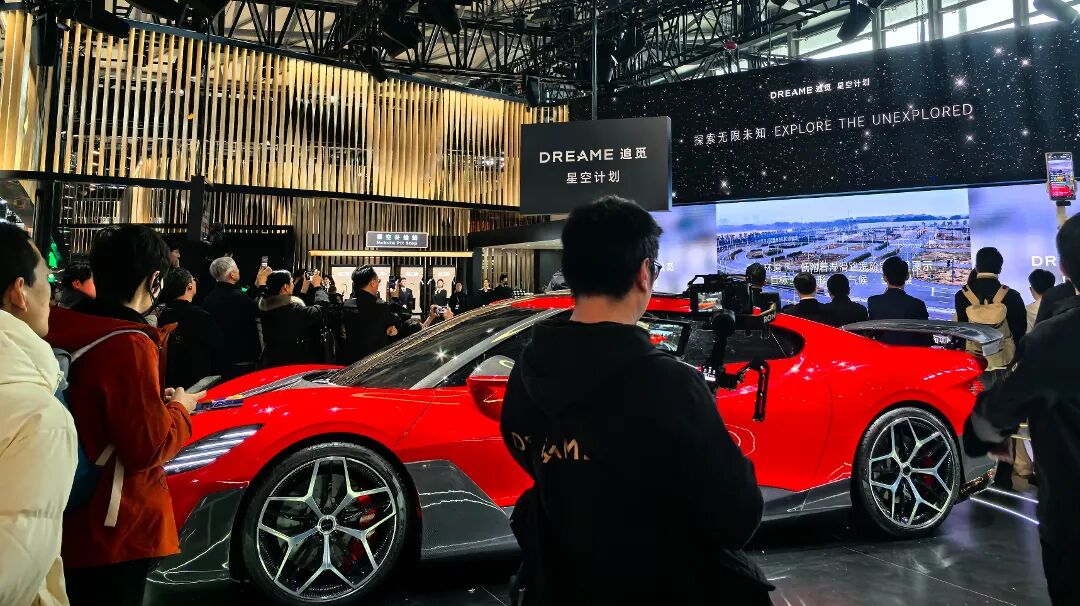
From Yu Hao leading a team to Germany to select a site for a complete vehicle factory, to the CES debut of the Nebula NEXT 01 all-electric hypercar concept, to the release of three SUV models—the rugged T08, the off-road extended T08L, and the six-seater flagship D09—by Interstellar Crossing, as well as the global launch event in Silicon Valley...
A series of moves sent a strong signal: Dreame wants to create a new story in the automotive industry. Especially Yu Hao's statement, "Those who cannot hear the music think the dancers are crazy, but I can hear the music," has made more people look forward to Dreame bringing something different to the Chinese automotive industry.
Unfortunately, things did not go as planned. There are no shortcuts in car manufacturing, or rather, Dreame underestimated market uncertainties.
In June 2026, Dreame Group confirmed strategic retrenchment, streamlining more than 200 business units into four core sectors: Smart Home (robotic vacuum/floor washers, whole-house appliances, the group's core), Outdoor Courtyard (lawn mowing robots), Smart Mobility (only retaining small businesses such as scooters and two-wheeled electric vehicles, no complete vehicles), and Embodied Intelligence (AI robot underlying algorithms).
The three major segments of Dreame Cars—Starry Sky Project, Star Imperial Future, and Interstellar Crossing—were all dissolved as independent business divisions and unified under the Group's Industrial Research Institute, retaining only pre-research on underlying three-electric components such as motors and electronic controls, with a complete suspension of mass production plans for complete vehicles.
Fate plays its part. Although some believe that Dreame Cars was "caught in the crossfire," within the larger framework of Dreame, it must also bear the corresponding "consequences." While it is unknown whether Dreame Cars will have a chance to make a comeback, as a "new new new car-making force," Dreame's foray into car manufacturing still holds sample significance—the era of storytelling to manufacture cars has ended; making a living in the automotive industry is truly not that easy.
02 Chunnan Sprints: But the Key Is Who to Sell the Cars To
If Dreame's foray into car manufacturing "hit a wall" and retreated, then Chunnan's entry into car manufacturing is a completely different story of "industrial integration." Unlike Dreame's car manufacturing, Chunnan is not a complete "outsider." It has two major foundations supporting its car manufacturing: a mature dealer network and battery influence.
Interestingly, Chunnan can also be linked to Xiaomi. The person behind Chunnan, Dai Deming, is from the same hometown as Lei Jun—Hubei. Hubei can also be considered the "base" of Dai Deming's vast commercial empire.
Dai Deming accumulated his initial capital through home appliance agency in his early years and entered the automotive distribution sector in 2000, founding Hengxin Automotive Group. According to the "2026 China Automotive Dealer Group TOP 100," Hengxin ranked second nationwide with revenue of 73.428 billion yuan and annual sales of 411,903 complete vehicles. It is reported that Hengxin has deployed over 300 4S stores in more than 60 cities across the country, covering more than 30 automotive brands, including luxury, joint ventures, and domestic brands.
In 2021, Dai Deming also cross-border invested in the lithium battery industry, founding Chunnan New Energy. In just a few years, it has built four battery manufacturing bases in Wuhan, Xiaogan, Yichang, and Xiangyang, with its energy storage cell shipments ranking among the top three globally. Its products are supplied to domestic leading energy companies and exported to more than 60 countries. As of now, nearly 40 models equipped with Chunnan batteries have been included in the Ministry of Industry and Information Technology's announcement catalog.
According to conventional thinking, having achieved such significant business success, Dai Deming could have "retired at the peak" and enjoyed a good life. However, it is clear that Dai Deming wants to charge forward once more, despite the uncertainties of entering the car manufacturing industry at this time.
Public information shows that Chunnan Automotive was established on December 26, 2024, with a registered capital of 2 billion yuan, equally held by Hengxin Automotive and Dai Deming. Although Chunnan New Energy is not among the shareholders, the three entities are all part of Dai Deming's commercial system, mutually supporting each other to build a very complete commercial system for the entire new energy industry chain.
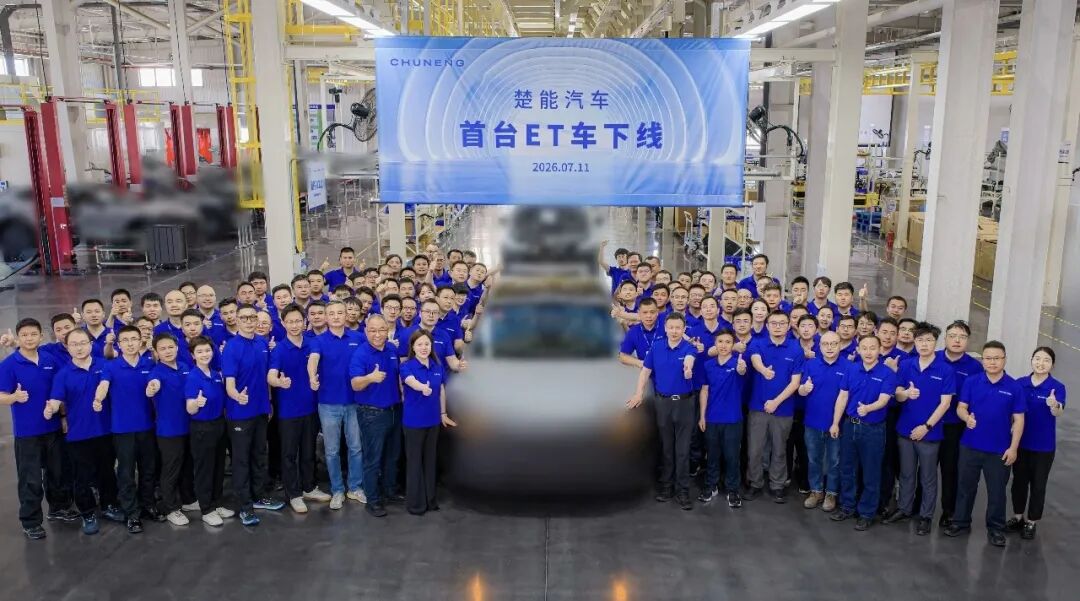
Just a few days ago, Chunnan Automotive's first ET vehicle officially rolled off the assembly line at the trial production center of the Chunnan Research Institute, marking the official transition of Chunnan Automotive's debut model from the engineering data stage to the real vehicle verification stage. If all goes smoothly, Chunnan's first model will enter the promotion and launch phase next year.
"Chunnan will pursue a cost-effective route and focus on volume." According to insiders, Chunnan Automotive's first model will not follow the example of previous new car-making forces by setting a "high initial price" but will instead take a practical approach and target the mass market. Online reports suggest that Chunnan's first model is positioned as a 150,000-200,000 yuan home-use mid-size extended-range SUV, competing with popular models in the same class such as the AITO M5 and Leapmotor C11.
From a strategic perspective, Chunnan's choice of this market segment is not surprising. Compared to the luxury market, the mass-market new energy vehicle segment offers greater sales potential. At the same time, Chunnan has advantages in batteries and distribution channels, which theoretically can reduce costs. If it can truly convert its supply chain advantages into price advantages, Chunnan does have a certain opportunity.
"Manufacturing cars now is a life-and-death struggle, with market overcompetition and overcapacity. All OEMs and new forces are seeking stability, streamlining product lines, and cutting R&D investment. No one is willing to enter from scratch with heavy assets. Chunnan is doing the exact opposite," commented Shao Jingfeng, Vice President and Chief Designer of SAIC Innovation Research and Development General Institute, on Chunnan:
"With a complete production capacity for power batteries in one hand and a nationwide network of several hundred Hengxin 4S stores in the other, batteries and distribution channels—two heavy assets—are simultaneously being poured into the complete vehicle sector. Building complete vehicle R&D from scratch, acquiring idle factories, and investing billions of yuan in advance in R&D, going all-in on complete vehicles against the cycle, the entire approach completely deviates from industry norms. If we are to talk about the most extreme 'crazy force' in the entire car-making industry today, it must be Chunnan."
Indeed, the crux of the matter lies here. From an industry perspective, Chunnan Automotive's advantages are almost transparent; however, from a market competition perspective, many new energy vehicle companies have already proven one thing: manufacturing a car is not difficult; the challenge is making consumers remember you among numerous choices.
Today, the 150,000-200,000 yuan market segment has become the most fiercely competitive area. It includes new energy brands from traditional automakers and a large number of new car-making forces. Consumers face decisions based on: AITO's intelligent labeling; Leapmotor's cost-effectiveness advantages; BYD's scale advantages; and Xiaomi Cars' brand appeal.
Therefore, the conclusion is clear: the real challenge for Chunnan Automotive is not how to produce an SUV but making consumers understand why Chunnan Automotive is worth buying.
03 Is It Too Late to Manufacture Cars Now?
A decade ago, the new energy vehicle sector was a blue ocean. Companies that dared to think and invest could gain capital and market attention; NIO, Li Auto, XPeng, and Leapmotor all reaped the benefits of being "pioneers." However, today, the new energy vehicle sector has entered a more mature phase; consumers are more mature, competition is fiercer, and the market is more ruthless.
So, if you ask whether it is too late to manufacture cars now, my answer is definitely: Yes, but not entirely.
What is late is that the era of quickly gaining opportunities and resources through PPTs, concepts, and capital stories is gone forever. What is not late is that as long as one truly finds new ways to create value, the automotive industry will still leave space for latecomers.
For Dreame, what it lacks may not be technological imagination but the systemic capabilities accumulated over the long term in the automotive industry, as well as a bit of luck. From supply chain management and quality control to distribution channel construction and after-sales service, and then to brand recognition, these cannot be quickly filled in with just a concept car and a story.
For Chunnan, batteries, distribution channels, and capital are all advantages, but these advantages must ultimately be converted into values that consumers can perceive. Otherwise, supply chain capabilities are merely internal advantages within the enterprise and will not automatically become market competitiveness.
As for what these new ways to create value might be?
I don't know. It could be secrets to going overseas, embodied intelligent vehicles, or perhaps comprehensive self-research and industry chain integration. The answer is not unique, but one thing remains constant: the future automotive industry will no longer reward simple entrants but will reward participants and builders who truly possess differentiated capabilities.
The future automotive industry stands open to newcomers, yet it will not be swept up in illusory bubbles. As the saying goes, it's never too late to serve a fine meal, but the prerequisite is that you genuinely secure a place at the dining table.
-
![]()
Profits Plunge by 57%: China’s Auto Price War Takes a Toll on Tesla
-
![]()
Google: Is AI Going to Collapse? A Savior Has Arrived
-
![]()
The Proxy War Between Uber and Meituan
-
![]()
30 Acres! Another Aerospace Unicorn Secures Land in Yizhuang to Establish a 'Satellite Factory'
-
![]()
A Rocket Soars from the East China Sea: Orient Space Embarks on Dual Solid-Liquid Long-Haul Journey
-
![]()
Baidu Becomes "Younger"
-
![]()
Baidu Becomes 'Younger'
-
![]()
Chinese Automakers Going Global: Electrification as the Key Enabler, AI-Driven Intelligence as the Decisive Factor