The “Low-Price Miracle” Myth Rescues XPENG Yet Again
 07/23 2026
 480
480
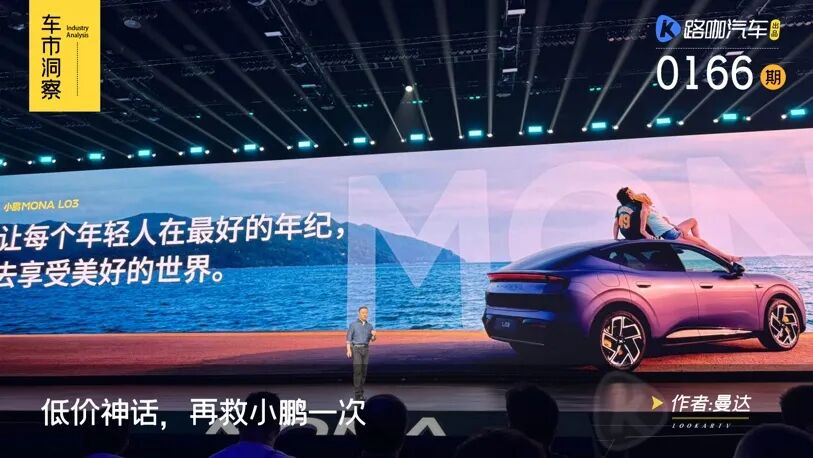
In the third week of July, a fresh “order surge myth” emerged within the Chinese automotive market.
The XPENG MONA L03, launched on July 16, shattered all previous order records for XPENG models, garnering 20,000 orders in just 7 minutes and surpassing 46,000 within an hour. According to Goldman Sachs' latest weekly order data, XPENG led the industry with nearly 60,000 weekly orders, marking a more than 700% increase from the previous week. The MONA L03 has undoubtedly cemented its status as a blockbuster.
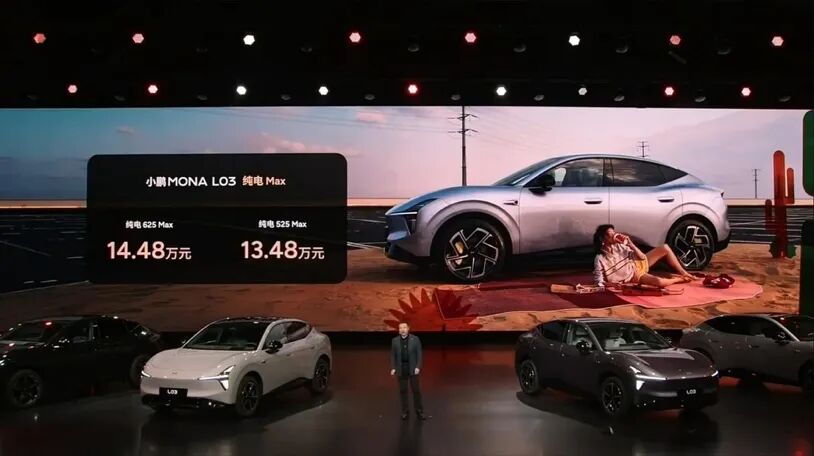
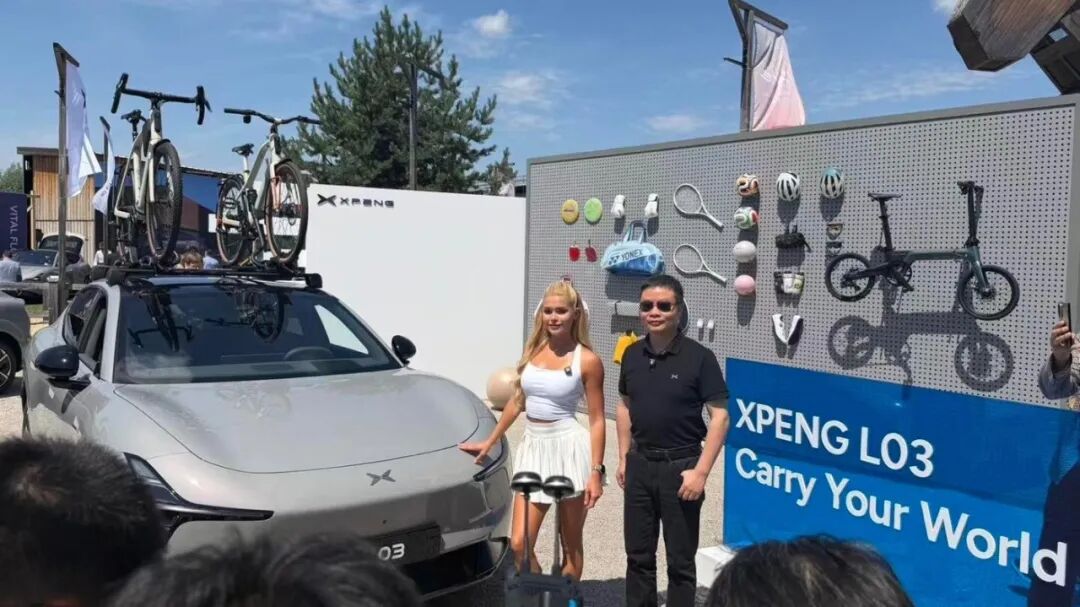
As a global model, the MONA L03 made its debut in Munich and announced its availability in 65 countries worldwide this year. When questioned about the differences with BYD following the launch, He Xiaopeng responded, “We prioritize high-quality, sustainable development over mere volume.”
Interestingly, MONA L03's swift market success is precisely built on a “volume-driven” strategy. From MONA M03 to MONA L03, XPENG appears to have reaffirmed a truth: Cars that achieve explosive sales are not necessarily the cheapest, but those that deeply resonate with the emotions of young consumers.

MONA Strikes Again, But Delivery Delays Loom
According to XPENG's official app, the delivery time for the MONA L03's pure electric version exceeds 13 weeks, translating to at least a three-month wait. The extended-range version is slightly quicker but still requires 7-8 weeks or more.
For a model positioned as a “high-volume seller,” such a lengthy delivery cycle presents a sweet dilemma, and XPENG's production capacity constraints are nothing new.
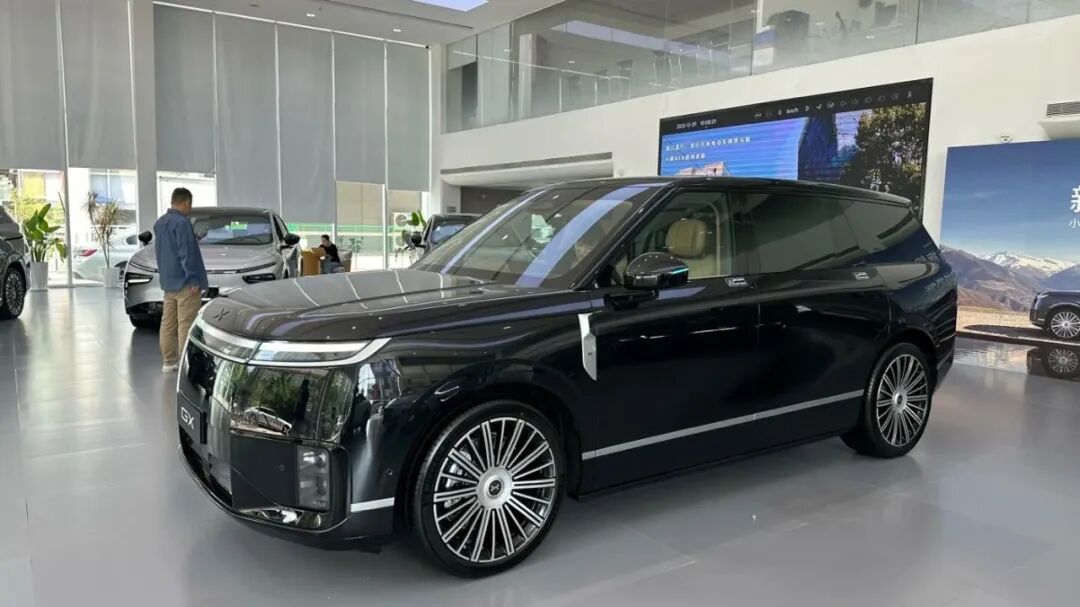
The XPENG GX, launched this year, saw its delivery time for the Ultra flagship version extend from 34 weeks to 40 weeks. He Xiaopeng stated during a livestream that he aims to reduce delivery times to 2-4 weeks, but as of now, the waiting period for the GX's top-spec model remains over 7 weeks.
Some reports indicate that due to the prolonged waiting period, some MONA L03 order customers have switched to other brands, such as the LeDao L60. This poses XPENG's biggest challenge: How to transform MONA L03's “order surge myth” into a genuine “sales surge myth”?
The core formula behind MONA L03's success is straightforward: low price + intelligent driving capabilities + appealing design.
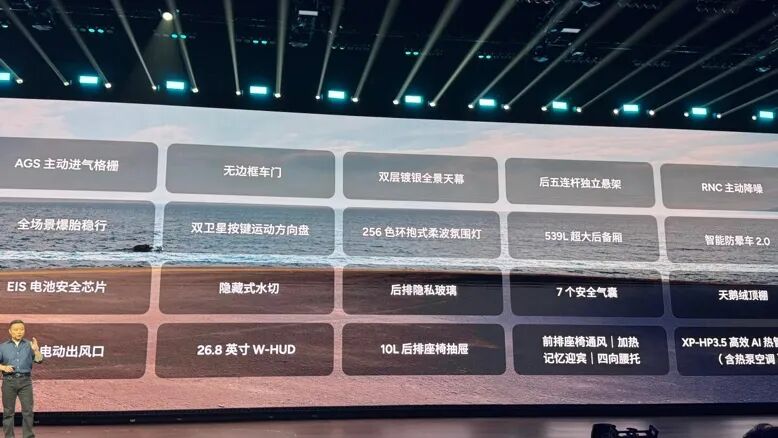
He Xiaopeng disclosed that 98% of MONA L03 orders are for the MAX and Ultra versions. The primary distinction between these versions and the Plus version lies in the Turing chip and XPENG's intelligent driving system. The entry-level Plus version lacks urban and highway NOA, largely continuing the hardware scheme of the MONA M03's base model—most likely the mobileye EyeQ4 chip, which was widely adopted in electric vehicles from new forces and joint ventures before 2020.
This strategy has already proven effective with MONA M03—since its launch in August 2024, M03 has contributed over 40% of XPENG's sales, becoming its largest sales pillar. With MONA L03, a similar “low-price miracle” is being replicated.
He Xiaopeng also revealed that the male-to-female ratio of MONA L03 owners is 1:1. According to Jielanlu's “User Profile Study of First-Batch XPENG MONA M03 Owners,” the MONA series has attracted a substantial number of young female users, with most owners under 30. This indicates that MONA L03 has successfully tapped into an emerging consumer group—young people intrigued by intelligent driving, particular about design, and sensitive to pricing.
How Long Will the Blockbuster Momentum Last?
To compete in the 150,000-yuan SUV market, MONA L03 has made certain “trade-offs” in its configuration. For instance, the long-range version is priced around 150,000 yuan but still utilizes a 400V platform with CALB battery cells. Recently, CALB's lithium iron phosphate batteries have faced criticism for issues such as battery swelling, leakage, and sudden breakdowns during driving, leading to a public opinion crisis.
While it's understandable for automakers to balance cost and pricing, the 150,000-yuan SUV market is the most fiercely competitive segment, with many new models offering “fully loaded” configurations. For example, BYD's top-spec Haishi 05 EV, priced under 150,000 yuan, already incorporates the latest flash charging technology.
On one hand, MONA L03 boasts compelling selling points like a “Ferrari-like” design, Turing chip, and low pricing. On the other hand, it faces controversy over its 400V platform and CALB batteries. For young consumers, design and intelligent driving capabilities appear to consistently outweigh chassis performance, handling, and charging speed—a trend fully validated by MONA M03.
However, the repercussions of a “blockbuster” model cannot be overlooked. Ideally, models like G6, G9, and X9 should be the primary drivers of brand elevation. Yet, MONA's low-price strategy inevitably impacts the overall brand image.
This path is not unique. Li Auto released the L9, L8, and L6 in the first half of this year. From the latest order data, the lower-priced Li L6/i6 contributed the most to growth. The phenomenon of low-priced models “cannibalizing” orders from higher-priced ones is becoming a common dilemma for new energy automakers.
Terminal channel feedback indicates that among new orders for XPENG GX, the mid-to-low-spec versions account for a higher proportion, partly due to insufficient production capacity for the top-spec model. However, even excluding capacity factors, once the GX enters a stable sales period, whether the trend of “most choosing high-spec” can be sustained remains uncertain.
This raises a deeper question: If low-priced cars sell so well, what should other models do under limited production capacity?
He Xiaopeng recently admitted in an interview that XPENG's strategy differs from BYD's. “We aim to establish a mid-to-high-end brand in Europe... I am very focused on high-quality, sustainable development rather than just volume. I believe volume is meaningless.”
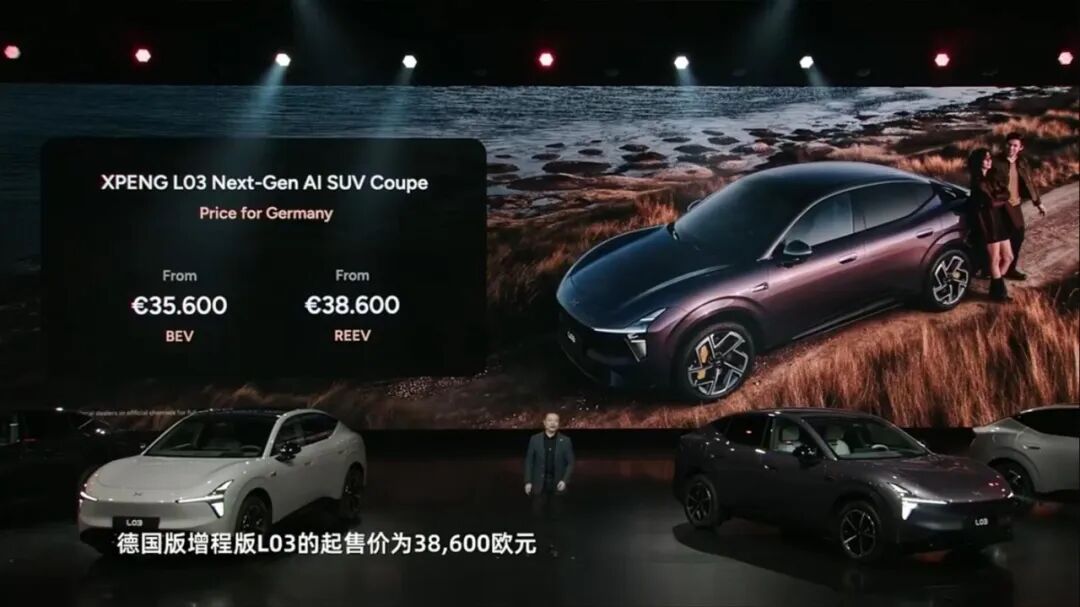
From a strategic standpoint, this statement holds merit. However, considering the pricing of XPENG's MONA L03 announced in Munich—the pure electric version starts at €35,600, lower than BYD ATTO 3's €38,000—it's evident that even in overseas markets, XPENG still adheres to a “cost-effectiveness” approach, creating a noticeable tension with its “mid-to-high-end” positioning.
Looking back at XPENG's history, low-priced models have consistently served as a “sales lifesaver” during slumps.
MONA M03 helped XPENG's sales rebound from the second half of 2024 to early 2025, with its stock price once surging to a two-year high. The blockbuster orders for MONA L03 may replicate this process.
However, the “efficacy” of low-priced blockbusters is limited. If He Xiaopeng's vision of “high-quality, sustainable development” is not reflected in the product lineup, MONA's low-price miracle can only “rescue XPENG once more” at best.
-
![]()
Profits Plunge by 57%: China’s Auto Price War Takes a Toll on Tesla
-
![]()
Google: Is AI Going to Collapse? A Savior Has Arrived
-
![]()
The Proxy War Between Uber and Meituan
-
![]()
30 Acres! Another Aerospace Unicorn Secures Land in Yizhuang to Establish a 'Satellite Factory'
-
![]()
A Rocket Soars from the East China Sea: Orient Space Embarks on Dual Solid-Liquid Long-Haul Journey
-
![]()
Baidu Becomes "Younger"
-
![]()
Baidu Becomes 'Younger'
-
![]()
Chinese Automakers Going Global: Electrification as the Key Enabler, AI-Driven Intelligence as the Decisive Factor