Volkswagen CEO’s Internal Memo Leaked: Plan to Lay Off 100,000 Employees Reveals ‘Financial Strain’
 07/23 2026
 346
346
Comprehensive Strategic Retrenchment
Author|Wang Lei
Editor|Qin Zhangyong
Volkswagen is truly at a breaking point.
In recent times, Volkswagen's layoffs have sparked significant upheaval, with the most alarming revelation being the company's plan to lay off up to 100,000 employees globally in the coming years, along with considering the closure of multiple factories in Germany. However, Volkswagen Group has refrained from commenting on this.
Recently, the truth has finally come to light.
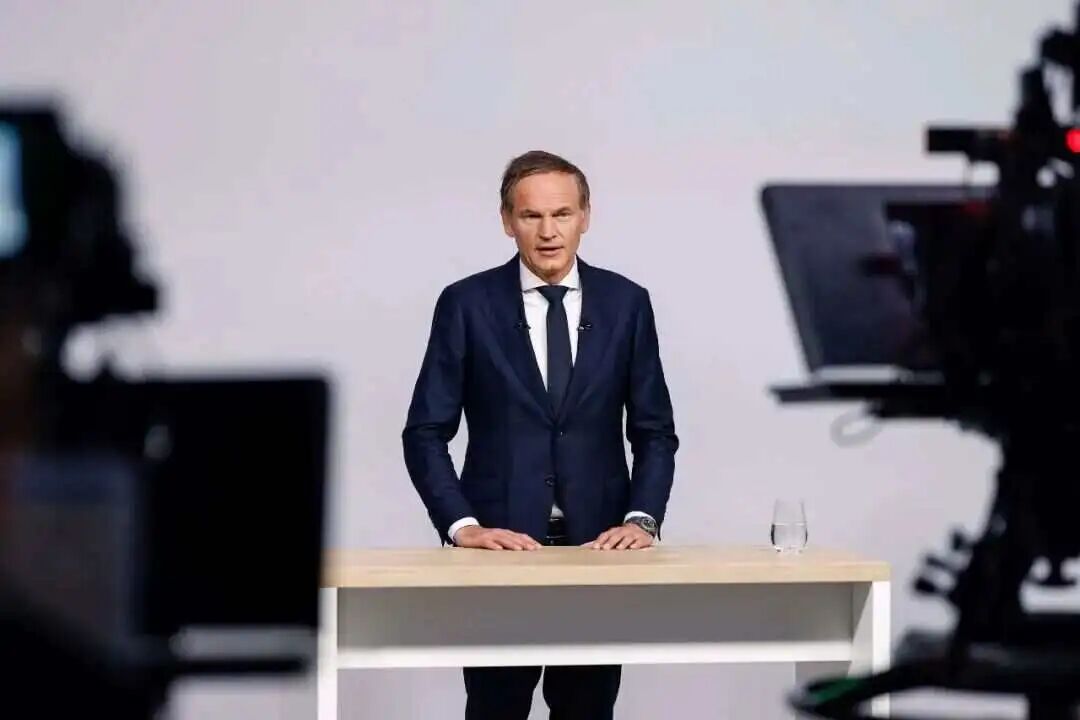
In Volkswagen Group CEO Oliver Blume's latest internal memo, he disclosed how the figure of '100,000' was derived. The memo states that approximately 50,000 jobs will continue to be cut. When combined with the previously announced plan to cut 50,000 jobs, the total number of layoffs could reach up to 100,000, precisely matching the previously rumored figures. This marks Volkswagen's first official confirmation of the news.
Although Volkswagen recently held a supervisory board meeting aimed at discussing the group's largest-ever transformation plan, the expected outcomes regarding employee layoffs and factory closures were not disclosed to the public.
The response was that the supervisory board rejected the resolutions related to these matters.
With the exposure of this internal memo, Volkswagen's plan to lay off 100,000 employees seems determined to proceed...
01 Still Aiming for 100,000 Layoffs
Why is Volkswagen so insistent on cutting an additional 50,000 employees?
In the internal memo, Blume laid bare the situation, stating that internal calculations show that Volkswagen Group's operating costs—namely, administrative management, infrastructure, and expenses incurred to support core business operations—are approximately 20% higher than those of comparable companies.
Moreover, Volkswagen's workforce has 'continuously grown over the past decades and has now reached an unsustainable level,' with Blume bluntly stating that 'half of Volkswagen's indirect costs come from personnel costs.'

Therefore, Volkswagen conducted theoretical calculations based on this cost gap, concluding that its current cost-cutting efforts are insufficient to narrow the gap with its peers. Assuming no changes to wages and other labor costs, Volkswagen can only bridge the current cost gap with its competitors by reducing its workforce. 'The theoretical calculation result is that approximately 50,000 positions will continue to be cut globally.'
In other words, to 'maintain wages unchanged' for everyone, theoretically, only a reduction of 50,000 employees is feasible. Thus, when combined with the previously determined plan to cut 50,000 jobs by 2030, the scale of 100,000 layoffs is derived.
According to 2025 financial report data, Volkswagen employs a total of 667,000 people globally, with 43% of them based in Germany. If the plan to lay off 100,000 employees is fully implemented, it means that nearly 15% of the group's positions will be cut.
Of course, what Volkswagen has presented now is not a finalized layoff plan but rather an internal cost calculation. Blume emphasized that this figure is merely a 'theoretical deduction' and not a final decision, stating, 'We are currently evaluating all brands, companies, and regions to determine how much adjustment is actually needed and feasible.'
However, at the same time, Blume also hinted at considering measures such as reducing labor costs, adjusting organizational structures, and improving efficiency. This includes the four factories that have been under close scrutiny, which were specifically mentioned in the internal memo.
Previously, Blume had stated plans to gradually shut down four factories in Germany. The Zwickau factory, which produces the ID.3 and Cupra Born models, and the Emden factory, which produces the ID.4 and ID.7, will cease operations in 2031. The Hanover factory, currently responsible for commercial vehicle production, is planned to shut down in 2032. Additionally, an Audi factory in Neckarsulm is scheduled to close in 2034.
In the memo, he reiterated that the situation regarding these four factories remains uncertain. 'As of now, we still cannot confirm competitive utilization plans for the three Volkswagen factories in Emden, Hanover, and Zwickau, as well as the Audi factory in Neckarsulm by 2030.'
In other words, if Volkswagen fails to secure sufficient orders and products for these factories, closure is not out of the question. However, Blume proposed a new solution in the internal memo, stating, 'There are wiser solutions than closing factories.'
One direction is transformation, with two paths suggested: transitioning to military production (the defense industry) or repurposing idle factories in Europe to produce Chinese Volkswagen models.
Regarding the former, Volkswagen has already begun taking action. The Osnabrück factory, which currently primarily produces the Volkswagen T-Roc convertible, was originally slated for closure after the end of its product cycle. However, it has reportedly accepted a commission from Rheinmetall, Germany's largest arms manufacturer, to produce armored cabs, with plans to transform it into a tank factory.
Regarding the latter, there are also clear signals. Olaf Lies, the governor of Lower Saxony, stated in an interview that Volkswagen could transfer some models currently produced in China back to Germany to improve factory utilization rates and stabilize employment.
It should be noted that Lower Saxony holds 20% of Volkswagen's voting rights and is one of Volkswagen's most critical shareholders. It also owns five of Volkswagen's six factories in western Germany, including the Emden and Hanover factories slated for closure, which are located in Lower Saxony.
He bluntly stated, 'If we bring the models currently produced in China to Germany, we can stabilize factory capacity utilization and bring new development and innovation opportunities to the local region. This is not about moving production capacity out of Germany but about bringing additional products and utilization rates back to European factories.' Already, informed sources have revealed that Volkswagen has initiated relevant evaluation work, which includes not only the importation of complete vehicles but also the possibility of subsequent localized manufacturing in Europe. The Zwickau factory is one of the potential production bases.
02 Extreme Downsizing
While a one-size-fits-all approach may seem easy, there is still a long way to go before the final plan is unveiled, as layoffs and factory closures are not decisions that can be made solely by Volkswagen's board of directors.
This is because Volkswagen and the trade unions signed an agreement at the end of 2024, committing to no forced layoffs and no factory closures in Germany before 2030. This agreement now serves as the basis for the supervisory board's resistance to the new plan.
Just a few days before Blume issued this internal memo, the tug-of-war between Volkswagen's board of directors and the supervisory board had just concluded.
To make Volkswagen Group 'more robust, efficient, and agile' by 2030, the group's board of directors submitted a comprehensive reform plan consisting of 12 measures to the supervisory board, including employee layoffs and factory closures.
The meeting lasted for 'several hours,' but ultimately, no concrete resolutions were given regarding the matters of concern to the public, such as layoffs and factory closures. The only adjustments announced were those that could be implemented without supervisory board approval.
Even so, many of the originally planned cost-cutting measures have begun to be implemented.
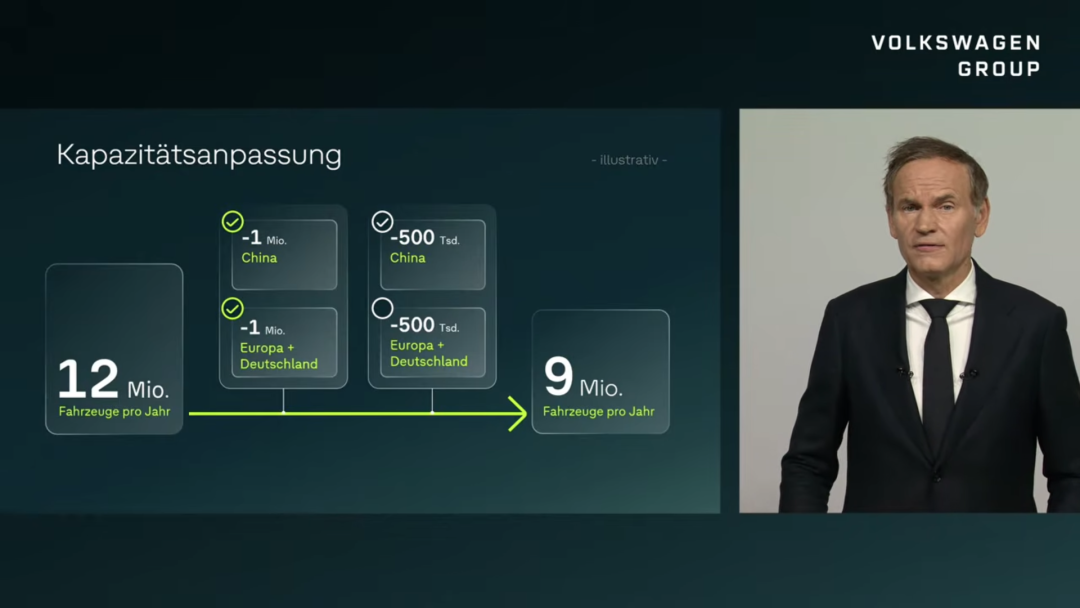
According to Volkswagen's statement, the group will gradually streamline its product lineup by up to 50%, and the number of optional configurations for existing models will be reduced by up to 75%. This is to concentrate efforts on developing the most attractive market segments, with production capacity also being reduced from the current 10 million vehicles per year to 9 million vehicles per year.
Moreover, according to a report by Germany's Bild newspaper, there is already a list of models that may be phased out as part of this massive cost-cutting plan, involving nearly 10 models, including both fuel-powered and new energy vehicles.
The Volkswagen brand may first discontinue the Jetta (Sagitar) and Taos models, with both reportedly not having a next generation. Additionally, the Skoda Fabia may also end its long product lifecycle, and the entry-level model Raval from the performance brand Cupra, which was released just a few months ago, may cancel its second generation.
Even high-margin luxury models are not spared. Audi may discontinue several crossover coupe models, with the Q5 Sportback and Q6 E-tron Sportback both on the list. While they will not disappear immediately, Audi is likely to stop developing next-generation models.
The list also mentions several Porsche models. The Porsche Taycan, an all-electric sedan, may exit the market after the current model completes its lifecycle due to poor sales and will not have a direct successor. Even the fuel-powered Cayenne Coupe has been included on the candidate list. Porsche had previously announced plans to discontinue the fuel-powered Macan, which will officially cease production at the end of this month.
According to Bild's report, eliminating these models by 2031 could save Volkswagen Group up to €6.5 billion (approximately RMB 50.23 billion) in investment and research and development expenses.
Cutting models alone is not enough. Volkswagen has recently also been reported to be considering selling Ducati and spinning off Lamborghini for an independent listing. Although Volkswagen has not yet responded, this series of cost-cutting measures is sufficient to illustrate Volkswagen's survival anxiety under heavy pressure.
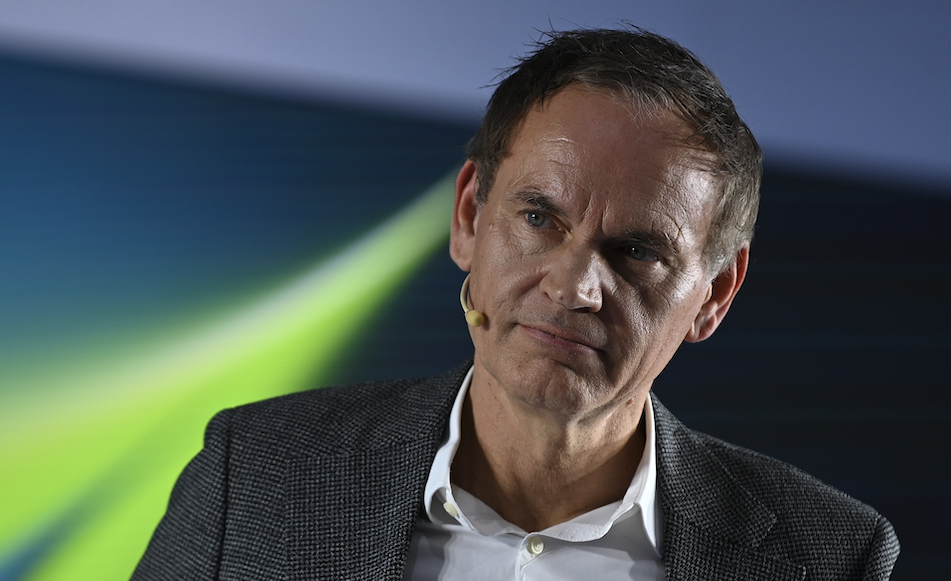
Perhaps to align with such an aggressive cost-cutting plan, Blume once proposed a performance metric that surprised the outside world. He hopes that Volkswagen can achieve an operating profit margin of up to 10% and a net cash flow of €3 billion to €6 billion by 2030.
It should be noted that Volkswagen's operating profit margin was only 2.8% in 2025.
In 2025, Volkswagen Group sold approximately 9 million vehicles, with sales revenue of €321.9 billion, roughly the same as the previous year. Operating profit was only €8.9 billion, a year-on-year plunge of 54%, marking the lowest record in nearly a decade since 2016. Net profit after tax fell from €12.4 billion in 2024 to €6.9 billion, a year-on-year decline of 44%, indicating a significant shrinkage in profitability.
Entering 2026, the situation has not improved. In the first quarter of 2026, revenue was €75.657 billion, a year-on-year decrease of 2.5%. Operating profit was €2.463 billion, a year-on-year decline of 14.3%. Vehicle deliveries were 2.049 million units, a year-on-year decrease of 4%.
Revenue, profit, and sales—the three core metrics—continue to decline.
Faced with such performance data, even laying off 100,000 employees would only be a temporary fix. However, Volkswagen still has €34.5 billion in liquidity, so its financial foundation is not thin.
How to improve operational quality amid strategic retrenchment is the long-term challenge that Volkswagen needs to address.
-
![]()
Gemini Slips From Global Top 10: What Lies Ahead for Google's AI Dominion?
-
![]()
Exclusive | Interview with Wu Yongjian, Vice President of Tencent Cloud: The Intelligent Agent Market Has Yet to Enter a Bubble Phase, Though Some Sectors Are Becoming Saturated
-
![]()
Profits Plunge by 57%: China’s Auto Price War Takes a Toll on Tesla
-
![]()
Google: Is AI Going to Collapse? A Savior Has Arrived
-
![]()
The Proxy War Between Uber and Meituan
-
![]()
30 Acres! Another Aerospace Unicorn Secures Land in Yizhuang to Establish a 'Satellite Factory'
-
![]()
A Rocket Soars from the East China Sea: Orient Space Embarks on Dual Solid-Liquid Long-Haul Journey
-
![]()
Baidu Becomes "Younger"