Hybrid Vehicles Lose Tax Exemption: New Energy Vehicle Industry Faces 'Coming-of-Age' Moment
 07/23 2026
 449
449
In July 2026, China's Ministry of Finance, State Taxation Administration, and Ministry of Industry and Information Technology jointly unveiled an updated vehicle and vessel tax adjustment plan. While the announcement's title may seem routine, its implications reverberate across the automotive and power battery sectors.
Effective January 1, 2027, a nearly 15-year era of tax exemptions and reductions for energy-efficient and new energy vehicles will formally conclude. Plug-in hybrids, extended-range vehicles, and new energy commercial vehicles will lose their tax-exempt status. However, private pure electric passenger vehicles and fuel cell passenger vehicles will retain their exemptions due to their zero-emission nature.
This marks a precise, targeted policy shift—phasing out support where necessary while preserving incentives for core zero-emission technologies.
Vehicle and vessel tax, an annual obligation for vehicle owners, applies to over 350 million motor vehicles nationwide. Generating tens of billions of yuan in annual revenue, it constitutes a vital component of local fiscal budgets.
Previous tax exemptions for new energy and energy-efficient vehicles essentially represented financial subsidies, with local governments foregoing revenue to promote green transportation.
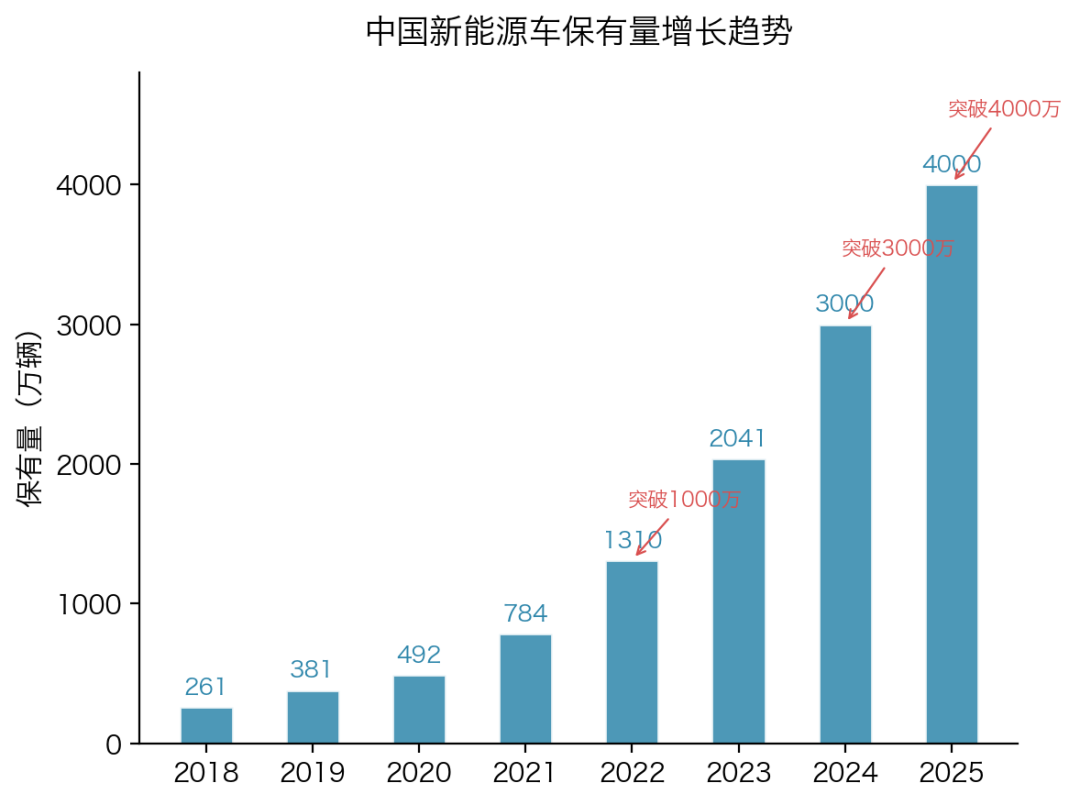
With new energy vehicle ownership surpassing 30 million, the cumulative tax revenue forgone has become substantial.
Since the 2009 pilot program for new energy vehicle promotion, subsidies and tax exemptions have served as dual engines driving the industry's growth for 15 years.
Now, with subsidies phased out and tax exemptions ending, the industry is undergoing a "rebirth" by shedding its reliance on policy support.
1. Key Changes in the New Vehicle and Vessel Tax Policy
Vehicle and vessel tax, calculated annually based on displacement, type, and tonnage, has seen special treatment for energy-efficient and new energy vehicles since 2009. Energy-efficient fuel vehicles enjoyed a 50% tax reduction, while new energy vehicles were fully exempt.
The new policy abolishes these preferential treatments.
Affected models span a wide range. Energy-efficient vehicles with small displacements meeting fuel economy standards will no longer receive the 50% tax reduction.
For new energy vehicles, plug-in hybrids and extended-range models—previously fully exempt—will now be taxed based on displacement.
New energy commercial vehicles face similar adjustments. Electric buses, logistics vehicles, and sanitation vehicles, previously exempt, will now be taxed based on curb weight.
Given the already thin profit margins in logistics and transportation, these new costs will likely be passed downstream.
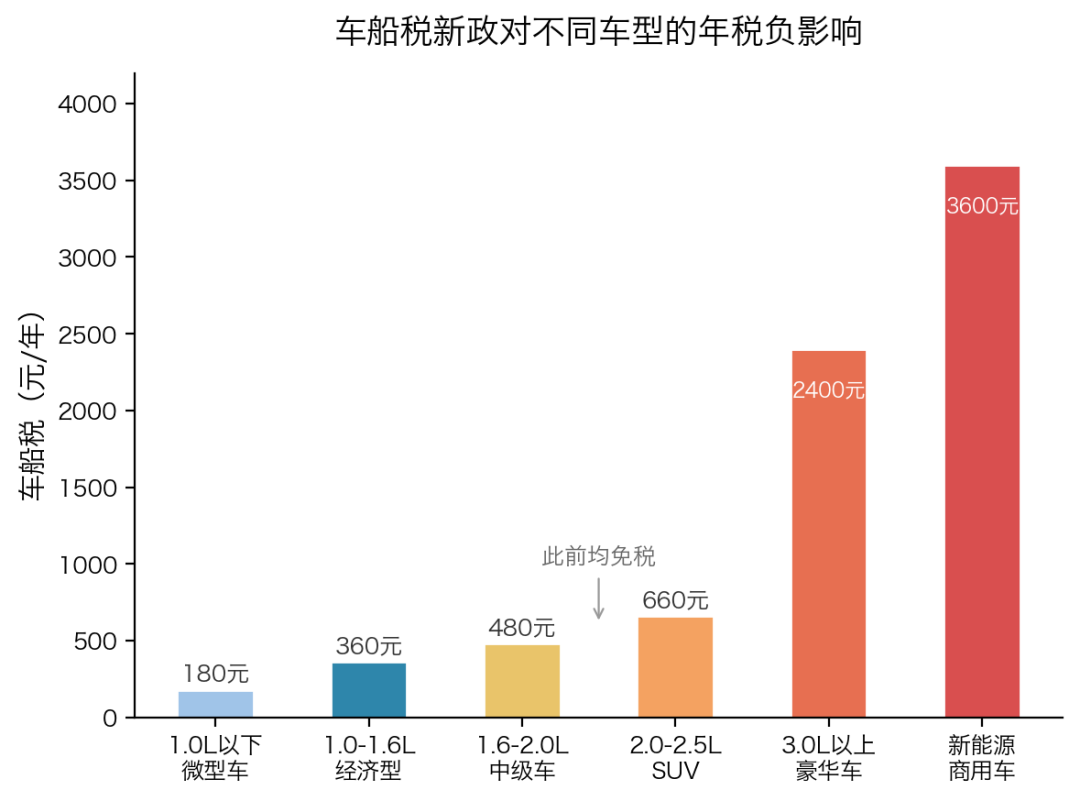
The policy clarifies continued exemptions: private pure electric passenger vehicles and fuel cell passenger vehicles remain tax-free. For example, a small-displacement household hybrid previously paying 480 yuan annually in vehicle and vessel tax will now incur an additional 400–600 yuan per year.
For buses, large models face a fixed per-vehicle tax, while medium-sized buses are taxed based on displacement or seating capacity. Trucks, trailers, and special operation vehicles are taxed at 16–120 yuan per ton of curb weight, with new energy commercial vehicles previously enjoying exemptions worth thousands of yuan.
This granularity reflects policymakers' strategic focus: pure electric and fuel cell technologies, as true zero-emission solutions, remain policy priorities. Hybrids and extended-range technologies, deemed transitional, lose preferential treatment as their transition period concludes.
2. A 15-Year Legacy of Tax Incentives
In 2009, China launched its new energy vehicle pilot program, offering subsidies and purchase tax exemptions in 13 cities, including Beijing and Shanghai. That same year, vehicle and vessel tax regulations were amended to include new energy vehicles in the exempt category for the first time.
At the time, China's new energy vehicle industry sold just a few thousand units annually. CATL had yet to be founded, and BYD had only just launched its first mass-produced plug-in hybrid, the F3DM.
Fifteen years later, in 2025, annual sales exceeded 12 million, with a market penetration rate surpassing 53%. China's global share of lithium-ion power battery production exceeded 60%, with CATL and BYD ranking first and second worldwide in shipments. China has transitioned from a follower to a global leader in new energy vehicle technology.
This 15-year timeline was no accident. China's industrial policies typically provide a clear timeframe for preferential treatment, allowing industries to develop before gradually withdrawing support.
New energy vehicle subsidies were last extended in 2022 and terminated in early 2023. Purchase tax exemptions, capped and phased out starting in 2024, followed suit.
The vehicle and vessel tax exemption, the final policy benefit to be phased out, aligns perfectly with policymakers' expectations.
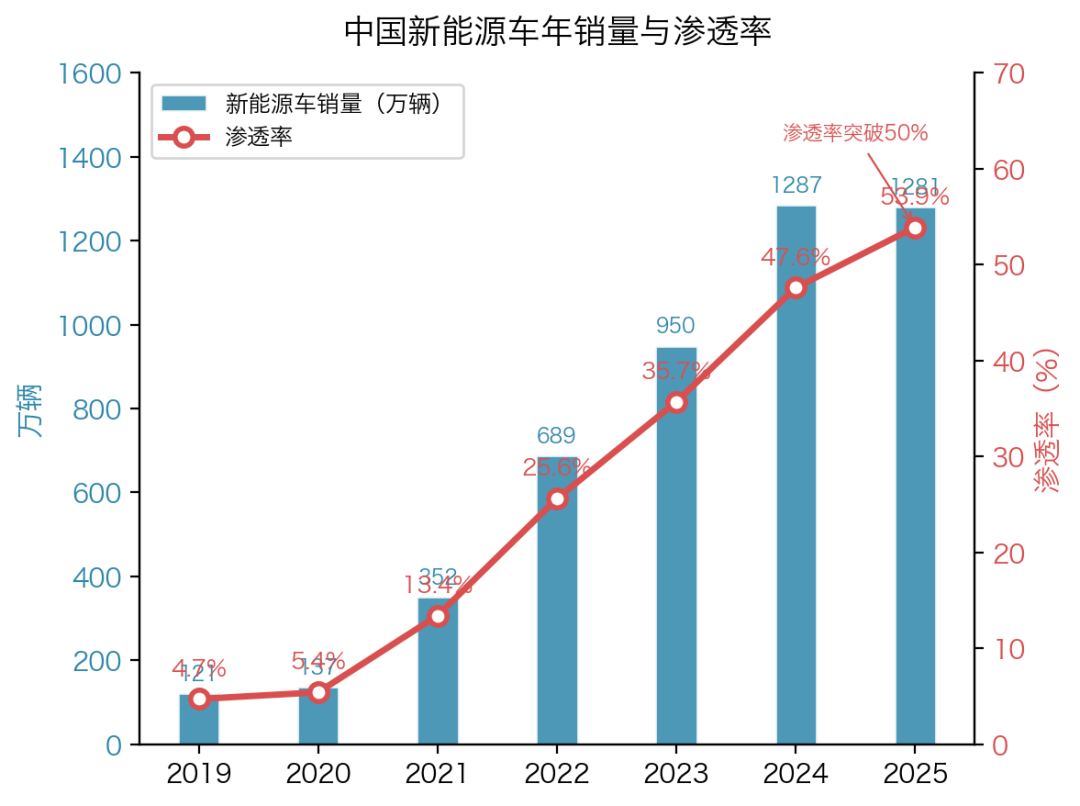
Data Source: ifind
This policy-driven approach has proven successful. During the industry's infancy, tax incentives and subsidies reduced purchase costs for early adopters, cultivated the market, attracted investment, lowered manufacturing costs, spurred technological innovation, and ultimately achieved economies of scale.
It exemplifies China's industrial policy model.
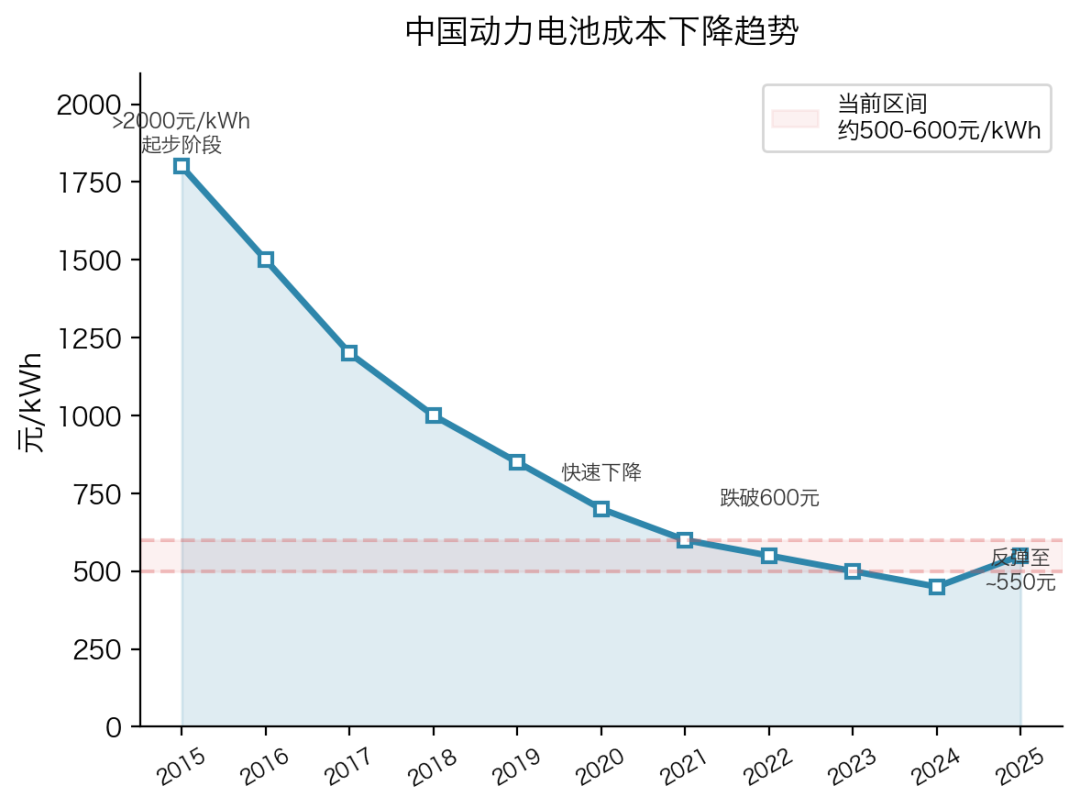
Today, the context has changed. The total lifecycle cost of new energy vehicles now undercuts that of fuel vehicles. The charging infrastructure network spans urban and rural areas. Power battery costs have plummeted from over 2,000 yuan per kilowatt-hour a decade ago to 500–600 yuan today. The historical mission of tax incentives has been fulfilled.
From a fiscal perspective, the vehicle and vessel tax exemption policy saved tens of billions of yuan annually for millions of new energy vehicle enterprises at its peak—a worthwhile investment in industrial cultivation.
3. Pure Electric Vehicles Retain Preferential Status
While hybrids and extended-range vehicles lose tax exemptions, private pure electric passenger vehicles maintain their exempt status. This differentiated approach underscores the state's clear stance on technology routes.
The pure electric passenger vehicle market is already massive. In 2025, retail sales exceeded 7 million, accounting for roughly 60% of new energy vehicle sales.
Technologically, driving ranges have surged from 300 kilometers five years ago to over 600 kilometers today, with fast-charging technology slashing recharge times.
Costs continue to decline, with per-kilowatt-hour prices reaching parity with fuel vehicles.
Pure electric vehicles' advantages extend beyond policy incentives. Their per-kilometer electricity consumption is just one-third to one-fourth that of fuel vehicles. Maintenance costs are lower, with electric motors requiring no oil changes or spark plug replacements. Power battery warranties typically extend to 8 years or 150,000 kilometers.
However, challenges persist. Charging infrastructure remains unevenly distributed, with rural and lower-tier cities lagging behind first-tier cities. Winter range decline remains an issue, particularly in northern regions.
The tiered utilization and recycling system for power batteries is still nascent, with retired battery disposal costs factoring into total lifecycle expenses.
As of late 2025, China's pure electric passenger vehicle ownership exceeded 20 million. Urban charging station coverage and highway fast-charging networks have expanded significantly, with charging and battery-swapping modes alleviating range anxiety in daily use.
Maintaining tax exemptions for pure electric vehicles at this juncture reflects a clear policy rationale: the core zero-emission route continues to merit institutional support.
It also signals to the global industry China's long-term, unwavering commitment to pure electric technology.
4. Fuel and Electric Vehicles on Equal Footing
The vehicle and vessel tax adjustment is widely seen as a symbolic step toward policy parity between fuel and electric vehicles. The message is clear: new energy and fuel vehicles will no longer receive differential treatment.
This trend extends across multiple domains. Purchase tax exemptions for new energy vehicles have been capped and phased out since 2024, with further reductions beginning in 2026.
In some cities, preferential treatment for new energy vehicles, such as free license plates and unrestricted travel, is also being withdrawn. This tax adjustment represents another stride toward policy parity in the fiscal realm.
-END-
Disclaimer: This article is based on publicly available information about listed companies, primarily drawn from legally mandated disclosures (including but not limited to interim announcements, periodic reports, and official interaction platforms). Shiyu Xingkong strives for fairness in content and viewpoints but does not guarantee accuracy, completeness, or timeliness. The information and opinions expressed herein do not constitute investment advice, and Shiyu Xingkong assumes no liability for actions taken based on this article.
Copyright Notice: The content of this article is original to Shiyu Xingkong and may not be reproduced without authorization.
Previous Recommendations
-
![]()
Gemini Slips From Global Top 10: What Lies Ahead for Google's AI Dominion?
-
![]()
Exclusive | Interview with Wu Yongjian, Vice President of Tencent Cloud: The Intelligent Agent Market Has Yet to Enter a Bubble Phase, Though Some Sectors Are Becoming Saturated
-
![]()
Profits Plunge by 57%: China’s Auto Price War Takes a Toll on Tesla
-
![]()
Google: Is AI Going to Collapse? A Savior Has Arrived
-
![]()
The Proxy War Between Uber and Meituan
-
![]()
30 Acres! Another Aerospace Unicorn Secures Land in Yizhuang to Establish a 'Satellite Factory'
-
![]()
A Rocket Soars from the East China Sea: Orient Space Embarks on Dual Solid-Liquid Long-Haul Journey
-
![]()
Baidu Becomes "Younger"