Tesla's Next Big Bet: The New Battlefield of the Automotive Industry | Cover Story: Automakers Enter the Robot Race (Part Six)
 08/03 2026
 329
329
Editor's Note
Automakers are collectively making moves in the robotics and embodied AI sectors. Could this become their strategic position and new growth curve for the next generation of intelligent terminals? The motivations for automakers to cross into this field are diverse, with technological commonalities and resource sharing being inherent advantages. Currently, they are transitioning from performance modes to operational modes, gradually moving from technology verification stages to large-scale application phases. However, opportunities and challenges coexist, and breaking through numerous obstacles in technological upgrades and large-scale applications is still necessary. The blueprint for the top-level design of the robotics industry has been drawn, awaiting automakers to create a new landscape.
Focusing on automakers' layout (layout) in the robotics sector, Auto Business News presents this special “Cover Story” report. This feature consists of six articles, with the sixth installment being released today. Stay tuned.
From Optimus to Atlas, and now to the humanoid robot pilot at BMW's factory, automotive companies are becoming key drivers in the industrialization of embodied AI. Behind these different paths, a race for the future of manufacturing has begun.
Over the past decade, the automotive industry has undergone continuous transformations in electrification, intelligence, and software-defined vehicles. By 2026, a new change is emerging: more and more automotive companies are becoming significant promoters of the humanoid robot industry. From Tesla accelerating the mass production of 'Optimus' to Hyundai Motor exploring robot commercialization through Boston Dynamics, and BMW introducing humanoid robots into real production systems, automotive companies are transitioning from users of robotic technology to deep participants in shaping industry rules.
These moves cannot be simply explained as business extensions. The core capabilities required for humanoid robots—precision manufacturing, supply chain management, large-scale production, long-term capital investment, and complex system integration—are precisely the strengths accumulated by the automotive industry over the past century. In a sense, humanoid robots are becoming the next category of industrial products that the automotive industry seeks to redefine, following electric vehicles.
The different paths chosen by Tesla, Hyundai, and BMW also reflect the industry's core 'disagreements' on the commercialization of embodied AI: Are robots a new type of consumer and industrial product, or the next generation of manufacturing tools?
Building Robots with Automotive Logic
To understand Tesla's ambitions in the robotics field, one must first understand Elon Musk's narrative logic.
Musk has publicly stated multiple times that the long-term value of Optimus may surpass Tesla's automotive business itself. He even directly links it to the company's valuation, saying, 'Those who don't understand Optimus don't understand Tesla's future.' This reflects his judgment on the market size of humanoid robots: the value scale of the global labor market far exceeds that of electric vehicles. If robots can replace or even surpass human labor, the market's ceiling would be almost immeasurable.
However, not everyone is convinced. Wall Street analysts are divided on this view. Morgan Stanley analyst Adam Jonas is a strong believer in Tesla's robotics business. His team believes that the 'Optimus' business could contribute a significant portion of Tesla's valuation within a decade, serving as one of the core drivers of its 'value reassessment' logic. However, many institutional analysts remain skeptical. Goldman Sachs pointed out in a research report that the commercialization timeline for humanoid robots has been consistently overestimated historically, and Tesla's mass production goals face undisclosed execution risks in terms of supply chain and reliability.
Against this backdrop of controversy, Tesla has adopted the most aggressive productization route. The most representative technological breakthrough of the third-generation Optimus lies not in hardware specifications but in the transformation of its control architecture. Tesla has migrated the end-to-end neural network approach it accumulated in Full Self-Driving (FSD) to the robot control system, integrating semantic understanding capabilities from large language models.
What does this mean? Traditional industrial robots operate on a 'rule-driven' control logic: engineers must pre-program precise instructions for every action, and robots execute tasks according to fixed programs. This approach is efficient and reliable but highly inflexible—switching tasks often requires reprogramming. In contrast, Tesla's end-to-end solution more closely resembles human learning: robots 'observe' how humans complete tasks through large amounts of demonstration data and then autonomously generate behavior strategies to accomplish those tasks. Tesla's AI team describes this capability as a 'closed loop from observation to action' in relevant technical documents, meaning robots do not rely on rule manuals but on reasoning to handle unfamiliar objects and scenarios.
At the hardware level, the third-generation Optimus has also undergone significant upgrades: the doubling of dexterous hand degrees of freedom enables precise object manipulation, while new motion control algorithms make walking and turning more stable. Paired with a pressure sensor system, the robot can perceive and adapt to contact surfaces of varying hardness and shapes. These parameters correspond to the rigid demands of real factory scenarios—after all, a robot that cannot handle irregular parts or is prone to falling on slippery floors cannot perform real production tasks.
Opinions on this approach are mixed. While the end-to-end method theoretically offers advantages in generalization, its 'fragility' cannot be ignored, as the model's performance outside its training distribution is difficult to predict—a critical issue in high-safety industrial environments. Tesla responds to these doubts by continuously expanding its internal deployment scale: more robots working in more complex scenarios generate more failure cases and corrective data, which is itself a path to addressing fragility.
Replicating Scale Advantages from the Automotive Era
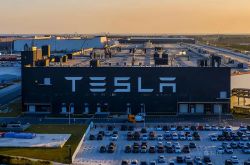
One of Tesla's core strengths is its ability to apply automotive thinking to robot manufacturing. Its transformation of the Fremont factory is the most intuitive (intuitive) reflect (embodiment) of this strategy. By establishing a dedicated robot production and verification area within the factory, Tesla implicitly prioritizes its strategic goals: future profit sources will come not from luxury electric vehicles but from embodied robots.
Tesla's planning for a second production base at its Gigafactory Texas further confirms this judgment. The goal is not to produce a few hundred robots annually for research institutions but to achieve true 'million-unit-scale' mass production. While this number may still seem fantastical today, recalling the skepticism Tesla faced when announcing its Model 3 production target of one million units annually in 2012 suggests maintaining openness.
Of course, mass production hinges on cost control. Tesla's target price for embodied robots is $20,000 to $30,000—roughly equivalent to a Tesla Model Y and about one-tenth of the current price of high-end industrial robots. Achieving this goal relies on leveraging economies of scale to reduce component costs and fully reusing the automotive manufacturing supplier network. Tesla's supply chain system, built over years in core components such as motors, battery management, and sensors, provides ready-made infrastructure for robot manufacturing.
Supply chain experts generally agree that automakers' advantages in supply chain reuse are real, but robots impose stricter requirements on component yield and consistency than automobiles. After all, a car with an occasional minor issue can be recalled for repairs, but a robot working alongside humans in a factory could cause safety incidents with any unexpected failure. This means Tesla must simultaneously establish higher-standard quality control systems while cutting costs—a natural contradiction.
On the other hand, by 2026, Tesla had deployed over a thousand Optimus units internally, primarily for factory logistics and battery assembly. While media reports often interpret this number as 'commercialization progress,' from a strategic perspective, its deeper significance lies in data collection. Each internally deployed robot serves as a data-generating node. They execute tasks in real factory environments, encounter failures, provide feedback data, and drive model iteration. This creates a self-reinforcing training loop: the more robots work in complex scenarios, the stronger the model becomes; the stronger the model, the more complex tasks the robots can handle, enabling deployment in more scenarios.
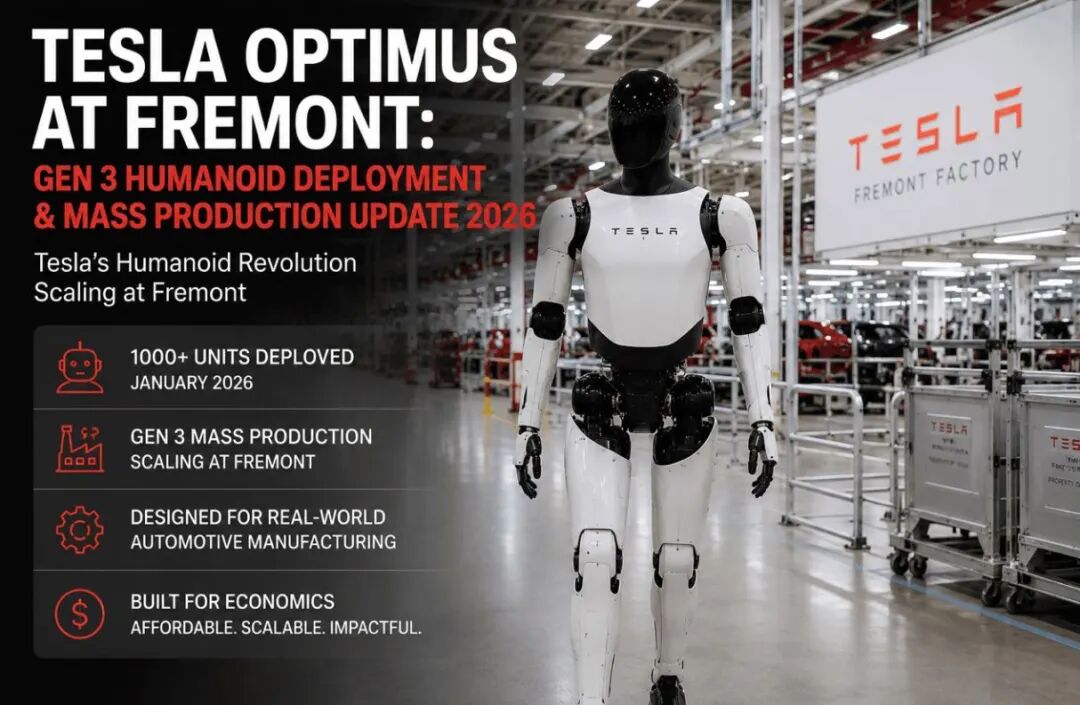
This flywheel logic closely resembles Tesla's growth path in FSD. Andrej Karpathy, Tesla's former AI director, has repeatedly emphasized that Tesla's core competitive barrier is not hardware but scalable real-world data. While this judgment was made regarding FSD, its logic applies equally to robotics. Now, the Optimus fleet in Tesla's factories is providing 'raw materials' for the next generation of embodied AI models.
However, the perspectives of Tesla's factory workers are often overlooked in these discussions. Some reports mention that employees at the Fremont factory have expressed discomfort during the adaptation period when working alongside robots—not out of fear of job loss but because the robots' behavior can still be unpredictable, requiring workers to actively avoid them when paths cross. Tesla's engineering team is addressing this issue by improving the robots' intent expression capabilities, but the smoothness of human-robot collaboration still needs refinement.
Another Path to Industrialization
If Tesla pursues a 'mass-market' product-native route, Hyundai Motor and BMW Group represent another typical choice among traditional automotive giants: leveraging mature global supply chains and external ecosystems to precisely embed humanoid robots into existing manufacturing and service systems. Rather than reinventing the wheel, they seek a more pragmatic balance between hardware limits and engineering implementation through acquisitions, cross-border collaborations, and localized pilots.
Hyundai Motor follows a 'technology flagship and commercial innovation' route. Its core weapon is Boston Dynamics, acquired in 2021. The fully electric Atlas, set to take center stage in 2026, represents one of the most advanced accumulations of dynamic control in bionic robotics. Unlike Tesla's Optimus, which emphasizes end-to-end AI reasoning, Atlas demonstrates absolute hardware extremism in its adaptability to unstructured terrain, motion fluidity, and action-level control for complex assembly tasks.
Hyundai aims to transform this extreme hardware asset into a sustainable commercial moat. To do so, Hyundai is collaborating with Google DeepMind to integrate AI ecosystems, endowing robots with cognitive reasoning capabilities through reinforcement learning to address software shortcomings. Simultaneously, the group is abandoning traditional hardware sales models and aggressively exploring subscription-based 'Robotics-as-a-Service' (RaaS) commercialization. With the first Atlas units deployed in Hyundai's own factories, the company is attempting to export leasable 'advanced robot work hours' to global manufacturing.
Compared to Hyundai's aggressive approach, BMW Group offers a more cautious and pragmatic European manufacturing style. BMW has neither grand plans to build its own robot brand nor announced million-unit-scale mass production expectations. Its core strategy is to select the most suitable external partners and conduct controlled pilots on real production lines. Under Europe's typical cautious manufacturing style, humanoid robots are not disruptors of existing automation systems but efficiency supplements within human-robot collaboration frameworks.
BMW's layout (layout) reflects a distinct engineer culture and a 'difficult-first, easy-later' deployment logic. By introducing Figure 02 from Silicon Valley startup Figure, BMW first passed process validation at its Spartanburg factory, subjecting robots to real production line durability tests in high-value, high-precision processes. Simultaneously, BMW introduced Hexagon's Aeon wheeled humanoid robot, leveraging the wheeled platform's high stability and mobility efficiency on flat floors to avoid the control risks of bipedal balance. Its comprehensive testing at the Leipzig factory in summer 2026 marked the official transition of such pilots to real deployment. BMW precisely locks robots into three types of processes: 'monotonous and repetitive,' 'high ergonomic risk,' and 'high-voltage electrical danger,' leaving humans to handle exception processing and quality inspection. This gradual strategy not only hedges against asset impairment risks amid uncertain technological routes but also aligns more easily with stringent regulations like the EU's AI Act and union frameworks than aggressive narratives of 'robot replacement of labor.'
Product or Tool?
When comparing these three automakers on the same axis, a clear dividing line emerges, splitting the industry into two camps: Should the robotics business follow Tesla's model of 'independent products and ecosystem platforms,' or the 'manufacturing and optimization tool' direction represented by Hyundai, BMW, and others?
Tesla's answer is the clearest: Robots are an independent core product line, sold to external markets with the goal of establishing a new platform ecosystem. In Musk's narrative, 'Optimus' is an independent core product for external mass markets, with the ultimate goal of building a new embodied AI ecosystem platform. Wall Street analysts view it as central to Tesla's 'value reassessment.' In contrast, Hyundai and BMW form the 'manufacturing and service integration camp.' Hyundai's positioning falls somewhere in between, defining robots as exportable industrial service capabilities through RaaS—essentially an extension of its 'beyond automotive' strategy. BMW purely views robots as 'manufacturing optimization iteration tools' without forming an independent business model; their core value lies in addressing structural shortages and safety pain points in its own production.
From an industry analysis perspective, the camp differentiation determines vastly different dimensions of commercial success: The independent product camp (Tesla) is quickest to see valuation reassessments, while the integration camp (Hyundai, BMW) is more likely to create demonstration effects and advance pilots in high-value industrial scenarios or European manufacturing.
Despite their differing paths, both camps share a highly consistent industrial vision: the 'lights-out factory.' The emergence of humanoid robots frees manufacturing facilities from the constraints of traditional robotic arms' fixed trajectories, enabling direct reuse of human tools and workstations and making large-scale full automation feasible.
However, behind this grand vision lie several deep-seated industrial contradictions that cannot be ignored:
First is the contradiction between technological dividends and labor transformation. While companies currently emphasize that robots aim to 'reduce employee burden,' the economic rationale of mature technology inevitably leads to labor displacement. McKinsey Global Institute has consistently estimated in multiple reports that by 2030, tens of millions of factory jobs globally will face substantive changes, with particularly severe impacts on developing countries reliant on low-cost labor. Embodied robots threaten semi-skilled jobs requiring scenario adaptability—the largest proportion of manufacturing workers. This tear (rift) between 'technological dividends' and 'labor transformation' has triggered policy divergence: The EU is accelerating tighter safety and worker protection clauses for industrial robots through the AI Act, while the U.S. federal level remains in a policy vacuum. Regulatory uncertainty is becoming the biggest external variable hindering camp expansion.
Second is the disconnect between the vision of general-purpose industrial intelligence and technological ceilings. Both camps are constrained by structural bottlenecks in underlying technologies. One is the 'ceiling of dexterity': Fine actions like splicing wire harnesses or handling flexible materials remain engineering challenges for robots. The industry widely believes that fusing tactile and force perception—enabling robots to truly 'sense' contact—is one of the toughest level (hurdles) in robotics, far more challenging than motion control. The other is the 'gap of general-purpose intelligence': Existing control systems perform well in specific, fixed tasks but remain extremely fragile when faced with unstructured 'surprises' like toppled shelves or unknown part shapes. While the integration of large models and embodied control is progressing rapidly, it remains largely in capability verification stages under controlled scenarios, still falling short of the general-purpose industrial intelligence needed to handle real factory complexity by a cross-generational technological gap.
Finally, there is the mismatch between the total cost of ownership (TCO) for businesses and the lifespan of hardware and software. Tesla's stated price of $20,000 to $30,000, when factoring in maintenance, training, and system integration costs, still results in a higher actual TCO over a five-year period compared to traditional automation equipment. Some current viewpoints suggest that only when robots can frequently switch tasks can their flexibility premium cover the costs. An even more severe systemic issue in the industry lies in the mismatch between the 'brain' and the 'body': AI models can iterate weekly through over-the-air (OTA) updates, but expensive physical actuators and hardware have lifespans lasting several years. Robots purchased by companies today may face the awkward (awkward) situation in three years where their hardware capabilities cannot support new algorithms. This mismatch in the iteration cycles of hardware and software is significantly suppressing genuine purchasing intention downstream in the supply chain.
How Robots Are Reshaping Manufacturing
Returning to the initial question: Why automotive companies?
The structural advantages of the automotive industry—supply chains, manufacturing culture, tolerance for long-cycle capital—are certainly important, but a deeper reason is that they need robots more urgently than any other industry to solve their own problems. Labor shortages caused by an aging society are gradually eroding the manufacturing workforce market; assembly process changes brought about by the electric vehicle transition require more flexible production line configurations; and the manufacturing reshoring driven by global trade frictions faces the practical constraint of high labor costs in developed countries.
In other words, automotive companies are investing in robots not only to solve their own problems but also to discover a new market.
This 'self-use-driven spillover commercialization' model is strikingly similar to the development path of Amazon Web Services (AWS): At that time, Amazon initially built cloud infrastructure to support its own e-commerce business, only to later discover that this capability could be sold to everyone, thereby creating a new growth engine that surpassed its retail business in scale. Tesla's most perceptive investors have already begun to reassess Optimus's potential value contribution using a similar logic.
From an industrial landscape perspective, the large-scale industrialization of humanoid robots will bring about a fundamental restructuring of manufacturing production methods. In a world where labor costs are no longer the primary variable, the logic of manufacturing location decisions will change; brand, design, supply chain flexibility, and delivery speed will become more important competitive dimensions than cheap labor. The impact of this on the global manufacturing landscape will be far more profound than any tariff adjustment.
Tesla, Hyundai, and BMW have chosen to enter the same Track (track/field) at different speeds and angles. There are no absolute winners or losers among their respective approaches, only different bets and different timelines. Their success or failure will depend not only on their own technological and execution capabilities but also on the pace of general AI breakthroughs, the speed at which regulatory frameworks take shape, and the overall acceptance level of manufacturing customers. 2026 will be a critical year, but it will not be the year when the answers are revealed.
Note: This article was first published in the 'Cover Story' column of the July 2026 issue of 'Auto Review' magazine. Please stay tuned.

Image: Sourced from the Internet
Article: Auto Review
Layout: Auto Review
-
![]()
Analysis of Service Reputation Index in the First Half of 2026
-
![]()
After Leapmotor’s Monthly Sales Surpass 100,000 Units, Netizens Ponder: Who Will Be the Next Newcomer to Achieve Both Scale and Profitability?
-
Auto Market News: Tesla Refutes, Calls It 'False Information'!
-
1.5% Profit Margin for Complete Vehicles: Where is the Automotive Industry's Profit Shifting?
-
![]()
In-Depth Analysis | July Sales Performance of Emerging Auto Brands
-
![]()
July Sales of Emerging Automakers: Widespread Month-on-Month Declines, Leapmotor Leads with Over 100,000 Units Sold
-
![]()
Musk Clarifies: Tesla Has No Plans to Divest Chinese Operations
-
![]()
ByteDance, Capturing 40% of User Time, Seeks to Transform Its Revenue Model