New Energy Vehicles Must Stop Using Consumers as 'Test Subjects'
 08/10 2026
 526
526
Lead
Introduction
It's better to prevent issues during the production phase rather than addressing them after they arise.
Tesla, once hailed as the vanguard of the automotive industry's future, is now grappling with quality control challenges.
On July 31 (local time), the U.S. National Highway Traffic Safety Administration (NHTSA) announced the initiation of a preliminary safety defect investigation into nearly 1.2 million Tesla vehicles. The investigation focuses on the 2018-2020 Model 3 and 2021-2023 Model Y produced at the Fremont factory.
According to reports, regulators have received over 150 complaints indicating that the front suspension lower lateral links in Tesla vehicles are prone to detachment while driving, potentially leading to a complete loss of steering control in extreme cases.
This news has left many Tesla enthusiasts at a loss for words, especially since many chose Tesla for its perceived reliability. However, this incident also underscores a harsh reality: vehicles are industrial products, and flaws can occur regardless of the manufacturer.
Furthermore, it's crucial to acknowledge that, unlike traditional fuel vehicles with nearly a century of practical experience, the rapid expansion of the new energy vehicle market, particularly the haste in developing models, has led to products being launched before thorough validation, effectively turning consumers into 'test drivers'.
The risks involved are immense!
In July 2026, the Ministry of Industry and Information Technology conducted two rounds of inspections within a week on five automakers, focusing on their product safety assurance capabilities and production consistency. Vehicles and power batteries were randomly sampled on-site and sent to third-party institutions for compliance testing according to national standards.
Subsequently, in August, regulatory authorities took decisive action in response to the chaos surrounding hastily developed models.
The National Technical Committee for Auto Standardization publicly solicited opinions on three new energy vehicle approval test procedures, proposing to standardize the total reliability driving test mileage for new energy vehicle models at no less than 30,000 kilometers, bringing them fully in line with traditional fuel vehicle standards.
The increasing official actions send a clear signal: as the new energy vehicle industry rapidly expands, contradictions in quality control have reached a critical juncture. The industry is teetering on the brink and urgently needs to course-correct.
01 Cost Reduction and Efficiency Improvement Should Not Come at the Expense of Quality
We often say that you get what you pay for. The underlying principle is that the costs associated with industrial products do not simply vanish; materials, processes, testing, and validation all necessitate investment. A price drop often implies that certain aspects have been compromised.
However, automobiles differ from ordinary consumer goods. When sales reach a certain scale, supply chain maturity and improved production efficiency can indeed reduce manufacturing costs through economies of scale. Toyota has demonstrated this over decades, and BYD's rapid development in recent years also supports this point.
The issue now, however, is that some automakers have taken a different approach—reducing costs not through technological progress but by shortening validation cycles and compressing R&D processes.
The rapid development of the new energy vehicle industry has made 'price competition' the primary focus. From new energy vehicles priced at 200,000-300,000 yuan in the past to the current market below 100,000 yuan or even lower, price wars have driven products to rapidly penetrate the market. However, this has also led some automakers to 'scrimp' on the cost of every component.
Can we switch to another supplier? Can we reduce the number of tests? Can we launch earlier?
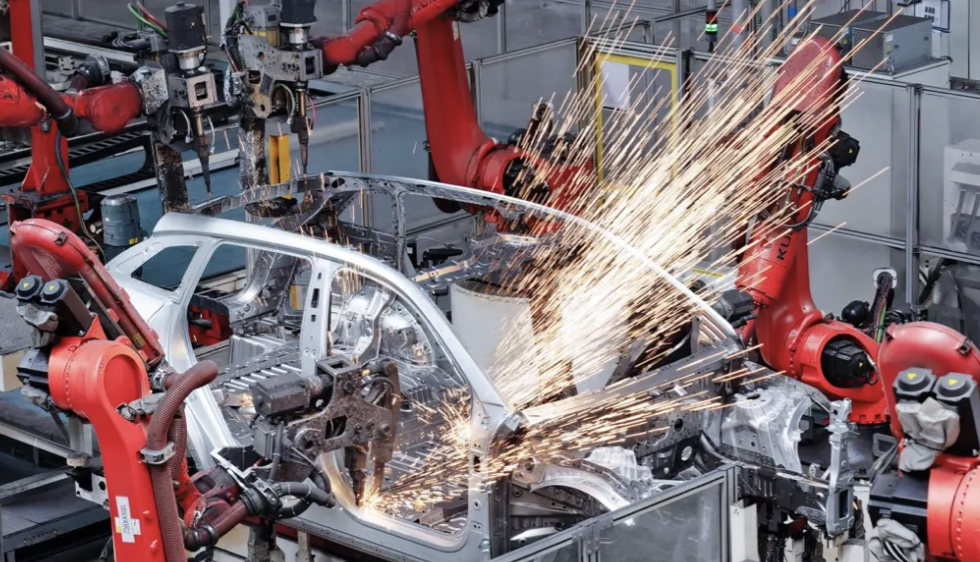
It seems that every automaker is calculating, thinking that as long as it does not affect system operation and saves money, Plan B is acceptable. But a car is not a smartphone. Problems with a smartphone might result in a crash or lag; problems with a car can affect life safety.
In the era of fuel vehicles, a new model typically underwent years of validation before launch, including tests for high temperatures, extreme cold, high altitudes, durability, and collisions. A small probability of failure in one component could become a massive safety accident when multiplied across hundreds of thousands of vehicles.
However, the development pace of new energy vehicles is disrupting this rhythm. The time from project initiation to market launch for some models is continuously shrinking. Platform sharing, supply chain integration, and rapid stacking of intelligent configurations are making cars more advanced, but the reliability validation behind them is lagging.
For example, there have been frequent controversial cases in the industry recently:
Some vehicles have simply used zip ties to secure high-voltage wiring harnesses; some models have experienced abnormal battery swelling and leakage, dubbed 'banana batteries' by consumers; some vehicles have emitted aluminum powder from their air conditioning systems; and even the air suspensions of some models have directly failed due to high temperatures...
Individually, these issues may seem like mistakes in specific components, but against the backdrop of the rapid expansion of new energy vehicles, they reflect a deeper bug: Are automakers' 'efficient' manufacturing processes producing good products or a pile of time bombs?
02 Don't Blindly Trust Fuel Vehicle Standards; Electric Vehicles Need Higher Standards
Let's temporarily assume that the series of faults in new energy vehicle products recently are isolated issues with components rather than intentional cost-cutting or the use of substandard materials by automakers.
Compared to traditional fuel vehicles, new energy vehicles utilize a large number of new technologies and components, such as power batteries, electric drive systems, intelligent driving, and high-voltage systems. These technologies bring new experiences but also new risks.
In the era of fuel vehicles, most basic vehicle components had already undergone long-term market testing. However, new energy vehicles now extensively adopt new technologies, new materials, and new supply chains. If the validation cycle is insufficient, consumers essentially become 'test subjects' in the product iteration process.
Therefore, it must be emphasized: New energy vehicles cannot simply replicate the standards of the fuel vehicle era but should establish higher reliability requirements.
Take air suspensions, for example.
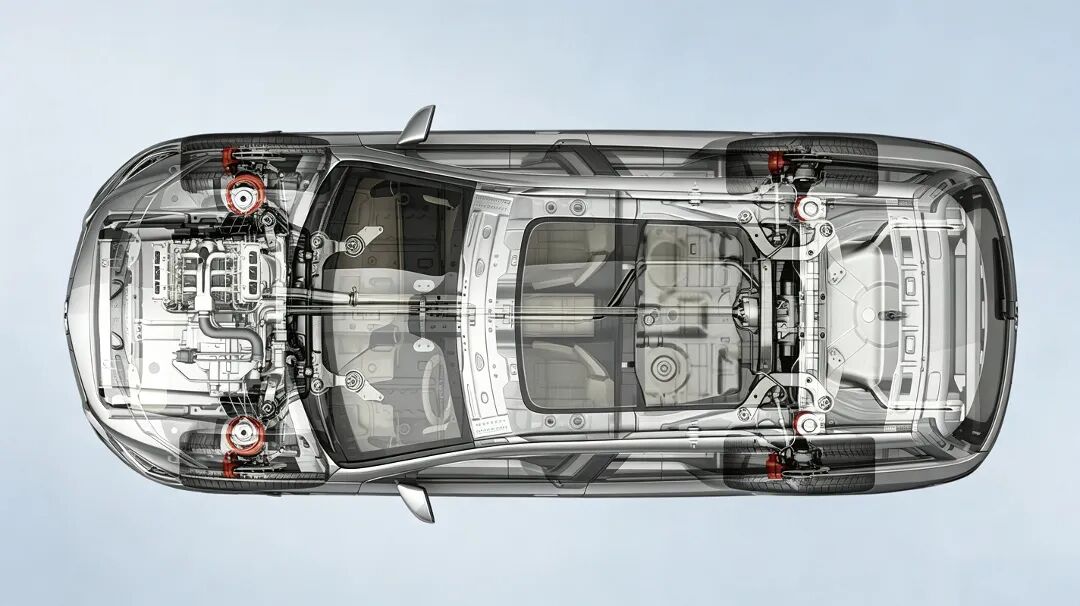
Traditional fuel vehicles use air suspensions primarily to enhance comfort. However, new energy vehicles, due to their battery weight, generally have higher overall vehicle weights. Additionally, many models are equipped with intelligent chassis systems that can actively adjust suspension height and damping based on road conditions.
This means that the air suspensions in new energy vehicles must not only bear greater vehicle weights but also face more frequent and complex active adjustment demands. Designing them according to the usage scenarios and lifespan standards of fuel vehicles from the past clearly will not suffice.
Another example is the thermal management system.
In the fuel vehicle era, the air conditioning system primarily served occupant comfort. However, in new energy vehicles, without engine waste heat, the thermal management system must coordinate the battery, electric drive system, and cabin comfort—ensuring battery temperature in winter, controlling battery heat dissipation in summer, reducing heat during fast charging, and maintaining stable temperatures for intelligent driving chips.
In other words, the air conditioning and thermal management systems in new energy vehicles are no longer just comfort features but core systems that affect range, safety, and overall vehicle performance.
In short, the working intensity of components in new energy vehicles has changed, and past durability standards may no longer apply.
Moreover, it cannot be ignored that new energy vehicles also introduce new challenges from power batteries and intelligence. Failures in fuel vehicles are often due to mechanical component aging; however, in addition to mechanical issues, new energy vehicles may also face new risks such as battery safety, system failures, and software abnormalities.
Therefore, the quality evaluation system for new energy vehicles, covering batteries, electric drives, electronic systems, software, intelligent capabilities, and other key components, should not merely meet the standards of the fuel vehicle era but establish higher, stricter, and more comprehensive quality inspection criteria.
New Energy Vehicles Are Undergoing a 'Second Competition'
In the second half of the new energy era, the competition is not just about technology but also about time. Clearly, the new energy vehicle industry is now undergoing a change in competitive logic.
In the past few years, the competition among new energy automakers focused on 'availability.' Whoever could launch a pure electric platform faster, who could first equip large screens, intelligent driving, or LiDAR would gain market attention. Consumers were also willing to pay for these new technologies because new energy vehicles represented the future.
However, as new energy vehicles enter more ordinary households, the competition is shifting from 'novelty' to 'trust.' Consumers are now generally more concerned not just with acceleration times, screen sizes, or the number of features but with whether the battery remains stable, the intelligent system is reliable, and the core components are durable after five or ten years of use.
Of course, the quality issues arising in new energy vehicles should not be attributed to the development path of new energy or electrification.
In fact, every automotive technology revolution must go through a process from rapid innovation to maturity and refinement. Traditional fuel vehicles have also undergone countless technical adjustments, ultimately relying on strict standard systems, supply chain management, and long-term validation to build consumer trust.
What new energy vehicles are experiencing now is a necessary lesson in the transition from rapid growth to maturity.
For automakers, there is nothing wrong with reducing costs or improving efficiency. However, truly excellent companies should achieve cost optimization while ensuring quality, rather than taking shortcuts and shifting the cost of trial and error onto consumers.
In other words, the new energy vehicle era requires faster innovation but also slower validation. Only by resolving issues at the production stage and eliminating risks before market launch can true trust be built with consumers.
Never forget that in the new energy vehicle era, technological innovation only determines the product's height, while product reliability determines how far the brand can go.
Editor-in-Chief: Yang Jing Editor: He Zengrong

THE END
-
![]()
Tencent Secures a Crucial Victory in AI Office Arena, While Baidu Continues to Struggle
-
![]()
DeepSeek Raises Prices, Alibaba Takes a Cut: Will Major Clients Stay or Leave?
-
![]()
After Persistent Declines, Is This Joint Venture Automaker Considering an Exit? Here’s the Official Word
-
![]()
DeepSeek Raises Prices, Alibaba Takes a Cut: Will Big Clients Pay Up or Walk Away?
-
![]()
SAIC-GM Shows Confidence in Joint Venture Model: What Lies Ahead?
-
![]()
Early Riser, Late Arrival: Where Is Toyota Stumbling in Its Electrification Journey?
-
![]()
Deep Integration and Rooted Expansion: China’s Auto Industry Systematically Expands into Western Markets
-
![]()
Emitting an Unyielding Message: The Injured Chery Seeks the Truth