If Honda Didn't Pursue Electric Vehicles, It Would Have Achieved Greater Success
 08/10 2026
 433
433
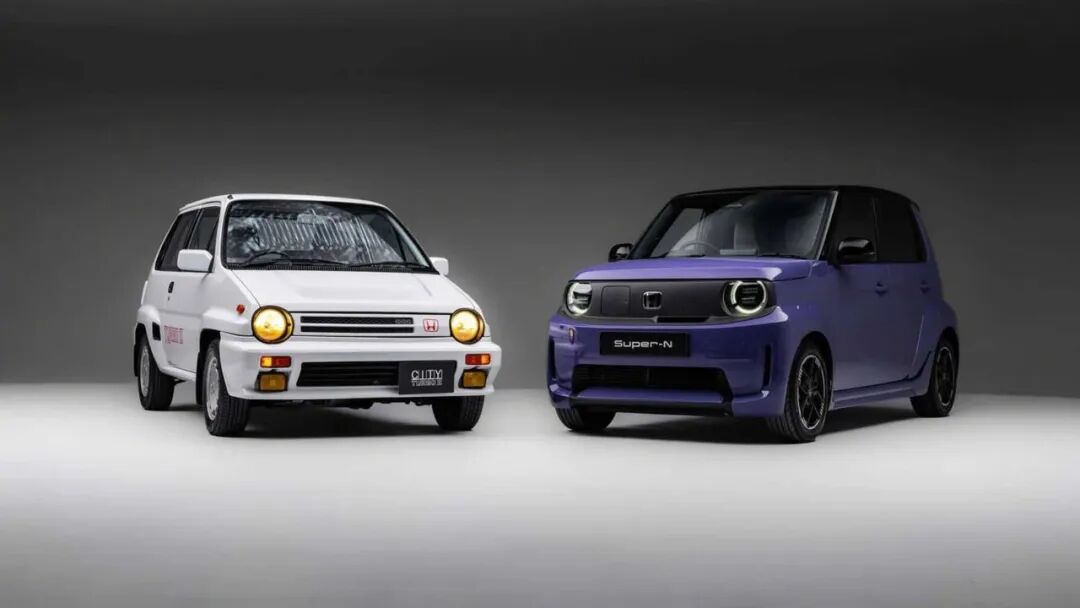
Lead
Introduction
For Honda, restructuring its electrification strategy may not be about defying industry trends, but rather about carefully selecting its battlegrounds.
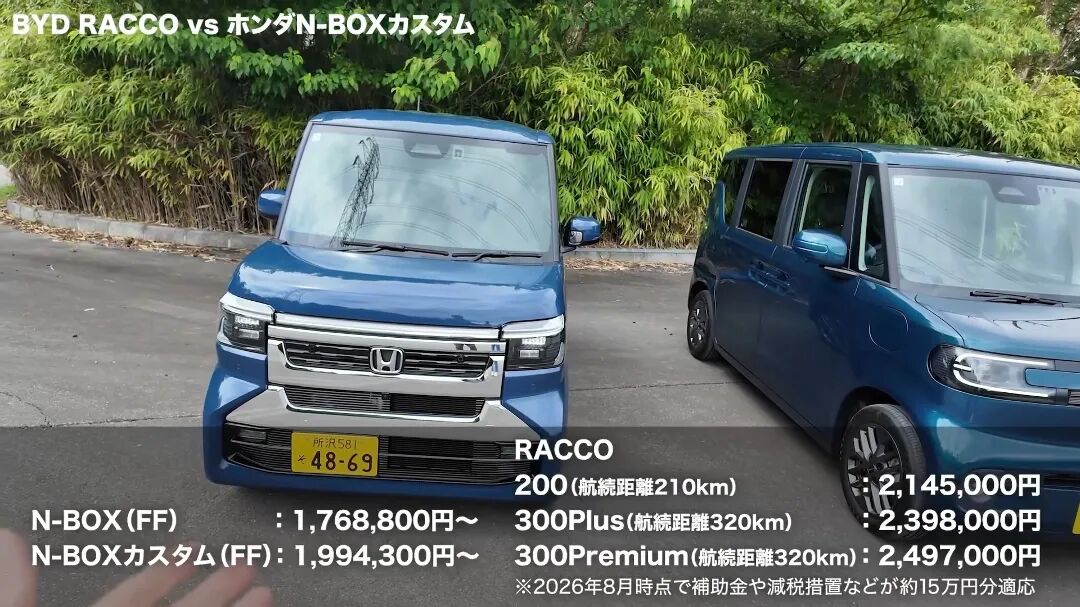
Following the official launch of the BYD Seagull in Japan and the significant attention it garnered, Japanese media compared it to the Honda N-BOX, the best-selling K-CAR model. After comprehensive testing, it became evident that the product performances of the two models were closely matched. However, the Honda N-BOX's inherent advantages seemed less remarkable when compared to the all-electric identity of the BYD Seagull.
Japanese automakers, including Honda, have been cautious in their approach to electric vehicle (EV) development. Much like how the Honda N-BOX dominates the K-CAR segment and even surpasses Toyota, Japanese companies have substantial experience and ample profits in specific market segments. This allows them to approach the electrification transition with confidence.
Currently, despite the impact of the BYD Seagull on Japan's K-CAR market, it remains uncertain whether Honda feels threatened by external forces in electrification, regardless of how Toyota, Nissan, and others respond.
As a Japanese company, Honda always evaluates whether strategic implementations and new vehicle developments can ultimately yield effective returns. In other words, while generating revenue through capabilities is important, the return on investment remains crucial. If Honda invests tremendous effort into creating a blockbuster product only to end up losing money despite the hype, it would lose interest.
Affected by new financial data, Honda has revised its performance forecast upward due to the weakening yen and strong demand for hybrid vehicles in the U.S. market. The underlying message is clear: If Honda had not aggressively pursued electric vehicle development, it would have truly achieved greater success.
After accounting for significant pre-emptive losses due to strategic adjustments in electrification, Honda now expects an operating profit of 650 billion yen for the fiscal year ending March 2027, up from the previous forecast of 500 billion yen. This further underscores Honda's commitment to sustaining profits through its traditional businesses.
Perhaps Honda's lack of enthusiasm for electrification has never been a sudden retreat but rather a calculated decision. Ultimately, electrification is seen as a business venture that neither generates profits, controls the market, nor ensures survival within Honda's global strategy.
01 Two-Wheeler Division: The Pinnacle of Honda's Prosperity
Honda has always prioritized profits over sales volume, scale, or corporate presence, much like Great Wall Motors in China. However, unlike Great Wall's current competitive landscape, Honda possesses an absolute defense that no equivalent automaker has—its thriving two-wheeler division. This fundamentally eliminates concerns about its automotive business.
How does the strength of motorcycles support Honda's unrestrained approach in the automotive market? One need only look at the profitability of Honda's two-wheeler division.
In the first fiscal quarter, Honda sold 5.663 million motorcycles, generating an operating profit of 233.9 billion yen with a profit margin of 20.5%. In contrast, its automotive business sold 786,000 vehicles, yielding an operating profit of 192.1 billion yen with a profit margin of only 5.0%.
In secondary markets like India, Brazil, and Southeast Asia, seemingly inexpensive models like the Super Cub and PCX generate far more stable profits than automotive IPs like the Accord and Civic, thanks to their massive sales volumes. Even when compared to Honda's North American automotive operations, no product can rival the profit-generating capabilities of Honda's motorcycles.
Under such circumstances, is it fair to blame Honda for stalling its electrification transition or accuse it of neglecting the Chinese market? Honestly, if any Chinese automaker had such a solid business foundation, would it matter if they stopped making cars?
Why bother chasing meager returns that barely outperform bank fixed deposits when you can comfortably lie in the two-wheeler market and continue to see substantial profits roll in?
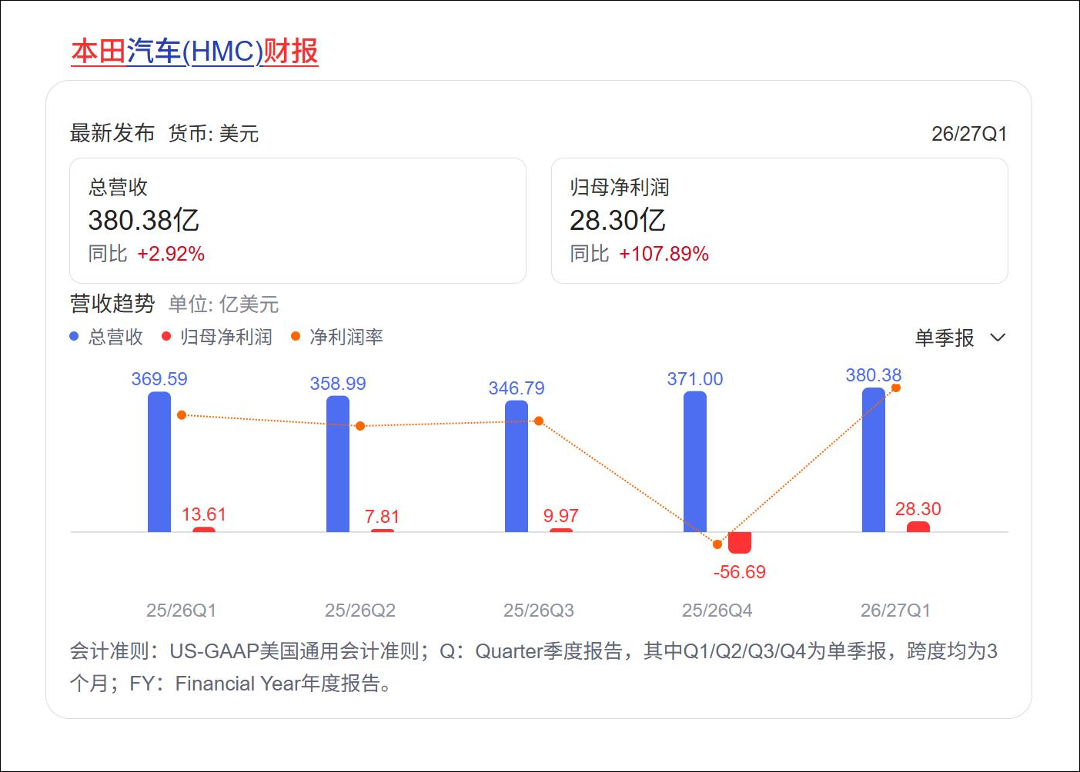
At this stage, even if such support relies on the weakening yen and tariff changes, the automotive business alone contributed 52.2 billion yen from exchange rates and saw an 81.6 billion yen improvement due to tariff impacts.
However, at its core, Honda possesses an enviable source of profits, which explains its lack of enthusiasm for intense competitive environments and high-investment forward-looking product layouts.
In the previous fiscal year, Honda accounted for over 1.45 trillion yen in EV-related losses, resulting in a net loss of 423.9 billion yen—its first loss in nearly 70 years of listing. While clear financial maneuvers were at play, Honda's series of announcements signaled a message to the outside world: Regarding industry electrification, Honda aims to reset the minds of those clamoring for a full transition.
The cancellation of three "0 Series" all-electric models in North America led to supplier compensation, scrapped molds, and reconfigured production lines. The freezing of a $11 billion battery plant plan in Ontario, Canada (jointly built with LG Energy Solution), with sunk costs still accounted for. The failure of both the e:N and Ye series in China, coupled with dismal capacity utilization at new energy factories and the announcement of the suspension of Guangben's Huangpu plant. And now, potentially outsourcing entire vehicle platform development to India's Tata Technologies...
Such radical restructuring plans may, in Honda's view, represent the correct posture for correcting its development path.
What's even more striking is that since its inception, the mechanical passion and technological pride instilled by Honda's founder, Soichiro Honda, have profoundly influenced the company's development.
Forget about the earlier termination of its collaboration with Sony. Seeing the Prologue, bearing the Honda badge and built on General Motors' Ultium platform, sell at a loss for every unit sold, Honda couldn't tolerate it and parted ways with GM without looking back.
Faced with a collective impeachment and "coup" led by retired executives, including 90-year-old former CEO Fukui Kenichi, Honda's board decided to "retain CEO Toshihiro Mibe after careful consideration." Do you think this was Honda's only option?
I believe it's because Honda, from top to bottom, understands that Mibe's latest decisions under his command are not about crippling Honda further.
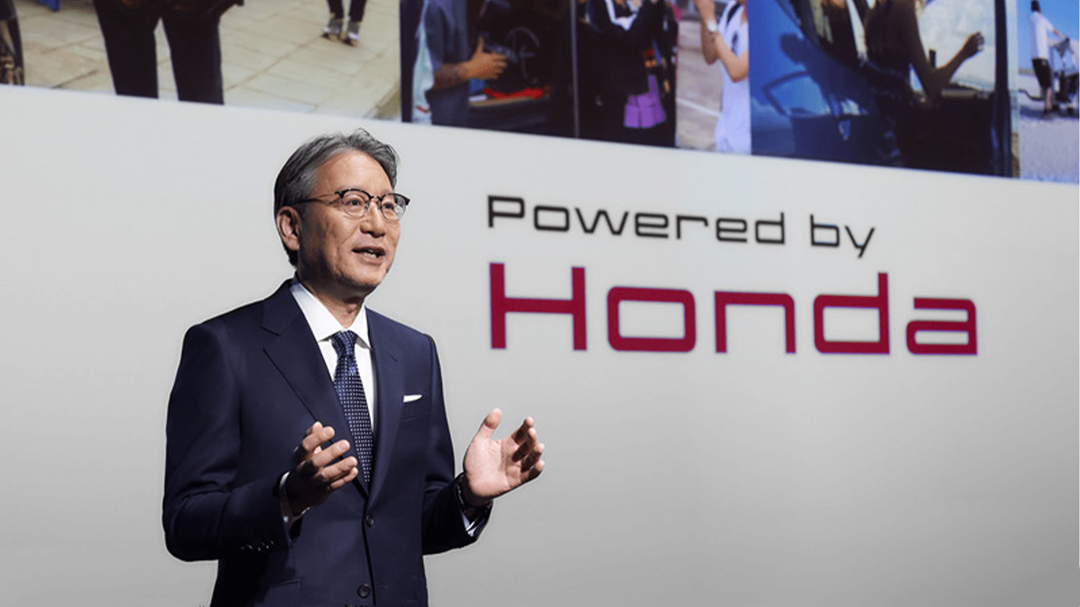
Upon recognizing the reality that "global demand for pure electric vehicles has been overestimated, North American policy incentives have ended, Chinese automakers are outcompeting joint venture EVs with intelligent driving and cost advantages, and India and Southeast Asia haven't yet reached the inflection point for pure electric vehicles," it's impractical to rely solely on past experience and burn money to survive.
In comparison, "consolidating fundamentals" has become Honda's first step in strategic adjustment.
02 The Future: Global is Global, China is China
Indeed, when slogans conflict with cash flow, Honda chooses cash flow. This is very Honda—and very Japanese.
Simply put, when Honda consciously downgrades "electrification" from a global belief to a regional development direction, the only choice before it is: Make money where you can, and retreat where you must burn money.
Toyota adopted this approach earlier this year, while Ford, Stellantis, and Volkswagen are all retreating in the U.S. Now, Honda is merely the most thorough retreater, having suffered the heaviest losses while still possessing the deepest competitive moat. Stopping first is always the right move.
Currently, in the Chinese market, we know that Honda's situation is awkward, unlike overseas. Once a leader among joint ventures, it has quickly become the slowest responder in the entire camp. Industry insiders often attribute this to the Chinese market not yet hurting Honda enough, suggesting it still has many cards to play.
Indeed, given the profitability of Honda's two-wheeler division, which operates like a money-printing machine, I would argue that without the "joint venture" label, Honda wouldn't bat an eye or lower its posture, even if the Chinese auto market became fiercely competitive.
What compels Honda to feel it's still necessary to sell cars in the Chinese market is the renewal of its joint venture agreements, which keep Honda emotionally invested.
Calculating based on how foreign automakers might operate in China's future, why bother with retail? Look at Hyundai and Kia before, and now Chevrolet under GM—relying on China's vast and low-cost supply chain to build cars for export overseas is far more comfortable than retailing at a loss.
Moreover, with China's new energy vehicle supply chain maturing, cost advantages alone can sustain profitability.
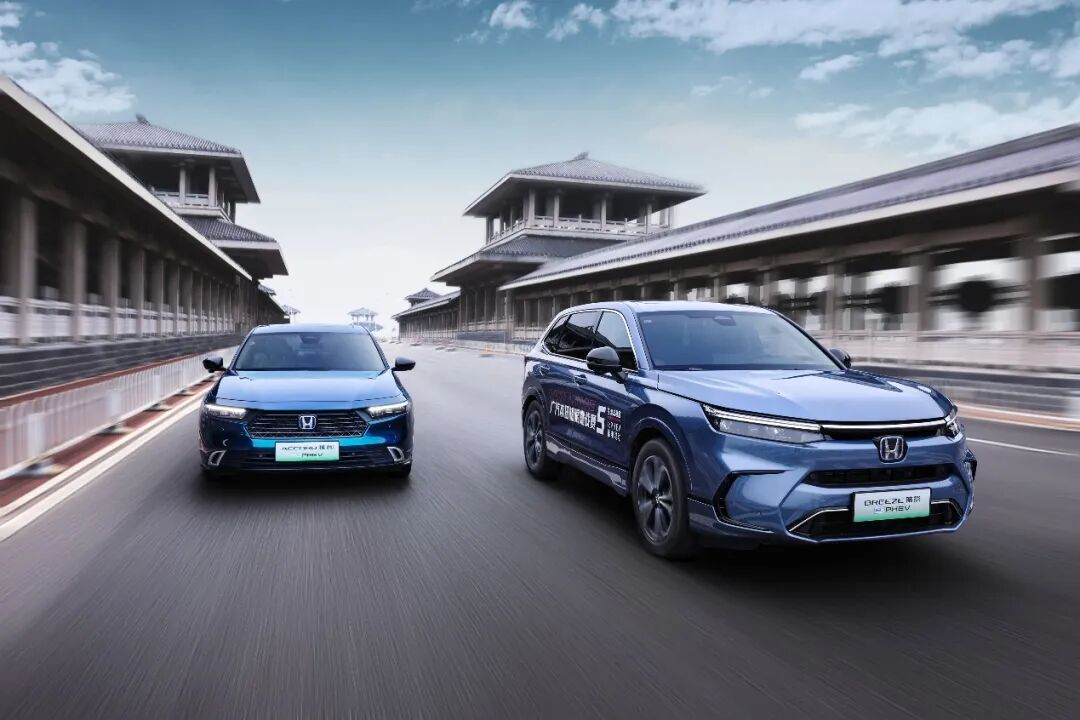
Philippe Brunet, former CTO of the Renault Group, once cited the example of the Twingo E-Tech to illustrate the benefits. Developed in Shanghai and manufactured in Slovenia, it was sold in Europe starting at 19,490 euros, yielding substantial profits. Meanwhile, its 22-month development cycle set a Renault record for speed, and orders doubled expectations upon launch.
Who's to say Honda couldn't adopt a similar approach if times get tough?
Ultimately, Honda is giving its Chinese joint ventures an opportunity. Ten years is neither long nor short for Honda—not a life-or-death decision but rather a chance for the two Chinese companies bearing the "Honda" name to achieve self-redemption.
Also in August, GAC Honda released new information regarding the joint venture renewal. The core message: Honda will delegate authority, allowing its Chinese partners to take charge of defining new products and making multidimensional decisions in research and development.
Breaking it down, given Honda's global business performance and its accumulation of new energy technology, regardless of market trends, future competitions will belong to these authentic Chinese automakers themselves.
Whether it's GAC Honda or Dongfeng Honda, would you prefer Honda to impose its experience of building Super-one—a model with less than 300 km of range and an exorbitant price—on them?
Honda hitting pause isn't about misunderstanding the future; it's about learning to survive in the present—waiting to profit from hybrids. The "Electric Honda" might return; if not, motorcycles and HEV product matrices are sufficient to sustain it for a long time. However, for Honda (China), it must recognize that all accolades Honda achieves globally are irrelevant.
While profit figures have noticeably improved, Chinese auto sales continue to decline rapidly. All development-related matters in China must be entirely China-based.
Within Honda's joint venture system, regardless of whether Dongfeng Honda's latest electric vehicle is a pure electric MPV or whether GAC Honda leverages GAC's capabilities to launch a product comparable to Toyota's bZ3X, everyone involved must shed Honda's arrogance and understand that, in front of Chinese companies, they are no longer veterans but novices just stepping onto campus.
Editor-in-Charge: Li Sijia Editor: He Zengrong

THE END
-
![]()
Tencent Secures a Crucial Victory in AI Office Arena, While Baidu Continues to Struggle
-
![]()
DeepSeek Raises Prices, Alibaba Takes a Cut: Will Major Clients Stay or Leave?
-
![]()
After Persistent Declines, Is This Joint Venture Automaker Considering an Exit? Here’s the Official Word
-
![]()
DeepSeek Raises Prices, Alibaba Takes a Cut: Will Big Clients Pay Up or Walk Away?
-
![]()
SAIC-GM Shows Confidence in Joint Venture Model: What Lies Ahead?
-
![]()
Early Riser, Late Arrival: Where Is Toyota Stumbling in Its Electrification Journey?
-
![]()
Deep Integration and Rooted Expansion: China’s Auto Industry Systematically Expands into Western Markets
-
![]()
Emitting an Unyielding Message: The Injured Chery Seeks the Truth