AITO G9 in L3 Leadership: Is It Unrivaled Below the Million-Yuan Mark?
 08/10 2026
 428
428
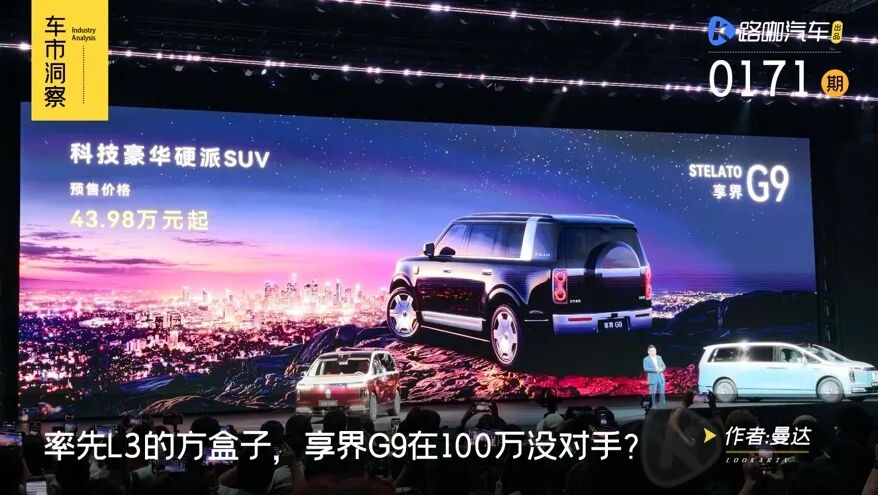
Following its pre-sale launch on August 5th, the AITO G9 swiftly emerged as one of the most talked-about new models within Huawei's ecosystem.
On one hand, this milestone marks Harmony Intelligent Mobility's first genuine foray into the "luxury rugged boxy SUV" market. On the other, with a starting pre-sale price of 439,800 yuan, it positions itself in a relatively uncharted territory within China's current new energy vehicle market.
Unlike boxy models priced around 200,000 yuan that compete mainly on price, or million-yuan luxury off-roaders that emphasize extreme off-road capabilities, the G9 endeavors to blend several of today's most sought-after features: a luxurious six-seater layout, Huawei's intelligent driving technology, light off-road capability, and a boxy design.
More crucially, it has been touted by industry observers as the first boxy model to feature L3 autonomy.

Unrivaled Below the Million-Yuan Mark?
From a market perspective, the G9's greatest uniqueness stems not from a single feature but from the fact that it "has virtually no direct competitors."
The 400,000-500,000 yuan new energy SUV market is already highly competitive. Models like the AITO M9, Li Auto L9, Denza N9, NIO ES8, and Zeekr 9X are all vying for family flagship SUV users. However, these vehicles predominantly follow an urban luxury SUV route.
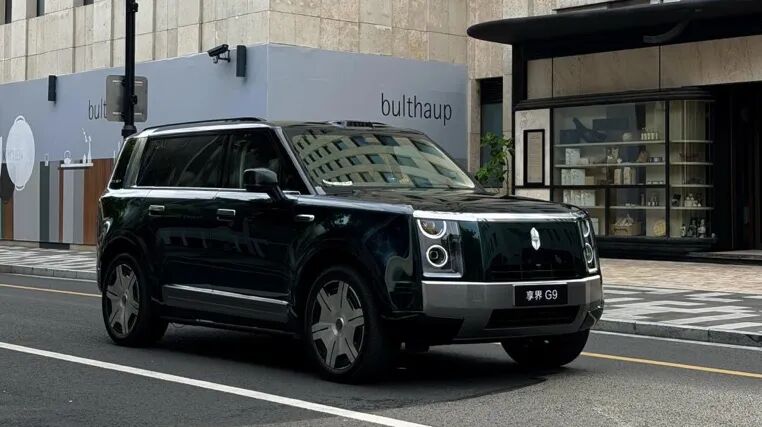
There are hardly any products that truly integrate a "boxy" design with high-end intelligence and spaciousness.
Among traditional rugged off-roaders, the Tank 700 Hi4-T leans more towards mechanical performance; the Mercedes-Benz G-Class and Land Rover Defender are priced higher; while the Yangwang U8 directly targets the million-yuan segment. As for models under 300,000 yuan like the Fangchengbao, Tank 300, and Haval Menglong, their user bases and budget ranges are entirely different.
Thus, the G9 has carved out an intriguing market niche: it is neither as "pure off-road" as traditional rugged SUVs nor as urban-focused as city SUVs, instead emphasizing passability and outdoor attributes.
Even below the million-yuan mark, finding a directly comparable competitor is challenging. The closest positioning currently is FREELANDER, a new energy brand co-developed by Chery and Jaguar Land Rover, whose first model, the Freelander 8, also targets the luxury new energy boxy SUV market. However, based on available information, the G9 is even larger in size.
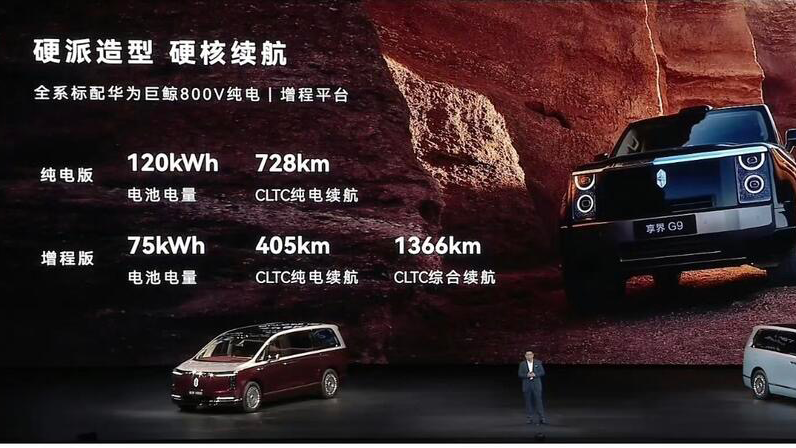
The G9 measures over 5.2 meters in length with a 3,160mm wheelbase, 35mm longer than the AITO M9 and Li Auto L9. It offers five- and six-seat layouts, a standard 800V high-voltage platform, and Huawei's Gigawatt Battery. The pure electric version boasts a CLTC range of 728 km, while the extended-range version exceeds 1,300 km in combined range. All versions feature dual-motor all-wheel drive, with 0-100 km/h acceleration in the 4-second range.
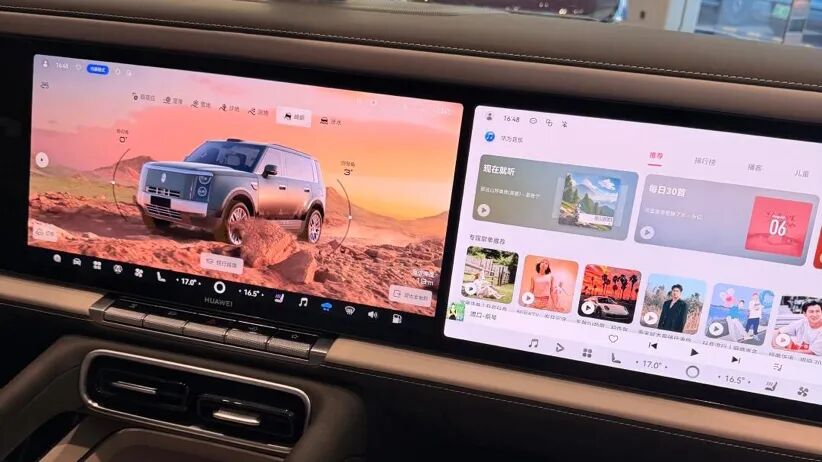
By specifications, it is not a traditional "off-roader" but a typical "luxury all-rounder SUV of the new energy era."
Especially in terms of intelligence, the G9 directly incorporates Huawei's ADS 5.0 with an 896-line LiDAR.
Market feedback has been immediate. Official data shows that within 24 hours of pre-sale, the G9 received over 10,300 orders, with 90% of users opting for the Ultra and Ultra+ versions. This indicates that consumers are not just choosing a "low-spec trial" but genuinely embracing its high-end positioning.
This reflects a trend: high-end new energy users are increasingly willing to pay for "all-round capabilities."
In the past, the boundaries between urban SUVs and rugged off-roaders were distinct. Comfort meant sacrificing off-road capability; off-roading meant compromising on fuel efficiency, space, and handling. However, new energy technology is redefining this market.
The G9's core logic is "adding capabilities to an urban SUV." For example, it uses a new Tuling Dragon platform with a closed dual-chamber air suspension + CDC electromagnetic damping, three differential locks, a 900mm wading depth, and a 2,000kg factory-approved towing capacity.
On the other hand, it is not a traditional body-on-frame rugged off-roader. The G9 adopts a unibody design with an embedded frame, and its official positioning is clear: 80% urban use, 20% light off-roading.
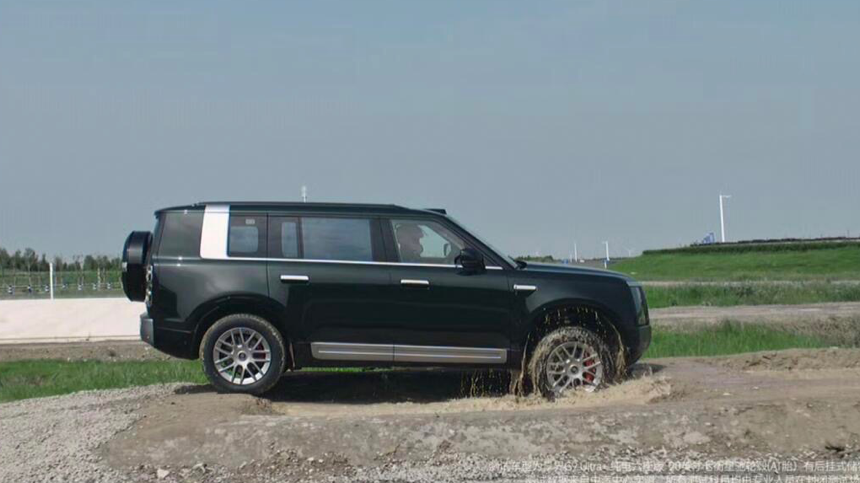
This aligns perfectly with current mainstream consumer scenarios. True heavy off-roading and long-distance expeditions will always appeal to a minority. Most consumers need a vehicle capable of venturing far while remaining comfortable for daily driving. This explains the sudden surge in boxy SUVs over the past two years.
They sell not just off-road capability but a lifestyle symbol. Compared to traditional urban SUVs, boxy models offer stronger emotional value; compared to pure rugged off-roaders, they lower the barrier to entry. Harmony Intelligent Mobility's greatest advantage lies in further elevating intelligence capabilities.
A video of Yu Chengdong driving the G9 through "complex rough roads" previously sparked controversy, with some arguing the terrain was not extreme enough. However, this precisely illustrates the G9's positioning: it is not designed for extreme enthusiasts.
First L3 Vehicle? Breaking Sales Ceilings
Beyond its "boxy" positioning, another topic rapidly elevating the G9's profile is L3 autonomous driving.
Previously, Peng Lei, Product Director of Huawei's Smart Selection Vehicle Business, showcased the G9's L3 autonomous driving function button, which emits a blue light. Many view this as a signal that "the L3 era is imminent."
The timing is highly coincidental. Not long ago, China's first mandatory national standard for L3 conditional autonomy and L4 high autonomy systems—Intelligent Connected Vehicles - Autonomous Driving System Safety Requirements—was announced, slated for implementation on July 1, 2027.
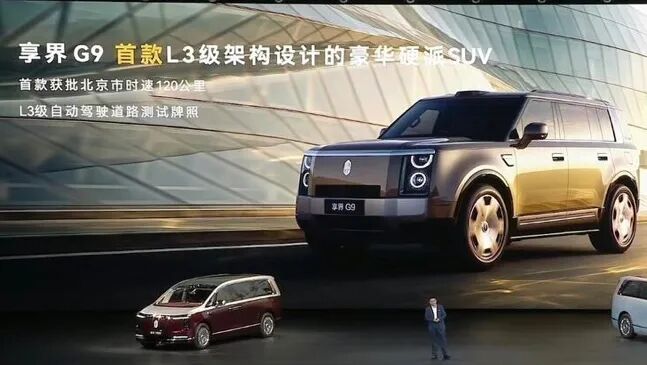
Meanwhile, the G9 has officially obtained Beijing's L3 autonomous driving road test license, becoming the first model approved for L3 testing at speeds up to 120 km/h in Beijing. These developments intensify the perception of the G9 as the "first L3 vehicle."
However, based on Harmony Intelligent Mobility's past track record with new technology rollouts, things may not be so straightforward. Huawei typically prioritizes new technologies for its "flagship brands."
For example, the 896-line LiDAR was first adopted by the Zenith and AITO M9. L3 autonomous driving will likely follow a similar path.
During the Zenith V800's launch, Yu Chengdong mentioned it already features an enhanced architecture for L3 autonomy, "ready for commercial use once national L3 regulations are implemented."
In other words, the G9 will be among Huawei's first but not necessarily the first L3 model.
Even so, the L3 concept itself remains a significant selling point for the G9. In the 400,000+ yuan SUV market, intelligence is becoming a decisive factor.
In today's large SUV market, the true sales leader is Harmony Intelligent Mobility's own AITO M9, with monthly sales consistently around 10,000 units.
However, the boxy SUV market follows different logic. In the first half of this year, the top 10 boxy SUV models by sales were dominated by brands like Fangchengbao, Tank, and Haval, with main price ranges concentrated below 300,000 yuan.
The highest-selling model, the Titan 7, is the only one exceeding 10,000 monthly sales. Among boxy models priced above 400,000 yuan, no true blockbuster has emerged yet.
The reality is stark. Boxy SUVs are a relatively niche category, and high-end positioning further shrinks the user base. Fewer consumers than imagined are willing to spend over 400,000 yuan on a rugged boxy SUV.
Thus, the G9 may not need to replicate the M9's sales volume. Stabilizing monthly sales around 5,000 units would already represent a "record-breaking" achievement in the 400,000+ yuan new energy boxy SUV segment, as almost no one has succeeded in this niche before.
The G9's true significance may not lie solely in sales figures. It represents Harmony Intelligent Mobility's latest market experiment: when intelligence, luxury, boxy design, light off-roading, and L3 expectations converge, can China's high-end SUVs continue to push upward? If successful, it may open not just a new model segment but an entirely new category of luxury new energy SUVs.
-
![]()
Tencent Secures a Crucial Victory in AI Office Arena, While Baidu Continues to Struggle
-
![]()
DeepSeek Raises Prices, Alibaba Takes a Cut: Will Major Clients Stay or Leave?
-
![]()
After Persistent Declines, Is This Joint Venture Automaker Considering an Exit? Here’s the Official Word
-
![]()
DeepSeek Raises Prices, Alibaba Takes a Cut: Will Big Clients Pay Up or Walk Away?
-
![]()
SAIC-GM Shows Confidence in Joint Venture Model: What Lies Ahead?
-
![]()
Early Riser, Late Arrival: Where Is Toyota Stumbling in Its Electrification Journey?
-
![]()
Deep Integration and Rooted Expansion: China’s Auto Industry Systematically Expands into Western Markets
-
![]()
Emitting an Unyielding Message: The Injured Chery Seeks the Truth