Major Reshuffle in the E-Scooter Market! Microcar Sales Plunge by 55%, Automakers Shift Focus Away from A00 Segment
 08/11 2026
 348
348
The age of A00 and A-class vehicles is drawing to a close.
The A00-class vehicle market has truly taken a nosedive!
According to data released by Cui Dongshu, Secretary-General of the China Passenger Car Association (CPCA), cumulative sales of passenger vehicles priced under RMB 50,000 in the domestic market reached 130,000 units in the first half of this year, marking a staggering 55% decline year-on-year.
The Wuling Hongguang MINIEV, a former sales sensation with over 50,000 units sold in a single month, outpacing the Tesla Model Y, saw its sales drop to 72,800 units in the first half of this year, nearly 100,000 units less than the same period last year. Its rival, the Geely Panda Mini, fared no better, with cumulative sales of 19,900 units in the first half of this year, down 78.2% year-on-year.
Moreover, the entire affordable new energy vehicle market has witnessed a contraction to some extent.
During the early days of the domestic new energy vehicle market, the Wuling Hongguang MINIEV stood out with remarkable sales, surpassing the Tesla Model 3/Y in several months.
For consumers at that time, a microcar with a range exceeding 100 kilometers, air conditioning, easy parking, and an affordable price tag was the perfect 'grocery getter' for daily commuting. After the Hongguang MINIEV became a hit, other automakers followed suit, launching similar models such as the Chery QQ Ice Cream and the Geely Panda Mini.
Soon, the entire A00-class vehicle market went electric, becoming the first segment in China to achieve a new energy penetration rate close to 100%. However, this did not guarantee continuous growth in market size for A00-class vehicles. From 2023 onwards, A00-class vehicles began to experience a decline.
The sales slump is not confined to A00-class vehicles; the A-class vehicle market has also been affected. In a Weibo post on June 9th of this year, Cui Dongshu outlined the six key characteristics of the passenger vehicle market in May, highlighting the pressure on micro electric vehicles, the shrinking of A-class vehicles, the urgent need for support for entry-level consumption, and the anticipation of standards for affordable electric vehicles.

(Image source: Weibo screenshot)
Among the segments of A-class and below, one type of vehicle has managed to maintain sales growth: A0-class vehicles.
CPCA data reveals that domestic A0-class vehicles achieved a doubling in growth from January to July 2025. Despite the overall pressure on the domestic new energy vehicle market this year, wholesale sales of A0-class pure electric vehicles reached 122,000 units in February, the industry's off-peak season, representing a 3.9% year-on-year increase.
In the A0-class vehicle market, models such as the Geely Galaxy Starwish, BYD Dolphin, Wuling Binguo Pro, Leapmotor A10, and Yuan UP all boast monthly sales exceeding 10,000 units. Among them, the Starwish delivered an impressive 194,200 units in the first half of this year, ranking first in domestic single-model sales regardless of powertrain or segment.

(Image source: Geely Galaxy)
Vehicles from A00-class to A-class are typically considered 'affordable' due to their low prices and low energy consumption. Especially with the support of new energy vehicle incentives, advantages such as easy licensing and low purchase costs once made A00-class vehicles extremely popular.
Today, in the market for A-class and below, only A0-class vehicles can sustain sales growth. It's not that A00-class and A-class vehicles are no longer affordable; rather, due to changes in new energy vehicle incentives and industry dynamics, they are no longer as 'cost-effective,' and consumer demand has shifted.
Starting January 1, 2026, the purchase tax exemption for new energy vehicles will be adjusted from full exemption to a 50% reduction, with the maximum tax reduction per vehicle not exceeding RMB 15,000.
From the phase-out of national subsidies for new energy vehicles to the adjustment of the purchase tax exemption, these changes reflect the growing maturity of new energy vehicles, with automakers no longer relying solely on subsidies and incentives to survive. From the consumer's perspective, the most noticeable impact is the increased cost of purchasing a vehicle.
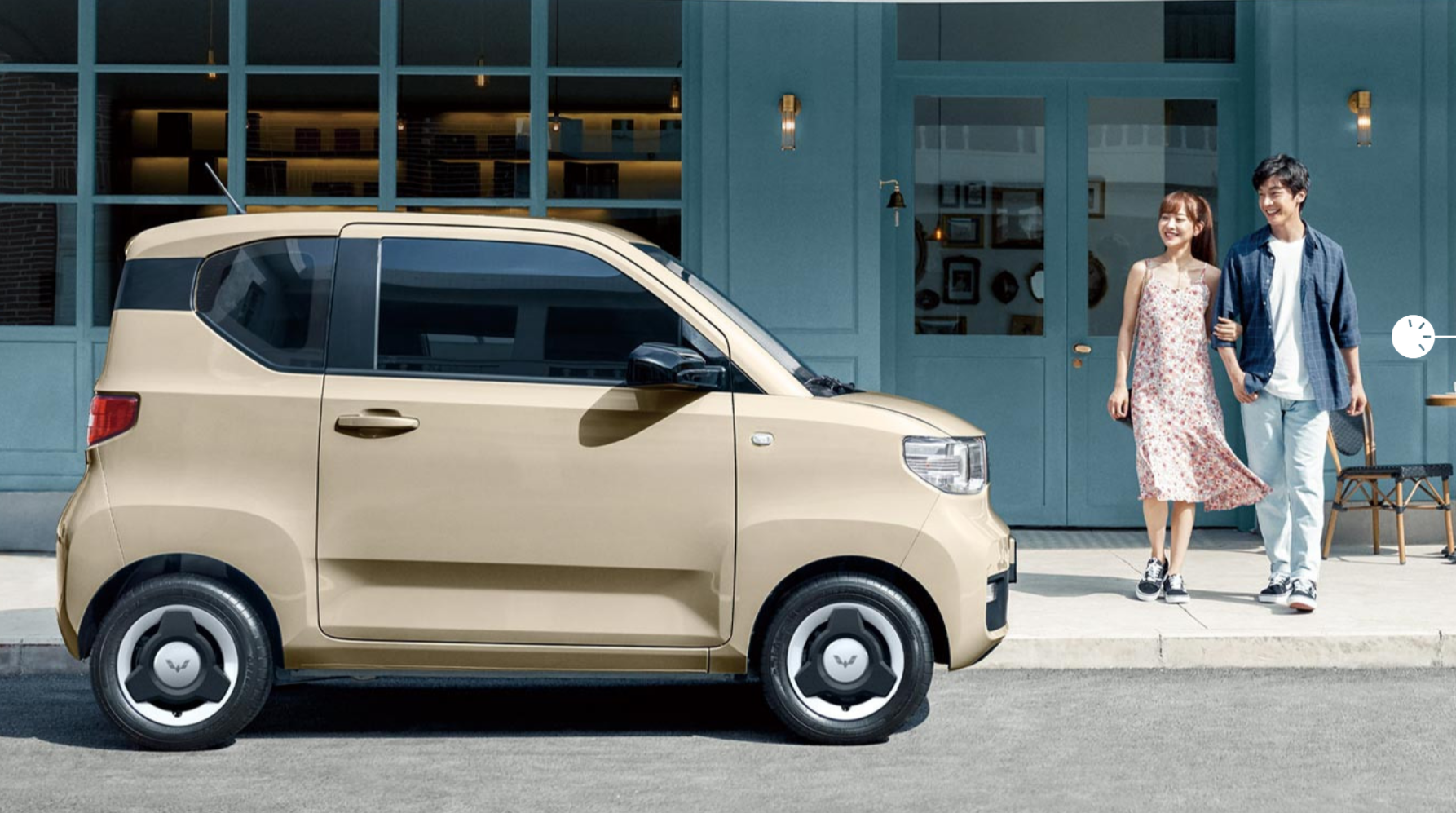
Some A00-class vehicles, such as the BYD Seagull and Leapmotor T03, now have starting prices around RMB 60,000, approaching those of A0-class vehicles. The fifth-generation Hongguang MINI EV maintains a starting price of over RMB 30,000, but with a length of only 3,268mm and a wheelbase of 2,190mm, its interior space is too limited.
(Image source: Wuling)
Furthermore, the current fifth-generation Hongguang MINIEV 301km Premium Edition has an official guide price of RMB 54,800. For just around RMB 10,000 more, consumers can purchase the 2026 Geely Starwish 310km Aspiration Edition, which offers a comprehensive upgrade in body size and configuration, ensuring that rear passengers do not feel cramped in the legs or head.
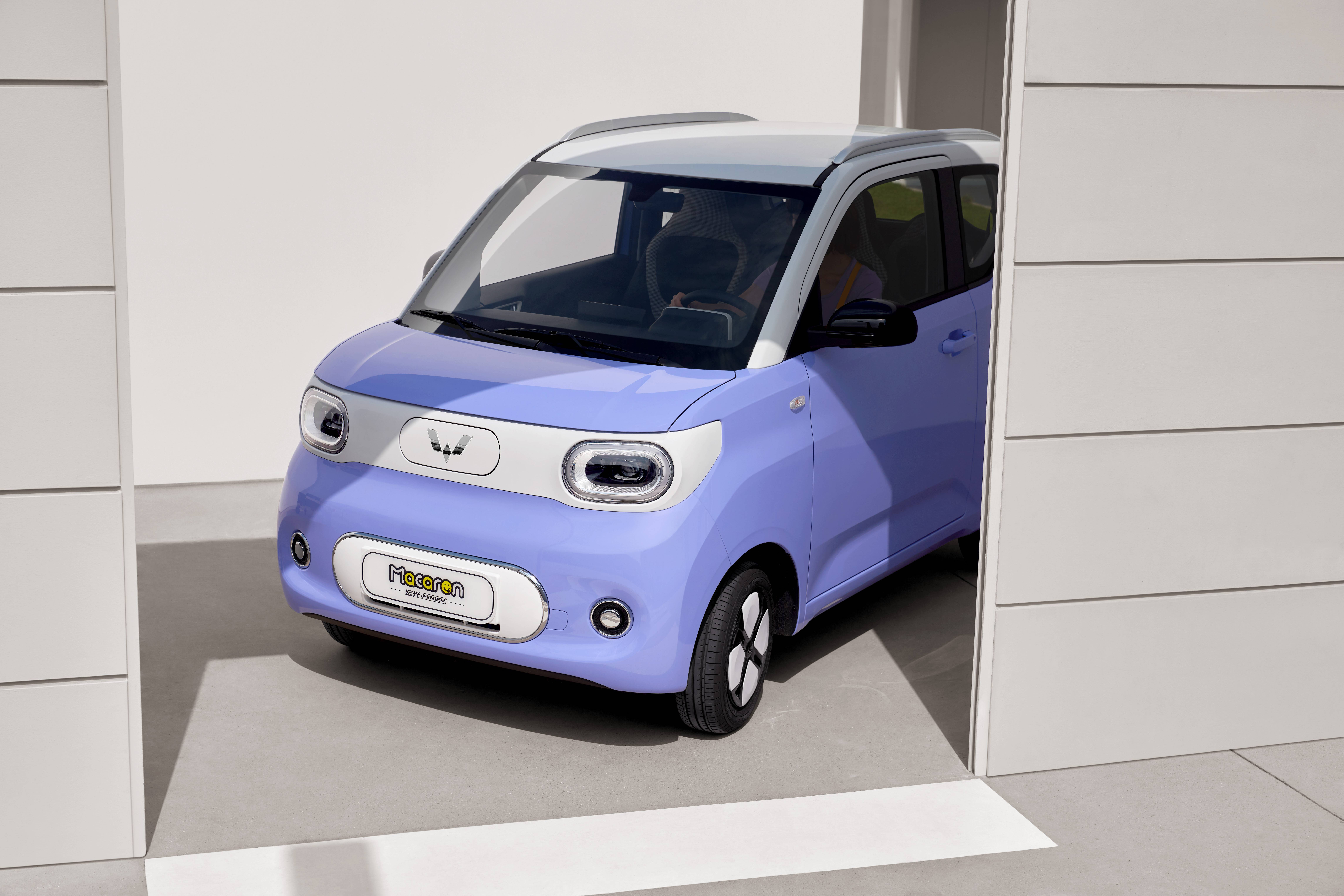
Additionally, A0-class vehicles such as the Wuling Binguo Pro, Chery QQ3 EV, and Nanomi 01 continue to penetrate the market, delivering a significant blow to A00-class vehicles.
For consumers, A00-class vehicles have become less cost-effective due to the phase-out of subsidies, changes in purchase tax policies, and rising prices of lithium batteries and memory chips. With an additional budget of RMB 10,000 to RMB 20,000, consumers can purchase products with comprehensive upgrades in space, range, and intelligence, making them naturally inclined to spend more for better options.
The reasons for the sales decline in A-class vehicles are similar to those for A00-class vehicles. On one hand, changes in relevant policies have reduced the cost-effectiveness of A-class vehicles. On the other hand, they face competition from B-class vehicles.
Models such as the Geely Galaxy A7 EM/Star Glory 7, BYD Qin L/Seal 06, and Arcfox Alpha S5/Beta S3 continue to penetrate the market, with starting prices not much different from the high-end versions of some A-class vehicles. A-class vehicle consumers can purchase a larger B-class vehicle for just an additional RMB 10,000 to RMB 20,000.
To adapt to the market, domestic automakers are making changes. Taking BYD as an example, despite the continued strong sales of the Seagull, BYD is taking proactive measures to significantly improve it.
In July of this year, the Ministry of Industry and Information Technology (MIIT) released the 409th batch of new product announcements for road motor vehicle production enterprises and products, which included the new BYD Seagull. Compared to the current model, the new BYD Seagull's dimensions have increased to 4205×1810×1570mm, with a wheelbase of 2650mm, reaching A0-class vehicle standards.

(Image source: Ministry of Industry and Information Technology)
The third-generation Yuan PLUS, unveiled at the Beijing Auto Show in April this year, has also increased its length from 4455mm in the previous generation to 4665mm, no longer just barely meeting A-class vehicle standards.
The comprehensive phase-out of policy incentives is the underlying driver reshaping the affordable vehicle market. The reduction in new energy vehicle purchase tax exemptions and the gradual withdrawal of local car purchase subsidies have narrowed the cost advantage of micro electric vehicles. Coupled with the stabilization of prices for core components such as batteries and chips, automakers can no longer compress profits for low-price promotions, causing the cost-effectiveness of A00-class vehicles to fade significantly, with their market size continuing to plummet.
The market pressure from both directions has further accelerated the decline of old market segments. A0-class models are fully penetrating the market, allowing consumers to upgrade from A00-class vehicles, which lag in space, range, and safety configurations, to highly practical A0-class commuter vehicles with just a small price increase.
B-class new energy models continue to reduce prices and penetrate lower segments, squeezing the living space of A-class vehicles and leaving them in an awkward position of 'neither matching quality nor cost-effectiveness' at their mid-range price point.
The collective adjustment of automakers' product strategies confirms the inevitable trend of industry upgrading. Popular models such as the new Seagull and the all-new Yuan PLUS have all lengthened their wheelbases, enlarged their bodies, and upgraded their configurations, actively moving up from the A00-class and A-class segments.
The era of A00-class vehicles relying on ultra-low prices for volume sales has ended. The traditional mid-range A-class segment is also being continuously eroded, with consumer vehicle market resources now concentrating towards the A0-class and B-class segments, forming a pattern of 'strengthening at both ends and shrinking in the middle.'
The ability of A0-class vehicles to capture the commuting demand lost by A00-class vehicles lies not in their sufficiently low prices but in finding a balance between cost and experience. They do not require the high budget of A-class vehicles yet provide qualified interior space, sufficient range, and basic intelligent configurations, perfectly matching high-frequency scenarios such as urban commuting and family short trips.
For users with limited budgets, spending an additional RMB 10,000-plus for a significant leap in safety and practicality determines that A0-class vehicles will gradually secure their position as the mainstay in the urban commuting segment, rather than simply repeating the old path of low-price internal competition seen with A00-class vehicles in the past.
The continuous downward penetration of B-class models is redefining new standards for ordinary family vehicles. Ordinary family users only need a small increase in budget to obtain a larger body, better chassis quality, and more comprehensive intelligent driving configurations, significantly enhancing the overall experience in home scenarios. This has led many consumer groups originally targeting A-class family vehicles to jump directly to the B-class segment, continuously compressing the living space of traditional A-class vehicles.
Even a small number of C-class new energy vehicles from Wuling, Chery, and Geely have starting prices after discounts below RMB 150,000. In the future, B-class vehicles may face pressure from C-class vehicles, leaving even less room for A-class vehicles to develop.
In the long run, A0-class vehicles will cater to entry-level commuting needs, while B-class vehicles will serve mainstream family needs, with these two segments continuing to absorb the core consumer power of the market. However, A00-class and A-class vehicles will not disappear entirely; they will gradually contract and eventually stabilize. Automakers will also continuously adjust their product matrices, aligning their offerings with A0-class and B-class vehicles through upgrades to adapt to new consumer preferences.
New energy vehicles, Wuling, BYD, Geely, Starwish, Seagull
Source: Leikeji
All images in this article are from the 123RF licensed image library. Source: Leikeji
-
How Far Have Domestic GPUs Progressed Behind Book Losses?
-
![]()
Taobao Flash Sale Restructures: After a Year of 90 Billion Yuan in Losses in the Food Delivery Battle, Even Alibaba Can’t Sustain the Fight
-
![]()
Valued at 7 Billion! Turing Quantum Races to Become the First Photonic Quantum Computing Company to Go Public
-
![]()
Revenue Sees Slight Rise, Net Profit Soars Twofold: Wavelength Opto-Electronic's 'Optics+' Strategy Yields Initial Fruits
-
![]()
Expected loss widens to HK$12.1 million! Ever Smart Eyewear issues profit warning
-
After 'No Right to Recall,' Can GAC Still Spin a Compelling Robot Tale?
-
![]()
Baidu's Critical Moment in AI Transformation: After Losing the Main Apple Partnership, What's Next for Ping Xiaoli's Strategy?
-
![]()
Voice Input: Opening the AI Gateway?