Joint Venture Brands Scale Back Production Capacity but Quietly Sell Chinese Cars Worldwide
 08/17 2026
 424
424
Over the next few years, more joint venture brands are expected to complete their strategic transformation from 'domestic sales-focused' to a balanced approach of 'both domestic and export sales.'
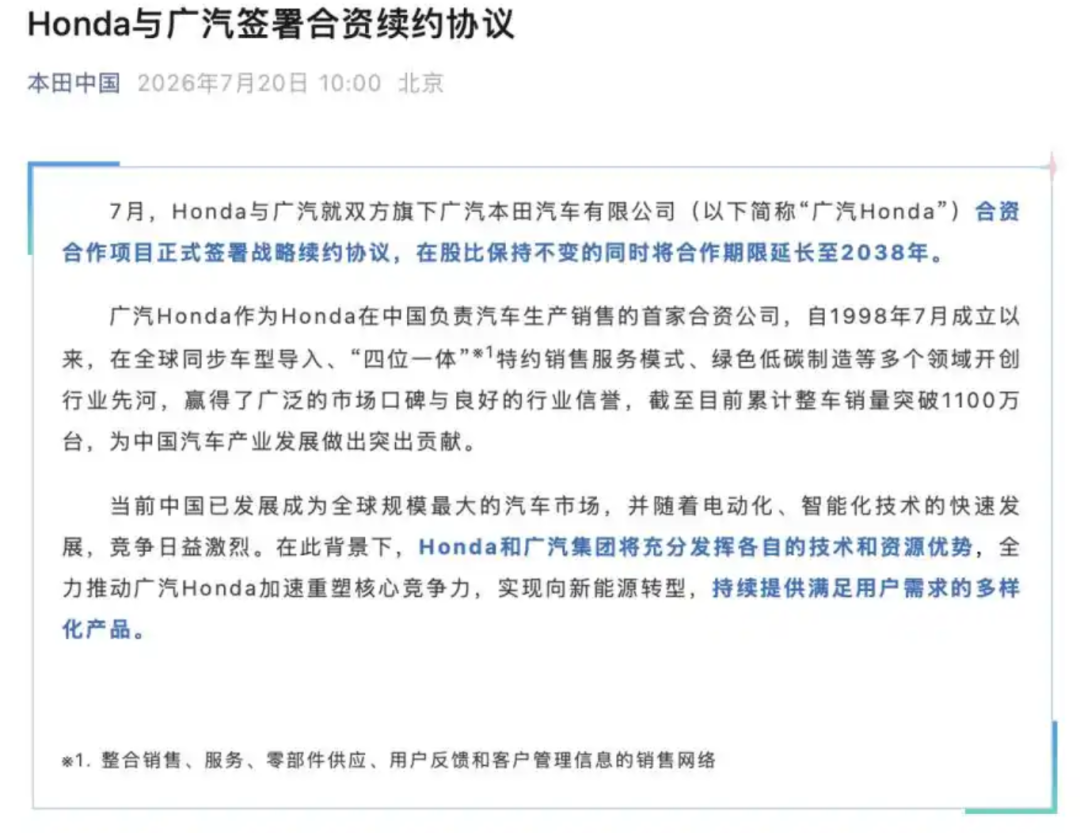
On August 5, SAIC Group and General Motors officially signed a joint venture contract renewal agreement at the Shanghai World Living Room, extending SAIC-GM's joint venture term by 20 years to 2047. Just a month earlier, GAC Group and Honda also announced a contract renewal until 2038.
These two renewal events involving leading joint venture enterprises go beyond simple contract extensions; they mark a complete shift for joint venture brands from the past 'using the Chinese market to exchange for global technology' (1.0 era) to a new stage of 'using Chinese technology, Chinese supply chains, and Chinese production capacity to reverse-empower the global market.'
The Real Dilemma of Joint Venture Brands in China
Over the past two years, structural changes in the domestic passenger vehicle market have continuously squeezed the traditional survival space of joint venture brands. In July 2026, domestic passenger vehicle retail sales reached 1.506 million units, down 18% year-on-year, but NEV retail sales hit 970,000 units, with a penetration rate climbing to 64.4%, and the cumulative NEV penetration rate surpassing 50% for the first time.
Under this market landscape, the traditional fuel vehicle base of most joint venture brands continues to shrink, and their pace of new energy transformation lags significantly. As a result, they have to respond to survival pressures by scaling back domestic production capacity and optimizing product mixes.
This round of production capacity reductions covers nearly all mainstream joint venture brand camps.
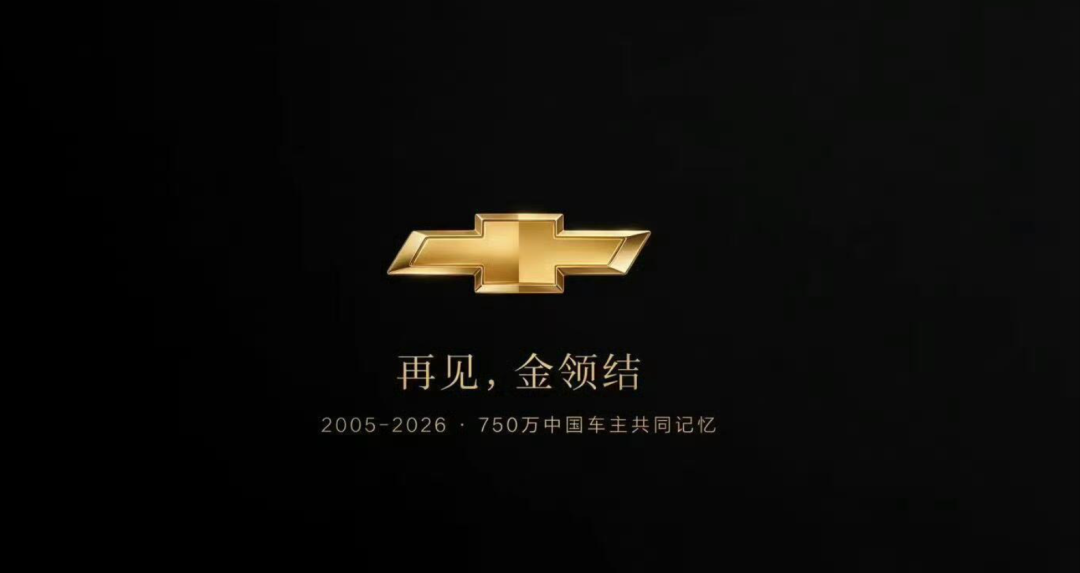
Among American brands, Chevrolet has essentially announced its withdrawal from the domestic new vehicle retail market, halting new investments in domestic sales-related production capacity and redirecting its remaining factories to export production. Ford dissolved its independent electric vehicle business unit, significantly cut production capacity for its first-generation pure electric models, wrote down related asset impairments, slowed the pace of domestic NEV product launches, and instead redirected surplus production capacity from its domestic factories to vehicle exports.
Among Japanese brands, Honda shut down low-efficiency, outdated fuel vehicle production capacity in the Guangzhou region; Mazda significantly reduced its domestic fuel vehicle production capacity while transforming its Chinese factories into exclusive production bases for Mazda's global NEV models, primarily for export; Nissan plans to streamline its global model lineup from 56 to 45 models, phasing out underperforming models in the Chinese market and reducing corresponding idle production capacity.
Among German brands, Skoda has completely exited the domestic new vehicle sales market, retaining only a small number of production lines for export orders supporting overseas markets. Volkswagen Group, in line with its 2030 strategic plan, reduced its global annual production capacity from 10 million to 9 million units, synchronously scaling back non-core model production capacity in China.

Among Korean and French brands, Hyundai Motor's export business in the Chinese market has become a core pillar of its China strategy, primarily relying on the two joint venture bases of Beijing Hyundai and Yueda Kia to position Chinese factories as 'global export hubs.' Dongfeng Peugeot Citroën (DPCA) shut down some low-efficiency, outdated production lines, and the revitalized Wuhan factory will produce NEV models for Jeep and Peugeot, achieving export sales through Stellantis' global channels.
This production capacity reduction represents a strategic choice made by joint venture brands in recent years to proactively respond to 'retreat' pressures. On the other hand, it essentially reflects joint venture brands 'slimming down' to withdraw limited resources from the fiercely competitive domestic market and redirect them toward new tracks where they can better leverage their strengths.
Taking SAIC Group and General Motors' contract renewal as an example, both sides explicitly proposed 'supporting local teams to lead R&D,' planning to launch at least 30 NEV models by 2030, accelerating the application of intelligent cockpit and advanced autonomous driving technologies, and continuously expanding into international markets such as the Middle East, Africa, South America, and the Asia-Pacific region.
This means that local teams are no longer just 'executors' of foreign technology but have become the core force driving product definition and technological innovation.
In the traditional 'market-for-technology' joint venture 1.0 era, foreign parties held full decision-making power over product definition, technical routes, and core R&D, while Chinese parties primarily undertook manufacturing, localization adaptation, and channel sales roles. The final product form was 'global models, made in China.'
Similar changes are also evident in GAC Honda's contract renewal process.
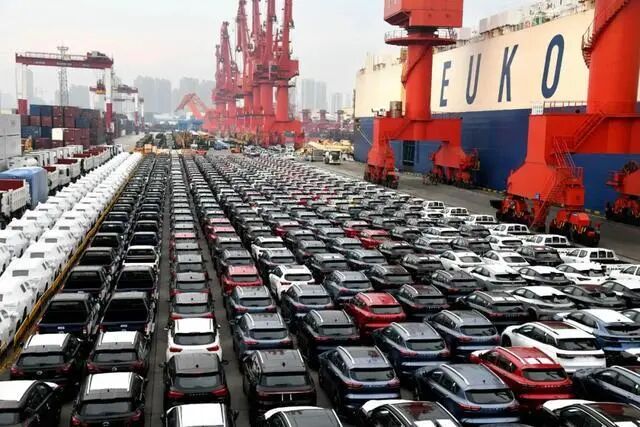
In the past, introducing Honda's global models to China often required lengthy adaptation cycles. According to the new plan, cooperation has shifted toward relying on China's local supply chains and R&D resources to develop NEV models better suited for global emerging markets. Honda has also explicitly positioned China as a 'global innovation and export base,' reverse-exporting models led by Chinese teams to Latin America and ASEAN markets.
This shift in cooperation models can be seen as a 'compromise' by foreign parties.
Today, China possesses the world's most complete NEV supply chain, the fastest iteration speed for intelligent technologies, and a profound understanding of user needs in both Chinese and emerging markets. Foreign parties' advantages still lie in their century-old technological heritage, stringent global quality control standards, and mature global sales channel networks.
In the past, foreign parties exported technology while Chinese parties exported markets and manufacturing capabilities. Now, Chinese parties export technology, supply chains, and efficient manufacturing capabilities, while foreign parties contribute global channels and compliance experience. Both sides jointly create products for the global market, marking a complete shift in the underlying logic of joint ventures from 'unidirectional technology input' to 'bidirectional capability co-construction.'
Practical Implementation of Reverse Export
China's automotive export market in 2026 has validated the feasibility of this new model with impressive results.
In the first half of 2026, China's automotive exports reached 4.059 million units, up 63% year-on-year. In July alone, exports hit 1.092 million units, a 57% year-on-year surge, marking the second consecutive month of exports exceeding 1 million units. Based on current growth rates, annual export sales surpassing 10 million units have become a certainty.
Taking SAIC-GM as an example, its new energy sub-brand Buick Envisione achieved over 10,000 deliveries in its first month on the market, setting a record for the fastest delivery milestone among joint venture NEV products. The Envisione L7 became the best-selling luxury NEV MPV priced above 400,000 yuan.
According to the plan, the Buick Envisione E7 will officially export to South Korea in October 2026 and gradually enter multiple overseas markets, including the Middle East, Africa, and South America, becoming SAIC-GM's first high-end NEV model to go global.

This model, defined and produced by Chinese teams relying on China's supply chain, is widely regarded as a true 'made in China, global car.' From the outset of R&D, it considered regulatory requirements, user habits, and road scenarios in different countries, enabling global market delivery capabilities.
Ford's transformation in China is also at the forefront. Leveraging China's complete NEV supply chain, Ford fully utilized surplus production capacity from its domestic factories, shipping multiple models suited for emerging markets from Chinese ports to global destinations. This significantly improved factory utilization rates and freed it from reliance solely on domestic market profitability.
Yueda Kia also redirected over 70% of its production capacity to exports, with products covering more than 90 countries and regions worldwide. Relying on China's supply chain cost advantages and manufacturing efficiency, it regained brand competitiveness in the global market.
This reverse export model also creates clear differentiation from Chinese brands' independent overseas expansion.
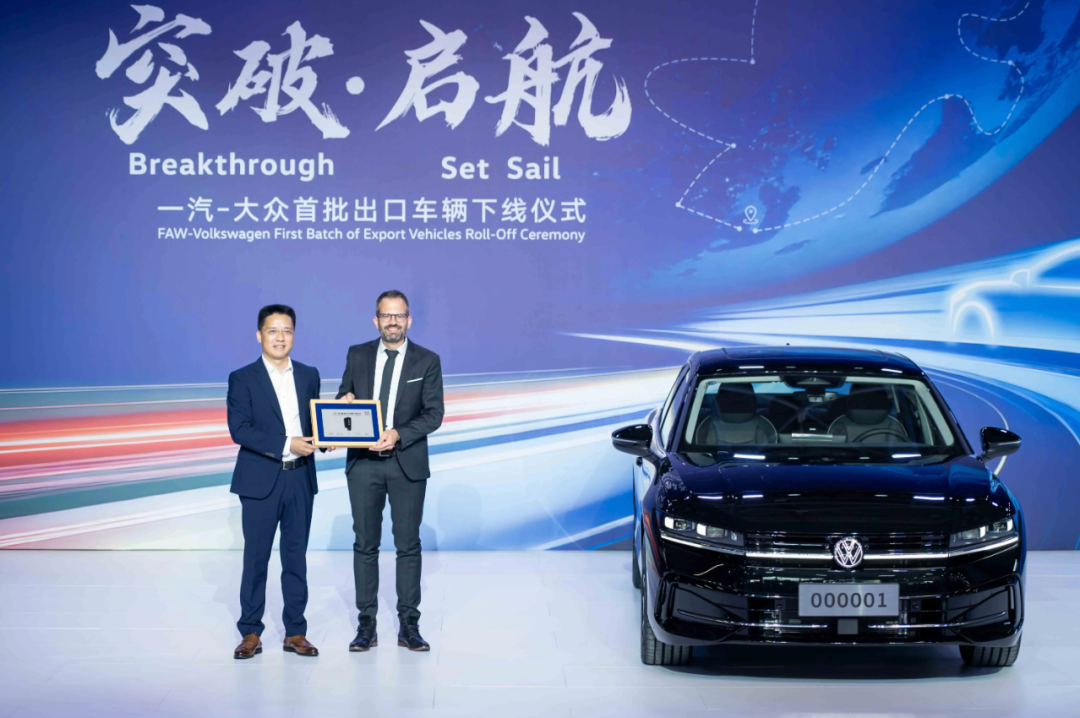
Joint venture brands do not need to build overseas channel networks from scratch or incur significant costs to adapt to different countries' regulations and compliance requirements. Instead, they can quickly distribute Chinese-made models globally by relying on foreign parties' decades-old global channel resources, significantly reducing the trial-and-error costs of going global.
Models built on China's supply chain also offer distinct competitive advantages over those developed locally by foreign parties in terms of intelligence levels, NEV technology maturity, and cost-effectiveness, enabling rapid market penetration overseas.
It is worth noting that the transformation of joint venture brands relying on Chinese production capacity for reverse exports is not entirely smooth. Policy barriers and regulatory uncertainties driven by geopolitics are becoming the most unavoidable external variables on this new track.
Ford Motor announced on August 12 (local time) that it would expand Lincoln production in the U.S. starting in 2030 and gradually halt imports of Lincoln models from China for the U.S. market. Ford China stated that the core pressure behind this decision came directly from U.S. market tariffs and regulatory rules.

Currently, the Lincoln Nautilus exported from China to the U.S. faces approximately 52.5% in tariffs, compounded by policy uncertainties arising from local connected vehicle regulations. The costs and risks of continuously supplying models from China to the U.S. market have completely exceeded reasonable limits.
Ford ultimately chose to shift production of models for the U.S. market back to domestic factories, using existing production lines for the Lincoln Navigator and Aviator in Kentucky and Chicago as the basis for expansion. The company expects this move to create thousands of direct and indirect jobs, thereby avoiding tariff impacts and complying with local regulatory requirements.
This incident serves as a warning to joint venture brands advancing reverse export strategies. The cost advantages and supply chain efficiency of Chinese production capacity cannot offset the high tariff barriers and exclusionary rules set by some mature markets based on geopolitical factors.
Precisely due to these practical constraints, the current reverse export strategies of mainstream joint venture brands essentially aim to proactively avoid uncertainties arising from geopolitics by concentrating production capacity resources in emerging markets with more favorable policy environments and better-matched market demands, avoiding ineffective resource allocation in high-barrier markets.
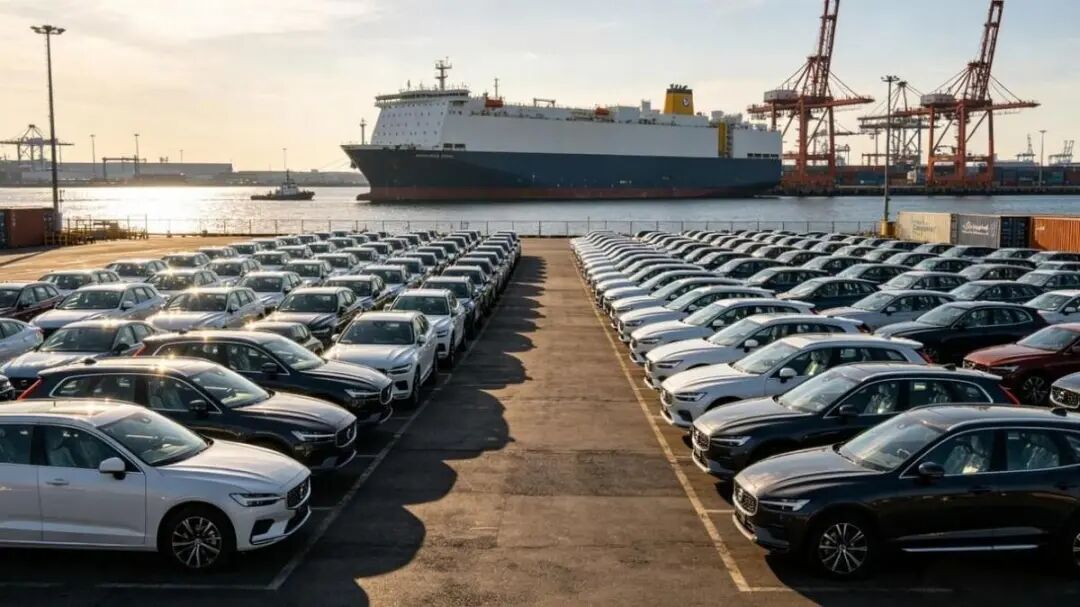
In summary, over the next few years, more joint venture brands are expected to complete their strategic transformation from 'domestic sales-focused' to a balanced approach of 'both domestic and export sales.' Domestic joint venture factories will no longer serve solely as manufacturing bases for the Chinese market but will become NEV supply hubs for the global market.
This new cooperation model of 'Chinese technology + global channels' not only enables joint venture brands to break free from the past dilemma of 'surviving through intense domestic market competition' but also accelerates the global automotive industry's electric transformation. Leveraging China's mature NEV supply chain system, consumers worldwide can enjoy higher-quality intelligent NEV mobility products at lower costs. The complementary strengths of Chinese and foreign parties will also open up new possibilities for open cooperation in the global automotive industry.
Note: Images sourced from the internet. Please contact us for removal if any infringement occurs.
-END-

-
![]()
The Scripts of Chinese and U.S. AI Have Completely Swapped Overnight
-
![]()
From a 1.4 Billion Yuan Loss to an Estimated 500 Million Yuan Profit: Generative AI Paves the Way for SenseTime’s Turnaround
-
![]()
After Testing CatPaw, I See the Second Half of Meituan's AI Game
-
![]()
In the AI Era, How Much Is Doubao’s Entrance Pricing Power Worth in Terms of Commission?
-
In Line with HJ 1480 - 2026! Hikvision Launches Specialized Products for Video Surveillance Systems in Pollution Discharge Monitoring
-
![]()
The Next Corolla: How Toyota is Reinventing the 'National Car' Amid Global Automotive Industry Changes - NHK's 'Inside Toyota'
-
![]()
HONOR Robot Phone: A Revolutionary Smartphone or Just a Compelling Tale?
-
![]()
Short Dramas with Face-Swapping and Talent Show Debuts: AI Begins to 'Mass-Produce Stars'