HONOR Robot Phone: A Revolutionary Smartphone or Just a Compelling Tale?
 08/17 2026
 504
504
Text by Xiang Guang
On the evening of August 12, Li Jian, CEO of HONOR, took the stage at a new product launch event. At first glance, it seemed like any other product unveiling.
But then, the new product was revealed. A metal cover at the top of the smartphone silently slid open, and a camera module slowly emerged, moving with fluid and precise motions—tilting, rotating, and focusing.
This is HONOR's first robot smartphone globally, the Robot Phone, with a starting price of 9,999 yuan.
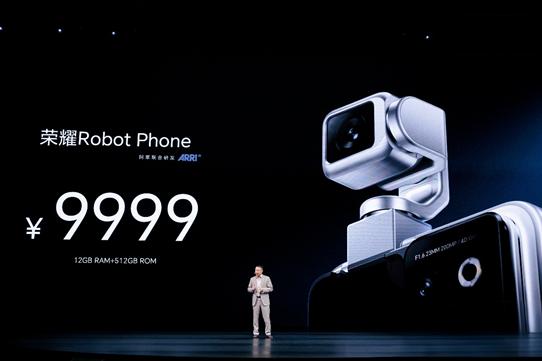
Li Jian articulated the central theme of the event: "People have grown accustomed to brick-shaped smartphones. We began to question: Is this the only standard form for smartphones in the AI era?"
This isn't the first time HONOR has integrated the concept of 'robot' into its products. Previously, HONOR had already introduced embodied robots and announced its transition from a smartphone manufacturer to an 'AI terminal ecosystem company.' From embodied robots to robot smartphones, HONOR's robot narrative is gradually taking shape.
However, a question lingers: Is HONOR creating a new smartphone or weaving a new story?
Let's begin with an objective evaluation: The Robot Phone warrants serious attention.
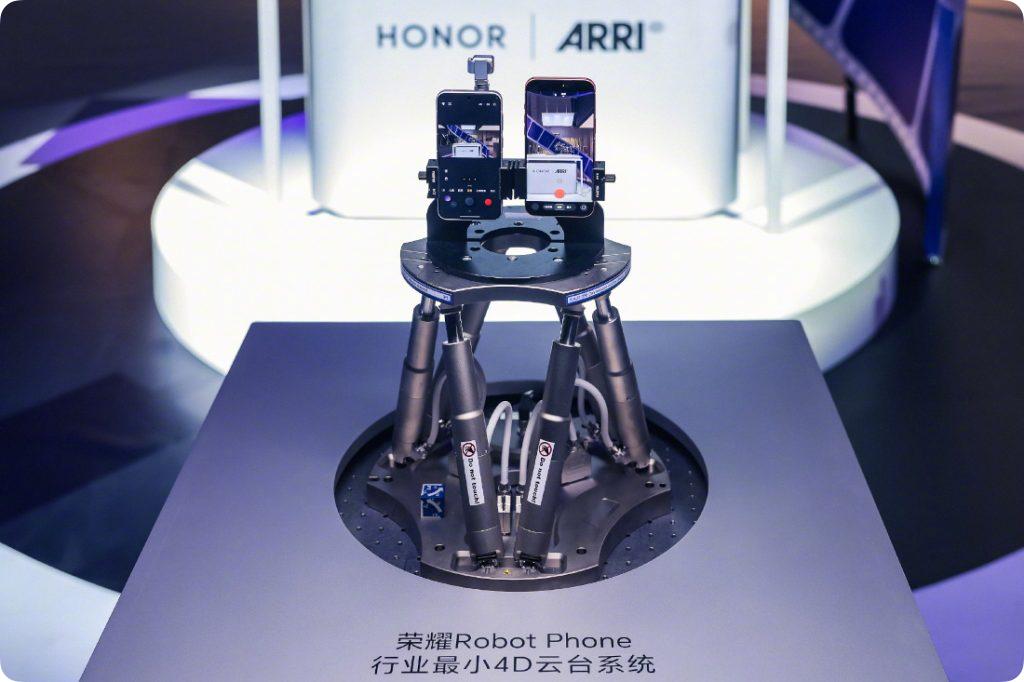
The smartphone industry has seen little genuine innovation in form for years. Screens have grown larger, bodies thinner, and cameras more numerous—all manufacturers are competing on the same fronts. In this context, HONOR has integrated a highly flexible mechanical gimbal into a smartphone, granting the camera robotic joint-like movement capabilities for the first time.
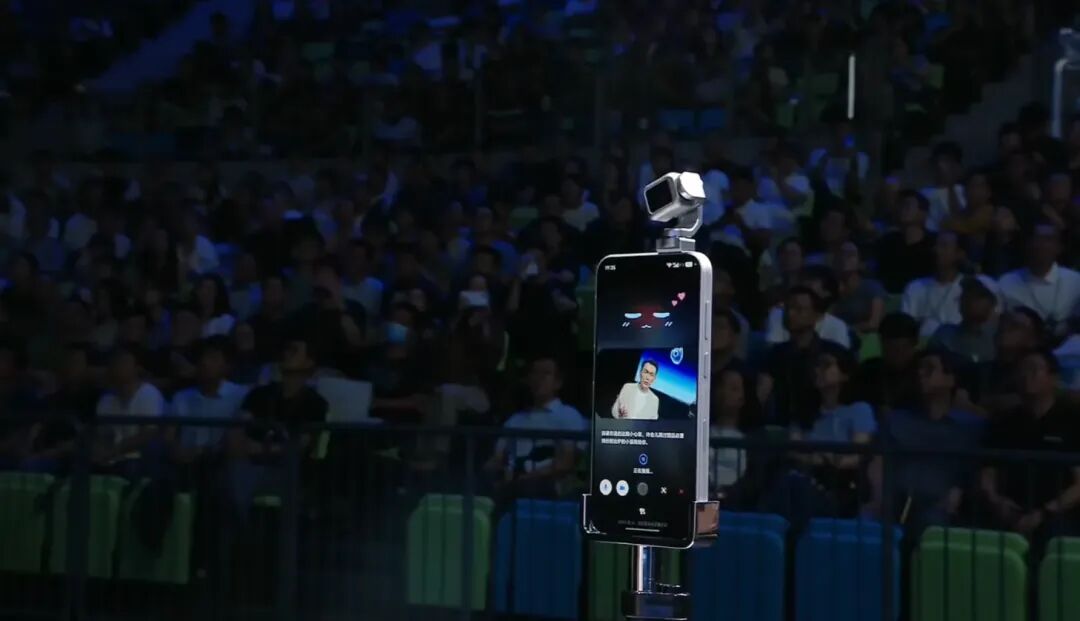
From an engineering standpoint, this is no small feat.
The mechanical gimbal contains numerous moving parts, posing challenges in dust resistance, durability, and long-term reliability. Fang Fei, President of HONOR's Product Line, revealed in an interview that one to two months before the launch, the team discovered that the original design for the flipping motor would only last about a year. Ultimately, they overcame this hurdle.
Lu Kelin, founder of Lukedao Technology, commented that the Robot Phone has the potential to mark a significant step in the industry's shift from spec competition to form innovation. Such engineering daring should not be underestimated.
Considering the product itself, the Robot Phone is undeniably a novel smartphone.
Amid the homogenization of AI smartphone narratives, it showcases HONOR's technical prowess through a hardware form never attempted before. Combined with its previously launched embodied robots, HONOR's intention is clear: to establish 'robotics' as its technological signature, distinguishing itself from Apple's system intelligence and Huawei's HarmonyOS ecosystem.
The issue arises in whether the product meets real demand.
This brings us to a fundamental question: Who is the Robot Phone designed for?
Functionally, the mechanical gimbal primarily addresses imaging needs—auto-tracking, video call focusing, and intelligent camera movement. These features appeal to content creators and tech enthusiasts but are likely excessive for the average consumer. Li Jian himself admitted that the goal is to 'reach more core tech users.'
He Jiyong, Director of the Yanji Space Intelligent Livelihood Research Center, was more blunt: The Robot Phone has a significant signaling effect on HONOR's premium image but is expected to have limited direct impact on overall sales, essentially serving as a strategic rather than a volume-driven product.
More intriguing are the choices made by competitors.
In the gimbal imaging space, vivo and OPPO have also made strides but have uniformly opted for a 'smartphone + separate gimbal' approach. This modular design allows users to choose whether they need the feature, whereas Robot Phone users have no choice—the gimbal is permanently integrated into the body, increasing weight, thickness, and the risk of mechanical failure, with all costs borne by consumers.
The evolution of smartphones has essentially been a history of simplification: physical buttons have disappeared, and bodies have become thinner and lighter. The Robot Phone, however, adds complexity in the opposite direction.
While industry-first innovations deserve recognition, why haven't other manufacturers followed suit? Perhaps not because they can't, but because they judge the returns to be limited. As one observer put it, this is like 'performing intricate rituals in a smartphone's confined space'—HONOR has achieved it, but the size of the audience remains to be seen.
Judging the Robot Phone solely as a smartphone leaves many questions unanswered. However, viewing it as HONOR's new narrative for the capital market makes things clearer.
To understand this, one must consider HONOR's circumstances.
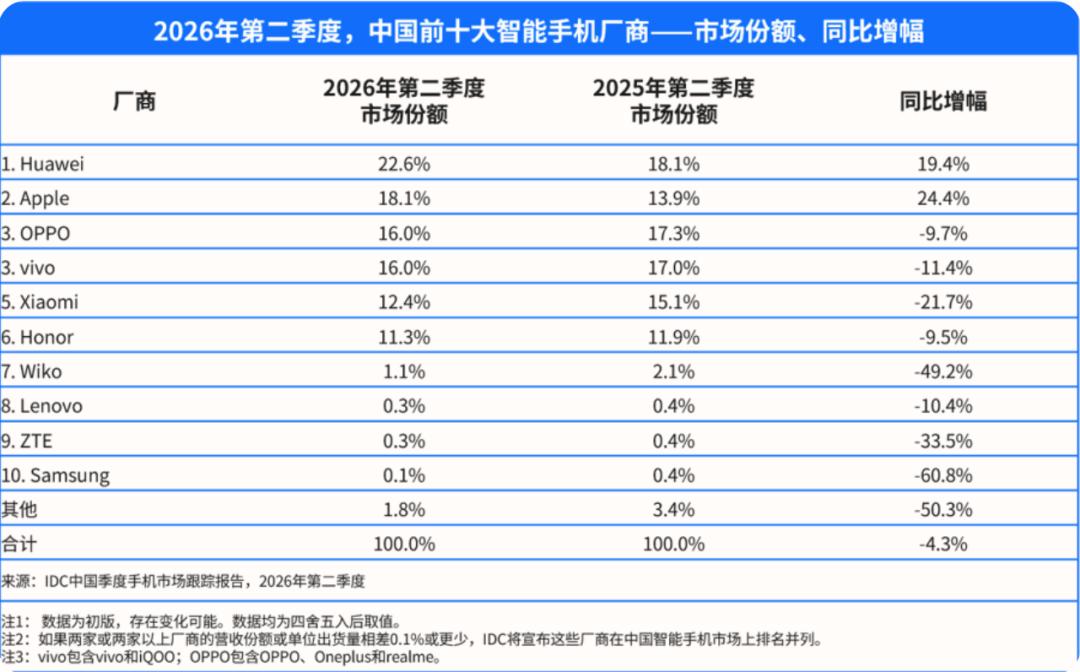
Financially, HONOR is experiencing a rollercoaster ride: In Q2 2026, its domestic market share was around 11.3%, ranking sixth with a year-on-year decline of 9.5%, among the steepest drops among mainstream manufacturers. Meanwhile, its overseas market grew by 20%, presenting a stark contrast.
At the capital level, the IPO counseling, initially scheduled for completion in March 2026, has long overrun its deadline. The latest counseling report highlighted nearly identical issues to the previous one, with market concerns about the listing process persisting.
Against this backdrop, the 'Alpha Strategy's' commitment to five years of $10 billion in AI investment requires a tangible and visible carrier (translator's note: 'carrier' or 'vehicle').
AI features have trickled down to budget smartphones, becoming standard rather than selling points. Enhancements like photo editing, schedule management, and voice assistants have failed to shorten the 36-month user replacement cycle. When AI smartphone stories lose their novelty, hardware form becomes the last remaining space for differentiation. The Robot Phone, along with the embodied robots behind it, represents HONOR's first piece in the puzzle of its new identity as an 'AI terminal ecosystem company.'

So, is the Robot Phone a new smartphone or just a compelling tale? It's too early to say.
If it is merely an isolated product launch, it resembles an expensive statement—the technology is real, but the demand is uncertain. Once the hype fades, it may remain a niche toy for enthusiasts.
However, if it marks the beginning of HONOR's robot product line—with the mechanical gimbal evolving and becoming more affordable in future models, moving from the premium segment to mainstream prices, and embodied robots synergizing with smartphones—then this slowly rising camera could truly become the first page of a new story.
Market patience hinges not on the intensity of innovation but on the consistency of delivery.
HONOR has submitted its answer to the first question. But the grading has just begun.
-
![]()
Porsche Won't Give Up on Manual Transmissions! Will Persist as Long as Regulations Allow and Market Demand Exists
-
![]()
This Summer, Car Rentals Are Surprisingly Affordable
-
![]()
MiniMax H3 Closes In, Leaving Seedance with Limited Safe Space
-
![]()
Blockbuster! Li Shufu Steps Down as Chairman, An Conghui Takes Over, Geely Ushers in 'Coming-of-Age' Moment
-
![]()
AI Smartphones: Don't Expect Price Drops Anytime Soon
-
![]()
Kingdee International's AI Aspirations Stumble at Market Cap Barrier: Can Xu Shaochun's Ambitious Vision Sustain Investor Confidence?
-
![]()
Phase I Project Covering 7 Million Square Meters Reaches Stable Mass Production! Shuangxin Materials Speeds Up Its PVA Optical Film Production Capacity Deployment
-
![]()
Despite Incurring a Loss of 67.23 Million Yuan, Launching a Private Placement of 1 Billion Yuan! What’s the Future Vision of Focuslight Technologies?