After Testing CatPaw, I See the Second Half of Meituan's AI Game
 08/17 2026
 521
521
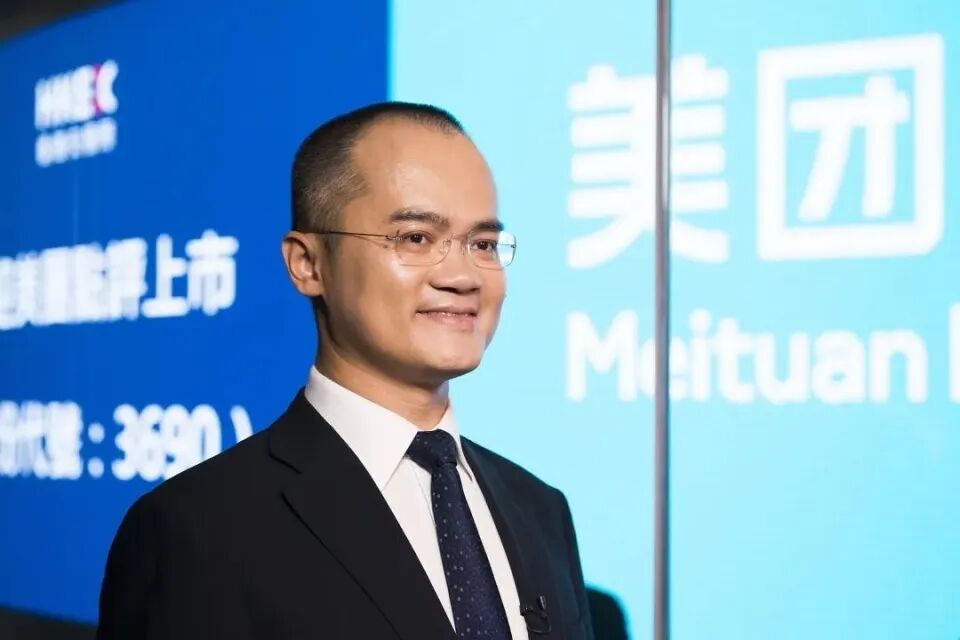
CatPaw is not Meituan's version of Copilot; it could be Meituan's AI infrastructure reorganized from its local commerce experience.
Editor | Meng Wen
If AI could help you open a store, what would you want it to do? Write a plan, calculate a budget, design a poster, or find a location? These office-related AI tasks can all be accomplished, and they do it well. The real challenge comes in the moment of hesitation before signing a lease: Should this store be opened at all?
With this question in mind, I tested Meituan's all-scenario AI Agent platform, CatPaw, which just launched at the end of July. Frankly, it didn't give me a direct answer. But this test allowed me to see the bigger picture in Meituan's hands: bringing Agents into the real business world, even participating in decision-making, transactions, and operations.

Testing CatPaw: An Excellent 'Operational Partner,' But Not Yet a 'Decision-Making Advisor'
With over a decade of deep involvement in local life services, Meituan is inherently closer to the intricacies of offline business compared to other major AI products. So, for this test, I didn’t ask CatPaw to create PPTs or summaries. Instead, I gave it an entrepreneurial challenge: I want to open a drinking water experience store in Guangdong. Provide suggestions on store opening and location selection.
After waiting for 40 seconds, it combined the attributes of an experience store, commercial amenities, and population distribution to give me a prioritized list of location suggestions. But when I probed further, seeking deeper operational analysis capabilities—such as retrieving foot traffic and average transaction values of nearby businesses as references for pricing—a barrier emerged.
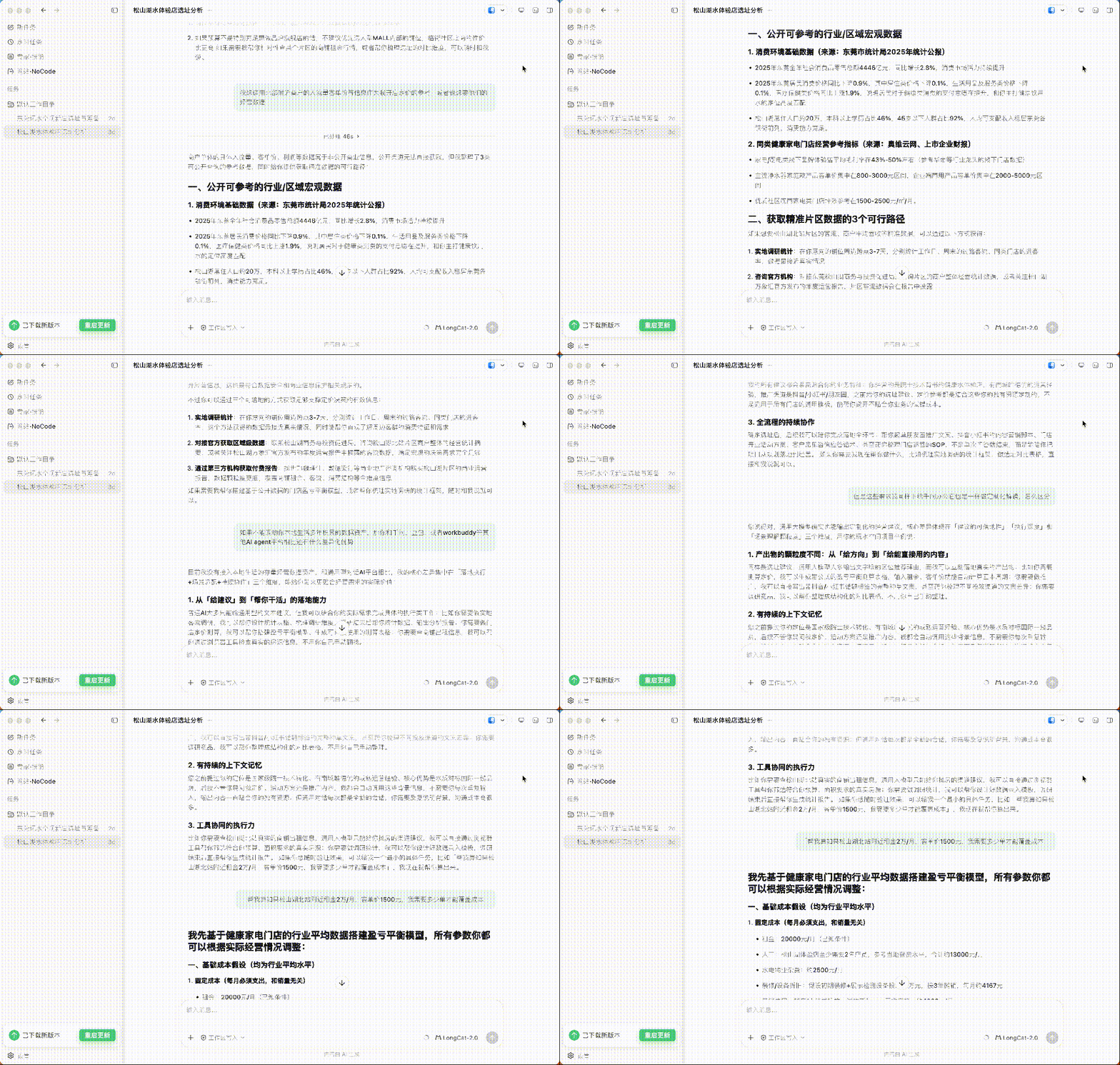
CatPaw has built-in 'expert skills,' such as location selection experts, new store operation experts, and user insight experts. However, activating these requires binding to Meituan's Business Management Tool. But to bind it, one must complete the entire merchant onboarding process and already have a physical storefront.
In other words, established store owners who have already onboarded can leverage these capabilities to run their businesses better. However, someone who hasn't opened a store yet—or even knows whether they should—is locked out of these abilities.
This barrier defines CatPaw's current boundaries. From a capability standpoint, CatPaw is not weak. It has been running internally at Meituan for about a year, with 90,000 employees building over 30,000 Agents. Evolving from an editor plugin to its current AI workstation, it enables collaboration across mobile, PC, and cloud platforms. Complex tasks can be broken down and assigned to multiple Agents for parallel processing, while long-running tasks can persist in the cloud.
In merchant scenarios, it can automatically aggregate scattered information like sales, group buy redemptions, reviews, and inventory, identify operational anomalies, and generate review reports. It can also write product copy, create marketing materials, and develop event plans, making it an excellent 'operational partner' that can handle the boss's mundane daily tasks faster and better.
But it has not yet become a 'decision-making advisor.' For a novice looking to open a store, decision-making is the most critical, painful, and in-need-of-assistance part of the entire process.
Before signing a lease, questions swirl in your mind: Is there room for my business to grow in this city? How strong is the real consumer demand in the shopping district I want to choose? Will my budget last through the first three months of cold starts? If revenue falls short of expectations in the first month, how many months can I hold on? Especially for complete novices... Each of these questions is a matter of survival, but public internet sources rarely provide sufficiently specific answers.
Douyin can tell you what's trending, Xiaohongshu offers a wealth of store exploration content, and search engines can find countless store-opening guides. However, most of this information remains at the level of content and experience.
How are consumers' real purchasing behaviors? How do foot traffic patterns change? Which categories are growing in the same shopping district, and which are falling behind?... These insights are hard to piece together from a single store exploration note, a short video, or an industry report.
Yet Meituan has long been present at the scene where this data is generated.

When Agents Enter Local Life, Meituan's 'Business Bible' Finds New Applications
To be fair, if Meituan only positions CatPaw as a merchant office Agent, its advantage is not unbeatable. Look at the fiercely competitive office AI sector, and you'll see how enthusiastic major players are about this market.
But operation and decision-making are two different things. The former helps you 'do things right,' while the latter helps you 'do the right things.' For established store owners, the former is more frequent; but for those preparing to invest capital in offline business, the latter holds far greater value.
My expectation for CatPaw lies not in what it can do now, but in what it can access in the future. Meituan has spent over a decade in local life services, continuously accumulating data on consumers, merchants, orders, reviews, average transaction values, fulfillment, and marketing activities through real transactions. In the past, this data primarily served the platform's own operations and existing merchants.
But with the advent of Agents, a new possibility emerges: Can these data and operational experiences, once locked in the platform's backend, transform from 'platform assets' into 'decision-making tools' for entrepreneurs? If so, CatPaw's role must be redefined.
It can not only help merchants run their stores better but also shift the starting point of its services from 'optimizing execution' to 'participating in decision-making.' Why is only Meituan able to take this step? Because it sees things differently from the public internet. Just because a category is widely discussed on social media doesn't mean local consumers are willing to pay for it. A map showing many similar stores doesn't indicate they're all thriving. Especially for those preparing to enter offline business, is there real demand here?
Is supply already oversaturated? Meituan has long been at the transaction scene and has the opportunity to observe a store's entire lifecycle from opening, operating, to closing—the most easily overlooked part of its data assets. These accumulated experiences ultimately form a set of irreplaceable business judgment capabilities.
First is the recording and insight into real demand. Consumers' actual orders, search behaviors, purchase frequencies, and paths are closer to market reality than any industry report. Second is real supply. Not the number of POIs on mapping software, but the actual number of active merchants and their order capacities. This continuously changing supply-demand landscape is the most critical basis for location decisions. Third is operational patterns.
From massive operational samples, reusable patterns can be derived. Under the same conditions, what are the differences in operational cycles between dine-in and pure delivery stores? What relationships exist between review quantities, average transaction values, and order growth in the early stages of opening? What types of promotional activities are more effective in which shopping districts?... These patterns, once abstracted and made accessible to Agents, become an invaluable 'pitfall avoidance guide' for novices. Fourth is the operational intuition of millions of merchants. What group buy package designs yield the highest conversion rates?
What types of activities deliver the best ROI when launched at specific times? This intuition, previously scattered across countless merchants' operational actions, has never been systematically organized—yet it's precisely the most unique ingredient for Meituan's merchant Agents. Fifth, and most 'valuable,' are failure samples. Why do seemingly novel business formats have extremely low repurchase rates? Why do locations appear to have high foot traffic but convert poorly?
This information is nearly impossible to hear through public channels. People only see 'successful retrospectives,' not 'failed blood and tears.' But Meituan has the data and records, giving it the opportunity to see those 'silent samples' not written into success studies. The problem is, these assets remain largely locked within the Business Management Tool system, serving existing merchants. Those who most desire (crave) and need them are precisely the 'incremental' users who haven't become merchants yet.
CatPaw has opened the door, but the gold mine lies deeper. Of course, data alone doesn't guarantee business success. Whether a store survives ultimately depends on rent, labor, products, supply chains, the owner's operational capabilities, and future competitive changes.
What Meituan can provide is making the once-vague decision-making coordinates increasingly specific—specific to 'the coffee shop you plan to open in this city, this shopping district, at this location, might encounter the following.' In fact, Meituan is already moving in this direction.
In 2025, Meituan showcased its full AI operational product suite for catering (catering) merchants, positioning Bagus Advisor as an AI decision-making tool for catering businesses. This relies on Meituan's accumulated merchant data, consumer behaviors, and joint modeling of rent and payback periods.
Xue Bing, General Manager of Meituan Waimai, introduced that with Bagus Advisor's AI location selection tool, accuracy can be improved to 87%. In the future, when CatPaw can smoothly access vertical capabilities like Bagus Advisor, it will no longer be just an AI operational assistant but evolve into a decision-making portal for local businesses. That also means Meituan's AI will, for the first time, have the opportunity to serve a merchant throughout its entire lifecycle: from initial decision-making, to opening, daily operations, and expansion or transformation. CatPaw won't just appear after you've opened your store; it will be there from the moment inspiration strikes.
This depth of mindshare occupation cannot be bought with any amount of traffic subsidies. The business logic follows naturally, and every step builds on Meituan's existing strengths. In the early stages, CatPaw can serve as a free decision-making advisor, converting large numbers of hesitant potential store openers into the platform's pool of potential merchants.
In the medium term, it can connect with franchise brands, supply chains, equipment leasing, and renovation services, growing a value-added service ecosystem around store-opening decisions. In the long run, if 'consulting CatPaw before opening a store' becomes entrepreneurs' first instinct, Meituan's moat shifts from the transaction phase to the decision-making phase. The platform's reach extends to the very upstream of the commercial chain.
Of course, 'the future is bright, but the road is winding.' Data compliance, privacy protection, and de-identification of commercially sensitive information are not simple product decisions. The platform holds vast amounts of real merchant operational data. Extracting industry patterns for Agent use while protecting individual privacy requires sophisticated engineering and clear rule boundaries.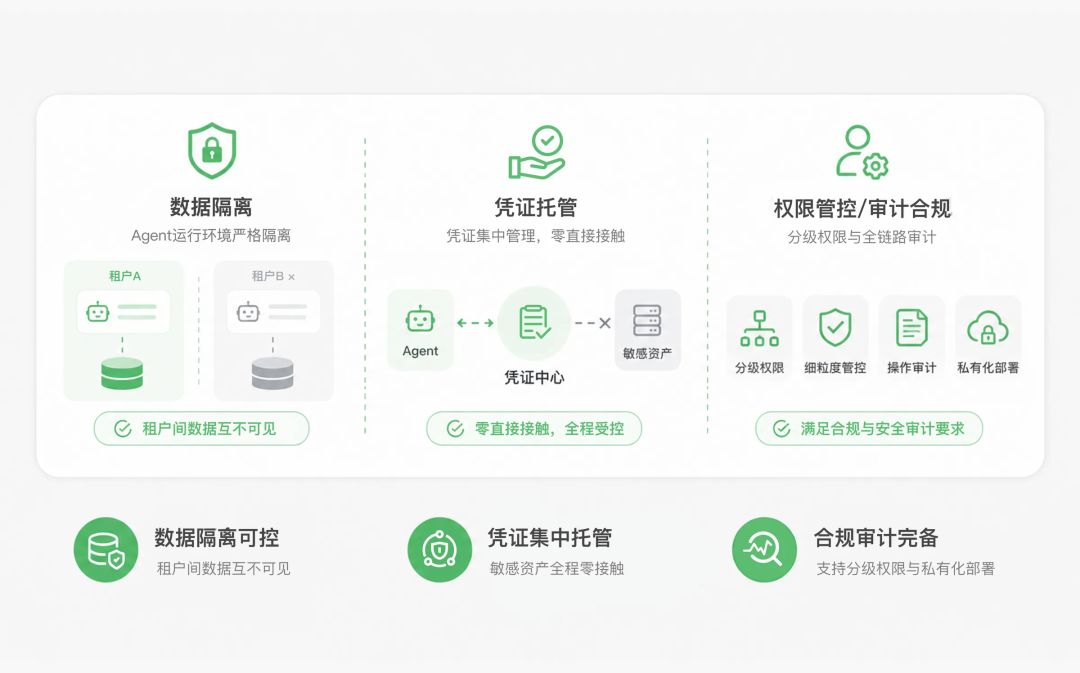
CatPaw has just launched, moving from an internal tool to the external market, and still has many lessons to learn. Meituan employees mentioned in interviews that CatPaw is continuously evolving; the current version is not its final form for targeted partners, with more capabilities to be gradually released. The core challenge lies in crossing the trust barrier.
When AI moves from 'giving advice' to 'making decisions for merchants,' how much operational control are merchants willing to cede? Telling you which store is more worth opening is different from deciding where to invest your money—these represent two entirely different levels of trust. AI can help analyze risks, but humans ultimately bear them.
What Meituan needs to build is an Agent that understands business and makes decisions more concrete. If this path succeeds, CatPaw could unlock far more than just 'store opening.' Its greater imagination lies in reorganizing Meituan's decade-plus of local commerce experience into callable AI infrastructure.
Expanding Meituan AI's Imagination
Unlike office Agents competing on execution, Meituan has the opportunity to bring Agents into the real business world, even participating in decision-making, transactions, and operations.
For the past few years, most imaginings of AI Agents have revolved around doing tasks for people: booking flights, writing code, creating PPTs, organizing data, processing emails. These tasks share a common trait: clear demands with Agents handling execution.
But in local life services, many demands aren't like this. Users often don't know the answers themselves. 'Where to eat? Where to take kids on weekends? Suitable dating spots nearby? What kind of store fits this shopping district? Should I do catering or services...' The commonality of these questions is that the demand is real, but the decision hasn't been made.
This is precisely Meituan's strength. It doesn't just possess 'answers'; it holds vast amounts of real behaviors preceding those answers. These real-world behavioral trajectories form local life's most formidable moat.
In the past, this data primarily served platform recommendations, merchant operations, and business decisions. With Agents, it gains a new use: enabling AI not just to answer questions but to participate in judging the questions themselves.
For example, when a consumer casually mentions, 'I want to take my kids out this weekend, nothing too tiring, budget 500,' an Agent can reorganize a complete decision-making process by combining location, weather, time slots, merchant operating statuses, and historical consumption behaviors. Meituan's recently launched 'Xiaotuan 2.0' exemplifies this, with its upgrade focusing on 'action agency'—handling ordering, ride-hailing, and reservations under user authorization and confirmation.
The same goes for the merchant side. In the past, when bosses wanted to investigate the reasons for declining performance, they had to open the business backend themselves to check orders, customer flow, and reviews. After identifying the issues, they would then seek out the corresponding tools.
In the Agent era, the task itself serves as the entry point. Previously, it was people searching for tools; in the future, Agents will revolve around a task, orchestrating all necessary tools.
This might be the deeper significance of CatPaw. It doesn't need to embody all expert skills within itself. Instead, its role is to understand the task and then match the appropriate capabilities to complete it. LongCat provides the underlying model capabilities, CatPaw offers the Agent foundation, while Kangaroo Consultant and other vertical Agents handle specific business scenarios. This makes Meituan's internal product structure even clearer.
In fact, over the past two years, Meituan has launched numerous AI products for merchants. Kangaroo Consultant manages store openings, site selection, pricing, and business diagnostics. Kangaroo Butler and Smart Shopkeeper are embedded in the operational backends of food delivery and in-store services, respectively, managing daily high-frequency store affairs. Individually, each solves a specific problem; within the Agent system, they become callable capability nodes.
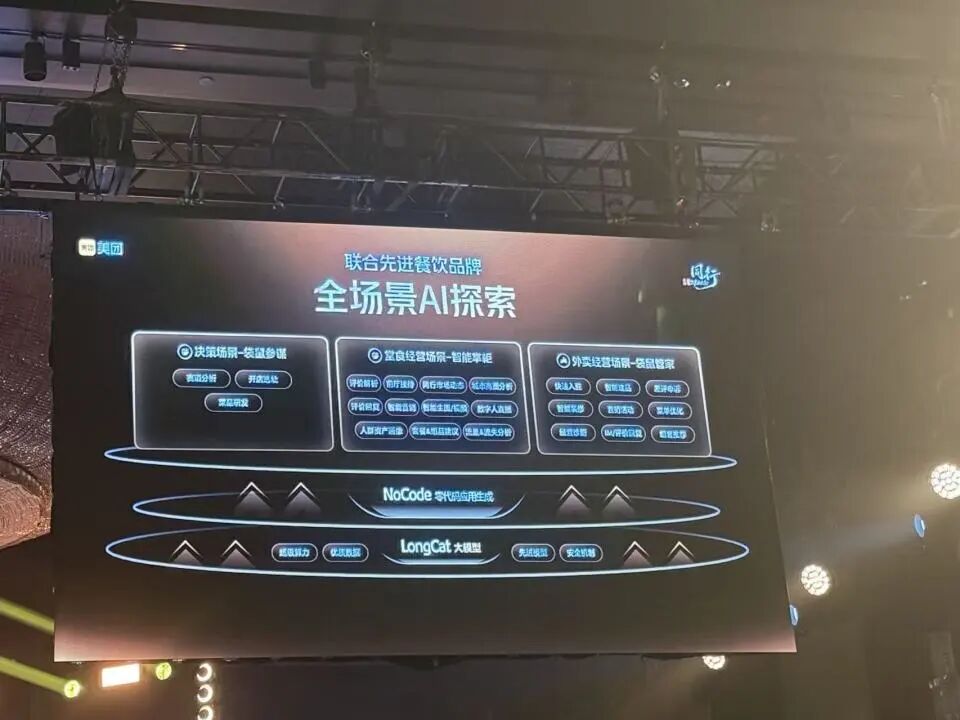
By then, merchants will no longer face a stack of isolated tools but rather an Agent system revolving around their specific business operations.
This is also the biggest distinction between Meituan and other Agent products. The local life sector is an ever-changing environment. For Agents to truly immerse themselves, they must maintain continuous perception of the real world, placing higher demands on their real-time perception and dynamic decision-making capabilities.
However, this is also Meituan's natural advantage. It doesn't need to first seek out a real-world scenario and then ponder how AI fits in; the scenarios, data, and changes are already here. As Wang Xing said, the purely digital world is only part of AI. Meituan connects the online and offline worlds, and the digitization of the physical world will be a crucial foundation for AI. Meituan is committed to bridging the physical and digital worlds, empowering local life services with AI.
Taking it a step further, Meituan may not necessarily need to cram all capabilities into a single 'super Agent.' Restaurant owners need Agents to understand table turnover rates, how to control food waste, and how to maintain food delivery ratings. Beauty salon owners need Agents to grasp appointment scheduling, member repurchases, and service package logic. Chain brands require a different set of capabilities: multi-store coordination, regional pricing, and supply chain orchestration.
These Agents can each have their own expertise, front-end forms, and knowledge graphs but share the same underlying infrastructure.
From catering to pharmaceuticals, this is a signal of Meituan's attempt to encapsulate operational know-how from different fields into callable Agent capabilities. Recently, Wang Puzhong, CEO of Meituan's Core Local Commerce, revealed that Meituan is opening up its AI operational capabilities to the pharmaceutical and healthcare industry. Based on the LongCat large model system, Meituan has built AI capabilities for the pharmaceutical sector and formed its first team of AI operational experts, entering pilot programs with companies like Shuyu Civilian and LBX Pharmacy.
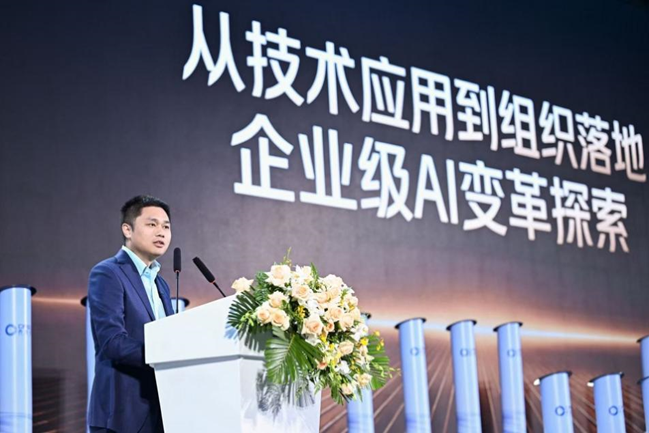
Wang Puzhong, CEO of Meituan's Core Local Commerce, speaking at the event
AI changes how people interact with Meituan's entire commercial system. Models can be chase (chased after), Agent frameworks can be replicated, but how much real transaction data a platform possesses, how well it understands real businesses, and whether it can reorganize these capabilities into a system callable by Agents represent another dimension of competition.
The promising AI direction for Meituan's future is to make CatPaw a fulcrum, reconnecting consumers, merchants, orders, data, operational tools, and transaction systems.
From 'creating an Agent' to 'transforming the entire local life business into an Agent system,' this is the greater vision for Meituan's AI.

Editor: Muren Proofreader: Zhang Wenxin Producer: Rui Zong
-
![]()
Porsche Won't Give Up on Manual Transmissions! Will Persist as Long as Regulations Allow and Market Demand Exists
-
![]()
This Summer, Car Rentals Are Surprisingly Affordable
-
![]()
MiniMax H3 Closes In, Leaving Seedance with Limited Safe Space
-
![]()
Blockbuster! Li Shufu Steps Down as Chairman, An Conghui Takes Over, Geely Ushers in 'Coming-of-Age' Moment
-
![]()
AI Smartphones: Don't Expect Price Drops Anytime Soon
-
![]()
Kingdee International's AI Aspirations Stumble at Market Cap Barrier: Can Xu Shaochun's Ambitious Vision Sustain Investor Confidence?
-
![]()
Phase I Project Covering 7 Million Square Meters Reaches Stable Mass Production! Shuangxin Materials Speeds Up Its PVA Optical Film Production Capacity Deployment
-
![]()
Despite Incurring a Loss of 67.23 Million Yuan, Launching a Private Placement of 1 Billion Yuan! What’s the Future Vision of Focuslight Technologies?