The Next Corolla: How Toyota is Reinventing the 'National Car' Amid Global Automotive Industry Changes - NHK's 'Inside Toyota'
 08/17 2026
 358
358
A recent documentary by Japan's NHK (similar to China's CCTV) has caused quite a stir in the domestic automotive industry. Titled 'Inside Toyota,' the documentary shares:
Insider reports on how Toyota Motor Corporation, the world's largest automaker with annual sales exceeding 10 million vehicles and annual revenue of up to 50 trillion yen (approximately 2.1 trillion RMB; according to data from China's Top 500 Enterprises, only 15 Chinese companies exceeded 1 trillion RMB in revenue in 2025, with BYD, the highest-earning automotive company, reaching 0.77 trillion RMB), is responding to challenges in these turbulent times. 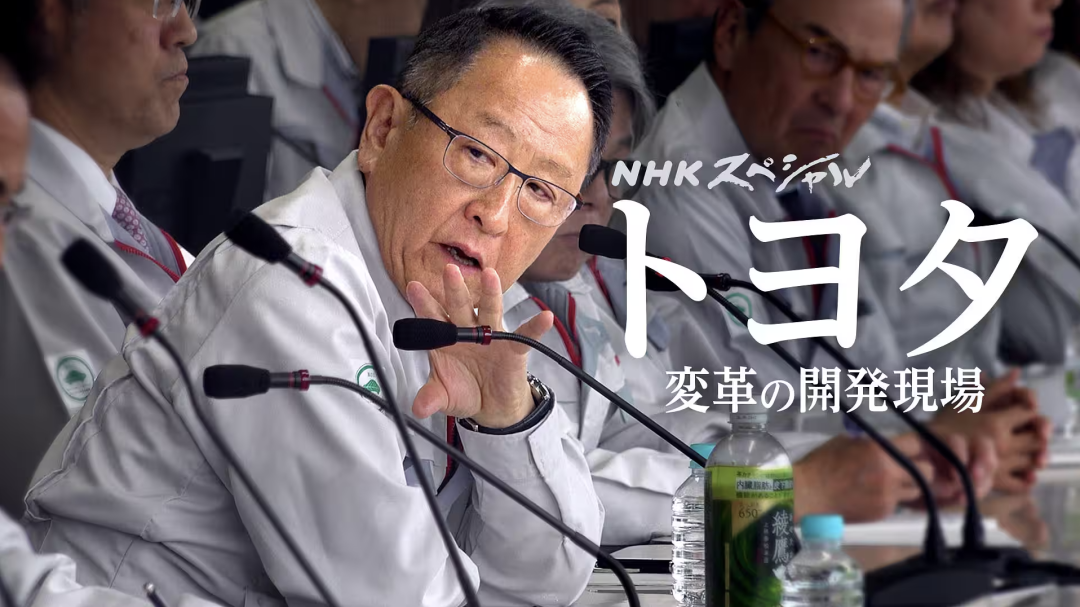
The video centers around the development story of Toyota's iconic flagship model, the next-generation Corolla, against the backdrop of Toyota engineers feeling threatened by emerging manufacturers from China and other countries, embarking on an intense battle for survival. NHK's footage takes us inside Toyota's highly confidential R&D base for the next-generation Corolla, a place off-limits to anyone but those directly involved. It captures a crucial meeting attended by Toyota Chairman Akio Toyoda and all top executives to decide the launch of this already developed model.
This article presents the complete Chinese transcript of the video, compiled by Vehicle based on the Japanese dialogue, narration, and English hearing excerpts from the video. For quick scanning and key point identification, it explores how Toyota Motor Corporation defines the next-generation Corolla in the face of challenges from Chinese automakers, what exactly Toyota Chairman Akio Toyoda and all top executives discussed, how Toyota plans to survive, and what this crucial pillar of Japanese manufacturing is contemplating.
This video is worth studying for Chinese automotive professionals, offering insights into sustainable development and globalization.
Below is the complete Chinese transcript of the video:
Opening: A car approaches its final hurdle before market launch. Narration:
A group of engineers is tasked with developing a model seen as a symbol of the company.
In four days, they will face the company's final internal review. If they pass, this car will head to the global market.
The scene shifts to a design discussion. Someone points to details on the car body, saying, 'This part used to look thick, giving a heavy impression. If we replace it with this, you'll see the gap between here and here becomes very small. The key is in this tightening.'
They scrutinize details differing by mere millimeters. At Toyota, many judge a car's aesthetics based on such aspects.
This is one of the world's largest automakers, holding a top-level meeting to decide whether a new product can be launched. With emerging automakers from China and elsewhere rising rapidly, competition intensifies. How will Toyota survive? As a vital pillar of Japanese manufacturing, what is it contemplating?
The meeting begins.
Moderator: 'Everyone, shall we begin? Today's core agenda is the next-generation Corolla. Let's proceed with the deliberation.' 
'400+ people, 30,000 parts, and the 'Z' that unites them all'
Narration:
Rewinding a few months, the next-generation Corolla development team's meetings are filled with technical jargon.
A car comprises around 30,000 parts, an incredibly complex industrial product. Over 400 members are involved in developing a single model.
Designers discuss the front windshield and body frame. To improve forward and side visibility, the glass edge extends as far as possible, nearly reaching unsupported positions. Someone says, 'I want to adjust this angle by millimeters.' Though some technical terms are unclear in the original subtitles, the discussion's core is clear: visibility, structure, and styling must all align, with no millimeter spared lightly.
At Toyota, the department overseeing vehicle development is called Product Planning. To the left in the conference room sit the experimental department, to the right, personnel and schedule managers, along with those coordinating the production system. It's unusual for cameras to enter here, as they discuss highly confidential models under development.
Interviewer: 'What is ZE?'
Staff: 'ZE is our team. We belong to Toyota's C-segment product group's Z Product Planning.'
Product Planning must integrate the R&D site. Toyota uses the last letter of the English alphabet to name this organization 'Z.' The ZE team is responsible for models like the Corolla. Its chief engineer, Fukushima, bears product responsibility for roughly 2 million Toyota vehicles annually.
Fukushima: 'We're now at the stage of gathering demands from around the world. Japan, the U.S., India—all regions are telling us what they hope the next generation will be like. My schedule is often fully booked.'
After 57 million units, can the Corolla still inspire desire?
Narration:
The Corolla's cumulative sales have reached 57 million units, making it one of the world's best-selling models and a unique presence in Japanese manufacturing.
The first-generation Corolla's chief engineer was Tatsuo Hasegawa. Born in 1966 during Japan's rapid economic growth, the Corolla became Japan's top-selling model for 33 consecutive years, establishing its position as a people's car. After 12 generations, it's sold in over 150 countries, becoming a representative of 'Made in Japan.'
But Fukushima and the Z team aim to radically transform the Corolla's image in the next generation. They've designed a larger front windshield and a more streamlined body.
Why must it change? Because the team feels a strong sense of crisis: can the Corolla survive in a rapidly changing world?
Fukushima: 'Nowadays, information and entertainment are abundant. What can we do to inspire desire? If we just make another ordinary sedan seen everywhere, I think the name 'Corolla' might slowly fade away.' Sixty years after the Corolla's birth, many believed tomorrow would be richer than today. But now, in Japan, the wealth gap widens, and the middle class thins. Fukushima: 'We want to touch these people's hearts. But we can't customize a car for every country and user. Even so, we hope users feel, 'This car suits me perfectly' when they sit inside.'
Meanwhile, past industry norms are being rewritten by competitors.
Tesla in the U.S. develops cars centered on software. Traditional cars require getting in, pressing the start button, and starting the engine, but Tesla lacks a traditional start button—you just get in and drive. Using a car starts to resemble using a smartphone. BYD in China employs about 900,000 people. Toyota typically takes six years for a model change, but BYD can compress this to about two years. Its competitiveness isn't just price; core technologies like batteries also hold advantages. 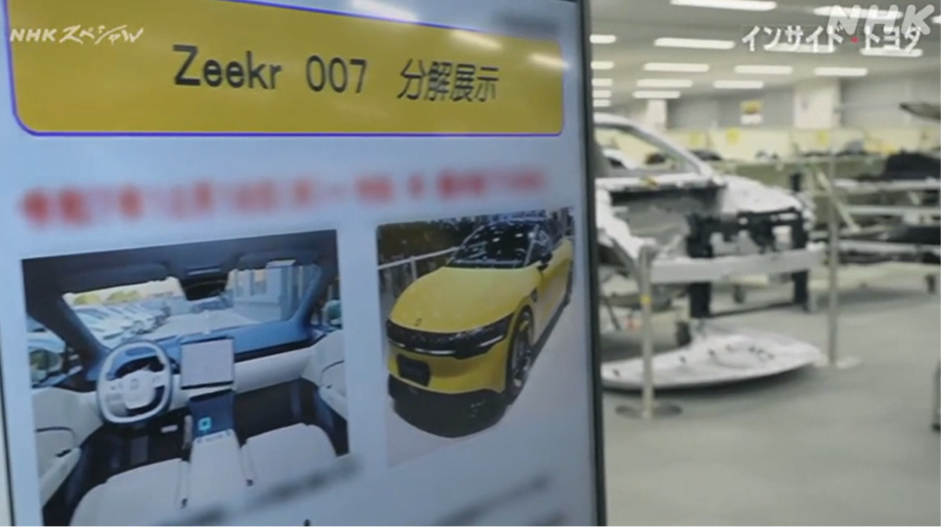
At a core team meeting, the Z team voices real pressures. Chinese manufacturers are believed to adopt a development system operating nearly 24/7. In markets like Asia, Toyota's share has started to be eroded.
Fukushima: 'The problems in global markets are actually the same. If we don't thoroughly change the past Corolla, we can't keep winning users.'
Simultaneous platform and vehicle development: Can time be saved, and where will people come from?
Narration:
The direction is set, but members immediately raise a practical question: is there enough manpower?
Engineer: 'Can we assume development resources are secured? Honestly, we can't see that yet.'
Project side: 'The resources needed for formal development aren't fully secured yet. We need to clarify what kind of car we want to make and the development scale first, then advance resource and development timeline arrangements in sync.'
The next-generation Corolla has another task directly tied to Toyota's future: developing a new foundational platform. A platform is a car's underlying structure. Automakers install different upper bodies (or 'Upper Bodies') on a common platform to develop various models.
Platform development requires massive investment, typically occurring every decade or so. 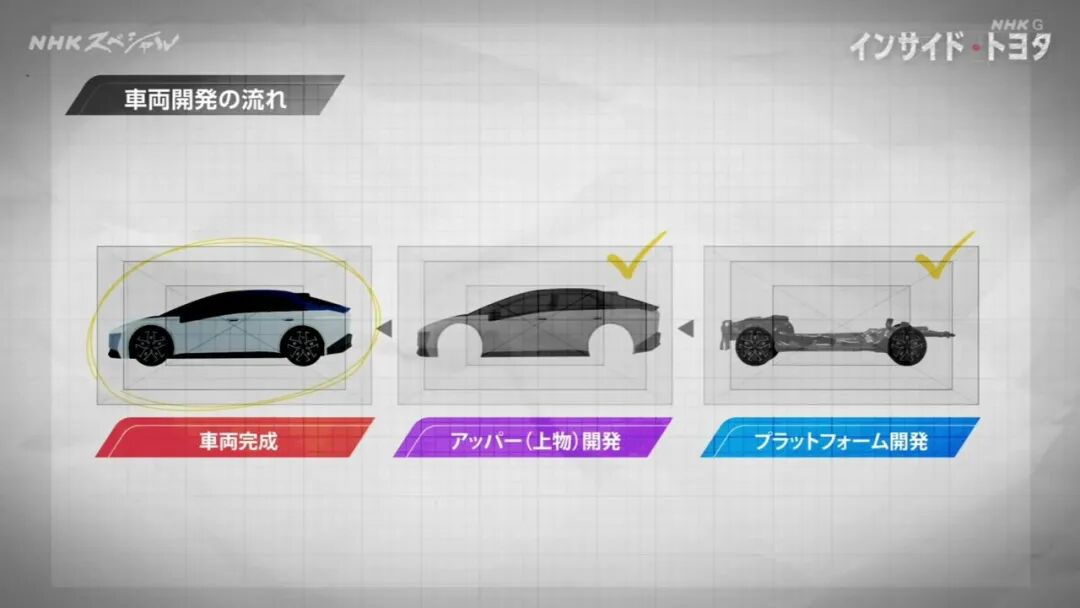
This new platform's first model is the next-generation Corolla. 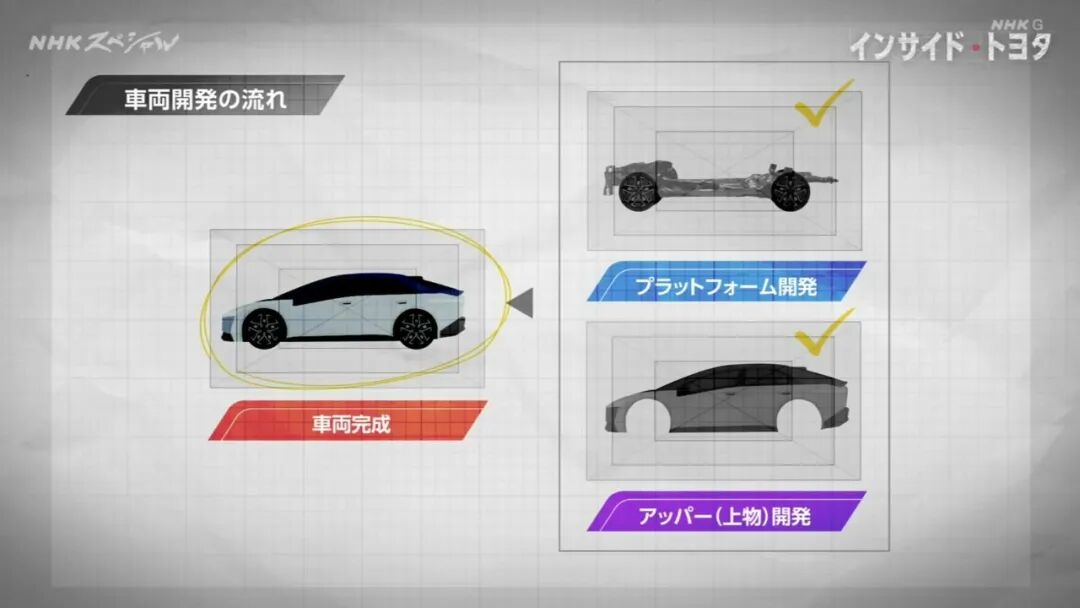
Traditionally, the platform is finalized before upper body development. But this time, Toyota aims to develop the platform and Corolla vehicle in parallel, significantly shortening the cycle. More uniquely, it hopes to use the same platform for gasoline to pure electric vehicles—a strategy Toyota hasn't adopted before. 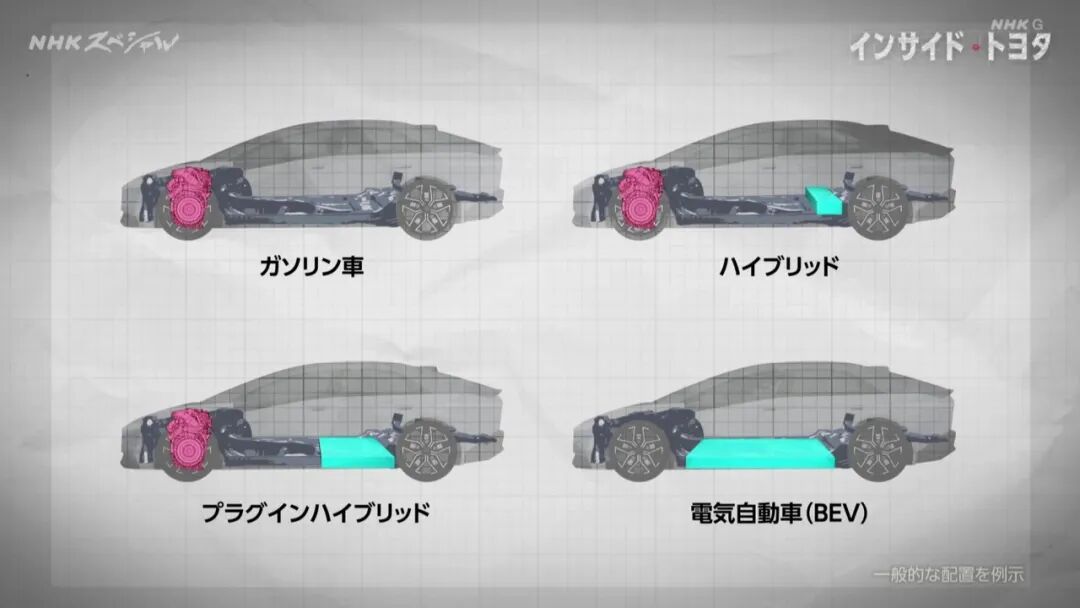
Engineers from the manufacturing department express strong concerns.
Manufacturing engineer: 'Since this project started, I've worked with design and experimental departments. Honestly, just making this car has everyone busy to the point of looking pale—I feel for them. Wanting to retain the ability for more derivative versions later is fine, but please give us enough time. You said manpower is guaranteed, but is that really true? Even if there are people, can we really mass-produce on this schedule? Pressing us this hard, even Mr. Tasaki and his team can't take it.'
Project side: 'I'm not saying the schedule and manpower are already feasible. We want to discuss with everyone how to achieve this. Let's set shortening by six months as a goal. If we say we'll do it three years later, the market might not care anymore. But we'll keep researching until we're sure no more time or resources can be squeezed, then fully communicate with superiors before proceeding.'
The leader then responds to Honda, who raised the issue: 'Thank you for speaking on behalf of everyone, saying what's hard to say. I'm not opposing you. I'm also under pressure. This is truly difficult. We can't do everything just because someone says 'do it all'—we must prioritize. This project is incredibly tough, but for Toyota to survive, we must keep going. Globally, we're gradually losing to Chinese manufacturers. We want to find a way to keep competing through this project.'
A city named after a corporation and the 60,000 enterprises behind it
Narration:
Driving southeast from Nagoya for over an hour, you reach a city named after a corporation: Toyota City.
Toyota's headquarters plant began production in 1938, with an annual output of only 4,615 vehicles then. Now, Toyota produces 9,959,004 vehicles globally annually.
Against Japan's declining population and low economic growth, Toyota continues to globalize production and sales, but its R&D hub remains long-term in a building in Toyota City—the Technical Center Main Building, housing numerous engineers.
After a new car launches, engineers disassemble it thoroughly and share the findings internally. About 75% of a car's parts are supplied by vendors, with Toyota connected to a cumulative total of around 60,000 trading enterprises.
A supplier introduces: 'We produce aluminum materials, forged parts using aluminum, and suspension components. Toyota's global output is top-tier, so entering its supply system is our task.'
Competing brand vehicles are displayed nearby. Toyota buys and studies any market-noticed cars. The three vehicles in the lens are all competing models the team focused on at the time.
To counter these rivals, the Corolla team redesigned the prototype trial production process, starting to compress the development cycle.
Early in trial production, engineers responsible for overall vehicle evaluation join the project, confirming pedal positions to the millimeter. Someone sits inside, saying, 'Isn't the space above the A pedal a bit narrow? On the toe side...'
Engineer: 'Past platform prototypes went through first, second, third rounds, improving each time. This time, we aim to solve everything in one go.'
Interviewer: 'Why adopt a short-cycle development now?'
Engineer: 'To win the competition. Rivals are too fast, with increasingly frequent model changes. To launch good products quickly, we must shorten R&D lead time. Past development methods are no longer sufficient.'
Japan's automotive industry supports around 5.5 million jobs. Toyota must keep finding its way.
An engineer says, 'If we keep using past high-cost, long-cycle methods while rivals' product power keeps rising, the gap will only widen. We must shorten the development cycle. But just copying rivals won't give Toyota an edge. Car-specific refinement and quality can't be compromised. Our challenge is how far we can push the cycle without sacrificing these.'
Another conversation touches on Toyota's role in Japan's automotive industry. Someone says, 'For a while, Toyota was criticized for 'winning alone.' But if Toyota loses, the entire supply chain might lose too. Nobody wants that. We must win, and not just rely on Toyota alone. The whole industry must partner up, or we won't survive this crisis.'
Akio Toyoda's alter ego: Morizo and 'driving feel'
Narration:
Akio Toyoda, chairman of this large multinational, has another identity. As 'Morizo,' he serves as Toyota's chief test driver, participating in deciding each car's final driving feel.
After a test drive, Toyoda says, 'When braking hard, does the rear end sway a bit? But accelerating out of a corner, the vehicle's turning and rolling feel good—even I can drive it confidently.' 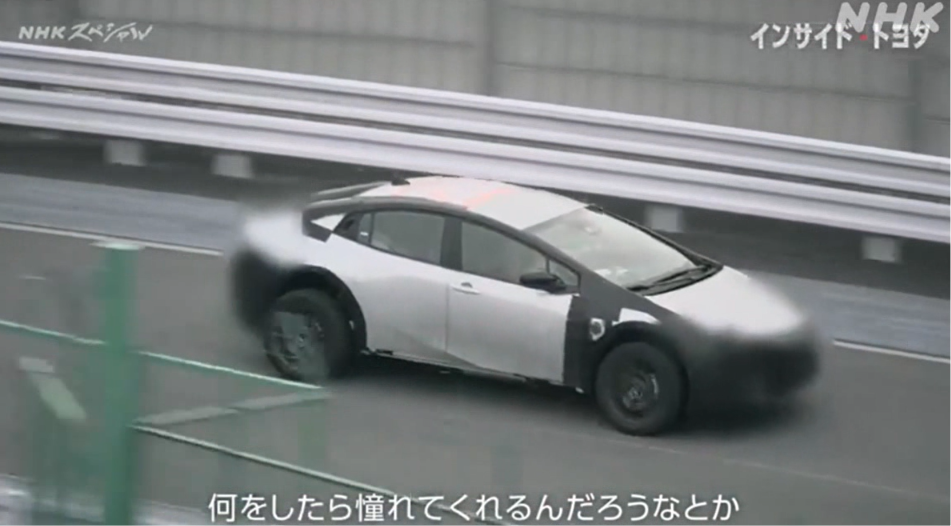
The interviewer asked a simple question: 'What exactly is the 'driving feel' that Mr. Morizo values?'
Instead of discussing parameters, Akio Toyoda used video production as an analogy.
'When you make a video, you shoot a lot of footage first, right? Then you edit it. At some point while editing, don't you suddenly think, 'This is it!'?'
The interviewer replied, 'Yes.'
Akio Toyoda said, 'That's the feeling. There's no fixed formula. The chief test driver touches and drives the car, sensing that something isn't quite right or feeling that this time it's correct, and then makes a judgment.'
The interviewer: 'So it's a emotional (emotional) judgment?'
Akio Toyoda: 'I believe it's absolutely emotional.'
Vehicles under development were continuously brought to the racetrack. A six-wheeled test vehicle even appeared on site. Engineers said Toyota had never made such a vehicle before and had to forcibly splicing (splice) existing vehicles together for verification.
The team brought designers responsible for the third-row design and exterior colors to the test site. In a large organization, the racetrack allowed people from different positions to discuss directly face-to-face.
After seeing the vehicle, Akio Toyoda said, 'This car should feel like it can seat six people from the start. Whether one, two, or six people get in, there shouldn't be an odd sense of incongruity.'
From First Operating Loss to U.S. Congressional Hearing
Narrator:
When Akio Toyoda became president, the company had just been hit by the Lehman crisis and suffered its first operating loss. In this crisis described as 'once in a century,' he took responsibility for steering Toyota.
Akio Toyoda recalled, 'It was the company's first loss since its founding. Because my last name is Toyota, people always thought I would become president sooner or later, as if it were the only answer. But in reality, others would say: Since you're from the founding family, you've already been made president; now take responsibility for the loss and resign, and leave the rest to us. That's how I felt initially.'
'My life has always been viewed through colored glasses by others. Because I'm from the founding family, I've been thinking since birth: Why can't everyone see the real me, just an ordinary person?'
A greater crisis followed. Toyota faced massive recalls in the U.S., and Akio Toyoda was called to testify at a U.S. congressional hearing.
Toyota stated, 'After very strict internal investigations and investigations by the U.S. National Highway Traffic Safety Administration (NHTSA), no vehicle malfunctions have been found so far, so we are confident there is no design issue.'
A U.S. congressman responded, 'Mr. Toyoda, I am not satisfied with your testimony. I believe it does not accurately reflect the large number of complaints.'
Akio Toyoda answered in English at the hearing:
'In the past few years, Toyota's business has expanded very rapidly. Frankly, I am concerned that our growth rate may have been too fast. As you know, I am the grandson of the company's founder, and all Toyota vehicles bear my family name. For me, when a car is compromised, it feels like I myself have been hurt.'
Toyota attributed one cause of the recall issues to the company's past overemphasis on scale expansion. After Akio Toyoda took office, he shifted away from prioritizing sales volume as the highest goal and began adjusting the product mix that had been overly biased toward best-selling models.
Overseas interviewees described past Toyota this way: It was essentially a company that manufactured 'economical box cars'—reliable, safe, and economical, but somewhat boring.
Akio Toyoda completely changed this direction, making cars more exciting, more fun to drive, and more sporty. His repeated mantra was: 'Make better cars.' Akio Toyoda recalled, 'At first, I said, 'Let's make better cars,' and I received a lot of criticism. People asked: Do you think the cars we're making now are bad? So later I added the word 'better.' Others criticized me for not being able to articulate a numerical target, just expressing sentiment.'
'But if someone in my position casually gives a number, the people below might do whatever it takes to achieve it. Many people have gone unrecognized for a long time, and once numbers become the only goal, things get strange. 'Making better cars' is inherently something that takes a long time. If you focus only on numbers, what you truly want to do will shift.'
'Competitors will change, technologies will change—that's normal. The biggest risk is when we think we've become too great and start to become arrogant. Once the internal mindset becomes 'we're perfect' or 'we're the best,' decline may begin.'
Final Product Review: Who Is the Customer, and What Does 'Good Product at Low Price' Mean?
Narrator:
The day to decide whether the product could be launched finally arrived.
Management from around the world and engineers responsible for development attended the meeting. It was said that in the past, models had been halted at such meetings. 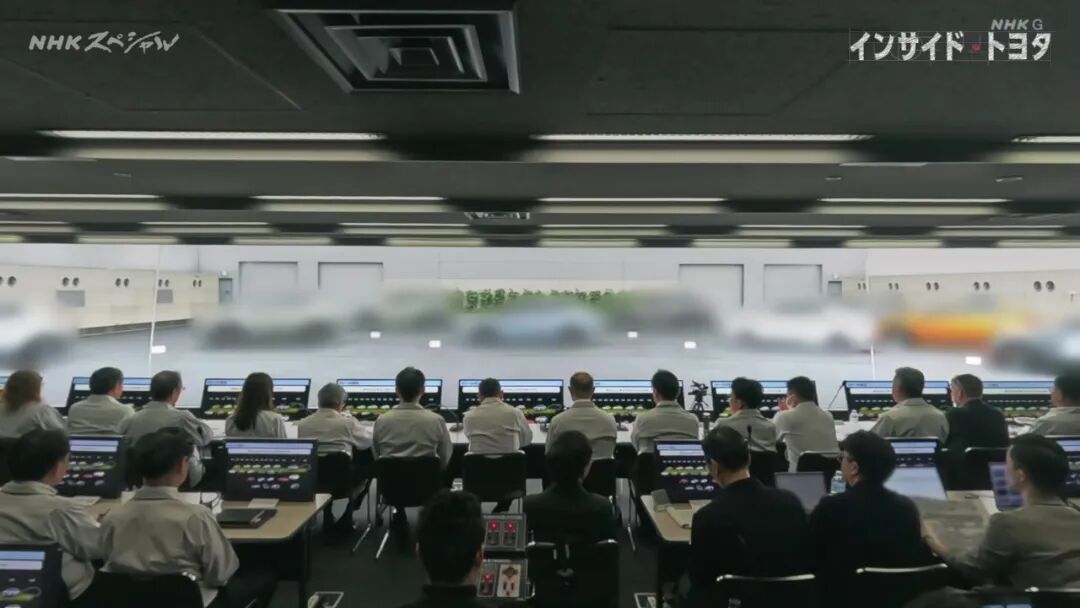
The moderator asked Fukushima to begin the presentation. Fukushima introduced that the product concept for the next-generation Corolla was 'The Surprising Corolla.' Its philosophy was to become more prevalent in people's lives, support daily life, create smiles, and adhere to 'good product at low price,' offering high-quality products at reasonable prices.
The team stood beside the development vehicle and explained the sales and profit plans. But the first question from management was simple.
Management: 'You say 'good product at low price.' Can this car really achieve a reasonable price? Becoming a good product seems possible.'
Fukushima: 'Thank you. As explained earlier in the cost section, we thoroughly improved from the basic qualities, reducing factors that could drive up costs and suppressing the base cost. Then we only added truly necessary elements, like adding ingredients, to form a complete commercial vehicle.'
Management pressed further: 'What does 'truly necessary' mean? Who decides, and how?'
Fukushima: 'Ultimately, of course, the customer decides. The specific work is discussed jointly by us, the sales department, and various regions.'
Management continued: 'Who is the customer? Politicians often say 'for the people,' but who exactly are 'the people'? These two questions are essentially the same.'
Fukushima: 'The customer I understand is the specific person standing right in front of us whom we truly hope will buy this car or exclaim 'Wow!' when seeing it. If someone says, 'Is this still a Corolla?' I would take it as a compliment.'
Management: 'The person who actually pays and uses the car long-term is the customer. Instead of collecting information from 1,000 irresponsible people, it's better to listen carefully to the opinions of 10 who truly want to buy this car.'
The discussion then turned to the costly platform development. The head of the technical department explained why the new platform must cover gasoline vehicles to pure electric vehicles (EVs).
'The biggest issue is that Toyota lacks suitable products in the compact EV segment. We've studied it before but always struggled to create a shape that satisfies customers. So this time, we're solving two problems:
First, even with a small body, we can arrange battery space;
Second, even with an engine installed, we can maintain a low body posture. Honestly, these are the two most important points.'
Management asked, 'Won't this cause major headaches for manufacturing? A multi-power, multi-model shared platform sounds good, but can the production site handle it?'
The development team admitted that different versions would increase the difficulty of managing development resources. Shiga, responsible for production technology, then spoke.
Shiga: 'If all models were exactly the same, things would be simple. But now some have added parts, some have reduced parts, with all kinds of differences mixed together. We production technicians have joined the project and are working with the development department to design a structure that makes these additions and reductions easier to implement. As long as the structure holds and conditions like crash performance are fully met, we can proceed.'
Management discussed demand forecasting: 'The sales department always makes forecasts, but they're not always accurate. Since supply and demand can rarely match perfectly, we should give factories more flexibility. Every time we say 'absolutely no problem,' we've been wrong before. It's better to assume from the start that forecasts may be inaccurate.'
The company had previously predicted that pure EVs would rapidly become widespread in a short time, but reality deviated significantly from the forecast.
Finally, Akio Toyoda pointed out, 'The key is who makes the decision and when. This can't rely solely on bottom-up processes. When risks need to be taken, someone at a sufficiently high level must bear them.'
The meeting lasted 45 minutes. Although many issues were raised about the Corolla and new platform development, they were ultimately approved.
Platform's 'Lifeline': Over 50 Crash Vehicles and Two Front Side Members
Narrator:
One of the most difficult tasks in platform development is ensuring crash safety. Regardless of changes in vehicle weight and size, it must meet regulatory requirements in different countries and protect occupants and the power battery.
A crash test vehicle, equipped with numerous sensors, is very expensive. To complete verification, over 50 prototype vehicles need to be crashed.
The platform has a critical skeletal structure called the 'lifeline.' At the vehicle's front are two main structural components called front side members. During a collision, the front side members must fold in a controlled manner as designed, safely absorbing the impact through their own deformation to protect the occupant compartment.
To improve development efficiency, key parts like the front side members must be shared across different models as much as possible.
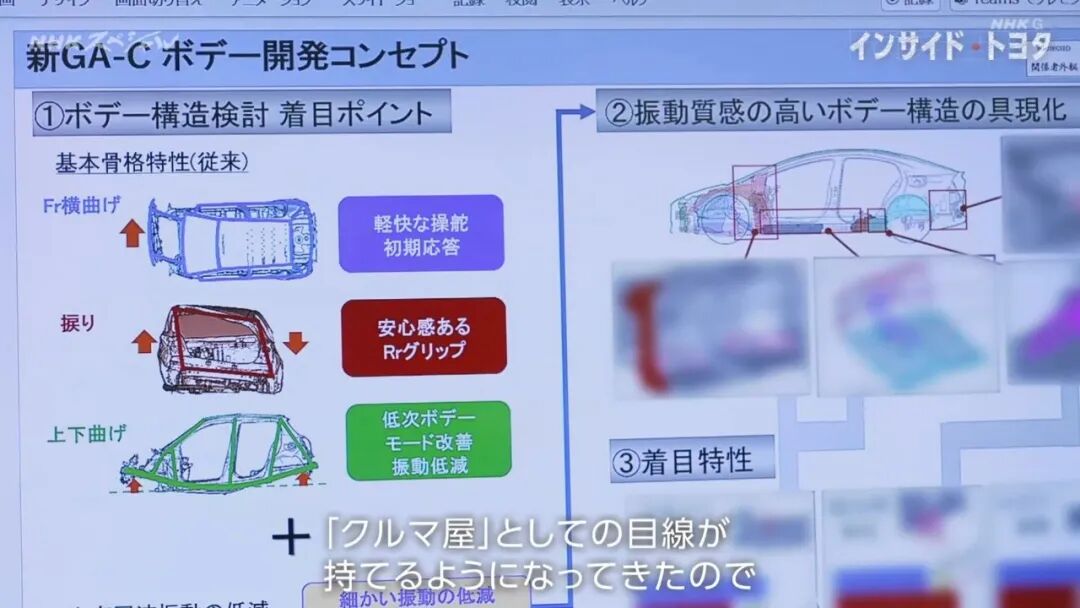
The engineer said, 'The hardest part is controlling how this component folds. If the folding pattern is unstable, it can't reliably protect the occupant compartment. So we've invested a tremendous amount of time in designing and developing this structure.'
A single platform will shape the fate of tens of millions of vehicles globally over the next decade. If it can't adapt to changes, the losses will be enormous. 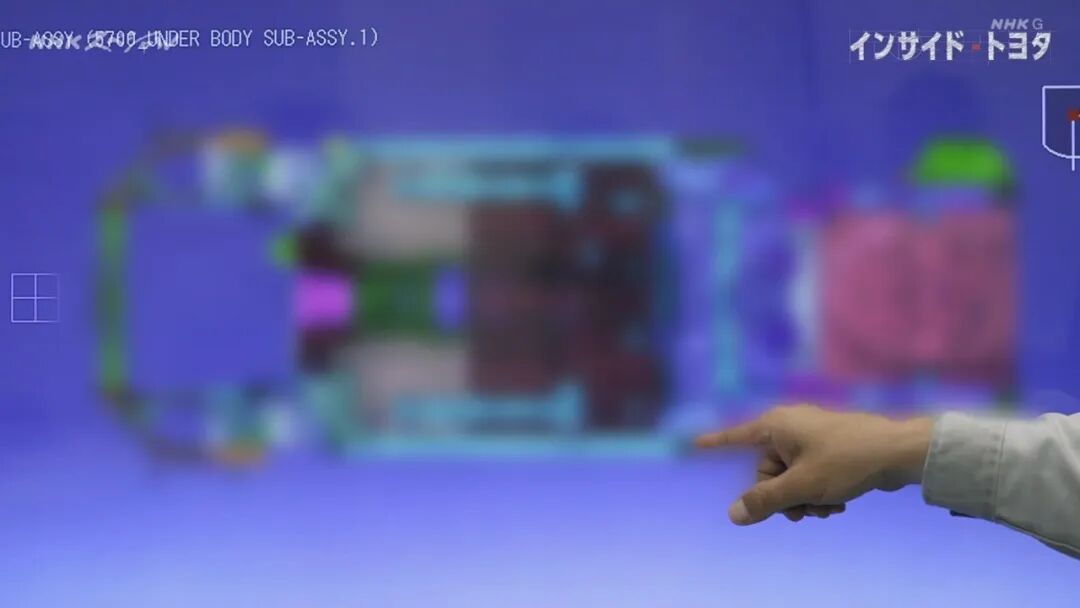
The engineer explained, 'Demand for pure EVs is hard to predict. So we must pre-establish an architecture that can be shared across multiple models. Otherwise, we might invest heavily in various versions that end up not being used.'
'The platform must meet the needs of different products while being as inexpensive, lightweight, and competitive as possible. These have always been key criteria for evaluating platform design in any era. We also need to consider possibilities that haven't emerged yet. Saying we've achieved all that sounds cool, but reality isn't that simple.'
Engineers must also continue pursuing the vehicle's driving feel. As an automaker directly competing with emerging manufacturers, this aspect cannot be abandoned. 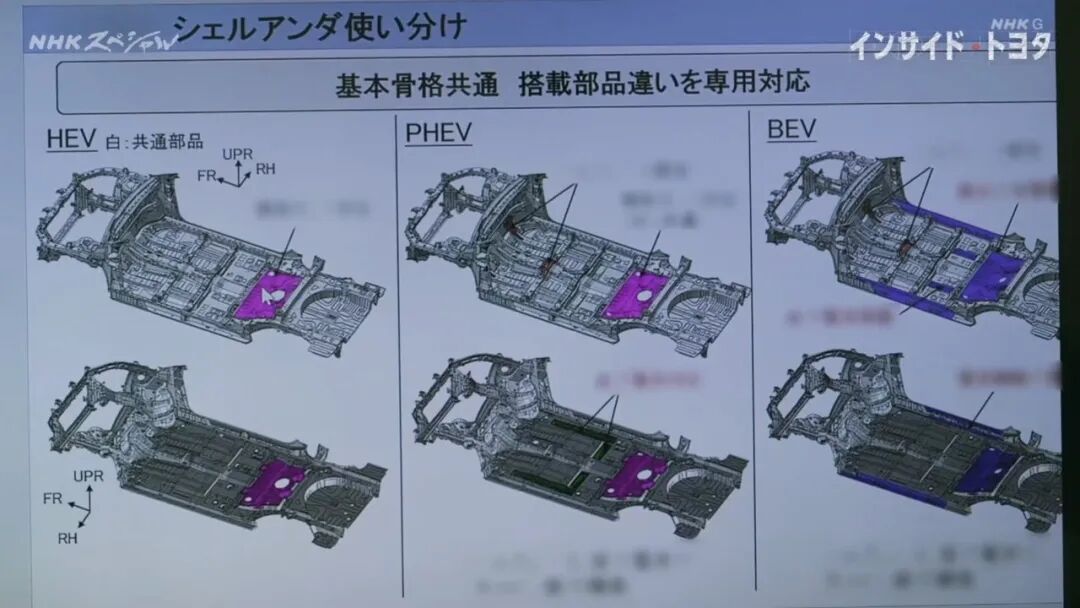
'It's difficult. When trying to make the car lighter and cheaper, people ask: Why do we need this part here? As we develop a true automaker's perspective, we keep asking what value the new platform should ultimately provide.'
Someone asked, 'Right?'
The engineer replied, 'I believe there's definitely an element of that. And we've gradually clarified some things we didn't understand before. To be honest, after working at Toyota for over 20 years, there's still much I don't understand, especially about a vehicle's driving feel. I know a car is good when I test-drive it, but if you ask what exactly to change to achieve that feel, sometimes I don't immediately understand even after repeatedly test-driving other companies' cars.'
The interviewer: 'Can there really be things engineers don't understand?'
The engineer: 'Yes, absolutely. A car's driving performance is truly difficult. Even changing the thickness of a single bolt flange can improve the vehicle's behavior—it's that detailed a world. Did you think it wasn't that hard?'
'Before joining the company, I didn't understand why everyone always said European cars were good and domestic cars weren't. I felt unwilling ful, so I joined an automaker to build good cars. But even now, there's still much I don't understand.'
Software-Defined Vehicles Are Coming, but Cars Can't Crash and Restart Like Phones
Narrator:
With the progress of artificial intelligence and the spread of autonomous driving, some believe that software will determine a car's value in the future. By then, traditional automakers might only be responsible for manufacturing a 'box' that holds hardware and software. Like the smartphone industry, industry dominance could shift to IT and tech companies.
Toyota is also gathering software talent to compete in this development race. But something like a platform remains fundamentally hardware manufacturing.
Akio Toyoda said, 'People may have become accustomed to the operating environments of ordinary electronic products. But cars face temperatures ranging from minus 50 degrees Celsius to plus 50 degrees Celsius, locally even approaching 100 degrees; they endure constant vibration, and most importantly, they carry human lives.'
'If an electronic device crashes, you can just restart it. But if a car crashes while driving, people could lose their lives. So don't simply compare cars to smartphones. At least for the digital environment inside the vehicle, I believe it's best left to companies that truly understand cars.'
Mid-Engine Sports Car: Developing Technology Even if Sales Will Be Small
Narrator:
Toyota is also developing a vehicle that entirely repursues driving performance from scratch.
Unlike ordinary mass-production vehicles, its engine is not at the front but in the middle of the body—a mid-engine configuration. With the heavy engine at the vehicle's center, the driven wheels can achieve more sufficient load, unleashing the tires' driving force. Having the center of gravity near the middle also improves steering and cornering performance.
The engineer said, 'A mid-engine design definitely has advantages in cornering performance. Now we're studying how to leverage this advantage on this racetrack. There are many curves here, requiring the vehicle to pass while enduring lateral G-forces. We're building this car to challenge things we've never done before, accumulate technology, and develop human skills.'
A mid-engine sports car occupies passenger space and is difficult to sell in large volumes. Nevertheless, Toyota pursues driving performance, driving fun, and technological accumulation. For an automaker, this is work related to survival.
After the test driver completed the first lap, feedback indicated that the engine's RPM response was not smooth enough in some sections, and power output felt insufficient on the main straight. It was clear the team was discussing engine RPM climb and power response.
Professional drivers also joined the development, comparing the test vehicle with competing models.
Mid-engine sports cars have long been developed through racing and racetrack experience by European brands. After test-driving a Porsche, the driver said, 'No matter how hard you press the accelerator, the car doesn't easily slide. In terms of basic tire usage, Porsche is truly impressive, and it doesn't rely solely on aerodynamics.'
Someone on site exclaimed, 'Amazing.'
The interviewer asked, 'Is Porsche really that strong?'
The engineer: 'Very strong. Every time I drive one, I'm impressed. This was just the ordinary version, not a track-prepared model, yet it had such strong sportiness and ride comfort. These are technologies Toyota hasn't mastered yet.'
Interviewer: 'Absolutely not at all?'
Engineer: 'Absolutely not at all. We still haven't fully understood what it exactly does, so we've been researching it.'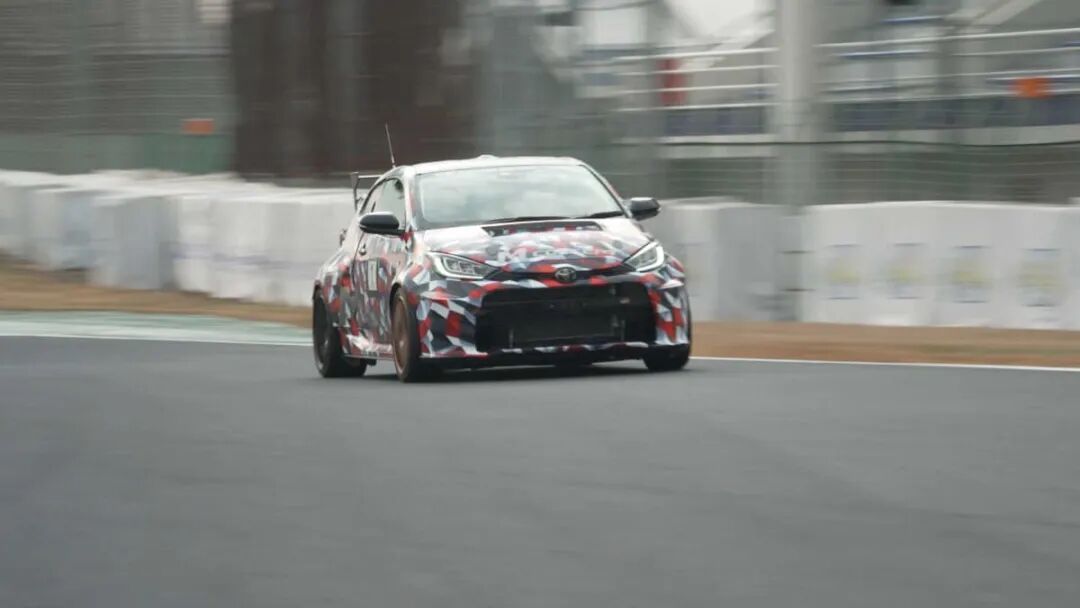
Manufacturing Department Rejects Drawings: A Decision Made in the Conference Room, with Consequences for the Production Line for Six Years
Narrator:
The Corolla project, the first to adopt the new platform, reaches another critical juncture.
The development team submits the design drawings to the manufacturing department responsible for mass production.
The manufacturing department must determine whether to proceed with making mass production molds. The developers explain one of the countermeasures: 'This is countermeasure four. We've added reinforcements at the stress points of the anti-collision beam. The results can be seen in the bottom left corner.' The manufacturing department then raises an opinion that surprises the development team: there are still too many issues with key structures like the front longitudinal beam, and they cannot proceed to the next stage.
Honda, the manufacturing head, says: 'Excuse me, I'd like to share our thoughts. We can only officially accept the drawings and proceed with mold design when all performance criteria are met, all requirements are satisfied, and every item can be checked off. I'm sorry, but for the batch of drawings submitted on the 24th, we hope to reject them. Is that acceptable?'
The development team states that, given the subsequent schedule, the project has reached a stage where mold design must commence. However, forcing it forward now and making everyone endure rework later would be equally painful.
Once molds are made, many things become irreversible; yet, there is no more leeway in the schedule.
Someone proposes a compromise: 'The situation varies for different parts. Some can start mold design, while others clearly cannot. Let's first screen them and proceed with mold research for parts where issues have been resolved. Is that acceptable?'
The manufacturing department does not budge.
Honda says: 'Take the issue of the front longitudinal beam's weld spot spacing, for example. This is a significant problem, really big. We're already discussing it and have a general idea of the direction for countermeasures. But does that mean we can proceed to the next step? This is a very difficult part to judge. By standard criteria, the answer is no. Moreover, it's the front longitudinal beam, a core component determining platform performance. I believe it's best to wait until all conditions are fully met before submission; otherwise, we might end up having to redo it.'
Toyota produces approximately 10 million vehicles annually in Japan and overseas. Honda, who rejected the drawings, has worked in the manufacturing technology department supporting stable production for 41 years.
He explains why the manufacturing side is so cautious.
'Suppose two parts are identical in shape but differ by 0.2 millimeters in plate thickness. They might require entirely different molds and manufacturing tuning methods.'
The interviewer confirms: 'Even a difference of just 0.2 millimeters makes a difference?'
Honda replies: 'It does.'
To meet regulations and user demands in different countries, the variety and quantity of automotive parts continue to increase. Take wire harnesses, which transmit electrical signals, as an example; a single production line has 679 types.
Honda says: 'Can you ask the on-site team to keep doing this kind of work for six years? A car's lifecycle is six years. A decision made in a conference room for an hour might burden the on-site team for six consecutive years. That's why I say no. The ideal approach is to move the conference room to the production site.'
This platform will be produced in factories worldwide in the future.
Honda says: 'Of course, some things are truly unavoidable. But if we say 'it's unavoidable' for everything, in the end, only the unavoidable remains. We must turn at least one thing into 'this can be done.''
The interviewer asks: 'After working in manufacturing for so many years, what do you value the most?'
Honda thinks for a moment and replies: 'The most important thing isn't actually the objects. It's the people on-site. In the end, the ones who will truly help you are the people on-site.'
Ending: Japan Aims to Be a 'Chosen Nation'
Narrator:
In a speech in Toyota City, Akio Toyoda said, 'Thank you all for building this city with automobiles at its center for so long.'
Shortly after the war, Toyota's founder, Kiichiro Toyoda, left a message: 'Build a democratic automotive industrial nation and contribute to the reconstruction of a peaceful Japan and world culture.'
Today, Toyota still wants to continue developing this city and the automotive industry, allowing automobiles and manufacturing to take root as a culture. To achieve this, people must continue learning, continue working, and create better things.
After the war, Japan's automotive industry drove economic development for a long time. Now, with a declining population and sustained low growth, Japan has not yet found another foundational industry that can fully replace the automotive sector.
Speaking of Japan's global position, Akio Toyoda says: 'If Japan were to set world standards, many might think it impossible. Japan is a small country, but a small country can still have a presence; it has nothing to do with territorial size. The key is that wherever you go, people can feel 'this was made by the Japanese' and think 'it's great that Japan's Toyota exists in the world.' I believe that is our responsibility.'
'Japan must become a chosen nation, regardless of the country it faces. Otherwise, it will be difficult for us to continue surviving.'
The Very End
This is no longer part of the video content but some reflections from Vehicle. Sustainable operations, lean manufacturing, and global strategy remain Toyota's strengths worthy of learning for our country. However, throughout the video, there is little mention of electronics, software, or electrification information. There are two possibilities: either this is Toyota's highly confidential information that they don't want to disclose, or Toyota is still developing and catching up in these areas.
Based on these two possibilities, in Scenario One, Toyota has a major move up its sleeve, and everyone should be prepared. However, to be honest, apart from potential electrification breakthroughs like solid-state batteries, other possibilities seem slim. If it's Scenario Two, then it can only be said that times have changed, and Toyota faces significant risks.
What do you think? Feel free to leave a comment and join the discussion.
References and Images* Unauthorized reproduction or excerpting is strictly prohibited - All images in this article are from the NHK 'Inside Toyota' video content.
-
![]()
Porsche Won't Give Up on Manual Transmissions! Will Persist as Long as Regulations Allow and Market Demand Exists
-
![]()
This Summer, Car Rentals Are Surprisingly Affordable
-
![]()
MiniMax H3 Closes In, Leaving Seedance with Limited Safe Space
-
![]()
Blockbuster! Li Shufu Steps Down as Chairman, An Conghui Takes Over, Geely Ushers in 'Coming-of-Age' Moment
-
![]()
AI Smartphones: Don't Expect Price Drops Anytime Soon
-
![]()
Kingdee International's AI Aspirations Stumble at Market Cap Barrier: Can Xu Shaochun's Ambitious Vision Sustain Investor Confidence?
-
![]()
Phase I Project Covering 7 Million Square Meters Reaches Stable Mass Production! Shuangxin Materials Speeds Up Its PVA Optical Film Production Capacity Deployment
-
![]()
Despite Incurring a Loss of 67.23 Million Yuan, Launching a Private Placement of 1 Billion Yuan! What’s the Future Vision of Focuslight Technologies?