Weekly Stock Review | The Golden September Market Beckons: Are Auto Stocks Poised for a Turnaround?
 08/17 2026
 379
379
This week's automotive stock review reveals a tapestry of diverse trends within the automotive market.
The A-share market this week was characterized by typical volatile trading, showing a stark contrast to last week's mild recovery and the steady exploration of the market bottom by funds.
Last week, market sentiment gradually improved, with funds positioning themselves in undervalued growth sectors, leading to a gradual rise in the index's center of gravity. However, as we entered this week, market uncertainty surged. The Shanghai Composite Index continued to oscillate around the 3900-point mark, with fierce battles between bulls and bears, and frequent intraday "surge-and-retreat" patterns becoming the norm.
Major indices displayed modest performance, with the Shanghai Composite Index down by 0.33%, the CSI 300 declining by 0.61%, the CSI 500 up by 0.13%, the CSI 1000 rising by 1.18%, the CSI 2000 increasing by 2.07%, the ChiNext Index up by 1.77%, and the STAR 50 down by 1.51%.
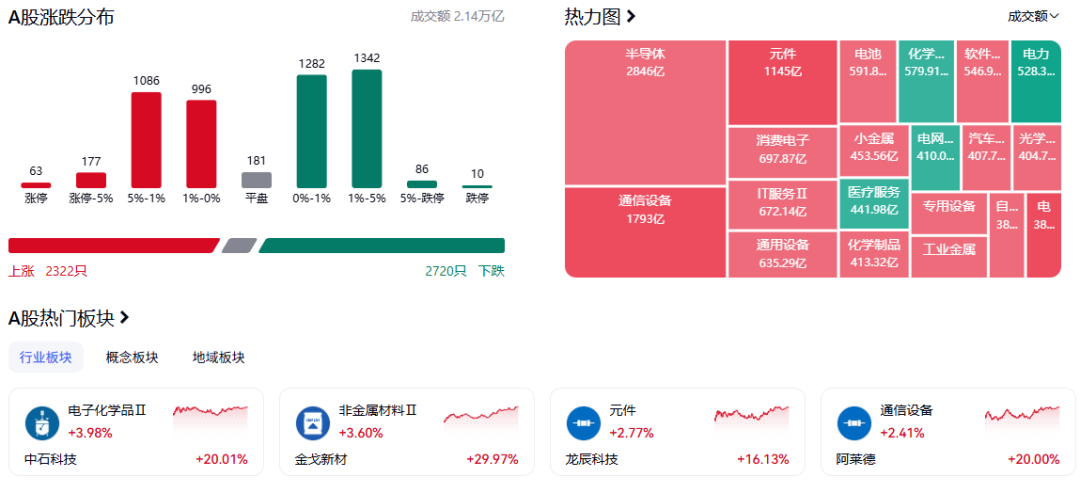
Overall, technology stocks slightly outperformed this week, as if a hidden force was consistently selling shares during trading sessions to prevent excessive volatility.
Market funds adopted a defensive stance, with hot topics rotating rapidly and sustained trends being scarce. Short-term funds' willingness to chase highs diminished significantly, and their preferences shifted from speculative themes to tangible sectors driven by concrete performance and industry events.
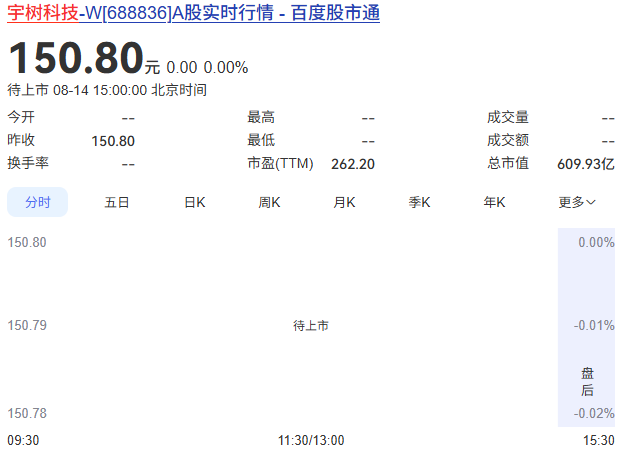
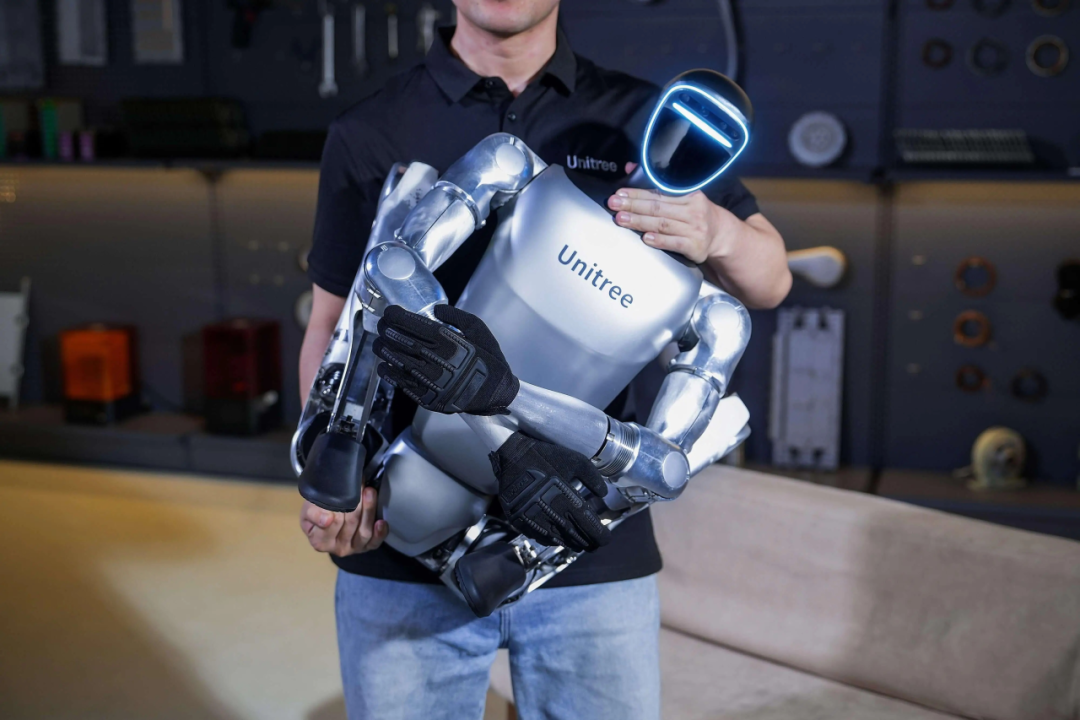
Following Changxin's listing, the biggest excitement this week came from Unitree Robotics. On August 13th, Unitree Robotics completed the subscription, lot drawing, and payment for its STAR Market IPO, officially entering the pre-listing waiting phase. The market anticipates its listing on the STAR Market of the Shanghai Stock Exchange in late August.
The issue price was set at RMB 150.80 per share, with an online lot winning rate of only 0.0181%. Since 2026, the average first-day gain of new stocks on the STAR Market has reached 466.61%. For Unitree Robotics, winning a lot of 500 shares requires a payment of RMB 75,400. Based on this, the single-lot paper profit could potentially reach around RMB 351,800.
An interesting incident occurred during Unitree Robotics' roadshow. An investor bluntly asked if Unitree Robotics was a remote-controlled toy company.
Wang Xingxing, the founder of Unitree Robotics, responded, "The remote control serves as the highest-priority safety redundancy, much like intelligent driving cars are equipped with steering wheels and brake pedals. In extremely complex terrains, communication anomalies, or logical errors, operators can use it for emergency shutdowns and forced risk avoidance."
However, his public statements were also interpreted as indicating that humanoid robots still have a long way to go before achieving full autonomy. Wang Xingxing also admitted that Unitree has not yet conducted large-scale real data collection and factory deployment training, and at this level, Unitree's progress is relatively slow.
Wang Xingxing said, "The order of application scenario implementation is jointly determined by the degree of scenario structuration and task complexity." In simpler terms, scenarios with the simplest tasks and the most fixed environment will be tackled first.
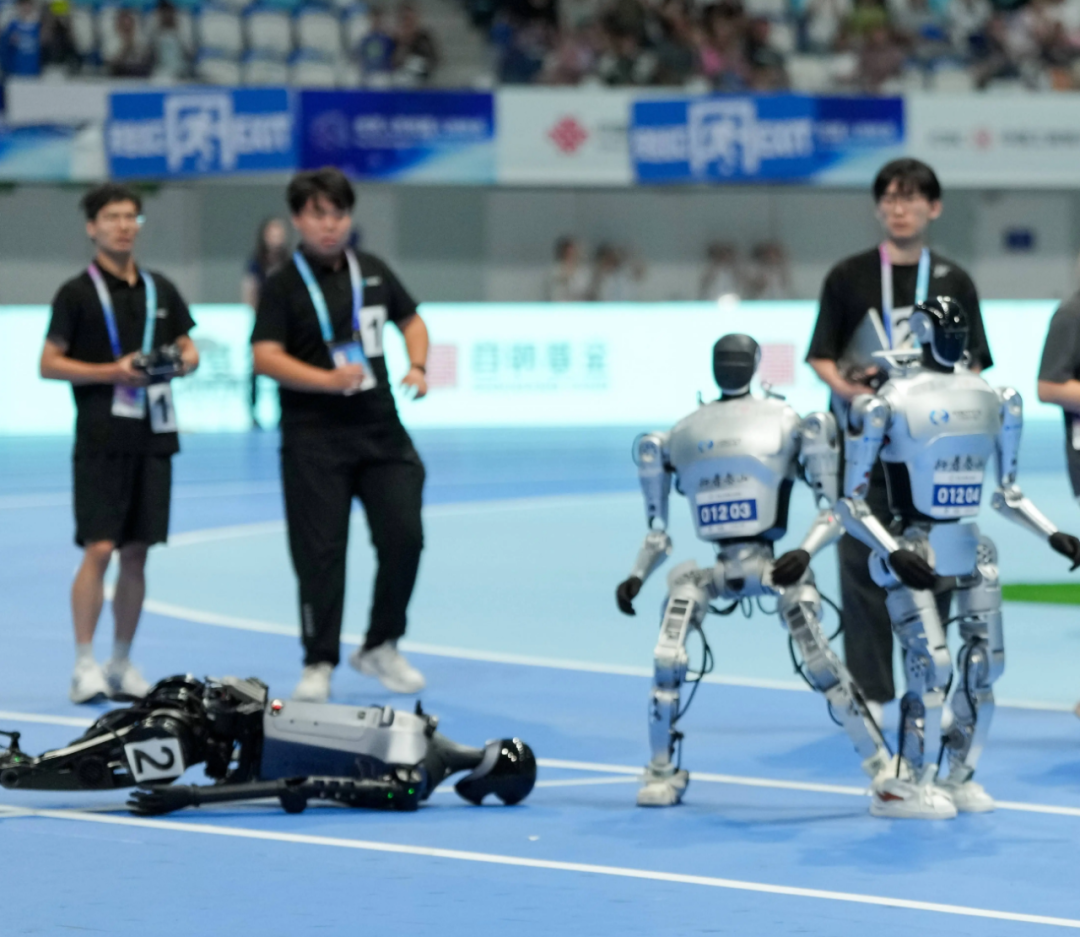
For humanoid robots, performing at the Spring Festival Gala, greeting guests in exhibition halls, and patrolling fixed routes are the simplest tasks because movements can be pre-programmed, the environment is controllable, and the error tolerance rate is high. Scientific research and educational scenarios are also hassle-free, as customers can write their own code and modify functions, and manufacturers just need to ensure the stability of the robot body.
In its prospectus, Unitree Robotics compares the embodied ontology intelligent model and the embodied large model to the "cerebellum" and "brain" of robots, respectively—the former responsible for motion control, and the latter for environmental understanding, intention perception, autonomous decision-making, and task execution. The capital market has previously focused more on hardware aspects such as reducers, motors, and joint modules. However, as the robot's physical motion capabilities gradually mature, the value of perception, data, and task cognition is expected to continue rising.
Notably, last week, RoboSense, a competitor only in the LiDAR sector, experienced a consecutive decline, sliding 7.59% cumulatively during the week.
Apart from tech stocks, in an environment where the overall market lacks a clear trend, the automotive sector is no longer experiencing synchronized gains and losses across the board but has officially entered an era of stock-picking. Funds are no longer indiscriminately betting on the new energy vehicle sector but are starting to refine their selection of targets.
As the absolute leader in domestic vehicle manufacturing, BYD's stock price fluctuated within a narrow range this week, with a much smaller amplitude than small and medium-sized automakers in the sector. It closed at RMB 88.9 per share on Friday, down 1.48% cumulatively during the week. From a funding perspective, significant divergences among large funds have notably narrowed, with the focus of contention shifting from short-term sales fluctuations to the pace of new product launches in the second half of the year and overseas expansion.
For long-term funds, BYD's complete vertical industry chain remains its core competitive advantage. However, investors need to temper their expectations for "explosive growth" in performance, as future corporate growth will transition from high-speed expansion to steady quality improvement.
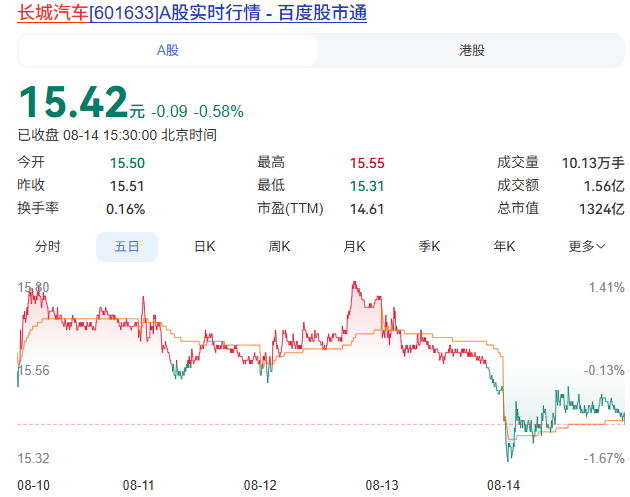
Compared to BYD's sideways consolidation, Great Wall Motors exhibited more volatility this week, with a noticeable warming up in funding contention.
This week, the incident of Wei Jianjun's self-drive test in western Sichuan continued to ferment. Meanwhile, the Weipai V8X sport version is about to be launched, and company executives publicly predicted that the plug-in hybrid market in the RMB 300,000 price range would see explosive growth, officially targeting the mid-to-high-end home SUV sector.
For a long time, the market has criticized Great Wall for its complex vehicle matrix and severe internal brand cannibalization. Starting this year, Great Wall's product strategy has gradually become clearer, with Tank defending its off-road base, Weipai targeting the high-end home market in the RMB 300,000 price range, and Haval anchoring the mass-market hybrid sector.
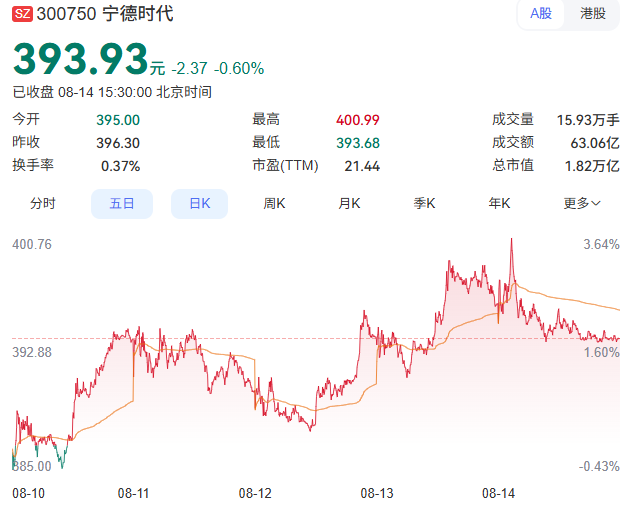
CATL, the leader in power batteries, performed relatively strongly this week, boosting sentiment in the new energy industry chain, with its stock price breaking through RMB 400 per share at its highest. It closed at RMB 393.9 per share on Friday, up slightly by 1.6% cumulatively during the week.
The semi-annual report disclosed not long ago has made the industry's current situation clear to the market. The power battery business is facing fierce competition, with battery prices continuing to decline, squeezing corporate profit margins. Energy storage has become the company's second growth curve. Global demand for energy storage is steadily rising, and overseas large-scale energy storage orders continue to land, partially offsetting the pressure on the power battery business.
Another noteworthy variable is the price of upstream lithium resources. Small fluctuations in lithium prices directly affect battery companies' cost control capabilities. In the short term, without strong catalysts, CATL's stock price is unlikely to embark on a trending rally and will rely more on energy storage orders and new technology releases for periodic rebounds.
In the short term, September is set to usher in the traditional peak sales season of "Golden September and Silver October," with major automakers launching promotional campaigns and new car launches, making terminal sales data the most crucial catalyst for the next two months.
In a deeply volatile V-shaped market, the bottom is never a fixed point but rather a range.
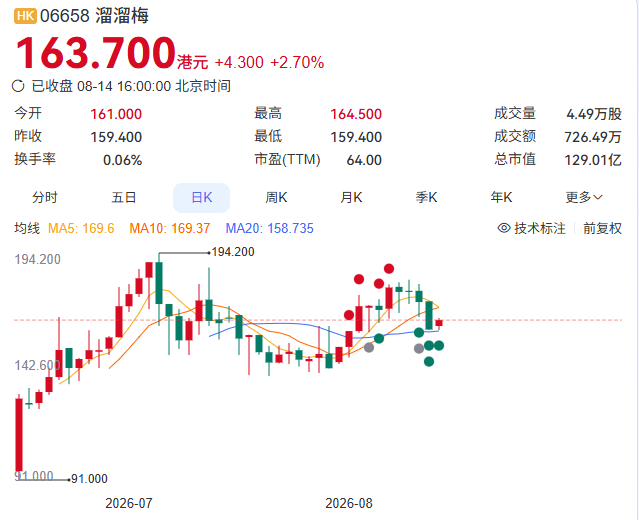
Finally, the craze for Liuliumei, which surged wildly two months ago, finally started to decline this week. Two months ago, this company selling plum snacks, with an issue price of just HKD 43.58, opened with a gap-up to HKD 95, more than doubling.
The reason is that the stock ticker Liuliumei, abbreviated as LLM, precisely corresponds to the English term for Large Language Model. People in the tech circle are now hypersensitive to topics related to "LLM," let alone a stock directly named LLM.
For emotionally charged funds, these three letters were like a key unlocking a magical realm of imagination.
A company originally selling snacks was forcibly labeled as "AI." Not only did it surge 197.15% on its debut day, but its stock price continued to soar afterward, reaching nearly HKD 200 per share at its peak.
This once again proves that fundamentals in the stock market can almost be ignored, with only uncontrollable emotions, frenzied funds, and keywords from quantitative institutions at play.
Note: Some images are sourced from the internet. If there is any infringement, please contact us for removal.
-END-

-
![]()
Three Waves of Technological Advancement in Sync: Who Will Seize the Next AI 'Opportunity Window'?
-
![]()
The Scripts of Chinese and U.S. AI Have Completely Swapped Overnight
-
![]()
From a 1.4 Billion Yuan Loss to an Estimated 500 Million Yuan Profit: Generative AI Paves the Way for SenseTime’s Turnaround
-
![]()
After Testing CatPaw, I See the Second Half of Meituan's AI Game
-
![]()
In the AI Era, How Much Is Doubao’s Entrance Pricing Power Worth in Terms of Commission?
-
In Line with HJ 1480 - 2026! Hikvision Launches Specialized Products for Video Surveillance Systems in Pollution Discharge Monitoring
-
![]()
The Next Corolla: How Toyota is Reinventing the 'National Car' Amid Global Automotive Industry Changes - NHK's 'Inside Toyota'
-
![]()
HONOR Robot Phone: A Revolutionary Smartphone or Just a Compelling Tale?