Xiaomi’s Auto Sector Revenue Hits 23.9 Billion Yuan! Q2 Financial Results Unveiled
 08/19 2026
 512
512
Revenue Rises, Yet Business Faces Ongoing Challenges
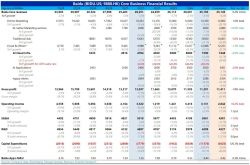
On August 18, Xiaomi disclosed its financial performance for the second quarter of 2026.
The total revenue of Xiaomi Group soared to 108.9 billion yuan, accompanied by an adjusted net profit of 6.2 billion yuan.
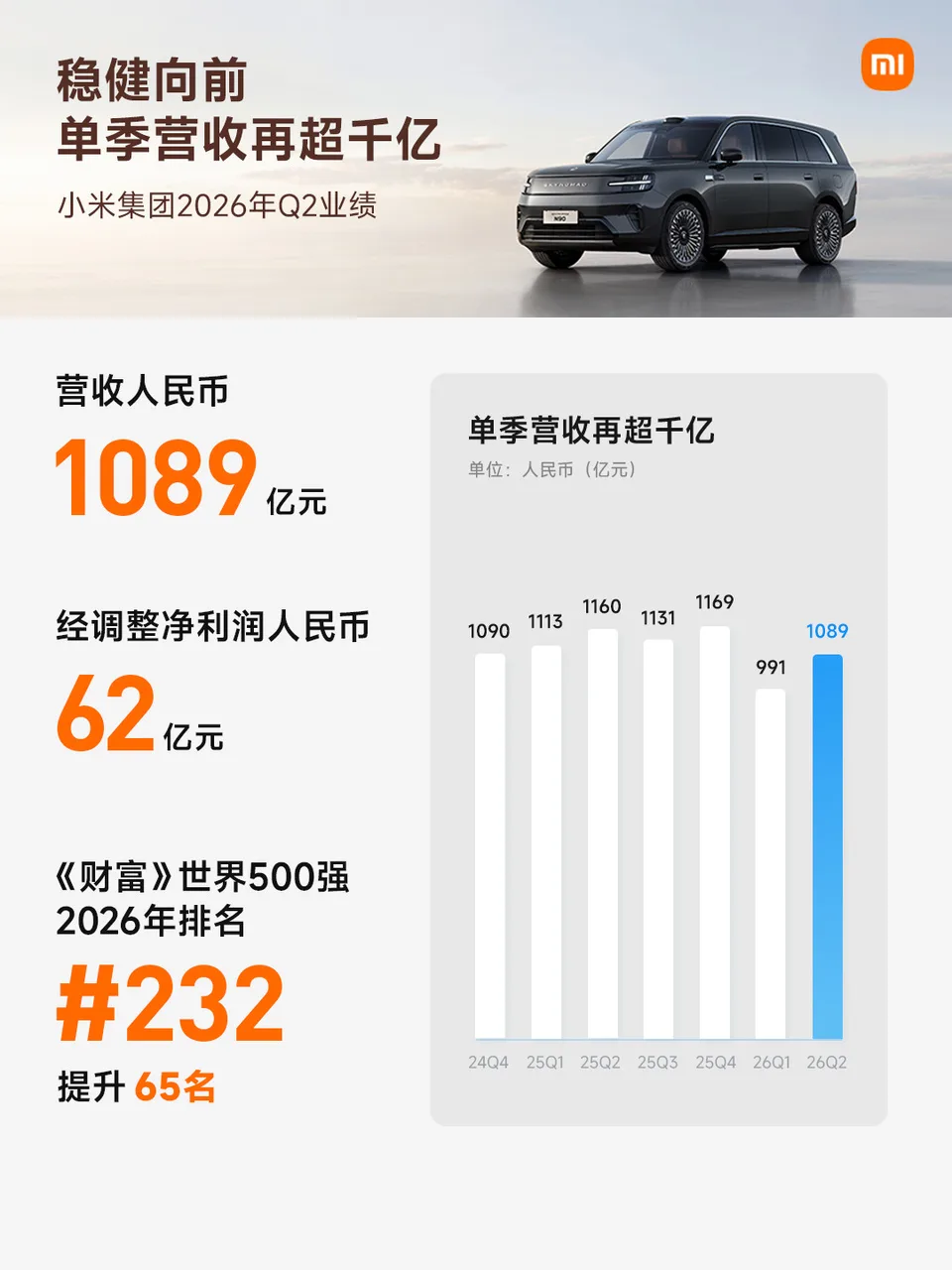
(Image Credit: Xiaomi)
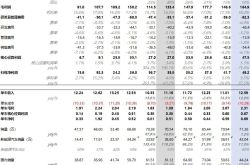
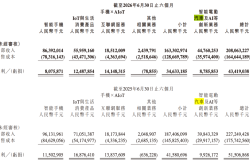
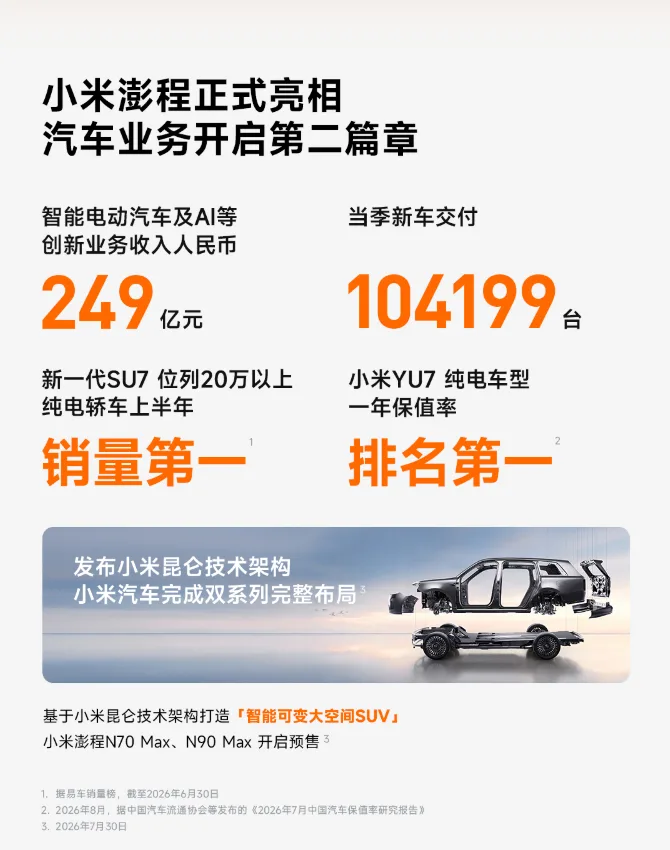
In the automotive sector, revenue from innovative business areas, including smart electric vehicles and AI, reached 24.896 billion yuan, marking a 17.1% year-on-year increase and a 25.3% quarter-on-quarter rise. Revenue specifically from complete smart electric vehicles amounted to 23.9 billion yuan, up 15.9% year-on-year and 25.7% quarter-on-quarter.
(Image Credit: Xiaomi)
The gross profit for these innovative business segments, encompassing smart electric vehicles and AI, stood at 4.792 billion yuan, with a gross profit margin of 19.2%. This represents a 7.2 percentage point decrease year-on-year and a 0.9 percentage point drop quarter-on-quarter.
Xiaomi explained that the year-on-year decline in gross profit for this segment stemmed from a lower proportion of high-priced SU7 Ultra deliveries, escalating prices of core components such as storage, and increased investment in the AI business. The quarter-on-quarter decrease was primarily attributed to rising component costs.
Moreover, the segment incurred an operating loss of 2.6 billion yuan, although Xiaomi did not disclose the separate loss situation for the auto business. Capital expenditures totaled 2.383 billion yuan, accounting for 65.8% of Xiaomi Group’s total capital expenditures for the quarter, primarily allocated to production capacity and technology R&D investment.
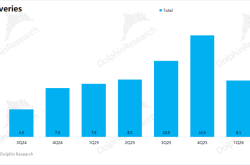
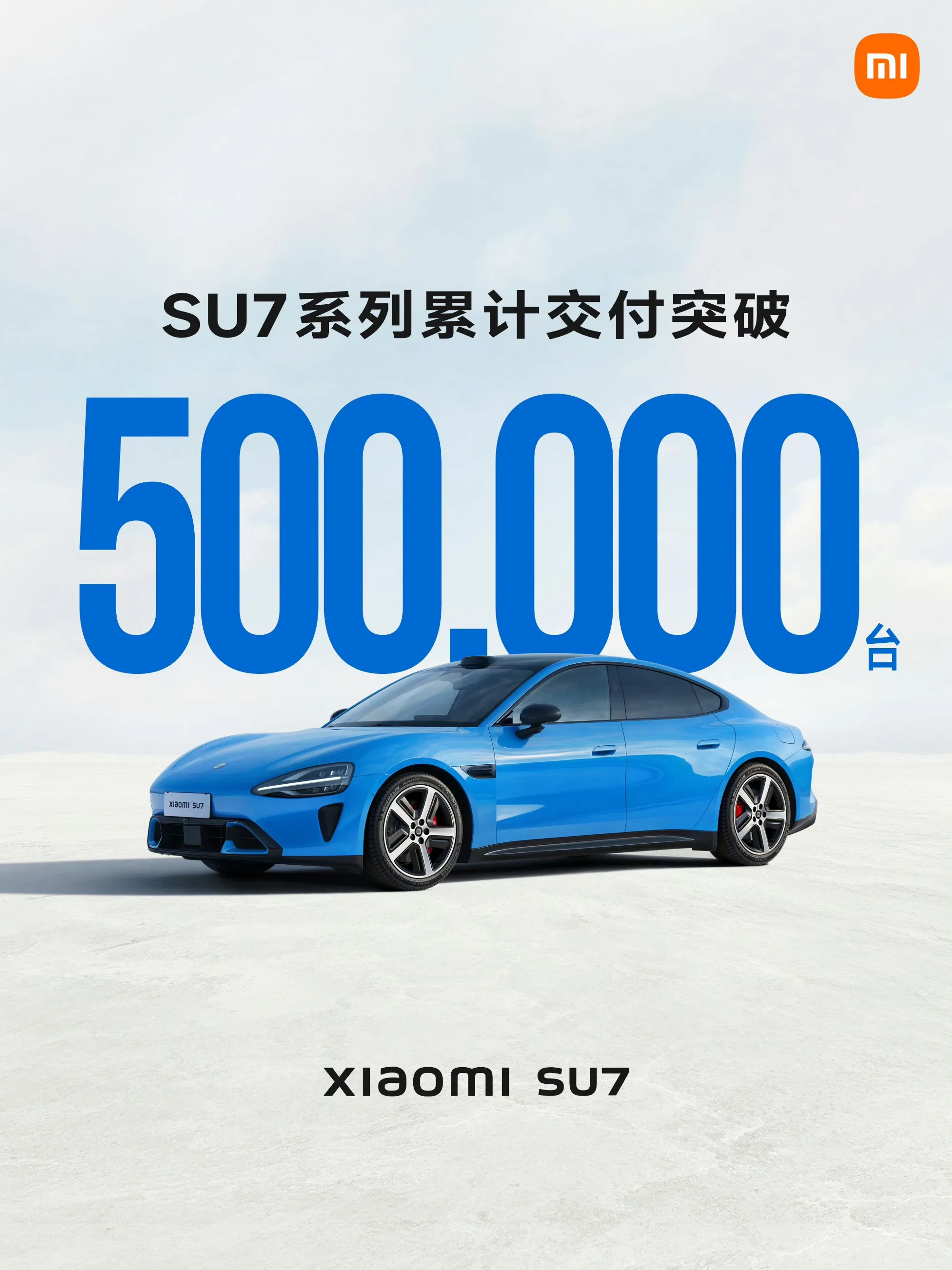
According to Xiaomi’s financial report, total deliveries of Xiaomi vehicles in Q2 reached 104,199 units, up 28.9% year-on-year. Cumulative deliveries of the Xiaomi SU7 have exceeded 500,000 units.
(Image Credit: Xiaomi)
Judging from Xiaomi’s financial data, despite the continued growth in auto business revenue in Q2, the gross profit margin declined both year-on-year and quarter-on-quarter, and the segment remained in an operating loss. Q2 was a challenging quarter for the auto business.
For Q3, Xiaomi will need to prepare inventory in advance for the Pengcheng models launching in September, and its financial performance is likely to continue facing pressure.
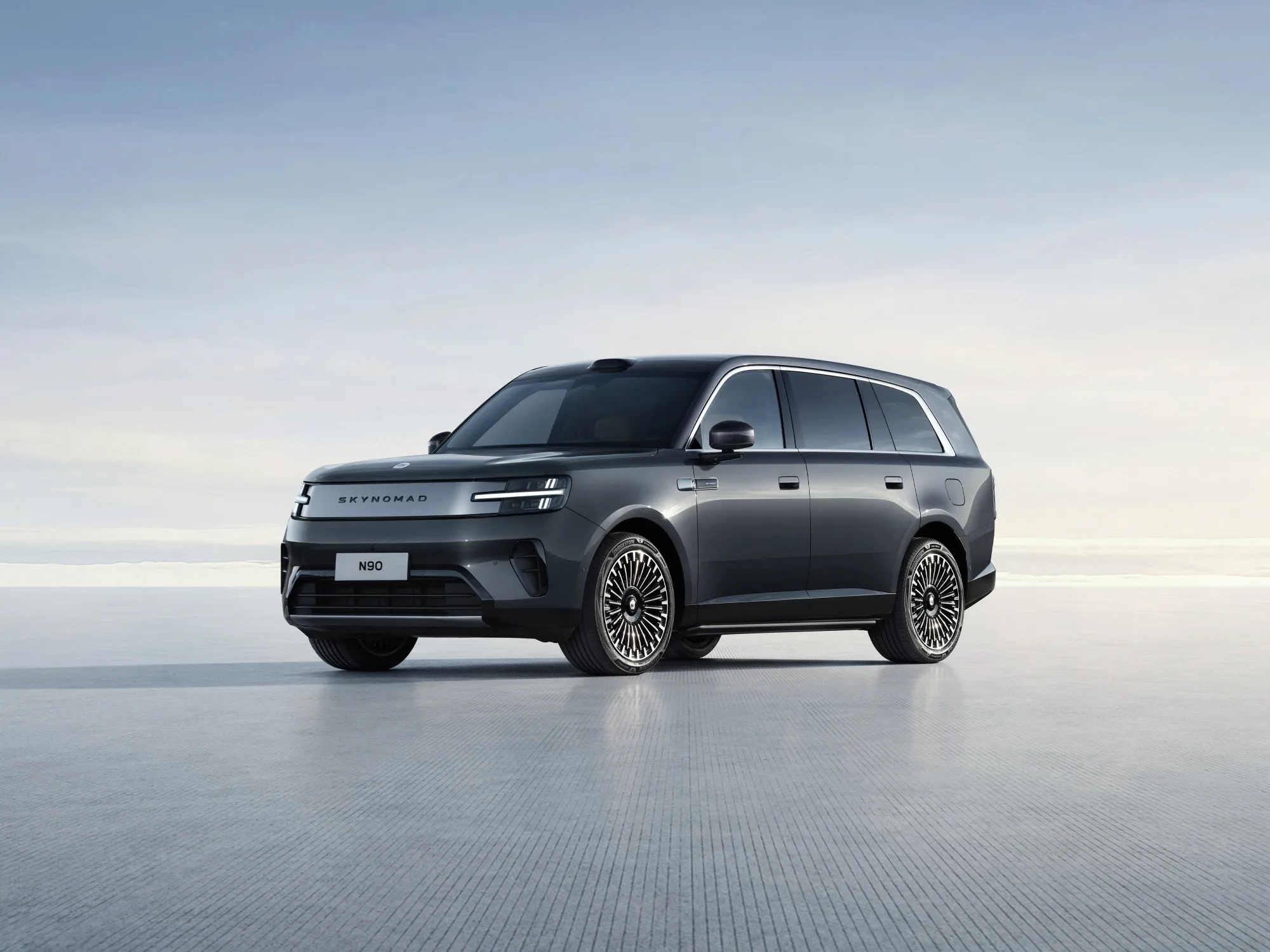
However, by Q4, when deliveries of the Xiaomi Pengcheng N90 and N70 models commence, Xiaomi Auto’s revenue is expected to further increase, potentially improving its financial performance.
(Image Credit: Xiaomi)
From an annual perspective, achieving the delivery target of 550,000 units set by Xiaomi at the beginning of the year still presents significant challenges.
In the first half of the year, Xiaomi Auto delivered approximately 185,000 units, completing only about 30% of the annual target. To reach the goal, Xiaomi Auto needs to deliver over 60,000 units per month in the second half of the year, implying that the Pengcheng series must achieve monthly sales of over 30,000 units after its launch.
Currently, although the Pengcheng series has demonstrated strong pre-sale performance, the extended-range SUV segment already features formidable competitors like Li Auto and AITO, resulting in intense market competition. The actual future sales performance of Xiaomi Pengcheng remains uncertain.
Overall, Xiaomi Auto is in a strategic investment phase of “sacrificing short-term profits for long-term market share.” It has established a presence in the 200,000-300,000 yuan market and is actively expanding into the extended-range segment. However, the profitability turning point for Xiaomi Auto is still unclear. Perhaps by 2027, when stable deliveries of Xiaomi Pengcheng commence, Xiaomi’s economies of scale will gradually emerge, ushering in a new phase of development.
Xiaomi, Xiaomi Auto, Xiaomi Pengcheng
Source: Leikeji
Images in this article are from: 123RF Licensed Image Library Source: Leikeji
-
![]()
Baidu: Legacy Businesses Continue to Struggle, AI Relies Solely on Computing Power Dividends
-
![]()
Geely: Riding the Wave of Overseas Expansion, Can It Mirror BYD's Success?
-
![]()
Xiaomi: Repeated Challenges—Can the Extended-Range Vehicle Be Its Redemption?
-
![]()
New Cars Swarm Chengdu Motor Show, Competing for Market Share in the Second Half of the Year
-
![]()
Q2 Sees 100,000 Vehicle Deliveries Amid 2.6 Billion Yuan Loss! Xiaomi Automobile Places Its Bets on Pengcheng
-
![]()
BYD Addresses Acquisition Rumors of SAIC Motor, Netizens Propose Acquiring Xiaomi Auto Instead
-
![]()
Xiaomi Addresses Claims of Pengcheng Battery Thermal Runaway, Exceeding New National Standards; Lei Jun Highlights 1,230 Rigorous Tests
-
![]()
岚图 Chairman: A Car with 'Two Degrees More' Than Maybach, Netizens: 'Implications' for Xiaomi?"],"abstract":["VOYAH Zhiguang S, New Energy, Extreme Stunts, Huawei ADS 5.0, Cost-Effectiveness