岚图 Chairman: A Car with 'Two Degrees More' Than Maybach, Netizens: 'Implications' for Xiaomi?"],"abstract":["VOYAH Zhiguang S, New Energy, Extreme Stunts, Huawei ADS 5.0, Cost-Effectiveness
 08/19 2026
 396
396
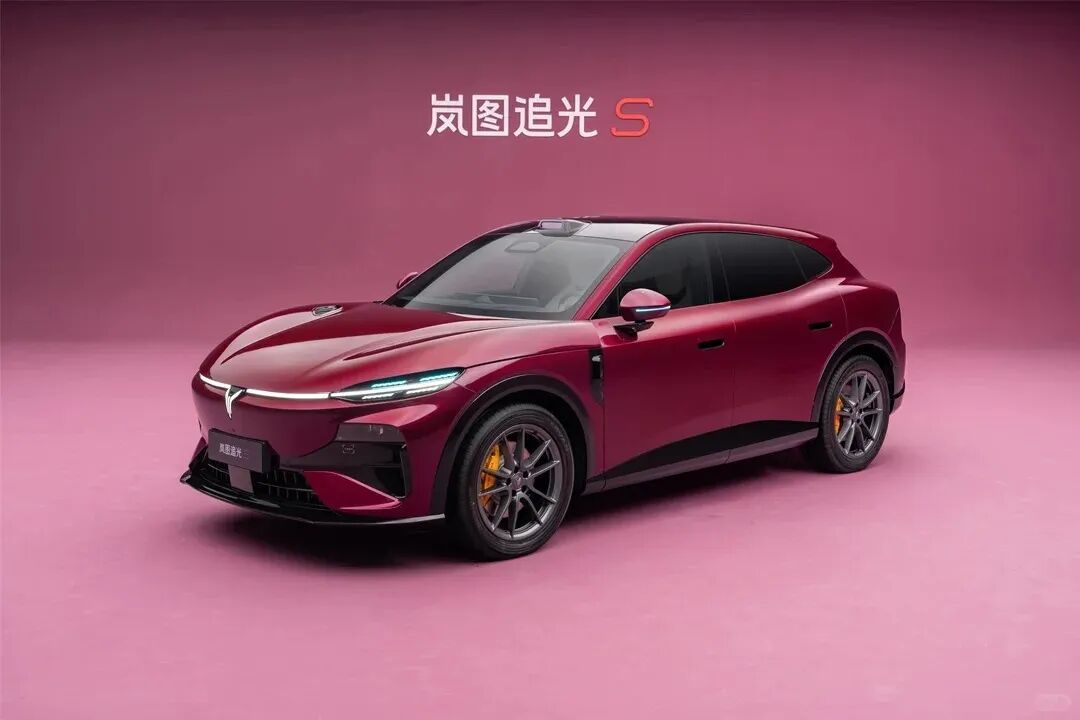
Previously, the Xiaomi YU7 went viral with its marketing tagline 'Second-row seatback at 135°, one degree more than Maybach,' turning seat angles into a new competitive track (literally 'track,' but figuratively 'arena') in the industry. VOYAH directly took on this meme and countered with a textbook-style benchmarking move.
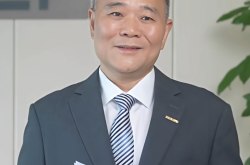
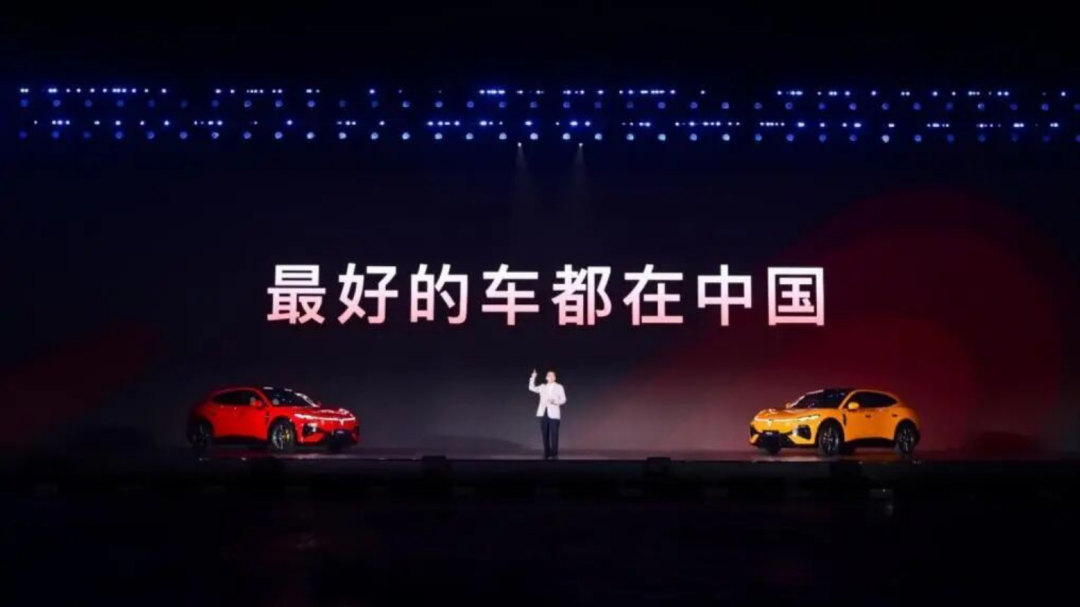
At the launch event, VOYAH's Chairman Lu Fang stated bluntly, 'I didn't really want to say this, but my colleagues insisted. Some models claim their seats are one degree more reclined than Maybach's, so we'll go two degrees more.'
Netizens hailed this move as 'using magic to defeat magic.' The parameters saw a tangible upgrade: the VOYAH Zhiguang S's rear seatback reclines to a maximum angle of 137°, two degrees more than the Xiaomi YU7. Without mockery or provocation, VOYAH simply used hard data to benchmark against this popular model that sells over 10,000 units monthly.
While seemingly a playful meme, the ambition is clear. In the fiercely competitive 200,000-300,000 Yuan pure electric SUV market, the Zhiguang S enters with fully loaded capabilities, aiming to directly capture mainstream market share. The focus on seat angles is just the beginning of its strategy to stand out.
Controversy Over Similar Appearances Goes Viral! VOYAH Turns the Tables: It's Others Who Look Like Us
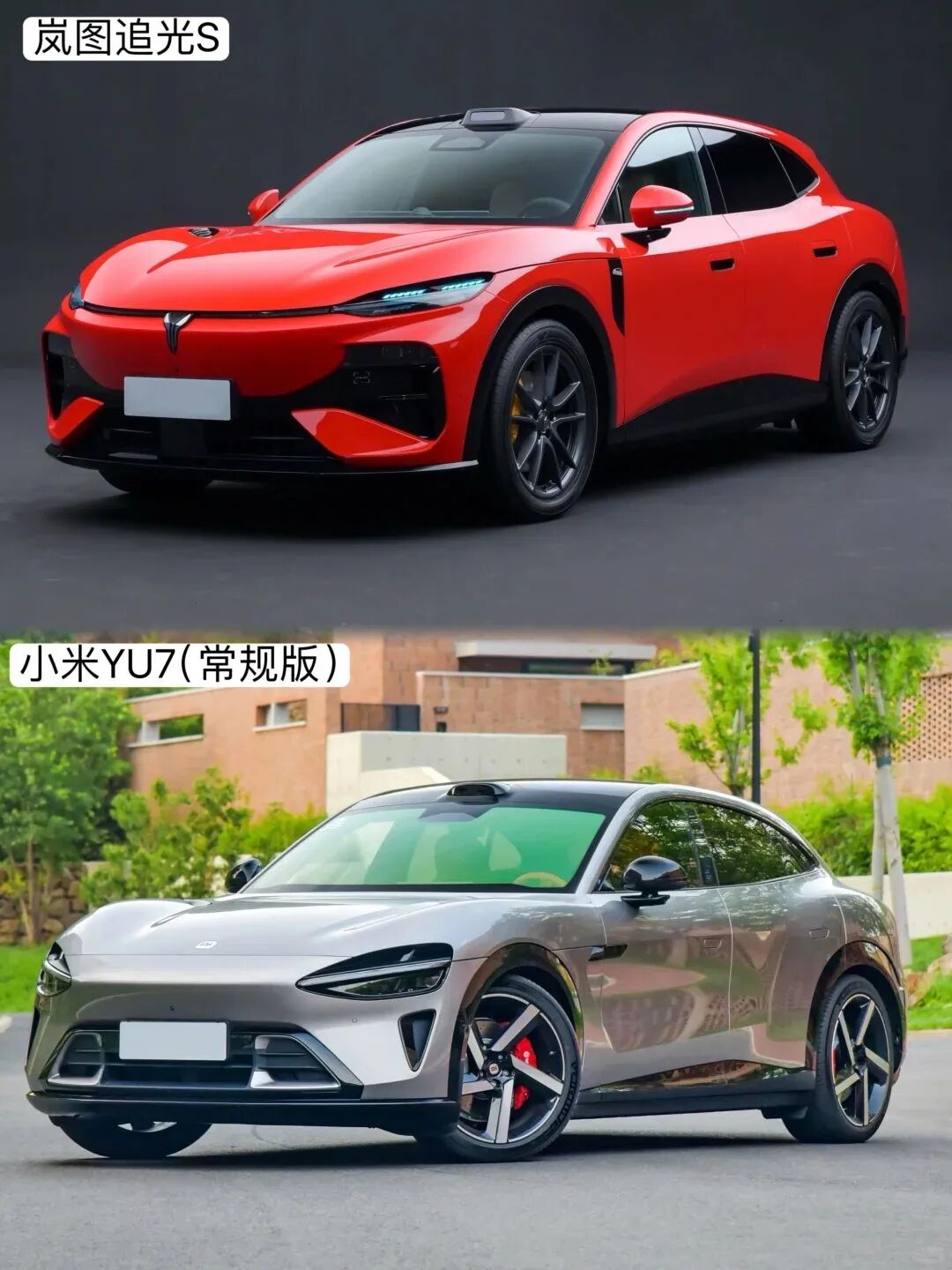
After the new car's debut, controversy over its 'similar appearance' to the Xiaomi YU7 quickly went viral, with many netizens questioning whether VOYAH had copied Xiaomi. Facing widespread criticism online, VOYAH did not shy away but directly reversed the narrative.
VOYAH's CBO Shao Mingfeng publicly stated that it was not VOYAH imitating Xiaomi, but rather the Xiaomi YU7 that more closely resembled the VOYAH Zhiguang S. He revealed that the Zhiguang S was already in development in 2022, with its design originating from VOYAH's i-cozy concept car. The production design boasts over 60% fidelity to the concept, with the family front face already finalized and an earlier research and development timeline. He also dropped a memorable line: 'Great designs share a common understanding.' VOYAH Executive Responds to 'Similar Appearance' with Xiaomi YU7: It's Xiaomi That Looks Like Us, Great Designs Share a Common Understanding
 Source: Weibo
Subsequently, netizens uncovered an interesting twist: this memorable line was not originally coined by Lei Jun but was actually used years ago by Porsche China's president to defuse controversy over the 'Mi Taycan' comparison, a phrase that had been misattributed online for some time. VOYAH's use of this misattributed quote to respond to the 'similar appearance' controversy added layers of drama, making it a notable moment in the automotive circle for the year.
Objectively speaking, design convergence among new energy vehicle models is an industry norm. Low-drag coupe styles, flattened front faces, and continuous light strips represent the optimal aerodynamic solutions for electric vehicles, leading to significant overlap in design philosophies across brands. Moreover, when concept cars transition to production models, adjustments are inevitable due to regulatory, cost, and visibility constraints, making it impossible to achieve a 100% replica. Most 'similar appearance' controversies stem from cognitive biases due to launch timing rather than substantive evidence of copying.
Unreleased Yet Already a Hit! Turning Advertising Stunts into Real Production Car Capabilities
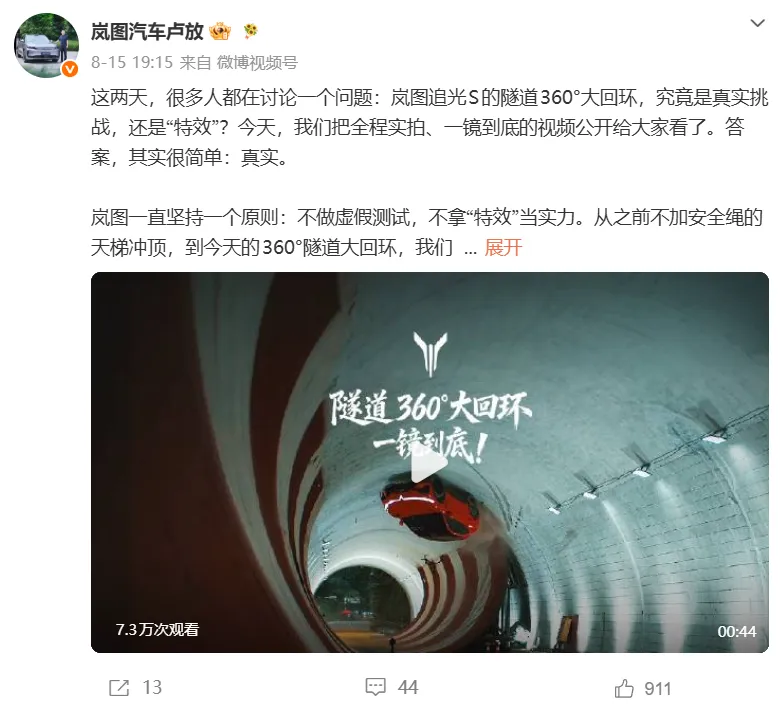
Even as the controversy over its appearance simmered, the Zhiguang S gained widespread attention and went viral online before its official release, thanks to a real-world tunnel 360° loop test. In automotive lore, the same tunnel loop performed by the Mercedes-Benz SLS AMG 16 years ago was merely an advertising spectacle, impossible to replicate in a production car.
 Source: Weibo
VOYAH's Zhiguang S shattered this industry limitation by completing a 360° dome loop in a real, closed tunnel in its completely stock, unmodified form, transforming what was once an advertising stunt into a tangible demonstration of extreme capability for a Chinese-made vehicle.
After the video went viral, accusations of AI synthesis and post-production trickery surfaced. VOYAH responded firmly, stating that the entire test was conducted without special effects, editing, or modifications, with all maneuvers executed autonomously through the chassis, powertrain, and electronic control systems. The launch event simultaneously released a 44-second, uninterrupted, multi-angle recording in both regular and slow-motion versions, comprehensively dispelling rumors of fabrication.
Lu Fang personally explained the test's purpose: while it may seem like showmanship, the goal was to validate the core technologies of Chinese brands in complete vehicle (complete vehicle) chassis, body control, and powertrain systems, breaking through the technical barriers long monopolized by overseas brands.
 Source: Weibo
At a time when the industry is hyper-focused on intelligent driving and cabin experiences, VOYAH remains committed to refining fundamental chassis capabilities. Technologies honed under extreme conditions ultimately enhance everyday driving safety during commutes and long-distance travel. Netizens also uncovered a significant bonus: while the vehicle was upside down in the tunnel at 134 km/h, the Huawei ADS 5.0 successfully triggered AEB emergency braking, making it the world's first production car to activate AEB while inverted in a tunnel, showcasing exceptional intelligent driving stability.
Lu Fang Directly Addresses 'Hasty Vehicle Development' Rumors: Rapid Iteration ≠ Corner-Cutting
Following the wave of controversies, questions arose about 'VOYAH's hasty vehicle development and reliance on simulations.' In response to public stereotypes about rapid iteration leading to poor quality, Lu Fang published an article to clarify misconceptions and dispel industry myths.
He concluded with a core tenet: the length of the research and development cycle does not determine vehicle quality; the key lies in whether the verification system is comprehensive and whether extreme conditions are thoroughly covered. Simulation testing and real-world road testing are not substitutes but complementary, iterative systems that form a closed loop.
 Source: Weibo
In layman's terms, simulations serve as massive 'mock exams' during the R&D phase, identifying potential issues early and reducing trial-and-error costs. Real-world road testing acts as rigorous 'practical exams,' covering extreme, complex, and misuse scenarios. Problems discovered during real-world tests continuously update the simulation database, driving iterative refinement. Efficient R&D shortens cycles without cutting corners; truly subpar 'hasty vehicles' result from skipped testing and corner-cutting—two entirely different scenarios. The rapid iteration of domestic new energy vehicles is an industry trend, and this dual-verification model holds greater technical value.
Sincere Pricing Starting at 223,900 Yuan! Fully Loaded Hardware Offers Exceptional Cost-Effectiveness
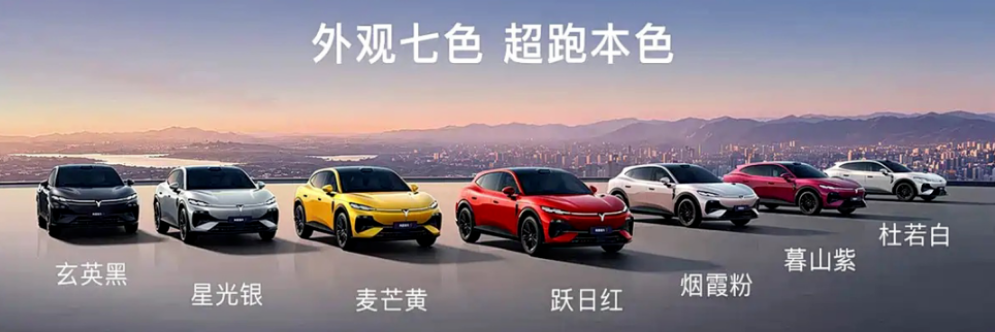
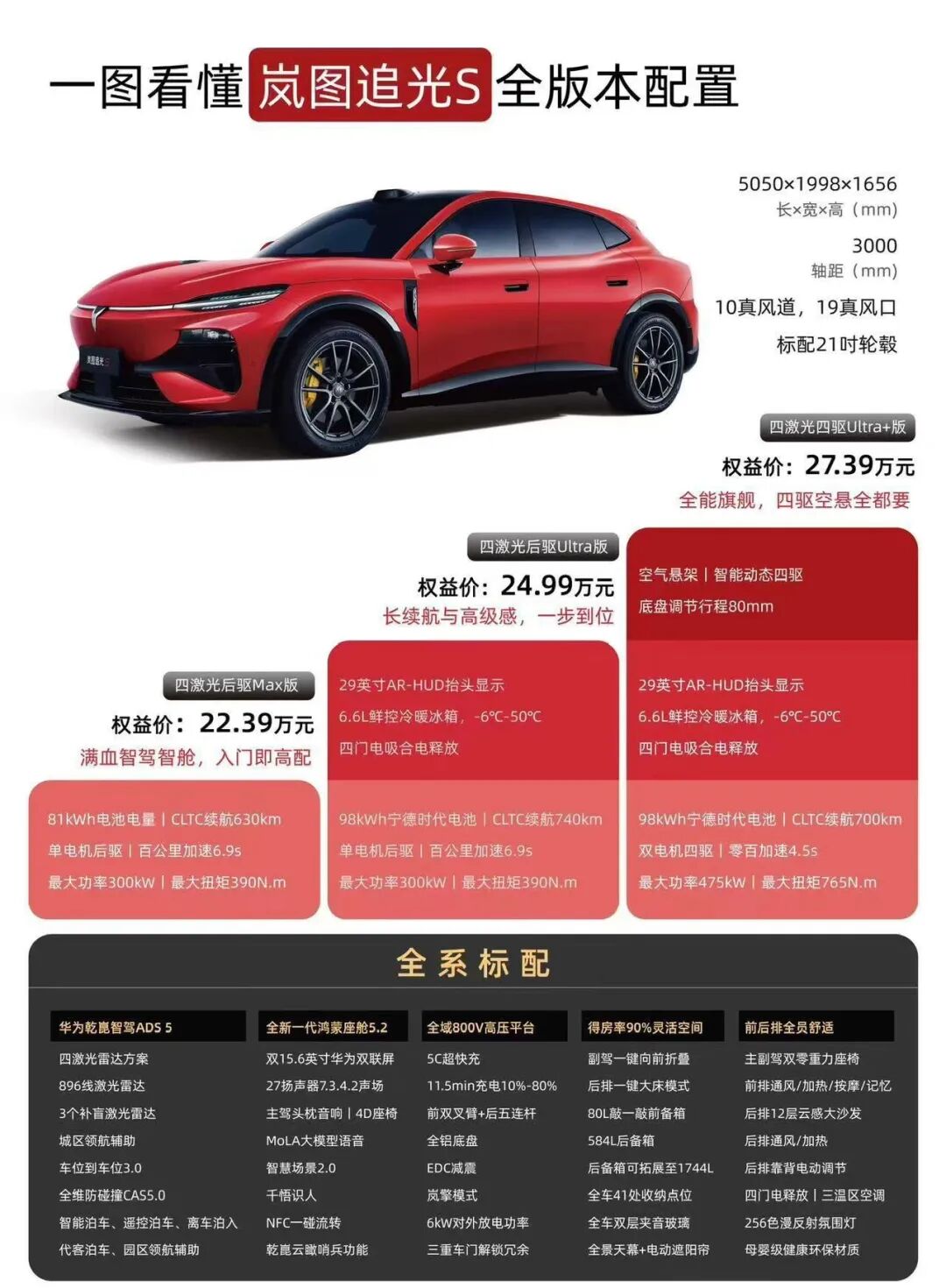
While trending topics add appeal, the Zhiguang S's true strength lies in its affordable pricing and fully loaded hardware. The new car's official guide price ranges from 229,900 to 279,900 Yuan, with limited-time promotional pricing at just 223,900 to 273,900 Yuan. The starting price undercuts the Xiaomi YU7 by 10,000 Yuan, precisely positioning it in the mainstream pure electric market. The launch event featured brand ambassador Yang Yang delivering the 001st car key, further boosting national recognition.
 Source: Weibo
The vehicle boasts class-leading dimensions, with a body measuring 5050×1998×1656mm and a 3000mm wheelbase, providing spacious cabin comfort. All core hardware comes fully loaded without entry-level downgrades:
Intelligent Driving: Standard 896-line quad-laser Huawei ADS 5.0, supporting map-free advanced NOA and all-scenario intelligent parking, paired with HarmonyOS Cockpit 5.2 + MoLA voice large model, placing it firmly in the top tier of 200,000-Yuan models for intelligent interaction and driving capabilities.
Powertrain: Standard 800V silicon carbide high-voltage platform + 5C ultra-fast charging, equipped with VOYAH's self-developed Amber Battery 2.0. The 98kWh version achieves up to 740km CLTC range, charging from 20-80% in 10 minutes and adding 577km in 15 minutes. Rear-wheel-drive peak power reaches 300kW, with all-wheel-drive combined output at 475kW and a zero-to-100km/h time as fast as 4.5 seconds, leading in performance, range, and charging efficiency.
Chassis Comfort: Standard front double-wishbone + rear five-link all-aluminum suspension, EDC variable magic carpet suspension, and air suspension with 80mm adjustability on top trims. All versions come standard with zero-gravity seats for driver and passenger, 21-inch wide tires, and a 137° ultra-reclined rear seat angle for maximum comfort.
The new car offers just three SKUs, with a clear and straightforward purchasing logic. Among them, the Quad-Laser Rear-Wheel-Drive Ultra Edition (promotional price: 249,900 Yuan) offers the best value, adding a 98kWh CATL battery for 26,000 Yuan more, along with AR-HUD, power-absorbing doors, and a refrigerator, without mixed battery types, making it the most recommended version. Those with sufficient budget can opt for the top all-wheel-drive trim to unlock air suspension and even stronger performance.
Fierce Competition in the Red Ocean! Can the Zhiguang S Seize Market Share?
The 200,000-300,000 Yuan pure electric market is fiercely competitive, with the Xiaomi YU7, AITO M6, and Avatr 07L vying for dominance. The Xiaomi YU7, with its stable monthly sales exceeding 10,000 units and solid user reputation, has an extremely stable (firm) market foundation.
As a latecomer, the Zhiguang S offers a lower price and more comprehensive hardware, but seizing market share from established competitors will not be easy. Industry projections suggest stable monthly sales of 4,000-5,000 units, providing significant growth for VOYAH but unlikely to displace top competitors in the short term.
While trending topics offer short-term benefits, consumers ultimately prioritize daily driving experience, long-term reliability, after-sales service, and genuine reputation. Extreme stunts may captivate, but reliable intelligent driving, comfortable rides, and stable powertrains are the core competitive factors for family vehicles.
Having long focused on the MPV market, VOYAH urgently needs the Zhiguang S to break into the mainstream family pure electric market and achieve brand transformation. While the car has successfully shed the stereotype of state-owned enterprises being conservative, its ultimate market success and ability to quell all controversies will depend not on rhetoric or hype but on tangible product quality. Its future market performance is worth anticipating.
Interactive Topic: Disregarding the launch event's memes and stunt promotions, with a budget of 220,000-280,000 Yuan, would you choose the hardware-packed newcomer VOYAH Zhiguang S or the Xiaomi YU7, which boasts stable sales and reputation? Share your thoughts in the comments!
Disclaimer: This article is solely for financial and technological commentary by Zhicaijing and does not constitute investment advice. All corporate data and regulatory events mentioned are sourced from publicly available information and are for reference only; specifics should defer to official announcements. Images sourced from the internet; if copyrighted, please contact for removal.
Hit 'Like,' 'Share,' and 'Favorite' in One Click!
Share your thoughts in the comments below!
Daily Insights into Intelligent Technology and Finance
-
![]()
Li Shufu Passes the Torch: Is Geely Stepping into the 'An Conghui Era'?
-
![]()
[In-depth Report] Reconstructing a New Talent Foundation to Secure Victory in the New Automotive Arena
-
![]()
Baidu: Legacy Businesses Continue to Struggle, AI Relies Solely on Computing Power Dividends
-
![]()
Geely: Riding the Wave of Overseas Expansion, Can It Mirror BYD's Success?
-
![]()
Xiaomi: Repeated Challenges—Can the Extended-Range Vehicle Be Its Redemption?
-
![]()
New Cars Swarm Chengdu Motor Show, Competing for Market Share in the Second Half of the Year
-
![]()
Q2 Sees 100,000 Vehicle Deliveries Amid 2.6 Billion Yuan Loss! Xiaomi Automobile Places Its Bets on Pengcheng
-
![]()
BYD Addresses Acquisition Rumors of SAIC Motor, Netizens Propose Acquiring Xiaomi Auto Instead