Geely Bids Farewell to the 'Li Shufu Era': A Historic Power Transition in China's Auto Industry | Auto Circle
 08/19 2026
 441
441
With the rapid development of new energy, autonomous driving, artificial intelligence, and chip technology, the automotive industry is undergoing unprecedented changes. To keep pace with the latest developments in the automotive sector and delve into market trends, LingTai LT has launched the "Auto Circle" column. From a professional perspective, this column focuses on the latest global automotive industry trends, new product launches from major automakers, technological innovations, and market performance. Through in-depth analysis of the automotive industry, it reveals the underlying business logic and market patterns, as well as how they are reshaping the industry landscape and influencing human mobility. This article, the 33rd installment of the column, focuses on Geely Automobile and explores the significance behind the "power handover."
Author | Ma Duoduo
Editor | Hu Zhanjia
Operations | Chen Jiahui
Produced by | LingTai LT (ID: LingTai_LT)
Header Image | Publicly available image from the internet
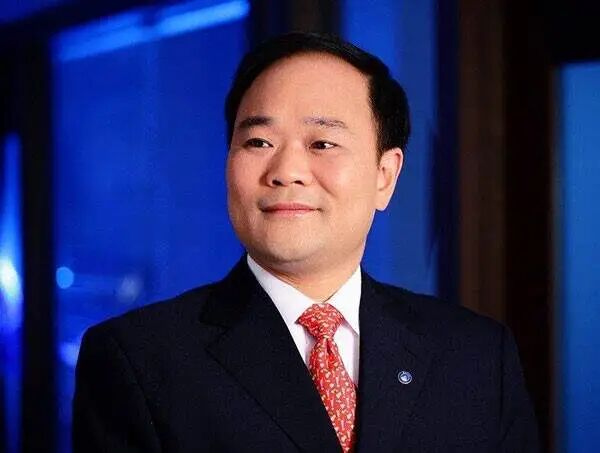
In August 2026, a personnel announcement from Geely Automobile turned one of the biggest suspense (uncertainties) in China's automotive industry into a reality: Li Shufu stepped down as chairman of Geely Automobile, with An Conghui taking over.
This is not a story of "retirement." Li Shufu remains chairman of Geely Holding Group and continues to be the most important decision-maker behind brands such as Volvo, Zeekr, and Lotus. However, the day-to-day operational and decision-making authority for Geely Automobile—the publicly listed company and the cornerstone of the entire Geely empire—has officially been handed over to An Conghui.
Among the founders of China's private automakers, Li Shufu was the last "first-generation entrepreneur" still at the forefront. Wei Jianjun remains at Great Wall but has stepped back behind the scenes; Wang Chuanfu is still at BYD, but the topic of succession has been discussed for years; and for the new forces like He Xiaopeng, Li Xiang, and Li Bin, "passing the baton" is still far off. Therefore, the significance of Geely's personnel adjustment extends far beyond a simple management change within a single company. It can almost be read as a nodal point of an era: the "era of maverick heroes" in China's automotive industry is drawing to a close, and the "era of professional managers" has officially begun.
But what kind of Geely is An Conghui inheriting? This question is far more important than "who An Conghui is."

An Conghui's Trump Card: A 'System Man' Triumphs
An Conghui is the most typical example of talent cultivated by Geely itself.
He joined Geely in 1996, before the company's first car had even rolled off the assembly line. Starting as a grassroots technician, he worked in procurement, oversaw production, led research and development, and in the 2000s, spearheaded the development of Geely's first mid-size sedan, the "Emgrand"—a model that later became the cornerstone of Geely's sales. In 2011, he took over as president of Geely Automobile, beginning to oversee the entire business operations of Geely Auto.
Unlike Li Shufu's "strategist" style, An Conghui is a thoroughgoing "system man." He believes in processes, standards, and organizational capabilities rather than impromptu inspiration and gambles. Within Geely, An Conghui's reputation is highly consistent: this man can break down the most complex tasks into executable steps.
According to comprehensive media information from Tianyancha, starting in 2018, as China's automotive market entered a downturn, Geely's sales growth slowed, and profit margins came under pressure. An Conghui led a technological transformation known as the "Blue Geely Initiative," propelling Geely from the era of internal combustion engine vehicles to the new energy era. After 2020, he was deeply involved in the founding of Zeekr, using a new product definition and user engagement logic to secure a position for Geely in the intelligent electric vehicle track (sector).
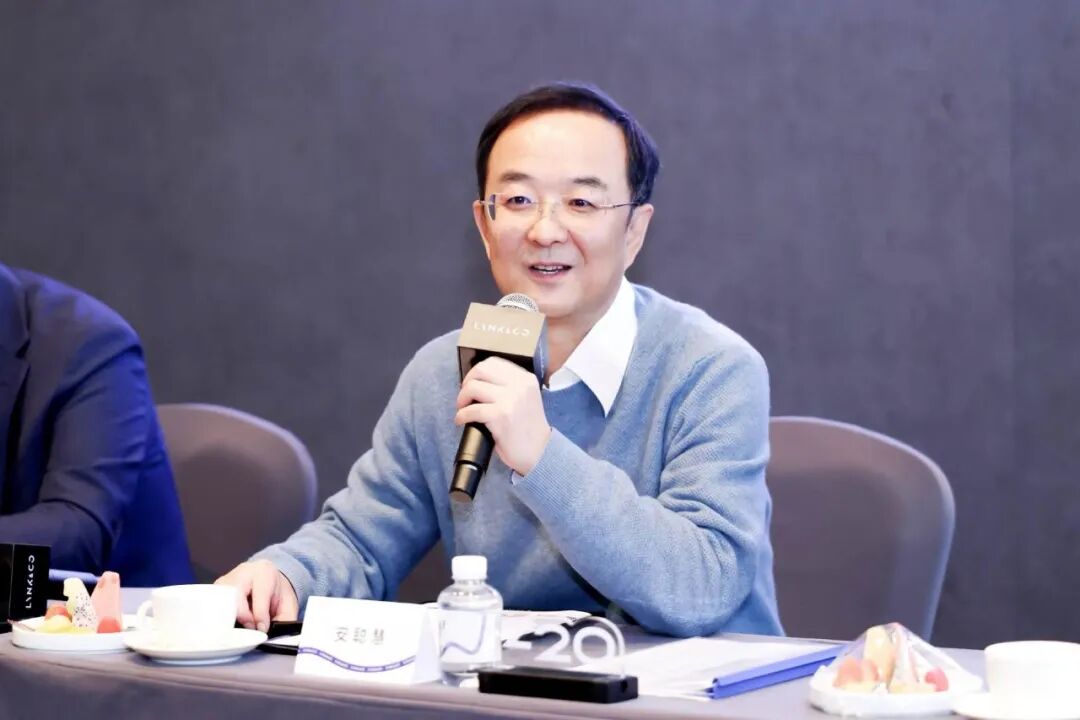
It can be said that An Conghui has been at the forefront of execution for the most critical product and technological decisions at Geely Automobile over the past decade. Li Shufu was responsible for "what to do," while An Conghui handled "how to do it." This time, he has been given the full set of keys.
However, the Geely Automobile that An Conghui is inheriting is a vastly different company from the one he took over as president a decade ago.
Today, Geely Automobile has more than ten brands under its umbrella: Geely, Galaxy, Geometry, Lynk & Co, Zeekr, Volvo (joint venture), Polestar, Lotus, Radar, LEVC... Each brand has its own positioning and track (sector), but the distinctions between them are not always clear. Within the "Geely Automobile" ecosystem alone, multiple brands are simultaneously selling SUVs and sedans in the price range of 100,000 to 300,000 yuan, leading to repeated criticisms from the outside world about product line overlaps, channel conflicts, and scattered resource allocation.
This is precisely An Conghui's area of expertise. What he needs to do is not to create another "miracle of turning the tide" like Li Shufu but to organize this existing portfolio of brand assets into a sustainable and functioning system.
This is not a glamorous task. It means cutting redundant product lines, merging overlapping channels, redefining the boundaries of each brand, and possibly even sidelining some "pet" brands. For any Chinese automaker accustomed to the strategy of "having more children to fight better," this is a painful organizational surgery.

Profitability Challenges and Variables
When discussing Geely, the outside world tends to focus on sales and technology. However, what truly tests An Conghui may be profitability.
In the first half of 2026, Geely Automobile maintained growth in both revenue and sales, with the proportion of new energy vehicle sales increasing further. However, the improvement in profit per vehicle was unsatisfactory. Under the pressure of price wars from BYD and Tesla, Geely's multi-brand strategy is proving to be a double-edged sword—while having enough brands to cover more market segments, it also means that R&D, production, and channel costs are not diluted sufficiently.
Whether An Conghui's "meticulous" management style can translate into "meticulous" financial results is a question that will require time to verify.
One detail that is easily overlooked in this personnel adjustment is that An Conghui continues to serve as CEO of Zeekr.
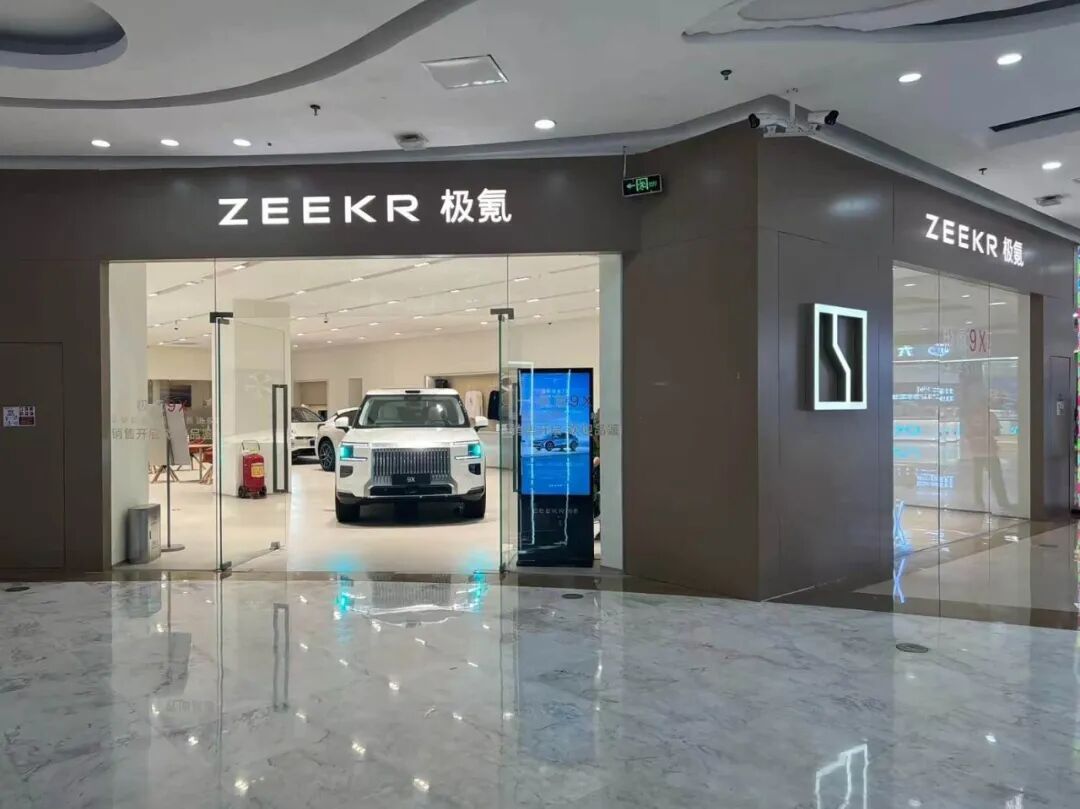
According to comprehensive media information from Tianyancha, Zeekr is the most successful new energy brand within the Geely ecosystem and the asset most likely to go public independently. An Conghui retaining the title of Zeekr CEO suggests that he does not want to hand over this most combat-ready position to someone else after taking over as chairman of the group.
However, this also raises a new question: how should resource allocation, brand positioning, and capital relationships between Zeekr and Geely Automobile be handled? If Zeekr remains independently operated for the long term, its synergies with Geely Automobile will be significantly reduced; if it is integrated back into the Geely ecosystem, will Zeekr's hard-earned image as a "user-centric enterprise" be diluted?
An Conghui needs to find a path between "systemic synergy" and "independent operation." The solution to this problem will directly determine the future valuation logic of Geely Automobile.

Where Does Li Shufu Retreat To?
Finally, it is worth discussing Li Shufu.
After the announcement, an insider at Geely told the media, "The chairman's position has been handed over, but Li Shufu is still Li Shufu."
This statement carries significant weight.
In the succession practices of China's private enterprises, true power transitions are never about changes in titles but about reshaping decision-making processes. Li Shufu still controls Geely Holding Group and retains influence over assets such as Volvo, Zeekr, Lotus, and Aston Martin. An Conghui's decisions at Geely Automobile cannot completely escape Li Shufu's shadow.
However, from another perspective, this "shadow" is not necessarily a bad thing. Li Shufu's strategic acumen and global ambitions remain the most scarce resources for Geely at critical moments. What An Conghui needs to do is establish a decision-making mechanism that relies more on systems than personal intuition while respecting Li Shufu's strategic judgment.
This is a very delicate power dance. If executed well, Geely will become the first leading private automaker in China to truly complete a founder succession; if not, it may fall into the awkward (awkward) situation of having a "loud chairman but a powerless president."
It has taken An Conghui thirty-one years to reach this point.
That is a sufficiently long number. Over thirty-one years, he has witnessed the complete transformation of a small Zhejiang factory into a global automotive group and has stepped from being Li Shufu's "supporting actor" to the center stage.
But the real test begins from the moment he takes over as chairman. Because from that day onward, the concentration of the name "Li Shufu" at Geely Automobile will gradually decline. And An Conghui needs to prove to everyone that a Geely no longer driven by its founder can still achieve better results than when the founder was at the helm.
This is not just a succession but an ultimate test of the company's organizational capabilities. The answer will not appear in announcements or next quarter's financial reports. It will take three to five years, or even longer.
But at least one thing is certain: in the "knockout" second half of China's automotive industry, Geely has chosen the person most resembling a "professional manager" to lead the team. This itself is a signal.
The era of winning the first half with intuition and courage is over. In the time ahead, whoever can solidly execute the least glamorous tasks—organization, processes, and efficiency—will be the one to secure a spot in the finals.
What An Conghui has taken on is not just the scepter of a company but the first true experiment in China's private automakers' transition from "heroism" to "systemism."
Follow LingTai's video account to get closer to business!
-
![]()
Surpassing the 'Storage Storm': Xiaomi’s Pivotal Moment
-
![]()
2026 China Auto Market: A 'Major Reshuffle' — Small Cars Decline, Large Cars Flourish, Is the Era of Fuel Vehicles Over?
-
![]()
Non-Recurring Items-Adjusted Net Profit Soars by 72.59%! Dongtianwei Records 502 Million Yuan in Revenue
-
![]()
Securing 2 Billion Yuan in Financing and Supplying Inno-Light: This Optical Device Company Launches Its IPO!
-
![]()
Farewell to 'Card Stacking': 2026 Marks China's Computing Power Shift to 'Token Value Output' Era
-
![]()
Xiaomi Weathers Storage Price Surge, Q2 2026 Revenue Tops 100 Billion Yuan Again
-
![]()
Geely Bids Farewell to the 'Li Shufu Era': A Historic Power Transition in China's Auto Industry | Auto Circle
-
![]()
Baidu Prepares for Inclusion in Southbound Trading: Wall Street Reassesses the Value of 'AI ETF'