2026 China Auto Market: A 'Major Reshuffle' — Small Cars Decline, Large Cars Flourish, Is the Era of Fuel Vehicles Over?
 08/19 2026
 419
419
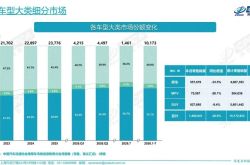
The Chinese auto market in 2026 is a landscape rife with contradictions and tensions. From January to July, the cumulative retail sales of passenger vehicles reached 10.173 million units, marking a year-on-year decrease of 20.3%. While the contraction in overall sales volume is now a certainty, what warrants closer scrutiny than the mere numbers is the underlying structural differentiation. Some market segments are thriving, while others are in freefall, with virtually no transitional phase in between. 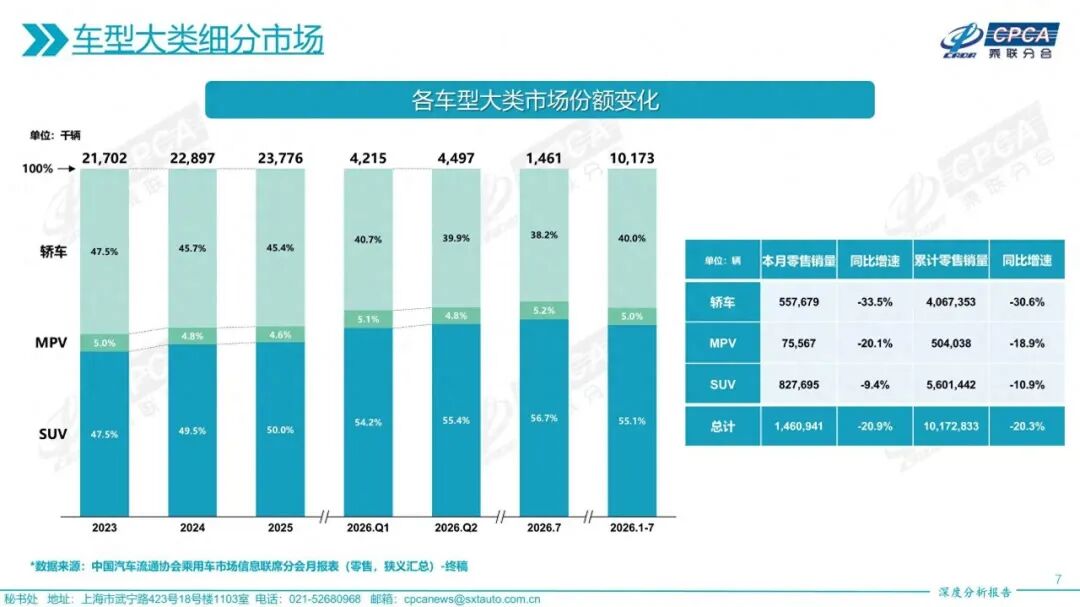
1. New Energy Penetration Rate Surpasses 60% for the First Time
In July, the sales share of new energy vehicles (NEVs) soared to 60.4% for the first time, with the cumulative penetration rate from January to July exceeding 50% for the inaugural time, reaching 51.2%. According to the China Passenger Car Association, the retail penetration rate of new energy passenger vehicles climbed to 65.1%, representing an 11.6 percentage point increase year-on-year. This means that for every three vehicles sold, two now sport green license plates. Among the top ten retail sales of passenger vehicles in July, new energy models accounted for nine, leaving only the Toyota Corolla Cross as the sole fuel-powered vehicle. Retail sales of fuel vehicles decreased by 41% year-on-year, while pure fuel vehicles experienced a staggering 44% plunge. The replacement of fuel vehicles with electric ones has transitioned from a mere trend to a tangible reality.
2. Small Cars Decline: Market for Vehicles Priced Under RMB 50,000 Nearly Halves
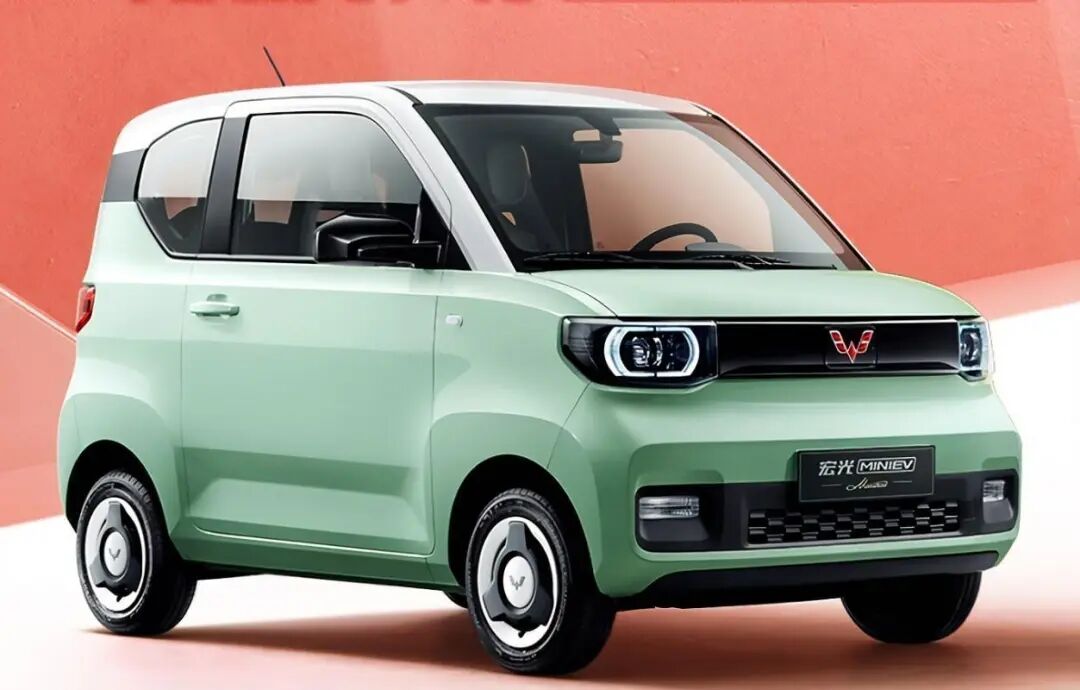
The microcar market is rapidly fading into obscurity. From January to June, cumulative sales of passenger vehicles priced under RMB 50,000 stood at a mere 130,000 units, representing a 55% year-on-year plunge, with market share halving from 2.8% to 1.4%. The Wuling Hongguang MINIEV, which once boasted sales of over 50,000 units in a single month, saw its sales shrink to 72,800 units in the first half of the year, nearly 100,000 units less than the same period last year. Geely Panda sales dropped by 78%, and Wuling Bingguo by 79%. Cumulative sales of A00-class sedans plummeted by 64% year-on-year, marking the largest decline among all market segments. A confluence of factors—halved purchase taxes, reduced subsidies, escalating raw material costs, and consumption upgrades—is accelerating the exit of players in this segment.
3. Large Cars Flourish: New Energy Vehicles Priced Above RMB 400,000 Surge by 46%
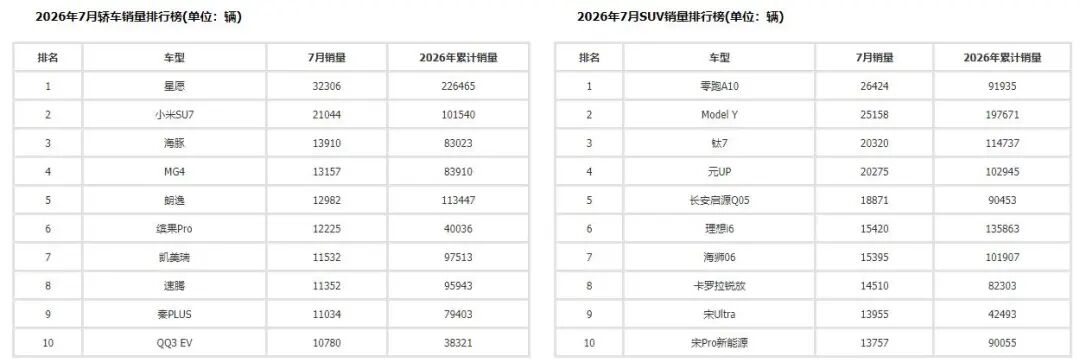
On the flip side, the high-end new energy vehicle market is experiencing a boom, with sales of vehicles priced above RMB 400,000 surging by 46% year-on-year. Domestic brands have captured 59% of the market share in this segment. In July, the Fangchengbao Titan 7 emerged as the top seller in the mid-to-large SUV market with 20,320 units sold, followed by the Li Auto i6 with 15,420 units, and the Xiaomi YU7 also surpassing 10,000 units. Notably, the top three are all SUVs that emphasize individuality—not traditional 'large six-seater family vehicles' but products with a stronger style proposition. Among the top ten, domestic brands account for nine models, all of which are new energy vehicles.
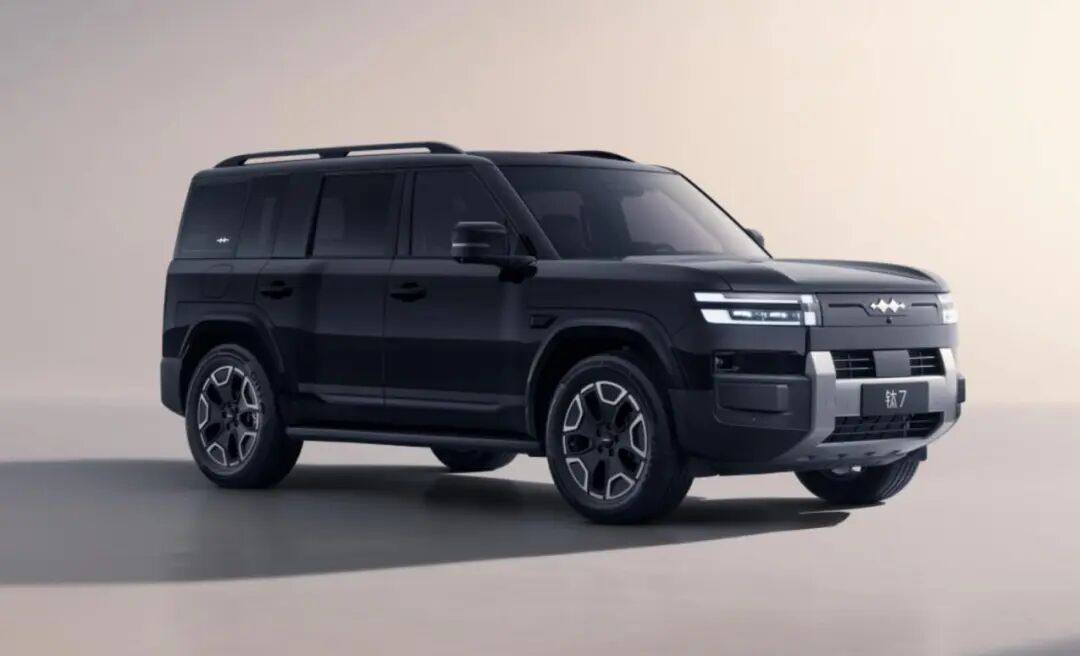
Fangchengbao Titan 7
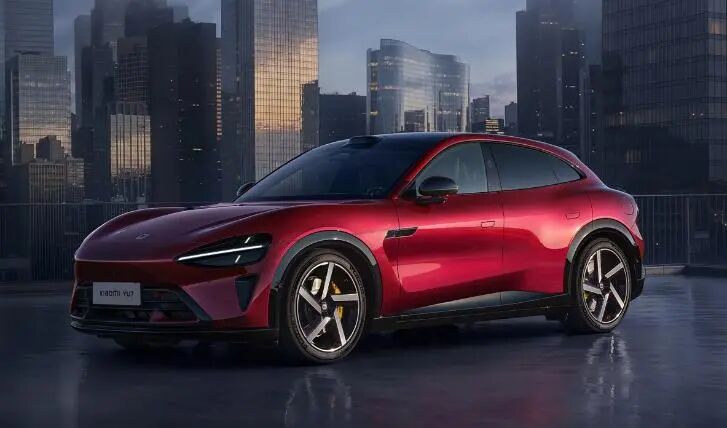
Xiaomi YU7
4. Sedans Lose Favor: The Gap Between SUVs and Sedans Widens
The sedan market continues its downward trajectory, with a 33.5% year-on-year drop in July and a 30.6% cumulative decline from January to July. In stark contrast, SUVs only saw a 9.4% month-on-month decline and a 10.9% cumulative decline. Market share has shifted from an even 47.5% for both SUVs and sedans in 2023 to SUVs now accounting for 56.6%, with sedans falling below 40%. Consumers are casting their votes with their wallets—for the same budget, bigger is undeniably better.
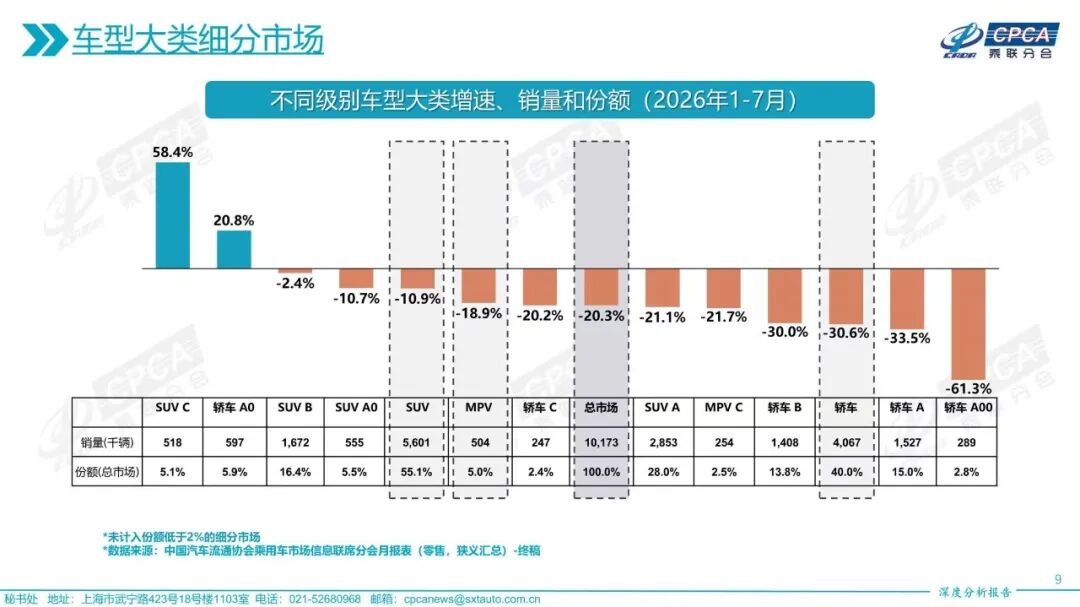
Within the SUV segment, C-class mid-to-large SUVs have emerged as the biggest winners. Retail sales reached 426,000 units in the first half of the year, marking a 58.4% year-on-year increase, the highest growth rate among all market segments.
5. The Logic Behind the Shift: From 'Availability' to 'Quality'
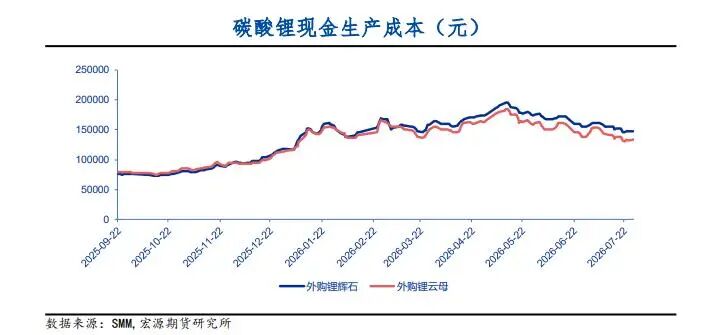
This structural differentiation is no mere coincidence. On the policy front, halved purchase taxes and adjusted subsidies have hit lower-priced vehicles the hardest. On the cost side, lithium carbonate prices have surged from RMB 75,000 per ton to RMB 190,000 per ton. On the consumption front, early adopters of micro-commuter vehicles are now, after a 3-4 year ownership cycle, generally seeking larger spaces and longer ranges. The confluence of these three pressures has left the market for vehicles under RMB 50,000 with little room to survive.
Total volume contraction and structural reshaping—this is the most accurate portrayal of China's auto market in 2026. Small cars are vanishing, large cars are expanding; fuel vehicles are on the way out, new energy vehicles are taking center stage; the low-end market is collapsing, while the high-end market is surging. This is not a normal cyclical fluctuation but a major structural reshuffle driven by policy shifts, cost escalations, and consumption upgrades. The reshuffle is far from over—which market segment will be reshaped next? Welcome to leave a comment and join the discussion on this rapidly evolving Chinese auto market.
-
![]()
Surpassing the 'Storage Storm': Xiaomi’s Pivotal Moment
-
![]()
2026 China Auto Market: A 'Major Reshuffle' — Small Cars Decline, Large Cars Flourish, Is the Era of Fuel Vehicles Over?
-
![]()
Non-Recurring Items-Adjusted Net Profit Soars by 72.59%! Dongtianwei Records 502 Million Yuan in Revenue
-
![]()
Securing 2 Billion Yuan in Financing and Supplying Inno-Light: This Optical Device Company Launches Its IPO!
-
![]()
Farewell to 'Card Stacking': 2026 Marks China's Computing Power Shift to 'Token Value Output' Era
-
![]()
Xiaomi Weathers Storage Price Surge, Q2 2026 Revenue Tops 100 Billion Yuan Again
-
![]()
Geely Bids Farewell to the 'Li Shufu Era': A Historic Power Transition in China's Auto Industry | Auto Circle
-
![]()
Baidu Prepares for Inclusion in Southbound Trading: Wall Street Reassesses the Value of 'AI ETF'