Chinese Capital Surges into Europe: Emerging as the 'White Knight' for Local Auto Parts Companies?
 08/21 2026
 473
473
Lead | Introduction
Currently, Chinese original equipment manufacturers (OEMs) are undertaking a significant global expansion. Concurrently, domestic auto parts companies are also aggressively pursuing international growth. Echoing OEMs' strategic focus on the European market, parts manufacturers are continuously advancing overseas mergers and acquisitions (M&A), emerging as a new driving force in China's auto industry.
Produced by | This article is produced by Heyan Yueche Studio
Written by | Zhang Chi
Edited by | He Zi
Full text: 2664 characters
Estimated reading time: 4 minutes
In recent years, leveraging the rapid growth of China's domestic new energy vehicle (NEV) industry and its comprehensive industrial chain, Chinese capital has significantly increased its investment in the European auto parts market. Through strategic acquisitions of high-quality overseas legacy companies and core business segments, Chinese firms are rapidly absorbing Europe's century-old manufacturing expertise, cutting-edge R&D technologies, and high-end automaker resources. Landmark deals such as Ningbo Jifeng's acquisition of German interior giant Grammer, Luxshare Precision's merger with Leoni's wiring harness business in Germany, and Hupai Power's joint industrial fund acquisition of Valeo's sensor core assets have made Chinese outbound M&A of European auto parts assets an industry standard.
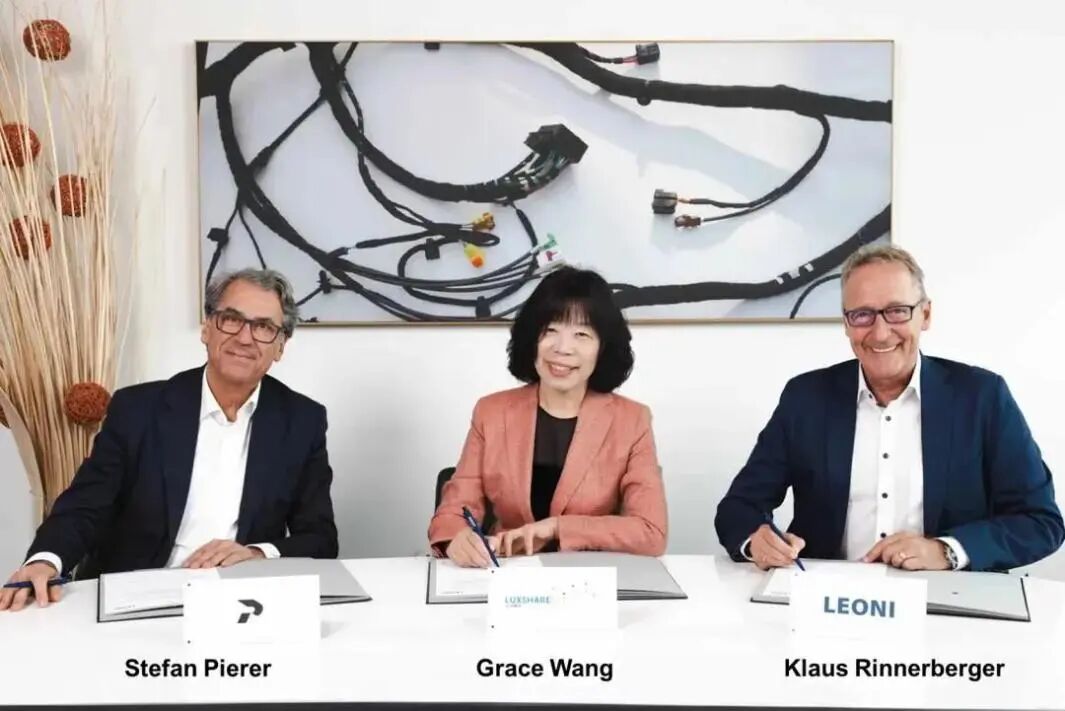
△ Chinese capital's acquisitions of European auto parts companies are becoming the norm.
This trend is corroborated by the simultaneous rapid expansion of Chinese passenger vehicle exports to Europe and the scale of localized production. In the first half of 2026, Chinese passenger vehicle exports to Europe surged. Terminal registration data from the European Automobile Manufacturers Association (ACEA) reveals that in the EU27, UK, and EFTA regions, new car registrations for Chinese-funded brands reached 827,000 units, up 63% year-over-year (YoY), with the overall new car market share rising to 9.5%. In June alone, the market share reached 10.9%, a new periodic high. According to European automotive research firm Schmidt Automotive Research, Chinese brands' pure electric models accounted for 15.1% of Europe's pure EV passenger car segment, up 5.4 percentage points from 2025.
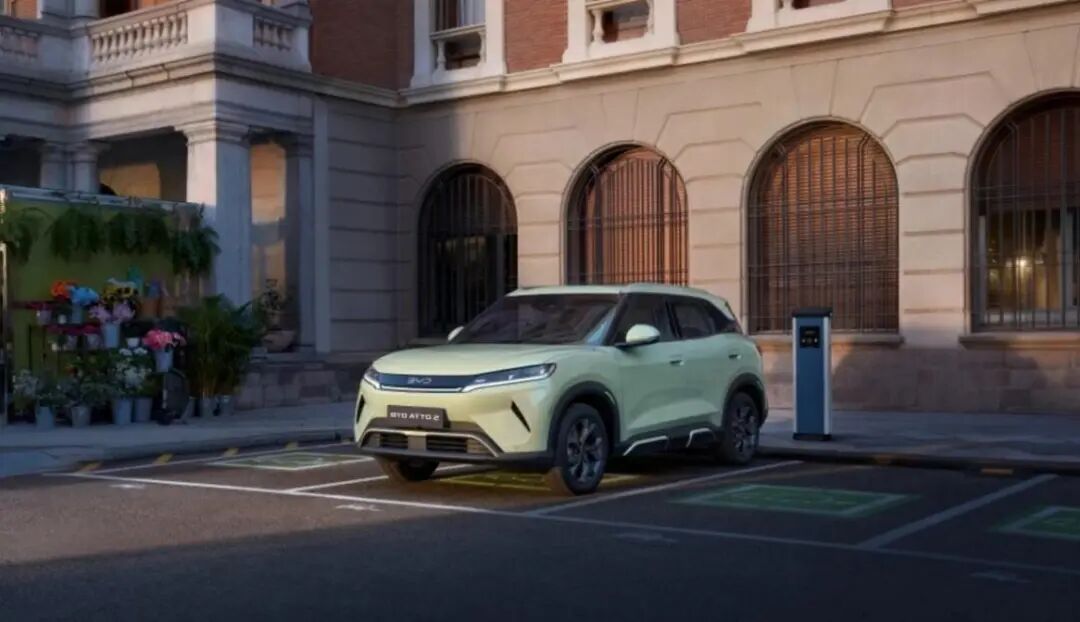
△ Chinese brands' market share in Europe is rising rapidly.
Chinese Parts Companies Aggressively Expand in Europe
Compared to the significant push by Chinese OEMs into Europe, Chinese auto parts companies are also expanding rapidly in the region. Parts firms are either establishing new factories in Europe to serve both domestic OEMs going global and local European automakers or continuing to pursue M&A of local parts companies. Data from Rhodium Group, a renowned cross-border research institution, shows that since the mid-2000s, Chinese companies have acquired or invested in over 130 European auto parts firms, with investments highly concentrated in Germany and France—two traditional automotive manufacturing hubs. Transaction scales exhibit a clear upward trend, with Chinese firms' M&A deals of European auto parts manufacturers increasing from 4 in 2022 to 9 in 2025, and the total transaction value rising from $393 million to $777 million.
Representative deals include Luxshare Precision's controlling stake in German wiring harness giant Leoni and acquisition of its automotive cable business, Dongshan Precision's purchase of French parts firm GMD, and Everlight Electronics' merger with French automotive electronics manufacturer All Circuits. These deals cover key segments such as wiring harnesses, metal stamping, and automotive electronics, with strategic value extending beyond acquiring local European production capacity to instantly gaining mature OEM customer resources, upstream-downstream supply systems, technological accumulations, production bases, and industry certifications—accelerating the globalization of Chinese parts firms.
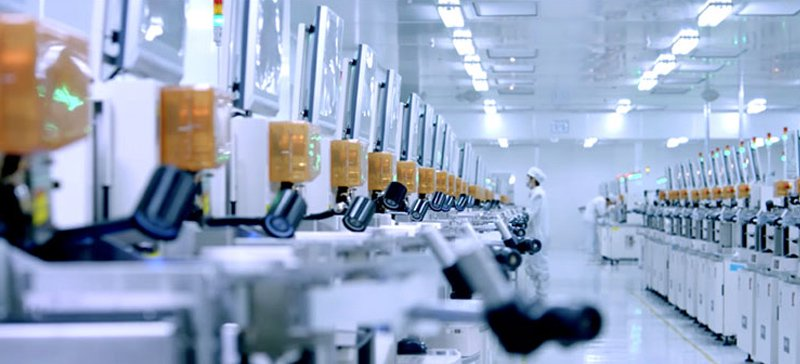
△ Dongshan Precision's acquisition of French parts firm GMD is drawing high attention in Europe.
Among these, Luxshare Precision's acquisition of Leoni Group stands as a landmark case. Founded in 1917, Leoni is Europe's largest and the world's fourth-largest automotive wiring harness supplier, long serving mainstream European automakers like Volkswagen, BMW, and Mercedes-Benz. In 2025, Luxshare Precision completed its controlling acquisition of Leoni AG, acquiring a 50.1% stake for approximately €205 million and purchasing its automotive cable business for €320 million, totaling around €525 million. In April 2026, Luxshare Precision acquired an additional 24.8% stake from Leoni's major shareholders, raising its ownership to 74.9%. This deal granted Luxshare Precision Leoni's production bases, technological reserves, and customer resources across 26 countries, leveraging Leoni's decades-old global automotive supply chain to transform itself from a local parts supplier into a global Tier 1 while solidifying a localized supply chain foundation for Chinese automakers expanding in Europe.

△ Luxshare Precision's acquisition of Leoni Group is a landmark case.
European Auto Parts Industry Urgently Needs Chinese Capital to Escape Predicament
Amid global economic recovery pressures, Europe's auto parts industry faces multiple challenges: weak terminal automotive demand, massive investments in electrification transitions, high energy and labor costs, and competitive shocks from Chinese automakers. Under this pressure, several European traditional Tier 1 suppliers have seen declining valuations and operational strains.
To address industry woes, European parts giants have launched cost-optimization measures such as layoffs and factory closures. Data from Germany's Automotive Industry Association (VDA) for 2026 shows that nearly two-thirds of surveyed German automotive suppliers cut local jobs last year. Typical cases include Bosch announcing global layoffs of about 13,000 in 2025, focusing on automotive operations; ZF planning to cut around 7,600 jobs in its powertrain segment by 2030 after already disclosing up to 14,000 job reductions in Germany; Continental advancing a massive business restructuring involving about 10,000 positions; and Valeo planning to cut around 1,000 jobs in Europe and close two French factories. Compared to leading firms, numerous small and medium-sized parts makers lack technological edges and weaker risk resistance, facing even tougher operational situations amid industry transitions and market competition—universally struggling with business contractions, low profitability, and weak transformation capabilities.
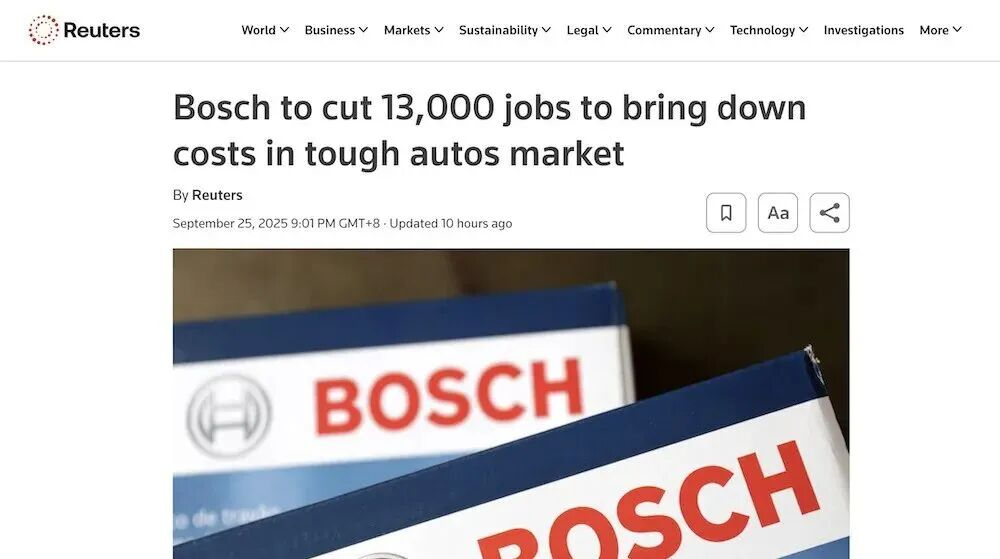
△ European parts giants are laying off workers en masse.
During Europe's automotive industry deep adjustment period, introducing Chinese capital can achieve mutual benefits for both sides. For original European shareholders, industry downturns have sustained valuation pressures and made self-rescue transitions difficult—Chinese M&A provides a stable exit channel for asset preservation. For European local governments, auto parts are a core local manufacturing pillar, and deteriorating firm operations risk unemployment and supply chain outflows. Chinese M&A can revitalize local assets, stabilize jobs, and import electrification and intelligent transformation experience to upgrade traditional parts businesses. Thus, Chinese parts firms' European M&A strategies highly align with local stakeholders' core demands, creating favorable conditions for local government support.
Chinese Parts Firms' Outbound Strategies Upgrade
For Chinese auto parts companies, development models are evolving from mere "product exports" to "supply chain globalization."
China's domestic automotive market has bid farewell to rapid growth, and firms solely relying on local markets will face sustained growth pressures. Meanwhile, domestic automotive competition is intensifying, with narrowing profit margins across the supply chain. To achieve long-term sustainable development, a global layout has become inevitable. Many local parts firms now hold significant advantages in manufacturing costs, electrification, and intelligent technologies, possessing the strength to compete with legacy international parts giants.
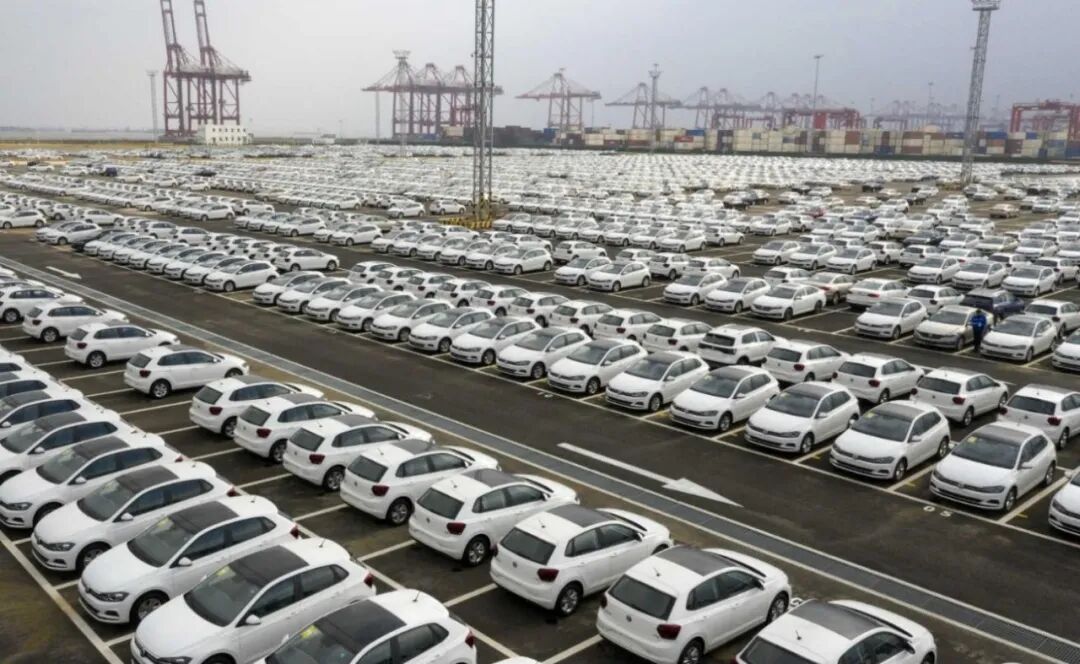
△ Severe internal competition plagues the domestic auto industry.
Under this backdrop, relying solely on product exports cannot support long-term development. By acquiring mature European suppliers, Chinese parts firms can swiftly integrate their cost advantages, scalable manufacturing capabilities, and electrification technology accumulations with European firms' OEM customer resources, cutting-edge technological reserves, and localized operational capabilities. This approach helps Chinese automakers expand in Europe, reduces trial-and-error costs, and accelerates entry into European OEM supply chains while leveraging overseas localization to effectively hedge against potential tariff barriers and ensure stable, sustainable operations. Looking ahead, Chinese firms' European M&A targets may further focus on high-value core parts segments such as automotive electronics, wiring harness connectors, thermal management, chassis lightweighting, and smart cockpits. If these strategies succeed, China's automotive industry will truly join the global top tier.
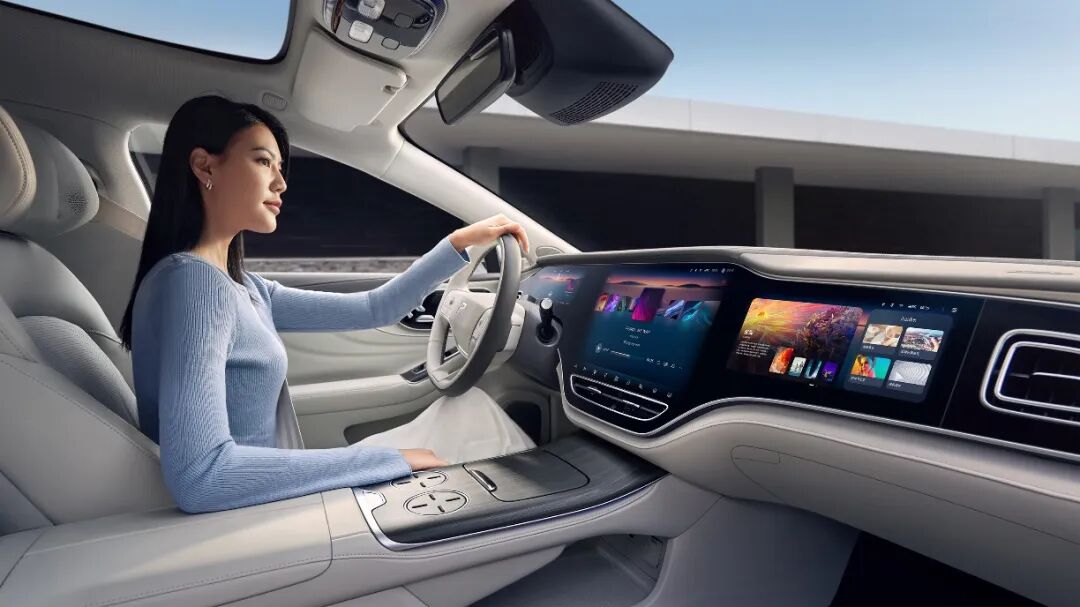
△ Chinese capital's acquisitions will focus on high-value core parts segments, including smart cockpits.
Commentary
For traditional European parts firms, introducing Chinese capital is merely a short-term relief measure and cannot fundamentally resolve their development bottlenecks. The core of industry competition remains technological innovation—firms must achieve breakthroughs in R&D and product iteration to return to growth and rebuild core competitiveness. Relying solely on capital infusions without autonomous innovation capabilities will leave traditional European parts firms ill-equipped for the industrial transformation trends of electrification and intelligence. Under sustained pressure from Chinese parts firms, they will gradually lose competitive edges and ultimately be marginalized by the market.
(This article is original to Heyan Yueche and cannot be reproduced without authorization.)
-
![]()
Yu Chengdong's Harmony Intelligent Travel Achieves 'First in New Force Deliveries', Netizens: Unbeatable Win
-
![]()
Six Entities Invest 8.2 Billion to Launch Shenlong Technology
-
![]()
Give BMW X3 a Chance?
-
![]()
Chengdu: Leading in New Car Sales, Yet Losing the Favor of Rolls-Royce and Its Luxury Peers
-
![]()
Shenzhen Speed: The New Era
-
![]()
Shenzhen Speed Gets a New Version
-
When AI Becomes Too Powerful to Ignore: OpenAI Hits the Brakes for the First Time in History
-
![]()
Why Have Small Commuter Cars Priced Under 50,000 Yuan Seen a Slump in Sales?