Yu Chengdong's Harmony Intelligent Travel Achieves 'First in New Force Deliveries', Netizens: Unbeatable Win
 08/21 2026
 534
534
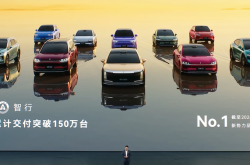
On August 20, the Xiangjie G9 launch event commenced as scheduled. Under the spotlight, Yu Chengdong revealed a figure that shook the automotive world: as of August 16, Harmony Intelligent Travel's cumulative deliveries across all models had surpassed 1.5 million vehicles in just 53 months, making it the fastest Chinese new force brand to achieve this scale.
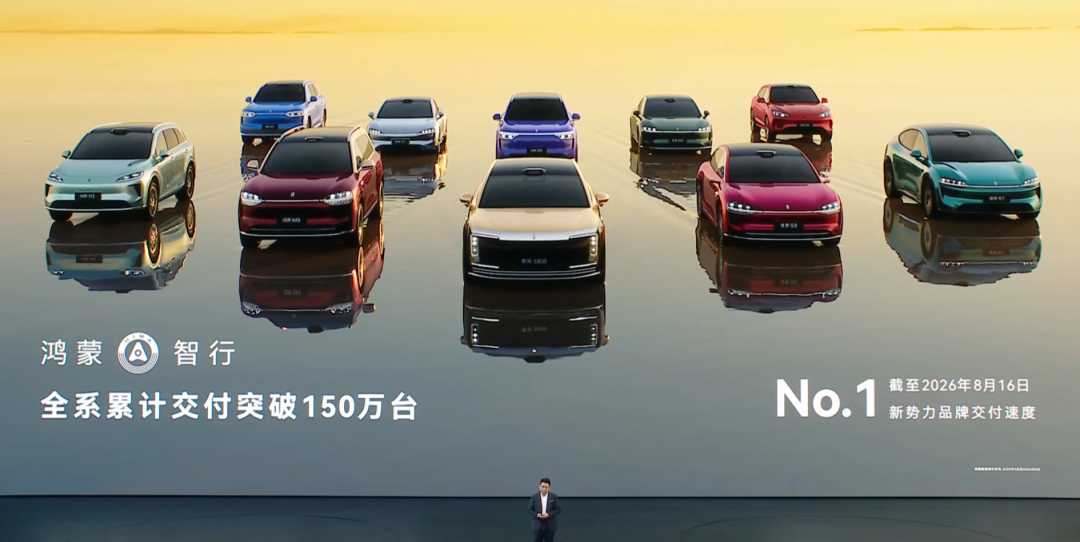 Image Source: Weibo
As the words fell, applause erupted throughout the venue. The news quickly spread across major industry groups, with some marveling at Huawei's unstoppable momentum, while others crunched the numbers to dissect the secrets behind this 'first-place' claim, sparking heated debates in the comments section.
Five Brands United as One: A Unified Tech Ecosystem Spanning All Price Points
Many still don't fully grasp what Harmony Intelligent Travel truly represents.
It's not a traditional automaker but a Huawei-led ecosystem alliance for intelligent automotive technology. Instead of producing vehicles itself, Huawei provides comprehensive intelligent solutions, collaborating with various automakers to build and sell cars. After years of layout (strategic deployment), five brands—Aito, Luxeed, Xiangjie, Zunjie, and Shangjie—now cover the entire spectrum of domestic mainstream Purchase price (vehicle price ranges), from affordable family cars to million-yuan luxury flagships.
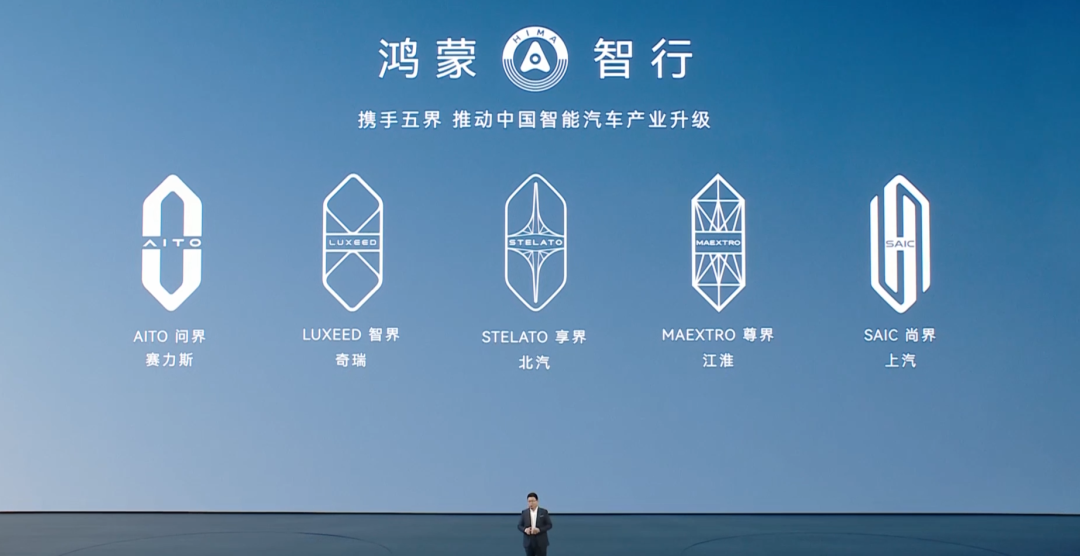 Image Source: Weibo
Clear divisions of labor have been established. Aito partners with Seres to dominate the home SUV market, serving as the alliance's sales foundation; Luxeed teams up with Chery to target young, sporty drivers; Xiangjie joins forces with BAIC to focus on the executive business and off-road markets; Zunjie, built by JAC, enters the ultra-luxury segment priced between 650,000 and 1.2 million yuan; Shangjie collaborates with SAIC to capture the 150,000-250,000 yuan mainstream market, prioritizing volume and scale.
Yu Chengdong repeatedly emphasized on stage that Harmony Intelligent Travel follows a route of end-to-end dominance, full-stack tech empowerment, and lifecycle management. This isn't merely selling a cockpit or intelligent driving software—Huawei deeply integrates into every aspect of product definition, channel development, brand operations, and owner services.
Five technological pillars form its competitive moat: Qiankun Intelligent Driving, Harmony Cockpit, Tuling Chassis, Huawei Intelligent Engine, and Megawhale Battery Platform, each fulfilling distinct roles. Public data shows that by April 2026, Qiankun Intelligent Driving had accumulated over 10.2 billion kilometers in assisted driving mileage, with massive real-world data continuously feeding algorithm iterations.
According to plans, Harmony Intelligent Travel will continue launching new models, expanding its product lineup, deepening ties with automakers, and striving for higher delivery targets, aiming to drive China's intelligent electric vehicle sector toward breakthroughs.
The 'First' Behind 1.5 Million Deliveries in 53 Months: The Art of Statistics
The claim of being the 'fastest new force to reach 1.5 million deliveries' sounds impressive, but industry comparisons reveal a different picture.
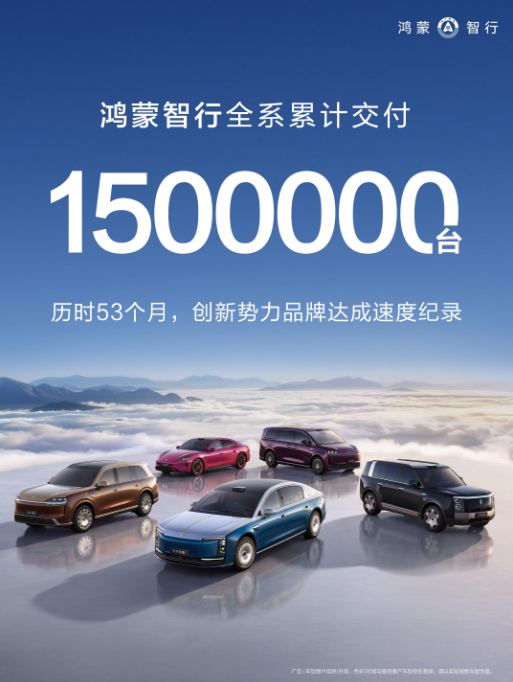 Image Source: Weibo
Netizens immediately raised questions: Isn't Leapmotor currently the top-selling new force?
The data speaks clearly. In July, Leapmotor delivered over 101,267 vehicles in a single month, becoming China's first new force to break the 100,000-unit monthly threshold. Its first-half deliveries reached 350,000 units, surpassing Harmony Intelligent Travel's 240,000. Meanwhile, Li Auto's cumulative deliveries exceeded 1.734 million by late June, over 200,000 more than Harmony's 1.5 million.
Harmony Intelligent Travel didn't top any of the three core industry metrics: monthly deliveries, half-year cumulative, or brand-wide total deliveries. Yu Chengdong's record is precisely defined: fastest to reach the 1.5 million delivery milestone in 53 months.
In horizontal comparisons, Leapmotor took nearly seven years to hit 1.5 million, while Li Auto took almost six. Harmony achieved it in four and a half years—a striking speed by this metric alone.
Controversy ensued. Harmony Intelligent Travel isn't a single automaker but an alliance of five established players: Seres, Chery, BAIC, JAC, and SAIC. Consolidating their production capacity, channels, and model sales to compete against independent new forces like Li Auto and Leapmotor stacks the deck from the start.
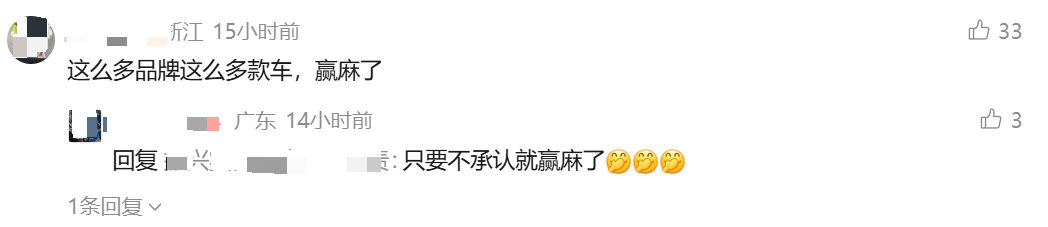
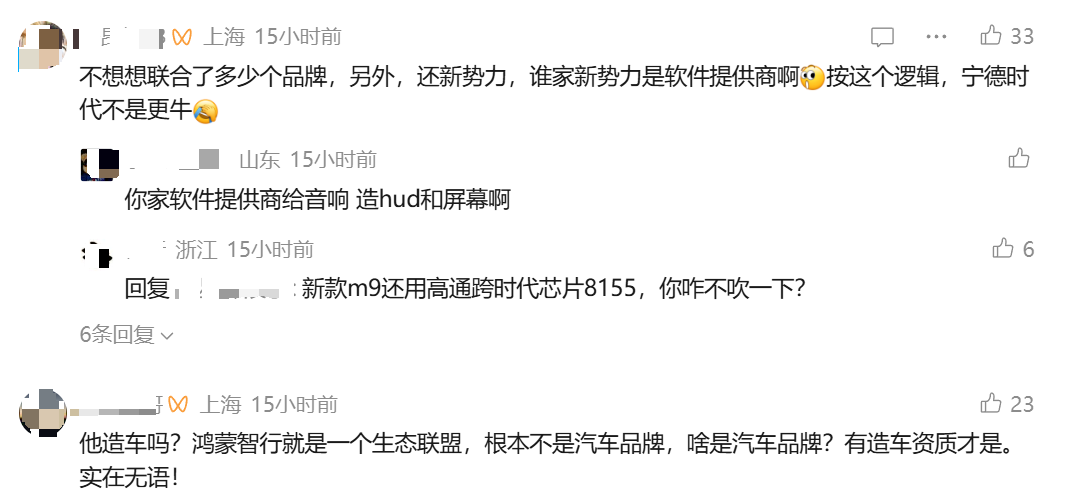 Image Source: WeChat Channels
One netizen bluntly stated: 'Combining sales from so many brands and models to claim total volume—unbeatable win, but is this comparison fair?' Another offered a vivid analogy: 'It's like ranking school exams by total class score of 800 for first place, while second-place Xiaoming scored 98 in a single subject. Comparing class totals to individual scores—how meaningful is that?'
Sharper criticisms followed: 'Why not mention how many brands are involved? Still calling it a new force when its essence is a software service provider (service provider)? By that logic, CATL, which supplies countless automakers, would be even more dominant.' Others questioned its legitimacy: 'Harmony Intelligent Travel is just an ecosystem alliance, not a proper automotive brand. A true automaker needs manufacturing Qualification (qualifications).'
Debate Rages: Integration Prowess vs. Record Credibility
Of course, online support for Harmony Intelligent Travel isn't lacking. Many argue that nitpicking statistical methods misses the bigger picture—Huawei's model is driving industry transformation.
Supportive netizens commented: 'Unifying five established automakers with differing stances under one Harmony Cockpit and Qiankun Intelligent Driving standard to achieve 1.5 million deliveries in 53 months—no other company matches this cross-enterprise integration capability.' Real owners chimed in: '1.5 million owners don't lie. The daily word of mouth (reputation) of Qiankun Intelligent Driving and Harmony Cockpit speaks for itself. User willingness to pay is the ultimate test.'
The comments section also featured lighthearted jokes: 'Too modest! Fast deliveries but even faster model launches—new cars keep coming so fast, ordinary consumers can barely tell the five brands apart.'
Objectively, Huawei's collaboration with traditional automakers to rapidly commercialize unified intelligent standards holds innovative value. The 1.5 million delivery milestone proves market acceptance of Huawei's intelligent vehicle solutions. However, the record's fastest delivery claim, achieved through consolidated multi-brand statistics, doesn't align with traditional single-automaker benchmarks—the root cause of ongoing online disputes.
Delivery Speed Is Just the Beginning: The Alliance's Real Tests Lie Ahead
In the short term, Harmony Intelligent Travel has secured the 'fastest to 1.5 million deliveries' milestone, but the real battles lie ahead.
Key challenges include differentiating the five brands to prevent internal cannibalization, improving per-unit profitability to escape endless price wars, and expanding overseas to build globally competitive products.
Achieving delivery speed through alliance synergy is merely the starting point. Whether it can forge more distinctive independent brands and achieve sustainable profitability will ultimately define this business model's success.
Interactive Topic: Do you think Harmony Intelligent Travel's 'fastest to 1.5 million' record holds significant value? Share your thoughts in the comments!
Disclaimer: This article is solely for financial commentary and does not constitute investment advice. All corporate data and regulatory events mentioned are from public sources and for reference only; official announcements shall prevail. Images sourced from the internet; please contact us for copyright removal.
Hit 'Like,' 'Share,' and 'Heart' in one click!
Share your thoughts in the comments!
Daily Insights on Intelligent Tech and Finance
-
![]()
Yu Chengdong's Harmony Intelligent Travel Achieves 'First in New Force Deliveries', Netizens: Unbeatable Win
-
![]()
Six Entities Invest 8.2 Billion to Launch Shenlong Technology
-
![]()
Give BMW X3 a Chance?
-
![]()
Chengdu: Leading in New Car Sales, Yet Losing the Favor of Rolls-Royce and Its Luxury Peers
-
![]()
Shenzhen Speed: The New Era
-
![]()
Shenzhen Speed Gets a New Version
-
When AI Becomes Too Powerful to Ignore: OpenAI Hits the Brakes for the First Time in History
-
![]()
Why Have Small Commuter Cars Priced Under 50,000 Yuan Seen a Slump in Sales?