Give BMW X3 a Chance?
 08/21 2026
 450
450
Just catching up is not enough.
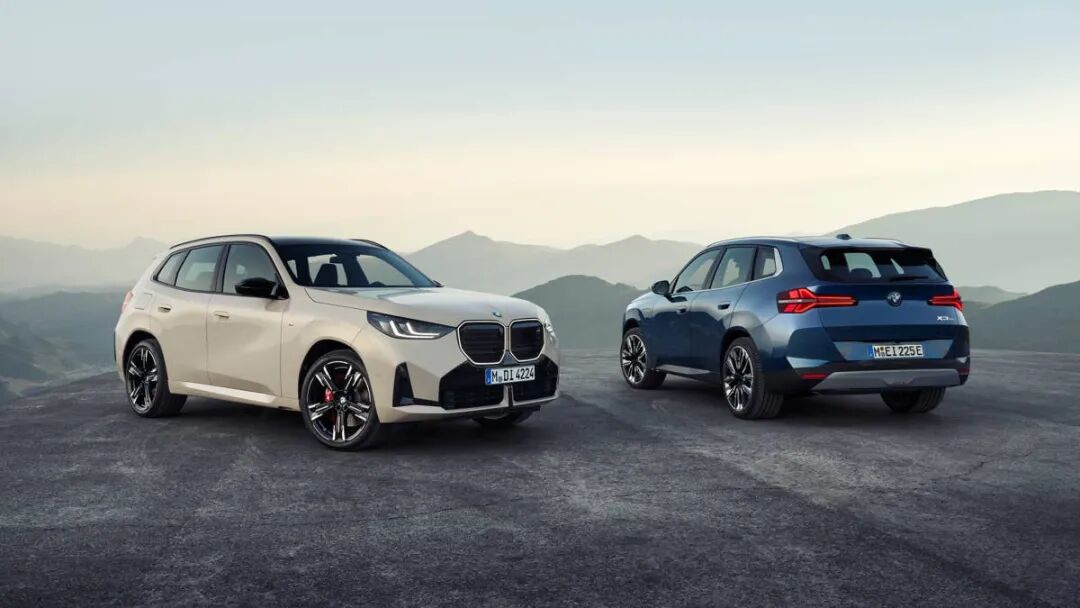
On August 21, the new BMW X3 made its debut at the Chengdu Auto Show, not as a new generation but as a facelifted model, with the domestically produced extended wheelbase of 2975mm remaining unchanged.
This is an important model for BMW, easily selling over 10,000 units per month at its peak and consistently achieving total annual sales of over 110,000 units. It was once a key force supporting BMW's sales in the era of fuel vehicles. However, it is no longer the center of attention.
That era has ultimately passed.
Last year, the numbers on the sales charts also burned BMW. The annual sales of the BMW X3 were only 76,900 units, a year-on-year decline of about 30%, while its old rival, the Mercedes-Benz GLC, maintained a respectable figure of 128,000 units. For the BMW X3, this was a double blow.
Where is the problem?
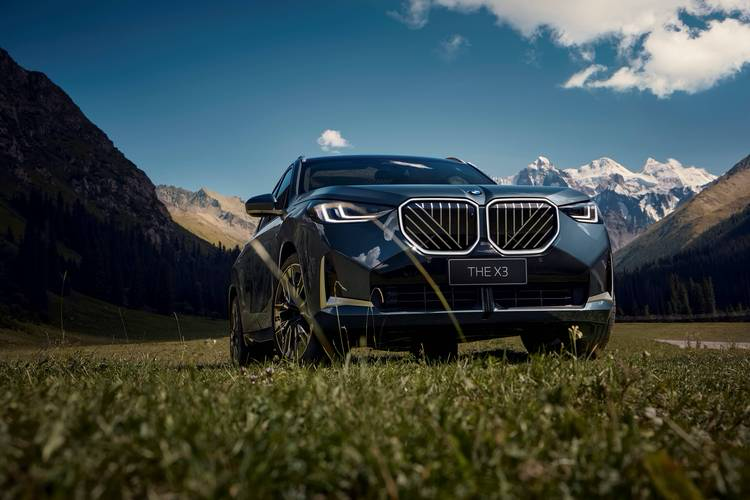
Perhaps, after the BMW family ushered in a new generation of design, BMW was destined to face a period of adjustment. "Who designed the 'elephant trunk with scallions'? The BMW X3 was originally a good car, but this designer has made it redundant, failing even the first test of consumer aesthetics," became the most popular controversy.
Additionally, the classic Hofmeister kink was eliminated, and the taillight design began to resemble Audi's style. BMW is looking less and less like BMW. Indeed, the new design style needs to be re-recognized by the market, but there is no clear timeline for whether or when it will be accepted.
Of course, with prices dropping from 400,000 yuan to 250,000 yuan and sales falling from over 10,000 units per month to less than half, the decline of the BMW X3 is not an isolated event but a clear signal of the structural transformation underway in the entire luxury car market.
In the midst of adjustments, it is harsh to see that BMW, accustomed to being the protagonist, has been marginalized in some market segments. Especially with last year's sales, when the Tesla Model Y achieved market dominance with over 425,000 units sold, BMW had to realize that the times have truly changed.
In 2026, the brushstrokes of the times painted this change even more bluntly. The TOP 20 sales list for models priced above 200,000 yuan in the first half of 2026 was released. For the sedan market, the top three were the SU7, Model 3, and BMW 3 Series. For the SUV market, the top three were the Model Y, Li Auto i6, and YU7.
Xiaomi and Tesla stood out. It can be said that BMW, Mercedes-Benz, and Audi's (BBA) stronghold in the SUV market priced between 200,000 and 300,000 yuan has been defeated by Xiaomi, Tesla, and Li Auto, even showing signs of being hollowed out. In the SUV market priced above 300,000 yuan, BBA also lost, with NIO, AITO, and Zeekr dominating this segment.
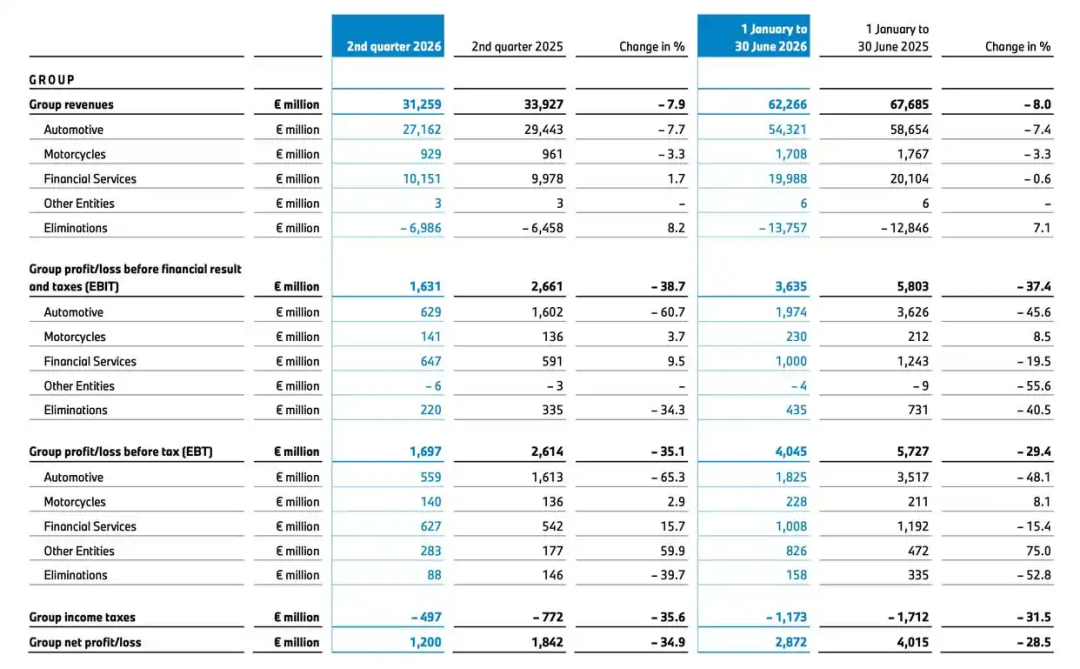
Based on this, the BMW Group lowered its core performance expectations for the 2026 fiscal year—reducing the automotive business's EBIT margin from the 4% to 6% range to 1% to 3% and changing the delivery volume forecast from "flat" to "slightly declining."
CEO Milan Nedeljković stated that the company needs to "adjust organizational structures and processes to adapt to the sharp decline in market conditions." In the official explanation, "increased competitive pressure in the Chinese market" was listed as the primary reason.
Once the news broke, BMW's stock price plummeted, at one point falling by over 11%. One of the influencing factors behind this profit warning was that the BMW X3, which once sold over 10,000 units per month, experienced a halving in sales, and its 2025 sales also ranked last among BBA products in the same category.
The combination of 2.0T+8AT, xDrive all-wheel drive, 50:50 weight distribution, and "German-flavored" chassis tuning, once considered a killer mechanical setup, is no longer effective in the face of intelligence.
The X3 performs weakly in "decisive" areas such as smart cockpits and ecological expansibility. The 2026 Audi Q5L, already equipped with Huawei's intelligent driving system, highlights BMW's significant lag in intelligence.
The radical design Adventure (adventure) has alienated its core user base. With strong encirclement from new energy models, traditional advantages have become insignificant. How should the BMW X3 proceed?
So adjustments are needed.
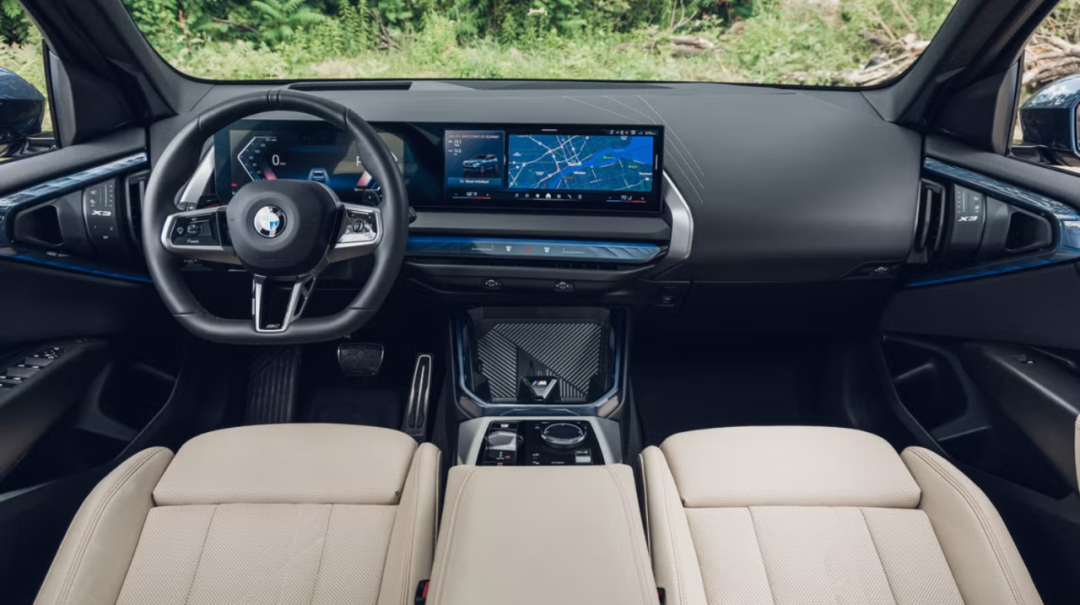
The upcoming facelifted BMW X3 features some changes in appearance. The design changes are concentrated on the front fascia, with a new M Sport horizontal slat double-kidney grille. The interior layout remains unchanged, still featuring a 12.3-inch instrument cluster and a 14.9-inch curved central control screen.
Overall, the design changes in appearance and interior are not significant but still noticeable. Behind these design changes lies BMW's anxiety in the face of market competition. As Tesla captures the market with minimalist design, BMW urgently needs to strengthen its visual identity.
However, the scale is difficult to grasp.
Another area of criticism is intelligence. In fact, accusing BMW of laziness or a lack of enthusiasm in intelligence would be unfair. The BMW X3 embodies the concept of "high specifications from entry-level" in its configuration, including front/rear collision warning, front/rear parking radar, 360-degree panoramic imaging, adaptive cruise control, lane-changing assistance, and reverse tracing, all capable of achieving Level 2 autonomous driving.
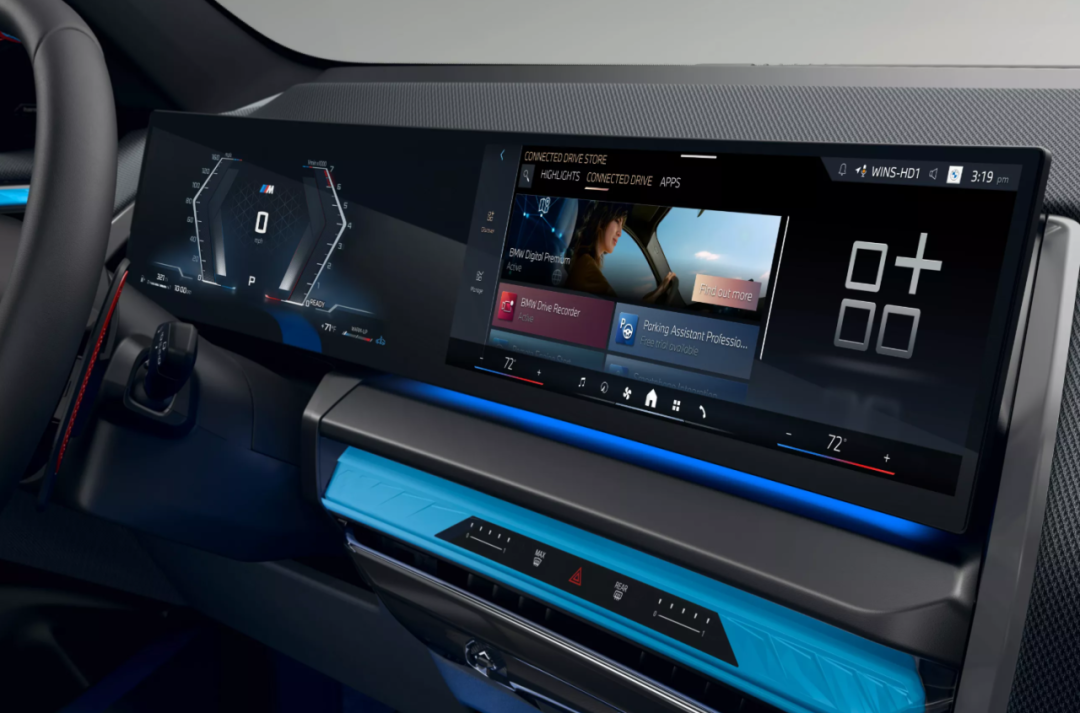
However, the issue lies in the fact that BMW's understanding of intelligence and user demands for intelligence have become two different things. Especially models like the Xiaomi YU7 have achieved a dimensionality reduction attack on luxury models, including the BMW X3, through configuration stacking and ecological integration.
The cool reception of the BMW X3 is enough to show that the old logic of traditional fuel-powered luxury SUVs is being re-examined.
BMW is also aware of the issues. Therefore, the facelifted BMW X3 has made some improvements in intelligence, featuring the BMW AI Personal Assistant, supporting multi-round continuous dialogue and contextual memory functions. While not groundbreaking, it is sufficient.
The infotainment system incorporates an AI large model voice assistant, and the M-style grille design has been extended to lower trims. This facelift of the BMW X3 seems more like patching up vulnerabilities, attempting to win back users lost due to design or experience issues.
With increased configurations, how will the pricing strategy be determined for the market launch? Whether consumers will buy it is enough to give BMW a headache.
After all, BMW's previous strategy of sacrificing price for volume not only failed to save sales but also eroded brand premium. Once the brand's moat is completely breached by price wars, rebuilding it will be difficult.
Whether the BMW X3 can regain some market vitality also depends on pricing strategy. Pricing too high or too low will push the BMW X3 deeper into the abyss. After all, in this brutal elimination race, simply catching up is not enough.
Will the market still give the BMW X3 a chance?
Note: Some images are sourced from the internet. If there is any infringement, please contact us for removal.
-END-
-
![]()
Yu Chengdong's Harmony Intelligent Travel Achieves 'First in New Force Deliveries', Netizens: Unbeatable Win
-
![]()
Six Entities Invest 8.2 Billion to Launch Shenlong Technology
-
![]()
Give BMW X3 a Chance?
-
![]()
Chengdu: Leading in New Car Sales, Yet Losing the Favor of Rolls-Royce and Its Luxury Peers
-
![]()
Shenzhen Speed: The New Era
-
![]()
Shenzhen Speed Gets a New Version
-
When AI Becomes Too Powerful to Ignore: OpenAI Hits the Brakes for the First Time in History
-
![]()
Why Have Small Commuter Cars Priced Under 50,000 Yuan Seen a Slump in Sales?