Chengdu: Leading in New Car Sales, Yet Losing the Favor of Rolls-Royce and Its Luxury Peers
 08/21 2026
 433
433
The transformation of Chengdu mirrors the broader shifts occurring across China.
Chengdu, a city described by Li Bai as descending from the heavens 1,400 years ago, with households painted in a picturesque scene, remains a thriving metropolis today. It stands out prominently in China's auto market, with bustling weekends in Taikoo Li and ownerless luxury cars dotting the landscape under Longquan Mountain, all showcasing the strong purchasing power of Chengdu's residents for luxury vehicles.
Even in 2026, amidst a decline in auto sales nationwide, Chengdu maintained its leading position, selling 261,700 vehicles and surpassing Shanghai (259,500), Beijing (247,700), and Guangzhou (239,900). It firmly held its title as China's top city for auto consumption.
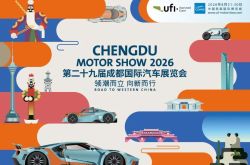
Despite robust sales, Chengdu has seen a decline in attention from many luxury car brands. At the 2026 Chengdu Auto Show, over a dozen ultra-luxury brands, including Rolls-Royce, Bentley, Porsche, and Lamborghini, were notably absent.
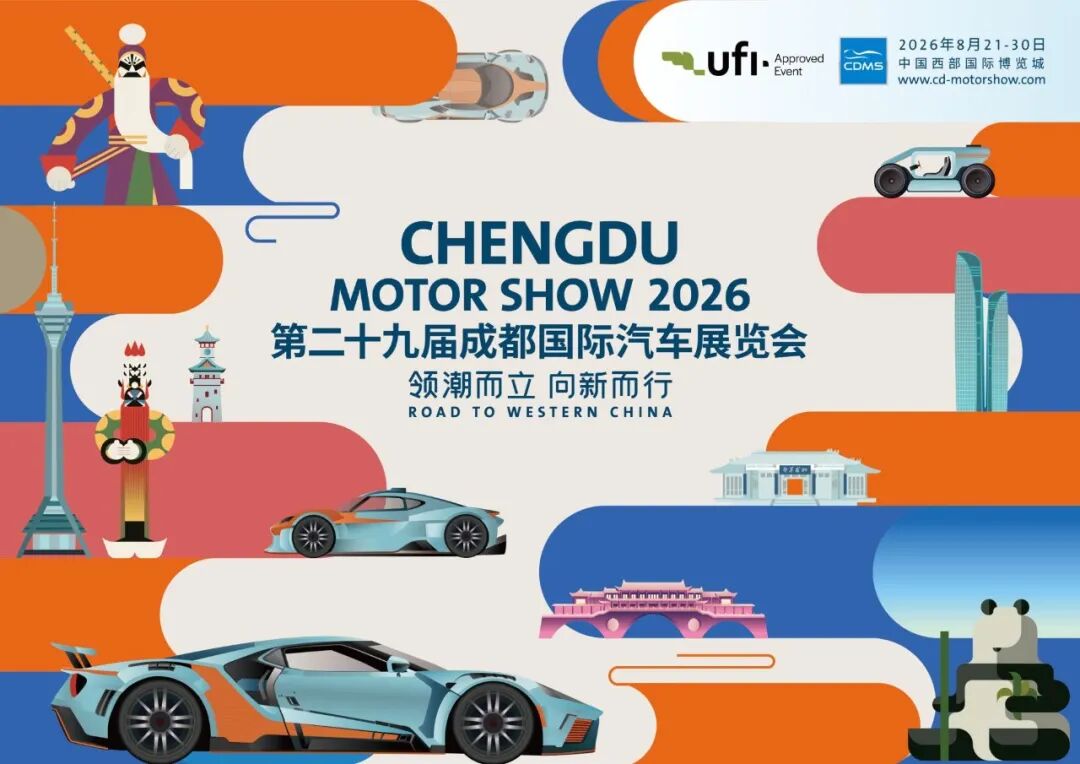
It's evident that traditional luxury cars are losing their foothold in Chengdu.
Conversely, Chengdu has emerged as a highly sought-after market for new energy automakers. In the 300,000-yuan-plus segment, the Xiaomi SU7 has become a new favorite among Chengdu's residents. The NIO ES8 dominates the 500,000-yuan-plus market, and even in the 1 million-yuan-plus segment, the Zunjie S800 has gained prominence.
Chengdu's luxury car market is undergoing a transition from fuel-powered to new energy vehicles, reflecting a broader market transformation.
The Luxury Car Market Undergoes a Seismic Shift
In 2026, the auto market faced significant pressure, with BBA (BMW, Mercedes-Benz, Audi) feeling the brunt first. On the first day of the new year, BMW announced price adjustments for 31 models, with 24 models seeing price cuts exceeding 10% and five models experiencing cuts over 20%. The million-yuan all-electric sedan i7 M70L saw a direct price drop of 300,000 yuan.
In February, Mercedes-Benz followed suit, officially reducing prices for key models like the C-Class, GLB, and GLC by about 10%. The E-Class saw terminal discounts of 110,000 to 135,000 yuan, with some high-end models offering discounts exceeding 200,000 yuan.
Audi, known for its swift price adjustments, introduced another round of incentive prices in July, reducing the starting price of the A6L from 422,900 yuan to 322,900 yuan, a drop of 100,000 yuan. Models like the A7L and Q6 started at 299,000 yuan for a limited time, with some models offering overall discounts of 150,000 to 160,000 yuan.
Despite being core players in the luxury car market, BBA failed to retain their market share through price adjustments, delivering dismal results in the first half of the year.
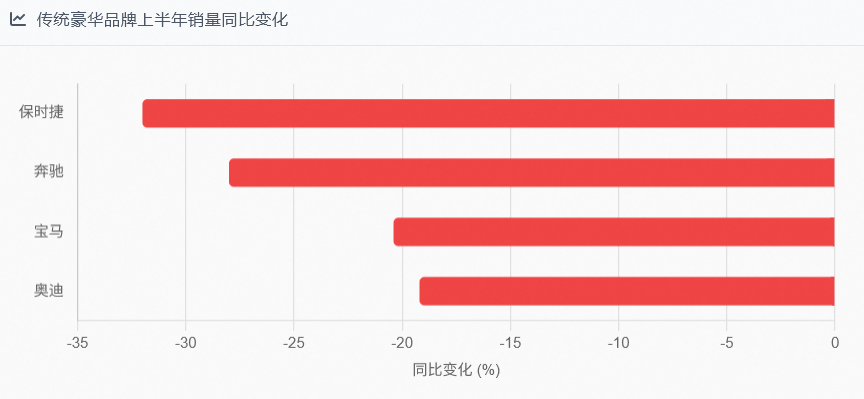
BMW delivered 261,800 vehicles in China in the first half of 2026, down 20.4% year-on-year. Mercedes-Benz delivered 210,200 vehicles, a sharp decline of 28%. Audi delivered 232,200 vehicles, down 19.2% year-on-year.
Worse than the sales decline was the operating condition of terminal dealers, with inventory coefficients soaring to 1.99, turnover days extending from 30 to 90, and 55.7% of BBA dealers operating at a loss.
However, the data tells a different story about the luxury car market's struggles. In the 400,000-yuan-plus market, it was the only price segment with positive growth in the first half of the year. While most brands consider 300,000 yuan as the threshold for luxury cars, with market changes, 400,000 yuan is becoming the new starting point for luxury vehicles.
Conversely, the 300,000-400,000 yuan segment, once considered the core volume segment, became the hardest-hit market, with sales of only 732,000 units in the first half, a sharp decline of over 20% year-on-year.
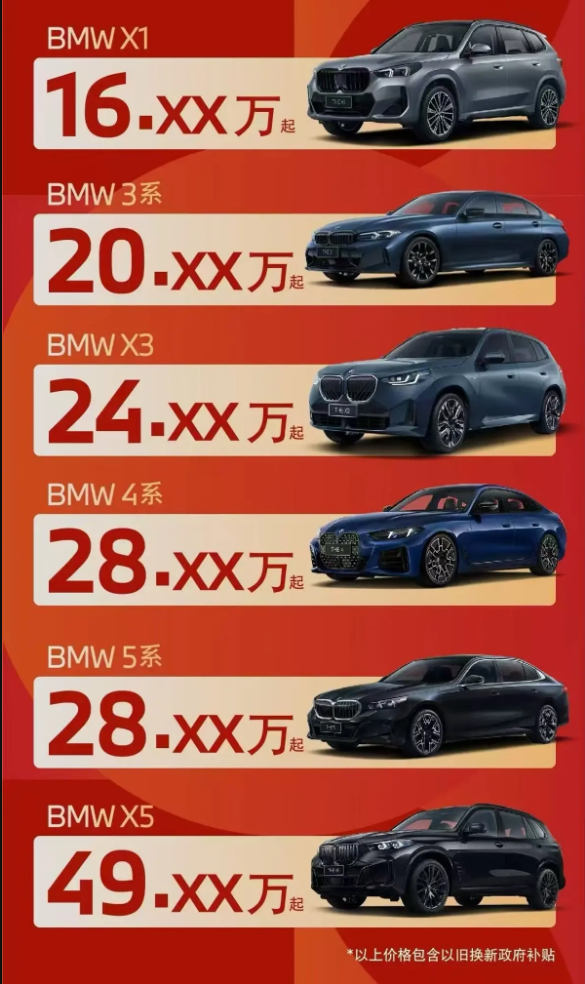
Behind the sharp decline in the 300,000-400,000 yuan segment lies a reshaping of the pricing system. Many models previously priced over 300,000 yuan now sell for under 300,000 yuan after discounts. For example, the average transaction price of the BMW X3 dropped from 319,500 yuan to 292,000 yuan, and the base price of the Audi A6L fell to 258,000 yuan. The once-prevalent "brand premium" has finally been squeezed dry by reality.
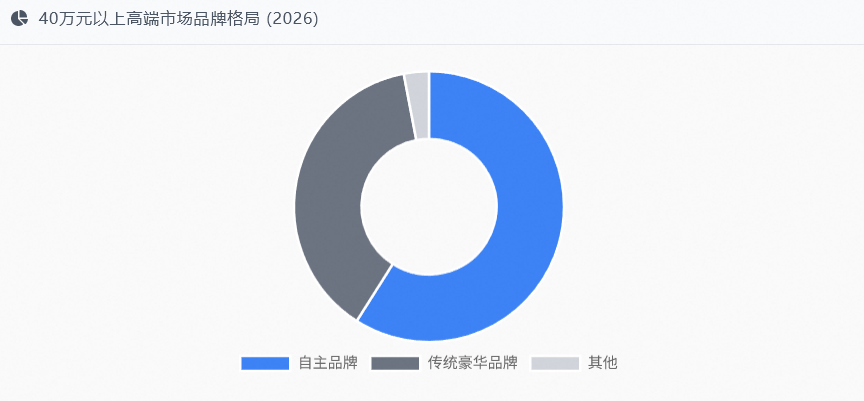
Squeezing out the "moisture" (meaning "excess" or "fluff") are the relentlessly advancing new energy vehicles. According to statistics, in the 400,000-yuan-plus premium market, domestic new energy sales surged by 46% year-on-year, with domestic brands capturing a 59% market share, while traditional luxury brands' share fell to 38%.
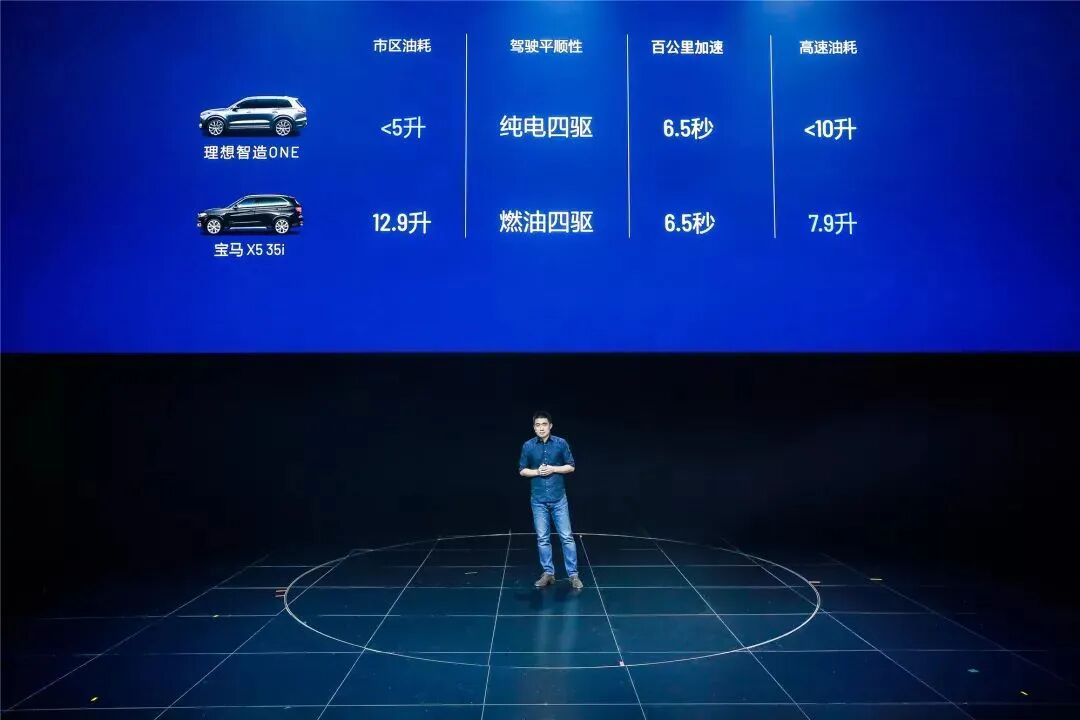
Traditional luxury SUVs like the BMW X5 and Mercedes-Benz GLE have become regular fixtures at new energy brand launch events, directly targeted by models like the AITO M9, Li Auto L9, and NIO ES8, which aim to capture consumer attention from the outset.
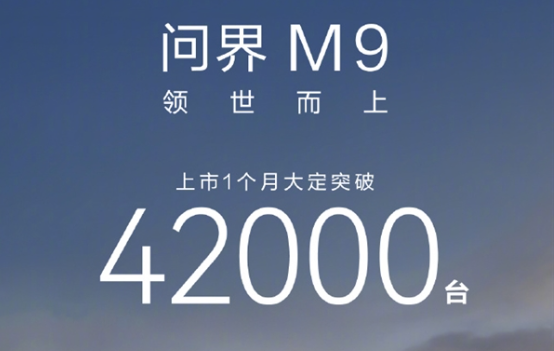
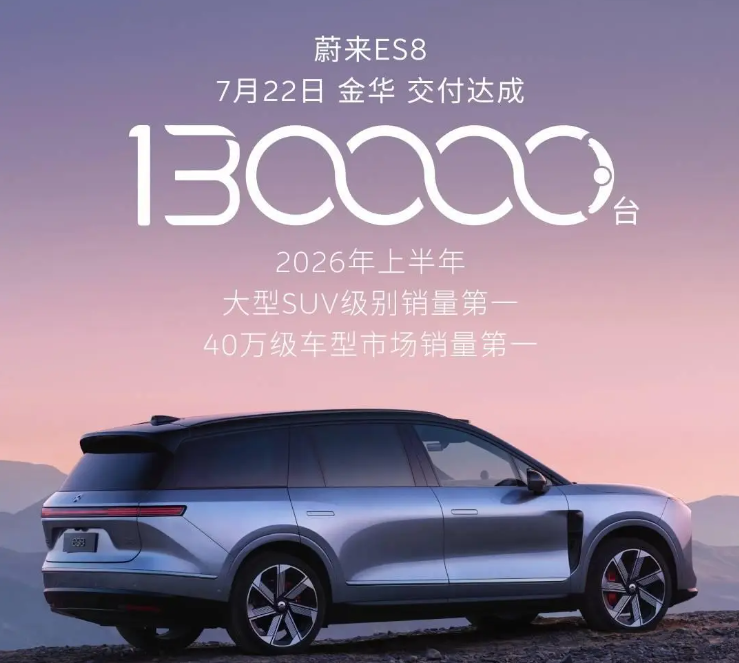
The results are clear: the AITO M9 sold 10,089 units in July this year, topping the 400,000-yuan-plus sales chart. The NIO ES8 led the 400,000-yuan-plus SUV market with 11,472 units sold, securing the double crown for large SUVs and the 400,000-yuan-plus market for seven consecutive months. The Zeekr 9X followed closely with 9,058 units sold. More importantly, 80% of these buyers traded in vehicles from BBA, Land Rover, or Porsche.
For even higher-priced ultra-luxury models, the shift in consumer attitudes has made them even more passive. According to data from the China Passenger Car Association, in the first half of 2026, terminal retail sales of imported vehicles were only 190,000 units, a sharp decline of 29% year-on-year. McLaren's sales in China fell by 90%, Maserati by 48%, and Bentley by 34%.
In Chengdu, the luxury car capital, only traditional fuel-powered SUVs remain resilient in the million-yuan-plus market, with the Porsche Cayenne, Land Rover Range Rover, and Defender still ranking in the top three in sales.
50% and 70%: A Broader Transformation
The changes in the luxury car market are just a microcosm of the broader transformation in China's auto market. With the development of new energy vehicles, China's auto industry has reached a new stage. After crossing the 50% penetration rate threshold in 2025, the new energy penetration rate reached 60% in July this year, with cumulative sales accounting for over 50% of the market, truly securing half of the market.
From 5% to 60%, the Chinese market achieved this in just seven years, driven by a shift from policy-driven to product-driven growth. Initially, policy support alone helped new energy vehicles overcome their initial challenges, giving them a chance to compete with fuel-powered cars.
With technological advancements, the battery costs and charging challenges that once constrained new energy vehicles are no longer issues. After bridging the technological gap, the convenience offered by new energy vehicles has become unmatched by traditional fuel-powered cars.
Just as with the development of luxury brands, early competition among luxury brands focused on technology and how many trophies they could win on the track. However, as technological advancements slowed, luxury brands shifted to storytelling to build brand value, from royal exclusivity to century-old design, transforming the definition of luxury from tangible to intangible.
With the advent of new energy vehicles, consumers are rethinking what true luxury means—no longer just about brand premiums but about real value propositions.
In the past, consumers paid for the three core components of a car. Today, they prioritize the "three smarts": smart cockpit, smart driving, and smart charging, valuing tangible benefits over the intangible allure of "one person, one machine."
The advancement of new energy vehicles has brought about a generational leap in smart cockpits. While traditional luxury brands are still grappling with Bluetooth connectivity stability, domestic cars in the same price range are equipped with smart cockpits, urban intelligent driving, and a full suite of intelligent ecosystems.
Multiple surveys show that domestic car owners consider features like advanced driver-assistance systems and smart cockpits as their top priorities when upgrading vehicles, with brand price losing its premium appeal in the face of intelligence.
In building charging infrastructure, new energy brands are also transforming the driving experience with visible services. NIO has built a highly efficient charging network with 4,000 battery swap stations for users. Li Auto and Yangwang are also constructing their own ultra-fast charging stations, providing exclusive charging systems for users.
Additionally, today's consumers are more willing to pay for experiences. Features like zero-gravity seats and 28-point SPA-level massages, which may seem unrelated to driving, are popular selling points for many users. These have even evolved into cockpit layouts, with rotating seats changing traditional cockpit configurations and creating new uses for interior space.
These innovations stem from local brands' deep understanding of market demand. In the past, whether joint ventures or imported brands, they only offered overseas-developed models without true customization for China, as demand always outstripped supply.
Today, domestic brands account for over 70% of the market, with most models being independently developed by local automakers. Naturally, Chinese brands understand the needs of the domestic market better than foreigners.
While new energy penetration may still be influenced by policies, the rise in market share for domestic brands represents a core transformation. In the fuel-powered era, joint ventures and imports symbolized quality. In the new energy era, joint ventures and imports are largely seen as generic by consumers, even in the luxury car market.
When consumers are willing to pay for the Xiaomi SU7 instead of the "original" Porsche Taycan, beyond the apparent price difference, the key factor is the gap in intelligence—after all, Xiao Ai is smarter than "Hey Porsche."
Looking back at Chengdu, according to comprehensive data from the Chengdu Vehicle Management Office and the China Passenger Car Association, in the first half of 2026, new energy passenger vehicle registrations priced over 300,000 yuan in Chengdu grew by about 38% year-on-year. The new energy penetration rate in the luxury car market exceeded 45%, well above the national average. In the new energy era, Chengdu remains a luxury car hub, but the protagonists of the story have changed.
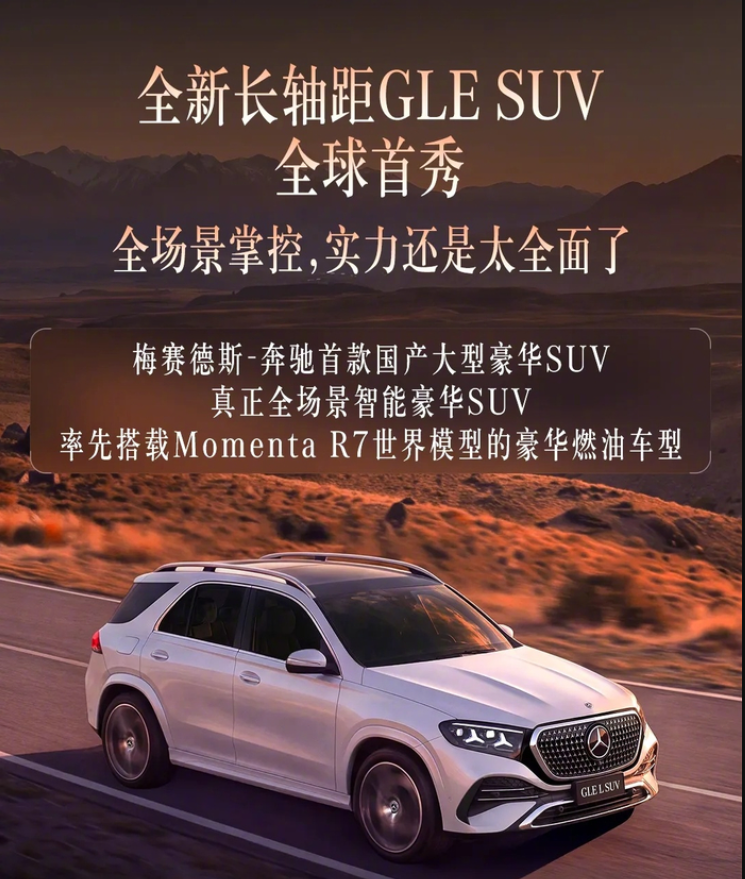
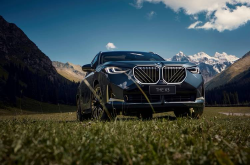
Of course, facing Chengdu's unique and important market, ultra-luxury brands may give up, but BBA still needs to maintain its foothold. At the 2026 Chengdu Auto Show, BMW brought the updated X3, while Mercedes-Benz showcased the long-wheelbase GLE equipped with Momenta R7 intelligent driving, attempting to regain lost market share in Chengdu.
For consumers, this is an era of "buying better cars for less money." For traditional luxury brands, this is a critical transition period where they must shift from "brand premium" to "technology premium."
After losing the attention of ultra-luxury automakers like Rolls-Royce, Chengdu is poised to become a trendsetter for China's new energy luxury car consumption.
Note: Images sourced from the internet. If there is any infringement, please contact us for removal.
-END-
-
![]()
Yu Chengdong's Harmony Intelligent Travel Achieves 'First in New Force Deliveries', Netizens: Unbeatable Win
-
![]()
Six Entities Invest 8.2 Billion to Launch Shenlong Technology
-
![]()
Give BMW X3 a Chance?
-
![]()
Chengdu: Leading in New Car Sales, Yet Losing the Favor of Rolls-Royce and Its Luxury Peers
-
![]()
Shenzhen Speed: The New Era
-
![]()
Shenzhen Speed Gets a New Version
-
When AI Becomes Too Powerful to Ignore: OpenAI Hits the Brakes for the First Time in History
-
![]()
Why Have Small Commuter Cars Priced Under 50,000 Yuan Seen a Slump in Sales?