Will China's Auto Exports Surpass 10 Million Units This Year?
 08/21 2026
 553
553
Introduction | Lead
Chinese automobiles are experiencing divergent trends in two markets: while domestic sales are sluggish, exports are booming. During the traditionally slow months of June and July for domestic sales, auto exports exceeded one million units for two consecutive months. At this rate, could China's auto exports surpass 10 million units for the first time in 2026?
This article is produced by | Heyan Yueche Studio
Written by | Li Suwan
Edited by | Hezi
Full text: 2,702 characters
Reading time: 4 minutes
Will China's auto exports exceed 10 million units for the first time in 2026? The answer will unfold in the coming months.
Once, China's auto exports hovered around one million units annually for many years. Now, monthly exports can exceed one million units, marking a 'blowout phase.' This reflects a transformation from simple vehicle exports to a comprehensive global outreach strategy.
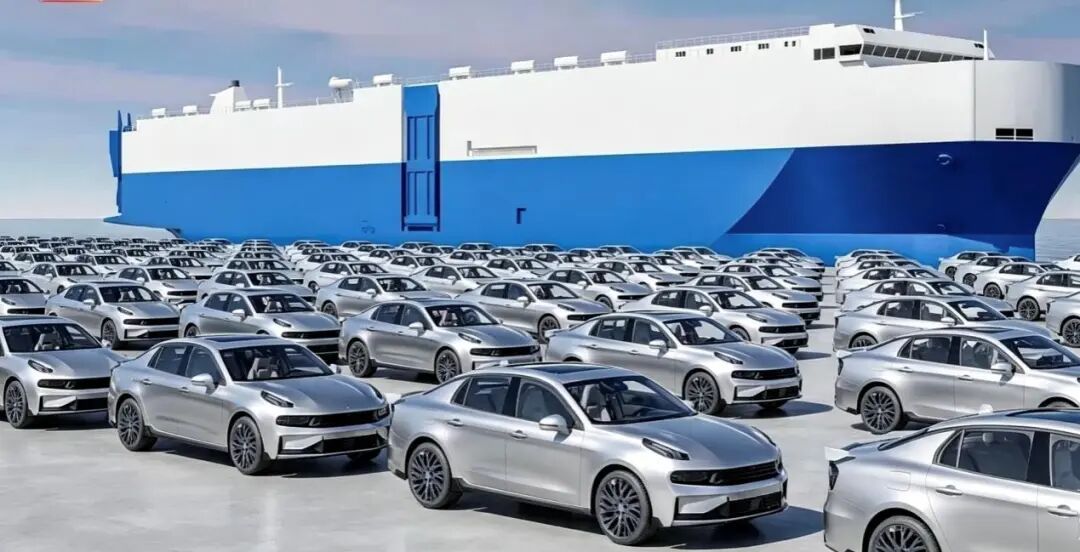
Following the first-ever monthly export milestone of over one million units in June, China's auto exports maintained strong growth in July. According to the latest data from the China Association of Automobile Manufacturers, 1.043 million vehicles were exported in July, up 0.6% month-on-month and 81.3% year-on-year. From January to July this year, 6.14 million vehicles were exported, a 66.8% year-on-year increase. In contrast, statistics from the China Automobile Dealers Association show that in July 2026, retail sales of passenger vehicles nationwide reached 1.461 million units, a 20.9% year-on-year decline and an 8.8% month-on-month decrease. From January to July this year, cumulative retail sales reached 10.173 million units, a 20.3% year-on-year decline.
The simultaneous rise in exports and decline in domestic sales reflect a structural shift in China's auto industry. The domestic market is becoming increasingly competitive, while exports serve as a stabilizing force, supporting automakers' wholesale volumes and production capacities while alleviating pressure from weak domestic retail sales. China's automobiles are gaining ground in the global market.
Can Exports Exceed 10 Million Units This Year?
In early July, a brand-new AION V cruised along the coastal highway in Swansea, Wales, UK, owned by the Jin couple, who were purchasing a Chinese auto brand for the first time. In a mature automotive market like the UK, where brand competition is fierce, it is not easy for a new Chinese brand to gain local consumers' favor. The Jin couple ultimately chose the AION V not only for its product design and configuration but also for factors such as an eight-year warranty and after-sales service.

Similar stories of overseas Chinese brand owners are on the rise. Countries such as the UK, Belgium, Brazil, Germany, Australia, Thailand, and South Korea are gradually becoming major export markets for China's new energy vehicles. In the first half of this year, thanks to the doubling of exports from independent brands like Aion, GAC Group achieved a year-on-year increase of 2.35% despite weak sales from its joint ventures. Not only GAC Group but also BYD, the leader in China's auto sales, is relying on exports to alleviate the pressure of declining domestic sales. Models like the BYD RACCO are entering Japan's K-Car light vehicle market, which accounts for one-third of the country's auto market. In July this year, BYD exported approximately 180,000 new energy vehicles, setting a new single-month record, with its export scale approaching that of Chery, China's leading export brand.
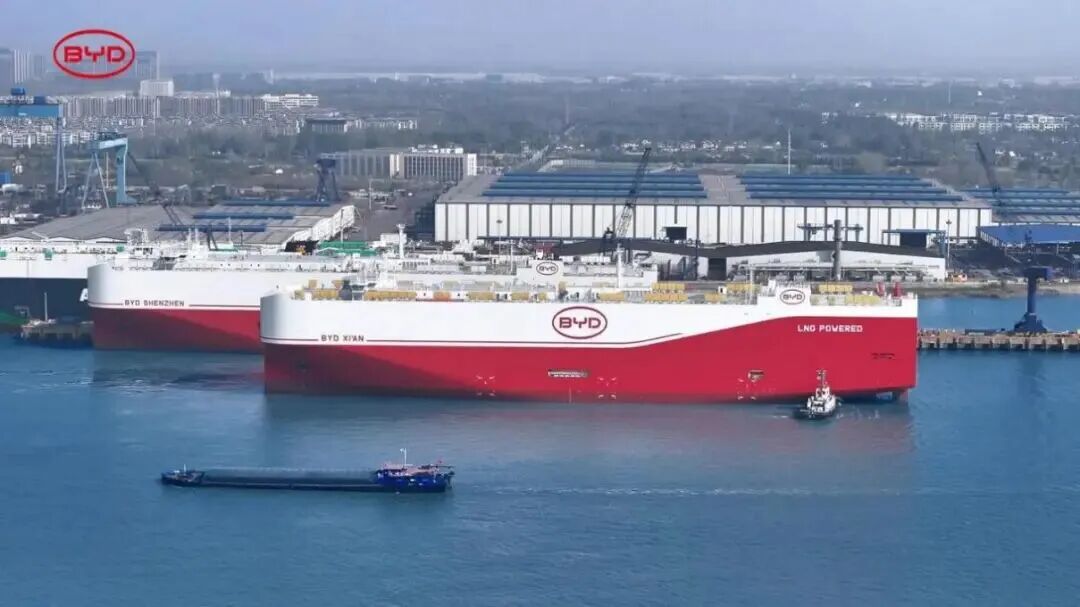
In July 2026, Chery Group exported 202,500 units, a 70.1% year-on-year increase, setting a new single-month export record and becoming the first domestic automaker to exceed 200,000 monthly exports. In the first seven months of this year, cumulative exports reached 1.1464 million units.
Unlike BYD's focus on new energy vehicles, Chery adopts a dual strategy of gasoline and new energy vehicles, leading in exports for a long time. It has a strong presence in Southeast Asia, South America, Russia, and other markets, with extensive overseas KD factory layouts. BYD is catching up rapidly, adopting a dual strategy of complete vehicle exports and overseas factory construction, with facilities in Thailand, Brazil, Hungary, and Turkey, covering both developed and emerging markets. SAIC Motor's MG brand has long been the highest-selling Chinese brand in Europe, while its subsidiaries SAIC-GM-Wuling and SAIC Passenger Vehicles are also increasing their CKD export ratios. Chery, BYD, and SAIC Motor form the first echelon of overseas expansion, engaging in fierce competition.
Geely, Changan, Great Wall, and other independent brands are also accelerating their overseas expansion. Geely relies on Lynk & Co and Polestar to target the high-end European market; Great Wall uses its factories in Thailand and Brazil as pivots to focus on Southeast Asia and Latin America; Changan focuses on the ASEAN new energy vehicle market. Meanwhile, new forces like Xpeng, NIO, and Li Auto are also accelerating their internationalization, one after another landing in overseas markets such as Europe and Southeast Asia. Xpeng's MONA L03 was officially launched globally in Munich, Germany, on July 16 this year, marking the first time Xpeng has premiered a new product overseas and signifying an important step in its globalization strategy.

With the combined efforts of multiple automakers, China's auto exports have entered the fast lane. According to data from the China Passenger Car Association, in July this year, passenger vehicle exports (including complete vehicles and CKD) accounted for 41% of passenger vehicle manufacturers' sales (37% in June, 21% in the same period in 2025). The surge in exports is inseparable from new energy vehicles. From January to July this year, manufacturers exported 2.771 million new energy passenger vehicles, a 128.5% year-on-year increase. In July, manufacturers exported 540,000 new energy passenger vehicles, a 147.8% year-on-year increase and an 8.1% month-on-month increase, accounting for 58.8% of passenger vehicle exports.
Following the first-ever surpassing of gasoline vehicle exports in June, new energy vehicle exports continued their strong momentum in July.
As the domestic auto market shrinks, many automakers are expected to increase their reliance on exports in the coming months, not only independent brands but also joint ventures. Based on the current trend, barring any unexpected events, China's cumulative auto exports from August to December are expected to exceed 4 million units, making it highly probable that annual exports will exceed 10 million units for the first time.
The Transformation from Vehicle Exports to Systemic Global Outreach
In 2012, China's auto exports surpassed the one million unit threshold for the first time, followed by nearly a decade of exports hovering around this mark. It wasn't until 2021 that China's auto exports exceeded two million units for the first time, reaching 2.015 million units, officially leaving the one million unit range and achieving leapfrog growth. In 2022, with 3.111 million units, China surpassed Germany to become the world's second-largest auto exporter. In 2023, with 4.91 million units, China overtook Japan to become the world's largest auto exporter, continuing to rise and breaking through the eight million unit export scale in 2025.
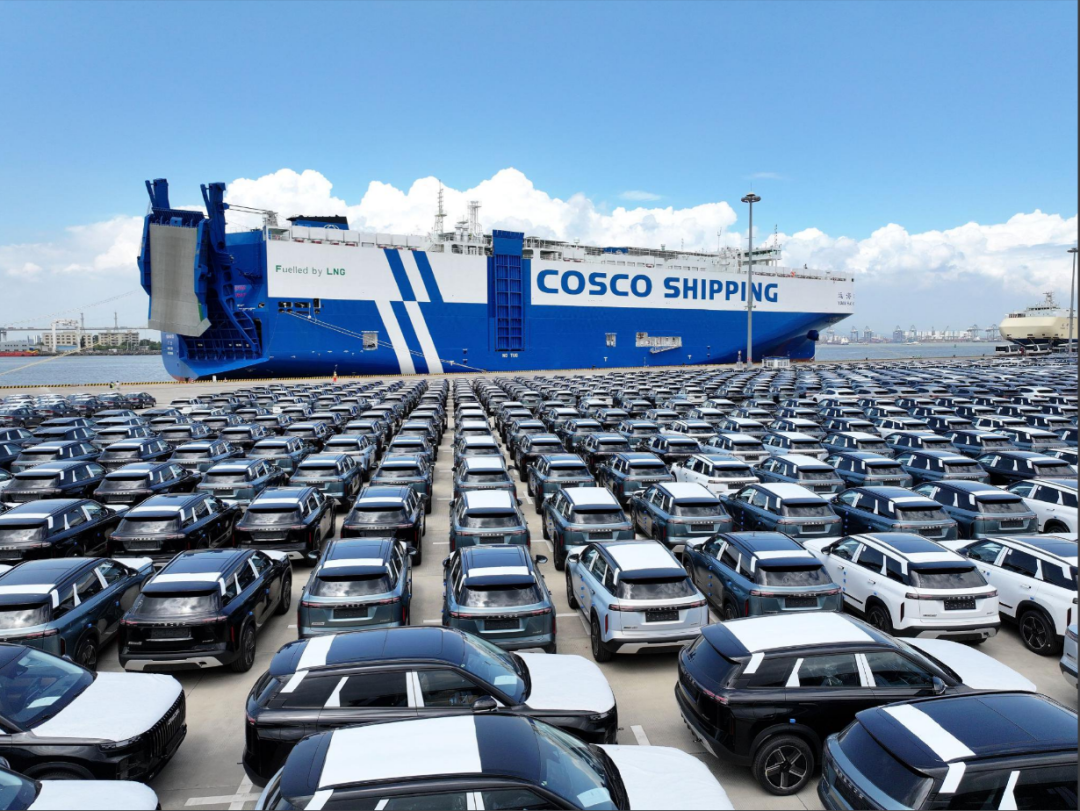
This year, China's auto exports are even poised to reach the ten million unit level. This is not just a change in surface data but a transformation of the export system. Over the years, China's auto industry has transitioned from the simple export of gasoline vehicles in Phase 1.0 to Phase 2.0 and even moving toward Phase 3.0. In addition to establishing overseas KD assembly plants, driven by the industrial dividends of electrification and intelligence, China is also iterating its export models. It is replacing the previous low-price competition model with product strength advantages built on three electric technologies, intelligent cockpits, and intelligent driving capabilities. It is also accelerating the integrated landing of R&D, supply chain, energy replenishment, after-sales, and brand ecosystems in overseas markets. Leading automakers are setting up R&D centers, battery supporting factories, and charging/swapping networks overseas, accelerating the 'paving' for China's intelligent electric vehicles to go global.
Cui Dongshu, Secretary-General of the China Passenger Car Association, mentioned in a media interview that four core advantages—significant scale advantages, overseas demand dividends, vast incremental space, and a complete supporting system—complement each other, driving the explosive growth of China's auto exports. China's annual auto production and sales have exceeded 30 million units, and the massive industrial volume dilutes R&D and production costs, achieving scaling cost reduction and efficiency increase. Additionally, China has the world's most complete industrial chain, forming extremely strong cost-effectiveness and supply stability. Meanwhile, high international oil prices are driving up the cost of using gasoline vehicles, providing an opportunity for China's new energy vehicles to explode globally. Furthermore, global emerging markets are also providing space for China's auto export growth.

Although China's auto exports are entering a golden era, rapid growth must also be vigilant against risks. Currently, in the global auto market with nearly one billion annual sales, China's automobiles already account for one-third of the market share, especially China's new energy vehicles, which account for over 60% of the global new energy market and even over 70% in segmentation markets such as plug-in hybrids. In this context, the space for China's auto exports will gradually become limited, and future uncertainties will continue to increase. International trade protection barriers will continue to rise. For example, after the EU imposed anti-subsidy tariffs on China's pure electric vehicles, it is also eager to wave the trade big stick at China's plug-in hybrids. In addition, countries may continuously raise local procurement rates and localization production thresholds, increasing the difficulty for China's automobiles to go global.
Meanwhile, it will take time and process for China's automobiles to build new systems overseas, create international famous brands, and lay overseas service networks. Moreover, the lack of uniformity in emission standards, charging standards, and autonomous driving regulations across countries, as well as ongoing geopolitical and public opinion risks, persist. To some extent, the difficulty of international markets will increase rather than decrease in the future. Chinese automakers must enter a new phase of 'value-driven, structural optimization' both domestically and internationally.
Commentary
In 2026, the probability of China's auto exports exceeding 10 million units for the first time is high. However, the real test of globalization has just begun. How to strengthen the overseas outreach system, how to establish a complete value chain overseas, how to enhance brand value, how to convert the current scale into sustainable global operation capabilities, and how to comprehensively compete head-on with top multinational automakers like Toyota and Volkswagen in the international market are all urgent internationalization challenges that need further answers.
(This article is original to Heyan Yueche and may not be reproduced without authorization.)
-
![]()
Yu Chengdong's Harmony Intelligent Travel Achieves 'First in New Force Deliveries', Netizens: Unbeatable Win
-
![]()
Six Entities Invest 8.2 Billion to Launch Shenlong Technology
-
![]()
Give BMW X3 a Chance?
-
![]()
Chengdu: Leading in New Car Sales, Yet Losing the Favor of Rolls-Royce and Its Luxury Peers
-
![]()
Shenzhen Speed: The New Era
-
![]()
Shenzhen Speed Gets a New Version
-
When AI Becomes Too Powerful to Ignore: OpenAI Hits the Brakes for the First Time in History
-
![]()
Why Have Small Commuter Cars Priced Under 50,000 Yuan Seen a Slump in Sales?