When 'Li Shufu' and His Peers Begin to Relinquish the 'Reins'...
 08/21 2026
 451
451
China's private automotive sector appears to be on the cusp of a significant historical pivot.
On August 18, Li Shufu officially stepped down as Chairman and Executive Director of Geely Automobile Holdings Limited (hereinafter referred to as Geely Automobile), with An Conghui assuming the helm. In response, Li Shufu remarked, "In terms of corporate governance, we are at the forefront of rigorously implementing and actively nurturing professional talent, constructing a professional team, ensuring the efficient and transparent functioning of the company's three-tier governance structure, and fostering a conducive governance environment for the healthy growth of internal talent and corporate culture."
More than three decades ago, a handful of 'grassroots entrepreneurs' laid the foundation for the first wave of private enterprises in China's automotive landscape. Leveraging their innate entrepreneurial spirit—marked by bold risk-taking, venturesomeness, and investment—they transformed modest workshops into automotive conglomerates with a global footprint. However, as industry competition evolves from domestic to global arenas and from traditional energy sources to intelligent electric vehicles, a profound question looms: When 'Li Shufu' and his contemporaries start to relinquish the 'reins,' can these companies, which have thrived on the founder's personal authority and decisiveness, successfully transition to institutionalized and professional governance?
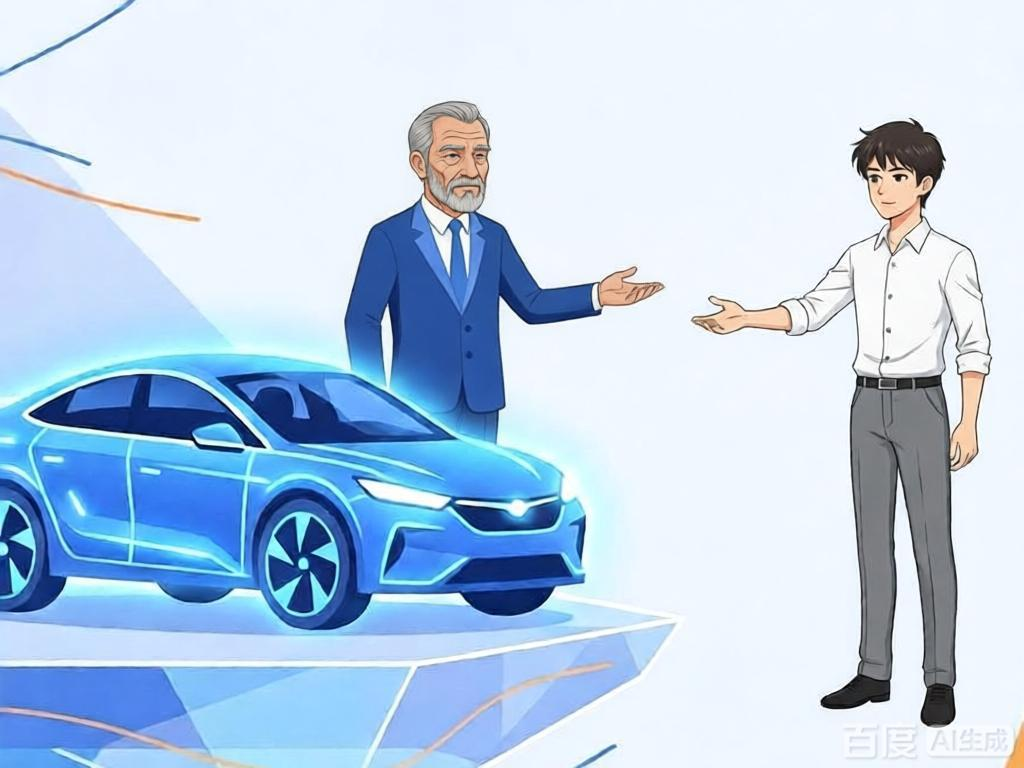
Transition from Founder-Centric to Institution- and Team-Centric
According to an announcement by Geely Automobile on August 17, Li Shufu resigned as Chairman and Executive Director of Geely Automobile effective August 18, while being honored as the Lifetime Honorary Chairman of the company. As the major and controlling shareholder, Li Shufu will continue to fully support the company's long-term development and remain Chairman of Zhejiang Geely Holding Group.
The announcement revealed that An Conghui has been appointed as Chairman of Geely Automobile's Board of Directors. He will spearhead the new board in fortifying corporate synergies, enhancing collaboration with controlling shareholders, and consolidating and strengthening 'One Geely.' Meanwhile, Li Donghui stepped down as Vice Chairman of Geely Automobile's Board of Directors but will retain his position as an Executive Director; Gui Shengyue resigned as CEO of Geely Automobile and was appointed as Vice Chairman of the Board of Directors, continuing to serve as an Executive Director; Gan Jiayue was appointed as CEO of Geely Automobile, responsible for the company's day-to-day operations.
This marks the first time Li Shufu has relinquished his position on the board of directors of this core listed company since assuming the role of Chairman of Geely Automobile's Board of Directors in 2005. At Geely Automobile's 2026 interim results briefing, Vice Chairman Gui Shengyue stated that this signifies Geely Automobile's shift from a founder-driven startup and growth phase to a maturity phase driven by institutions and teams. The company is transitioning from relying on personal charisma and authority to depending on organizational systems and talent pipelines, implying more transparent governance, more professional decision-making, and more scientific management.
Some observers believe that in China's current business environment, few entrepreneurs dare to entrust their teams with high levels of trust and authority, handing over core business operations to young leaders. Geely Automobile's core management reshuffle and young talent development plan not only represent a significant milestone in Geely's pursuit of modern, institutionalized, and rule-of-law-based corporate governance but also serve as a model and example for the modern governance of China's global enterprises.
Pan Helin, an economist and member of the Expert Committee on Information and Communication Economics at the Ministry of Industry and Information Technology, told the media that while Geely Automobile appears to be moving towards a de-familization and adopting a professional manager governance model, the new management team actually shoulders two major responsibilities: first, driving corporate transformation by focusing growth on mid-to-high-end models and overseas markets; second, completing the transition of succession, with Geely intentionally grooming Li Shufu's successor.
Collectively Confronting the 'Coming-of-Age' Challenge
In fact, corporate governance model and institutional innovations, including 'succession,' are not issues unique to Geely Automobile.
At BYD's shareholder meeting on June 9 this year, someone inquired of Wang Chuanfu, "What will happen to BYD after you retire?" Wang Chuanfu responded resolutely: BYD is not a company reliant on a single founder. BYD has established a mature talent pipeline internally, boasting a group of capable and daring core managers. After years of cultivation, the company has achieved steady growth through a robust system, engineer culture, and a youthful team, long since shedding its dependence on individuals. Adequate talent reserves have laid a solid foundation for the company's long-term development.
Currently, Chinese auto companies whose first-generation leaders have reached their 60s include not just Geely and BYD but, when considering the broader private economy in China, are collectively facing this 'coming-of-age' challenge. Statistics indicate that in the next 5-10 years, approximately 3 million private enterprises across the country will undergo generational succession. The first generation of private enterprises nurtured through more than four decades of reform and opening-up will all confront the crucial task of transitioning from the 'Founder Era' to the 'Institutional Era.' The answers to this challenge will profoundly influence China's industrial economy over the next two decades.
Relatively speaking, BYD has been more steadfast in pursuing the professional manager route. According to public information, since 2020, Wang Chuanfu has stepped down as chairman of over 40 subsidiaries, entrusting full business line operations to internally promoted executives and relying on an institutionalized professional team to drive transformation. From the 2025 financial report, it is evident that among BYD's current core management team, mid-generation executives such as 47-year-olds Yang Dongsheng and Luo Zhongliang, as well as the even younger 44-year-old Vice President Li Wei, have fully assumed their roles, becoming the backbone of BYD's professional management team.
However, as Pan Helin pointed out, the key to a professional manager system lies in both incentives and oversight—neither can be neglected. The new management team must face scrutiny from the governance layer of the listed company while also establishing credibility and a foothold among company veterans, winning recognition from all quarters for their operational prowess. Academic research highlights that the professional manager system faces challenges such as an imperfect value evaluation system, fragile trust mechanisms, unreasonable incentive structures, and unsound exit mechanisms. It requires a holistic approach supported by a robust governance structure, effective incentive and restraint mechanisms, a mature external market, and a deeply ingrained culture of trust—all genuine challenges that China's private auto companies must carefully navigate during their governance transformation.
Another Path: 'Family Succession'
Of course, professional managers are not the sole option; some auto companies have opted for an alternative path.
In June this year, Seres Automobile Co., Ltd. completed changes to its business registration information, with adjustments to its corporate leadership: Founder Zhang Xinghai stepped down as Chairman, with Zhang Zhengping officially taking over. It is reported that a round of leadership transitions had already been completed at the group level, with Zhang Zhengping previously serving as Chairman of Seres Group, fostering deeper cooperation with Huawei and aiding the AITO Wenjie series models in gaining market traction. Subsequently, Zhang Xinghai returned to serve as Chairman of Seres Group, overseeing the group's overall strategy, capital operations, and major decision-making. Now, with Zhang Zhengping assuming leadership of Seres Automobile, he will fully concentrate on the vehicle business, brand operations, and market expansion.
Last October, Cao Dewang officially stepped down as Chairman of Fuyao Glass, with Cao Hui taking the reins. As his father's 'successor,' Cao Hui also commenced his journey from the shop floor, gaining experience in the Hong Kong and U.S. markets, as well as through independent entrepreneurship, following a growth trajectory marked by 'longevity, versatility, and intensity.'
Tang Yingkai, a professor at the School of Business at Sichuan University and Director of the Family Business Research Center, stated candidly in a media interview that the second generation must undergo a significant transformation after assuming leadership. The previous generation managed the company through personal charisma, credibility in business circles, and decisive leadership, but the second generation's leadership must be anchored in governance structures, management mechanisms, and team empowerment—learning to collaborate with professional managers, make decisions through the board of directors, and drive the organization through systems rather than personal whim.
From this vantage point, regardless of who 'assumes the reins,' this batch of Chinese private auto companies confronts the same challenge: how to transition from 'individual heroism' to 'systemic operational capabilities' and secure sustained victories through systems in an increasingly competitive landscape. Some analysts argue that the automotive industry is unique—a technology-intensive, capital-intensive, and talent-intensive sector with lengthy decision chains, prolonged investment cycles, and significant risk exposure. The founder's personal authority often serves as the most reliable anchor in times of crisis. However, as companies evolve into large multinational groups with operations spanning multiple brands, technological routes, and overseas markets, relying solely on one person's wisdom and energy is no longer tenable. Institutionalized decision-making mechanisms, professional management teams, and transparent governance structures have become virtually inevitable choices.
What is certain is that China's private automotive industry is undergoing a profound metamorphosis. The success of this transformation will not only determine the fate of several auto companies but also whether China's private economy can accomplish a historic leap from the 'Founder Era' to the 'Institutional Era.' As Chinese auto companies navigate these uncharted waters, can they achieve long-term stability in the long-cycle, capital-intensive automotive industry through professional manager systems? And can family-succeeded enterprises uphold the foundations laid by their predecessors under the new generation's stewardship?
In the summer of 2026, the answers are gradually emerging.

Image: Sourced from the Internet
Article: Auto Review
Layout: Auto Review
-
![]()
Yu Chengdong's Harmony Intelligent Travel Achieves 'First in New Force Deliveries', Netizens: Unbeatable Win
-
![]()
Six Entities Invest 8.2 Billion to Launch Shenlong Technology
-
![]()
Give BMW X3 a Chance?
-
![]()
Chengdu: Leading in New Car Sales, Yet Losing the Favor of Rolls-Royce and Its Luxury Peers
-
![]()
Shenzhen Speed: The New Era
-
![]()
Shenzhen Speed Gets a New Version
-
When AI Becomes Too Powerful to Ignore: OpenAI Hits the Brakes for the First Time in History
-
![]()
Why Have Small Commuter Cars Priced Under 50,000 Yuan Seen a Slump in Sales?