Chengdu Unfaded: BYD and Geely Vie for Championship While the Weak Exit
 08/24 2026
 455
455
Lead
Introduction
This auto show sought order amidst a market shakeout. The weak exited, the strong consolidated, and the survivors competed on technology and value.
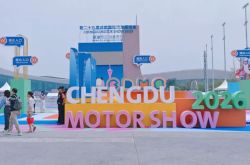
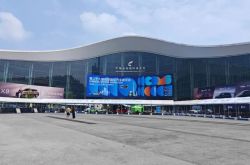
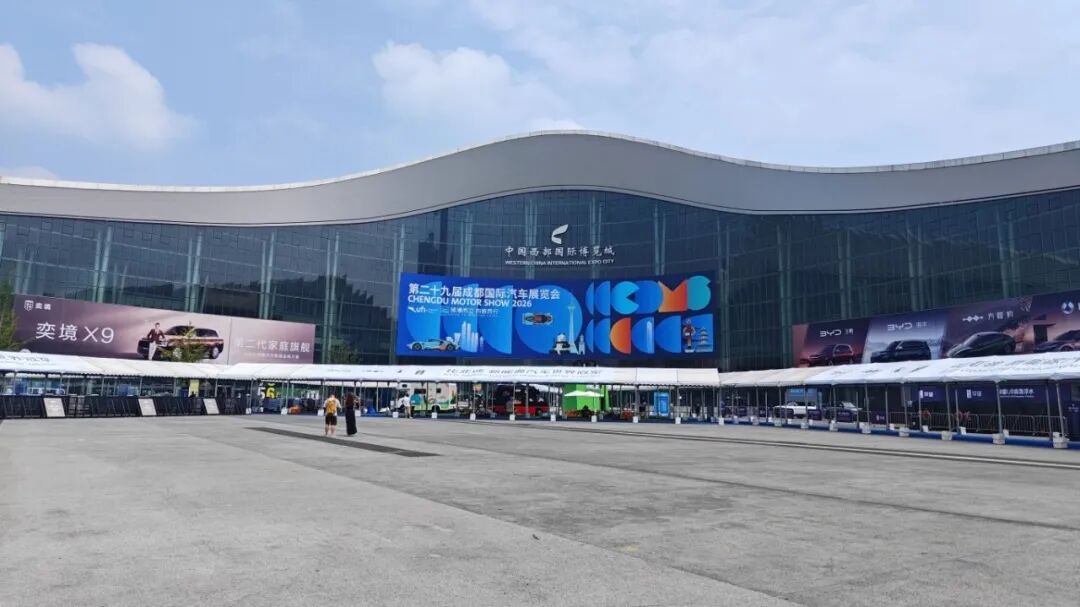
At 9 a.m. on August 21, at the entrance to Hall 1 of the Western China International Expo City in Chengdu,
security guards shouted, “Move inside, don’t block the entrance,” but the crowd was far from congested.
Across from them, a sales consultant glanced up from his phone—only to look back down. The number of customers visiting the store that morning was less than a single day’s worth from the previous week.
The numbers don’t lie. From January to July 2026, China’s auto production and sales both fell by 3.7% year-on-year, and that’s including a surge in exports. If we look only at domestic passenger vehicle retail sales, the year-on-year decline exceeded 20% for consecutive months.
Over 20 brands were absent from this year’s auto show. Dongfeng Nissan skipped for the first time, while Chevrolet, Kia, Rolls-Royce, and Bentley had no booths. Within the 220,000-square-meter exhibition space, more gaps were visible than in previous years.
But quiet does not mean stagnant. Those who left had their reasons; those who stayed had their stories.
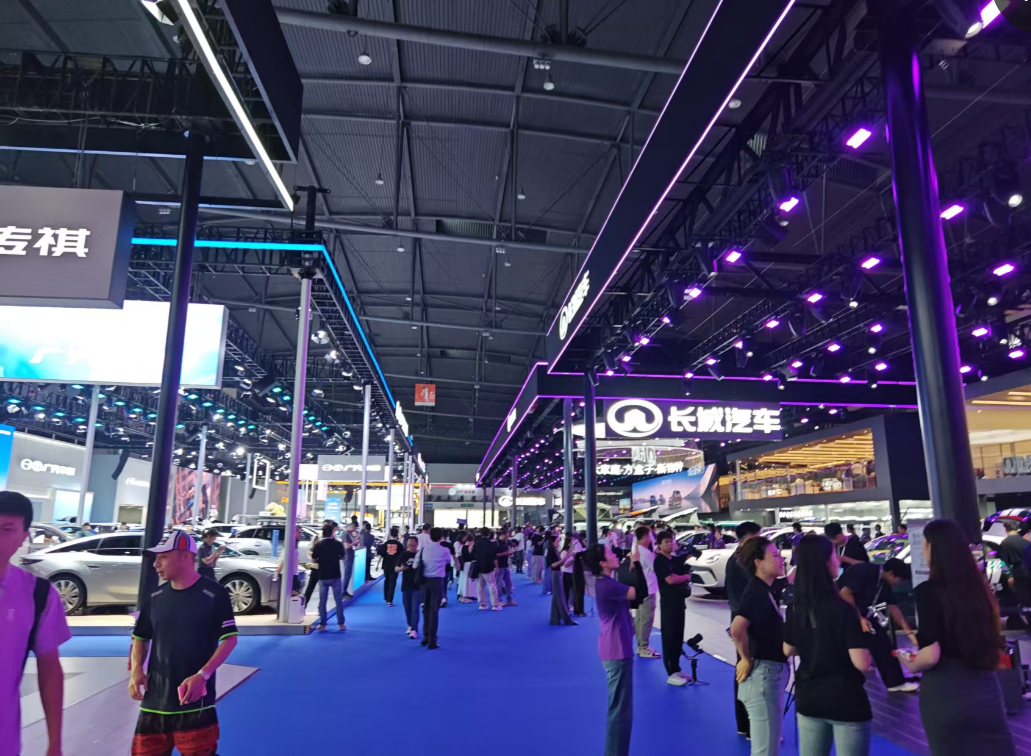
This auto show sought order amidst a market shakeout. The weak exited, the strong consolidated, and the survivors competed on technology and value. When the tide of intense competition recedes, it becomes clear who is swimming naked and who is building ships.
01 The Championship Battle: Pavilion Dominance vs. Guerrilla Tactics
BYD and Geely staged the most intriguing showdown at this year’s event.
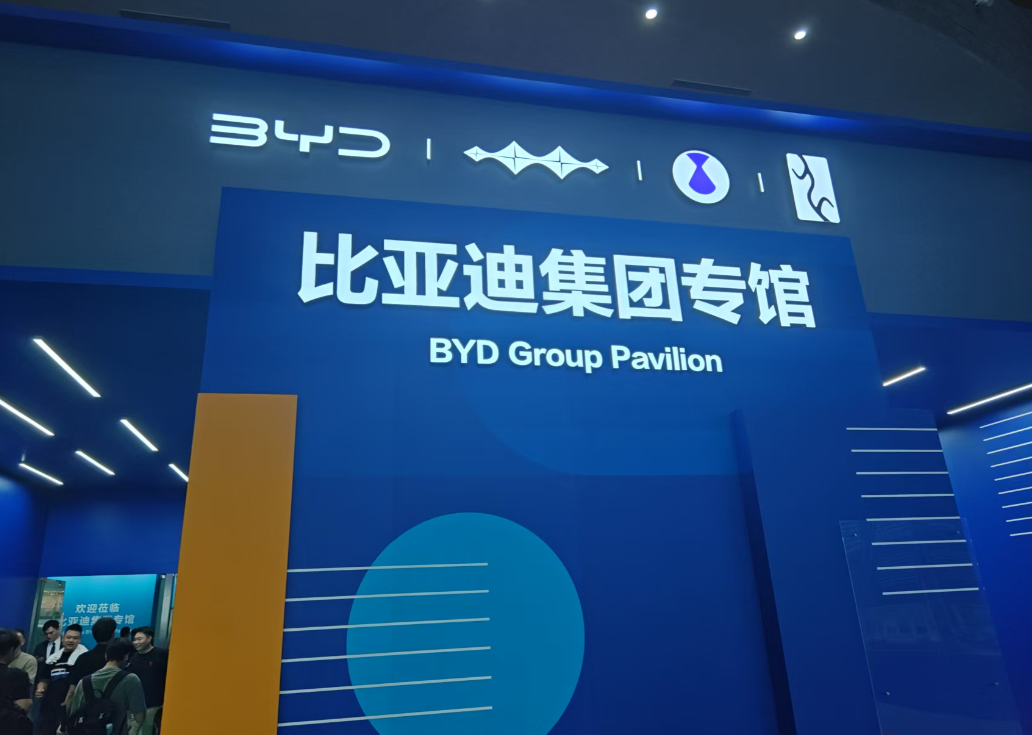
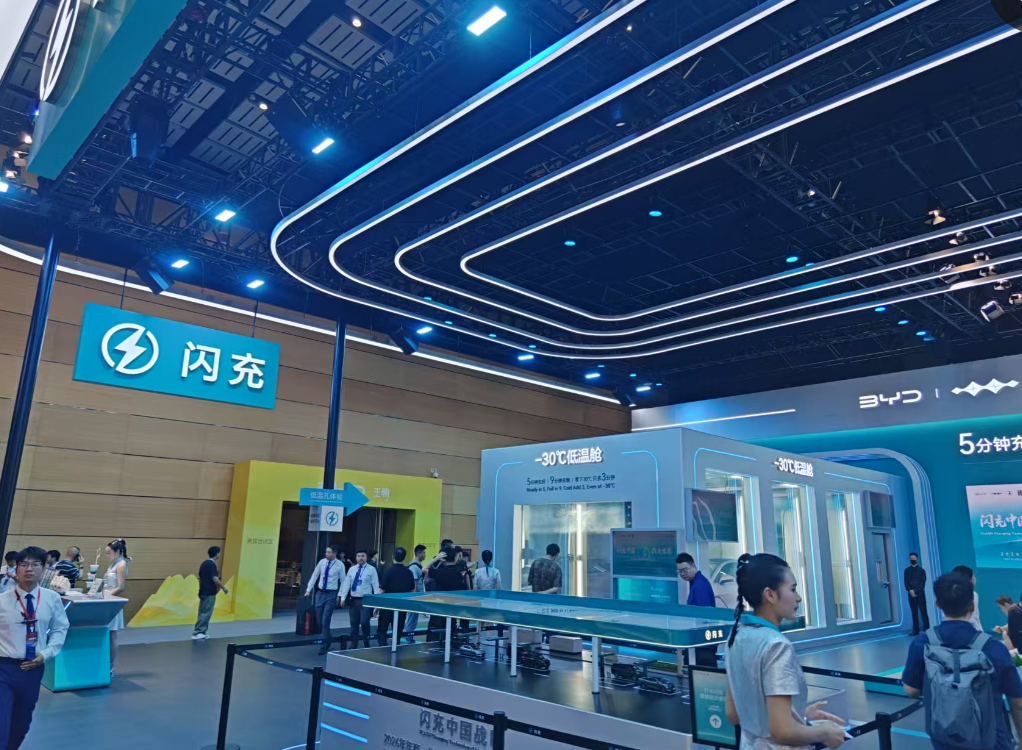
Hall 9 was entirely occupied by BYD. Its five brands—Wangchao, Ocean, Denza, Fangchengbao, and Yangwang—each had a large, independent display area. That wasn’t all—BYD also set up dedicated technology zones for its “Flash Charge” and “Divine Eye” intelligent driving systems. Rarely, if ever, has a carmaker allocated separate space for two technologies within its own pavilion at the Chengdu Auto Show.
“It feels like BYD’s home court here,” remarked Zhong Lin, editor-in-chief of Gasgoo, on-site.
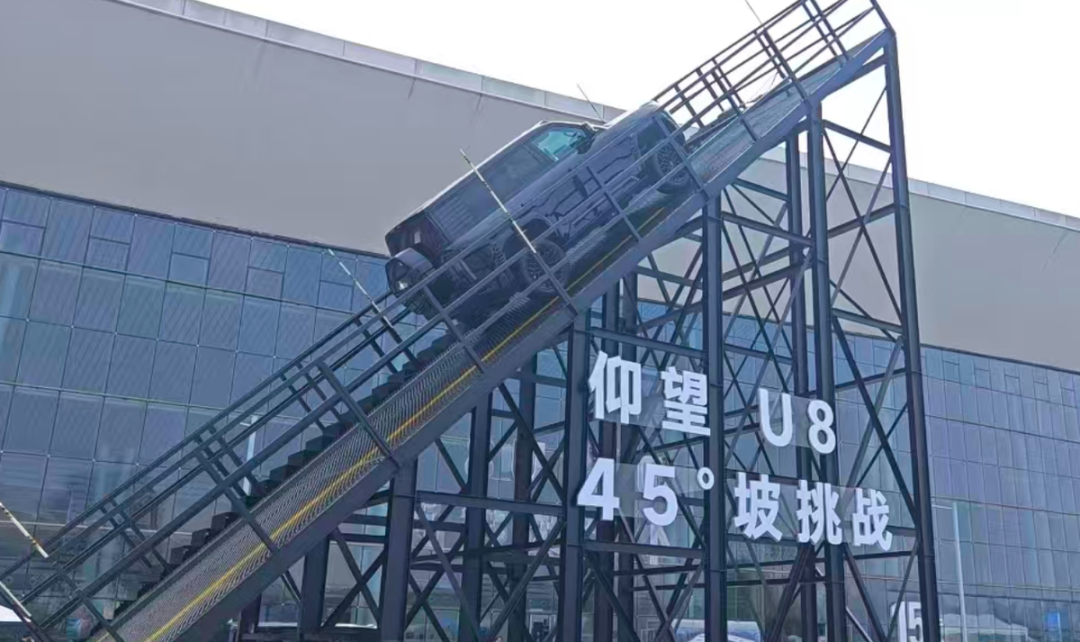
Outside, the spectacle was even greater. A long line formed in front of the Yangwang U8’s water floatation test pool, while the 45-degree slope climbing test area was surrounded by three layers of onlookers. A 45-degree slope means a 100% gradient, yet the Yangwang U8 not only climbed it forward but also reversed up and down.
When water splashed, smartphone flashes outshone the spray. Not everyone in the crowd would buy a Yangwang, but all would remember BYD.
Next door, Geely took a different approach—“breaking into pieces, each shining uniquely.”
In Hall 11, Zeekr rolled out an impressive lineup.
The 9X and 8X targeted the premium segment, challenging neighboring SAIC’s Zhiji and Changan’s Avatr with the message, “We can do premium too.” The 7X and 001’s fifth-anniversary edition told XPENG and MG, “We can win over young buyers too.”
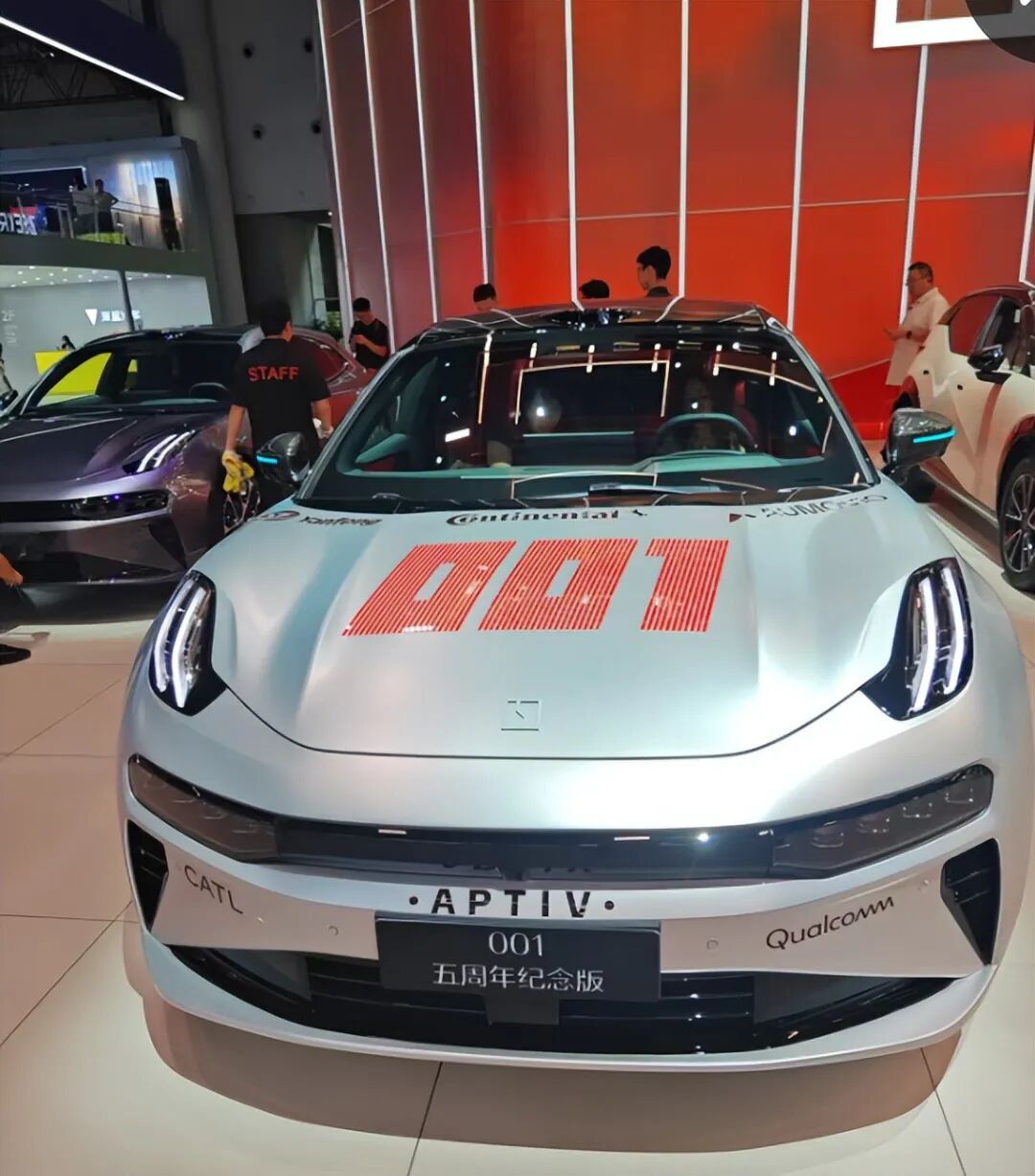
In Hall 14, Volvo stood calmly amid BMW, Cadillac, and Range Rover. Geely Galaxy, meanwhile, unveiled the Galaxy TT, a Class C all-electric sports sedan, and the Galaxy Warship 700, an AI-powered all-terrain SUV. Diagonally opposite were Peugeot Citroën’s two concept cars—“Luminous” and “Lion Sharp.” The transition of traditional fuel-powered veterans to new energy was plain to see.
In Hall 15, Lynk & Co and Smart showcased premium quality, while FAW Audi stood nearby, and JAC elevated its status through the Zunjie brand.
BYD opted for “pavilion dominance,” a full-line assault; Geely chose “guerrilla tactics,” a multi-pronged approach.
Market feedback was equally intense. In the first half of the year, Geely took the top spot in Chengdu’s auto sales with 21,800 units, followed closely by BYD with 21,400. By July, BYD reclaimed the monthly brand championship with 3,548 units. By group, BYD’s four brands sold 5,020 units combined in Chengdu that month, while Geely’s family (Geely, Galaxy, Lynk & Co, Zeekr, Volvo, Smart, Radar, Lotus) sold 4,978—a gap of fewer than 50 units.
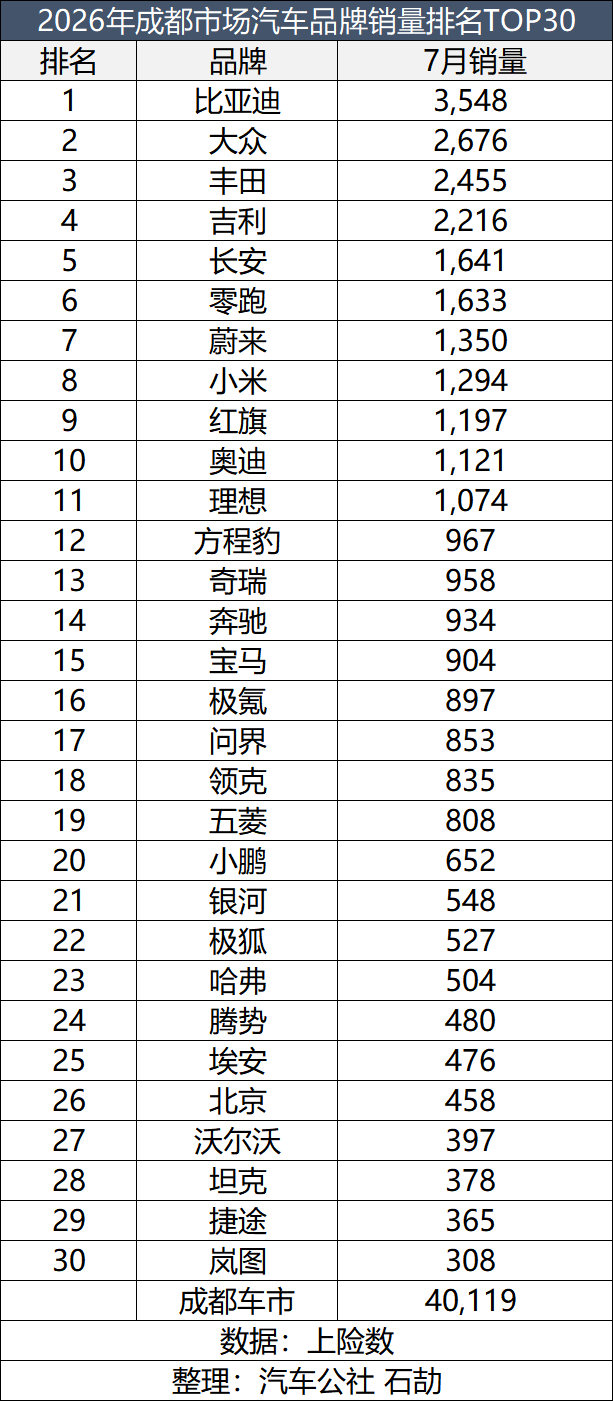
One was a “pavilion powerhouse,” the other a “guerrilla force.” The battle for Chengdu’s championship had entered a week-by-week knife fight.
02 Southwest: The ‘Play’ Gene
Qin Shuo’s WeChat account, “Chengdu, Guangzhou, and Shanghai: A Luxury City Perspective,” once defined Chengdu as a “city of show.”
“Chengdu’s lifestyle is so diverse and three-dimensional... Their openness to pleasure and self-expression makes them decisive shoppers who value ornamentation and self-representation, with a romantic aesthetic,” the article stated.
I’d argue that “play” or “novelty-seeking” is a more down-to-earth description. After all, this is a city that “once accounted for 8% of Volkswagen Phaeton sales in China and was among the earliest to embrace Tesla at scale.”
At this year’s auto show, off-road vehicles and boxy designs dominated, while sports cars and GT/shooting brakes were red-hot—all responding to this “playful” spirit.
Hall 1 best illustrated the trend.
“What are the standout models in Hall 1?” I asked a friend in a small survey.
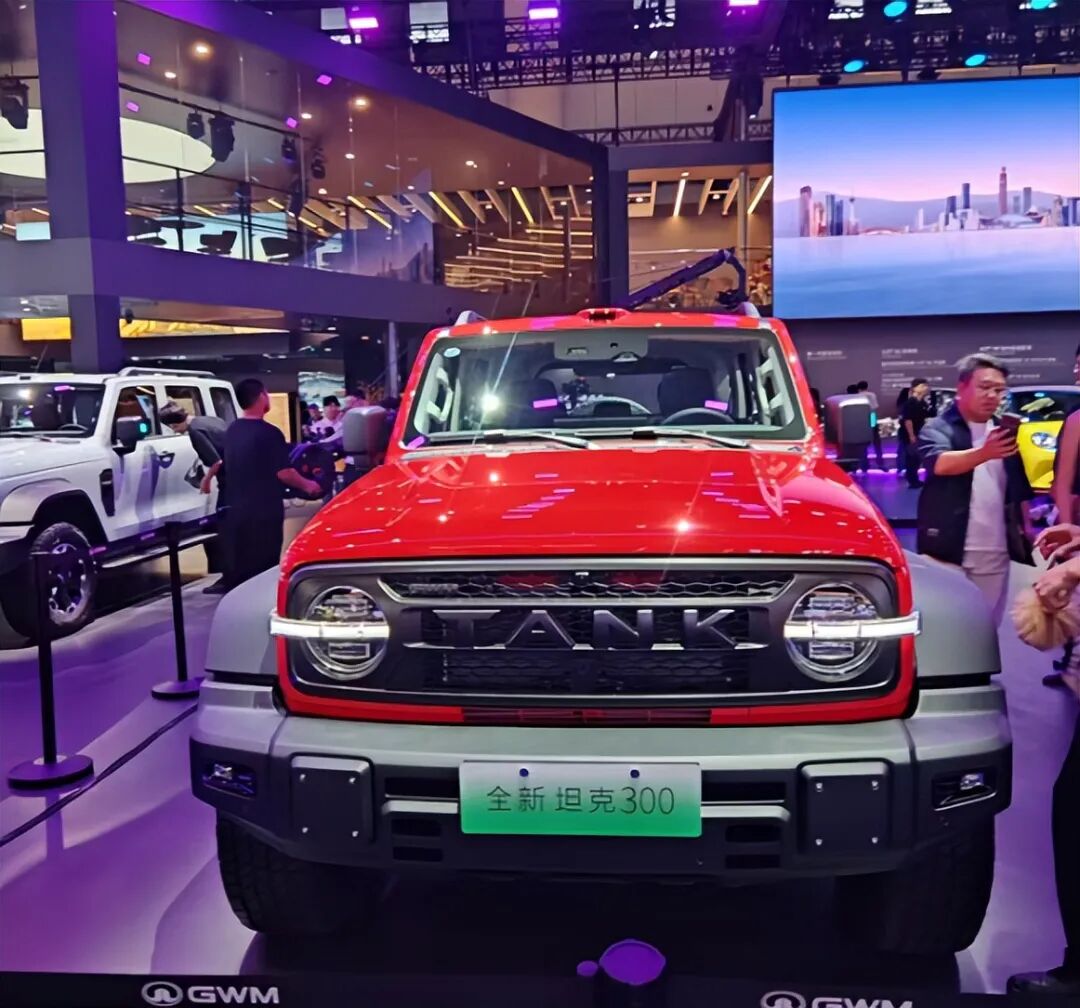
“The Great Wall H10 debuts, WEY V8X follows, GAC Yue7 lurks, FAW Yueyi 08 launches regionally with a convertible version. The new Tank 300 stands in the corner, its rugged lines impossible to hide,” came the literary reply.
The key point: three-fifths of the major new cars in Hall 1 were off-roaders.
Off-roading and convertibles are, at their core, about “play.”
It’s not that Chengdu residents can’t afford sedans—they’re just too playful. A regional salesperson at the Great Wall booth told me the Tank 300 consistently ranks among the top three in southwest China for sales. “Our customers here actually head into the mountains on weekends—no staged photos.”
Hongqi refused to be outdone. The new HS5, Tiangong 07, and the G919 off-roader—Hongqi building off-roaders was itself a major show highlight, aligning perfectly with the industry’s “off-road craze.”
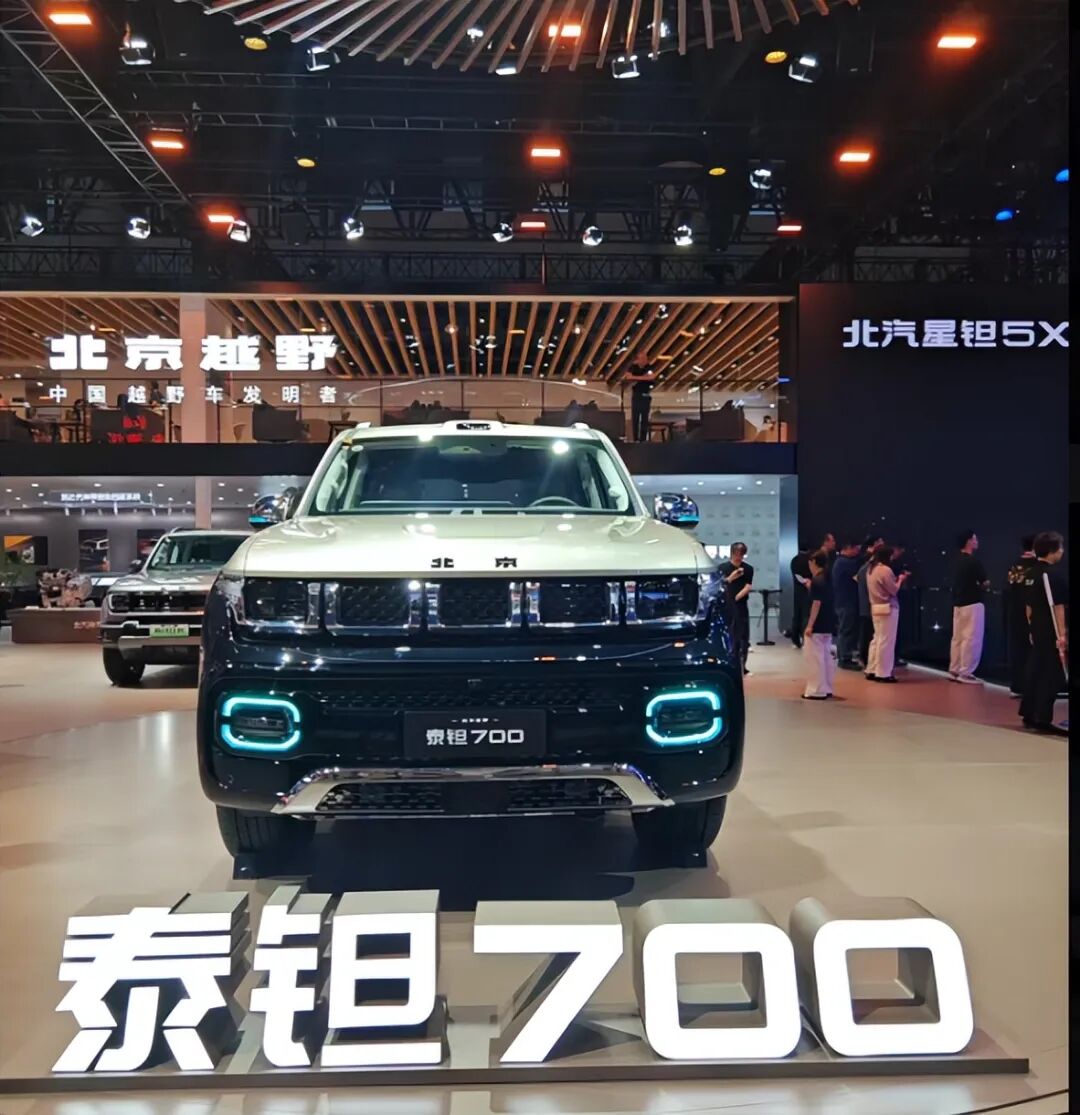
In Hall 2, BAIC’s off-road brand brought the Xingtan 5X, a mid-to-large off-roader. Nearby, the Taitan 700, a large off-roader, added a crucial feature—Huawei’s Qiankun intelligent driving. High-end intelligent driving on an off-roader would have been unthinkable three years ago. Today, ruggedness and intelligence are no longer contradictory.
Fangchengbao’s booth in Hall 9 displayed 15 cars, with the Fangcheng S accounting for seven. The concentration of sports cars in Chengdu speaks volumes. Some may wonder: Fangchengbao started with off-roaders, so why sports cars now?
In truth, Fangchengbao was always positioned as a “personalization brand” at launch, with both off-road and sports car lines. But consumers had strongly associated the “Leopard” name with off-roading, so the sudden appearance of a low-slung sports car required time for cognitive adjustment.
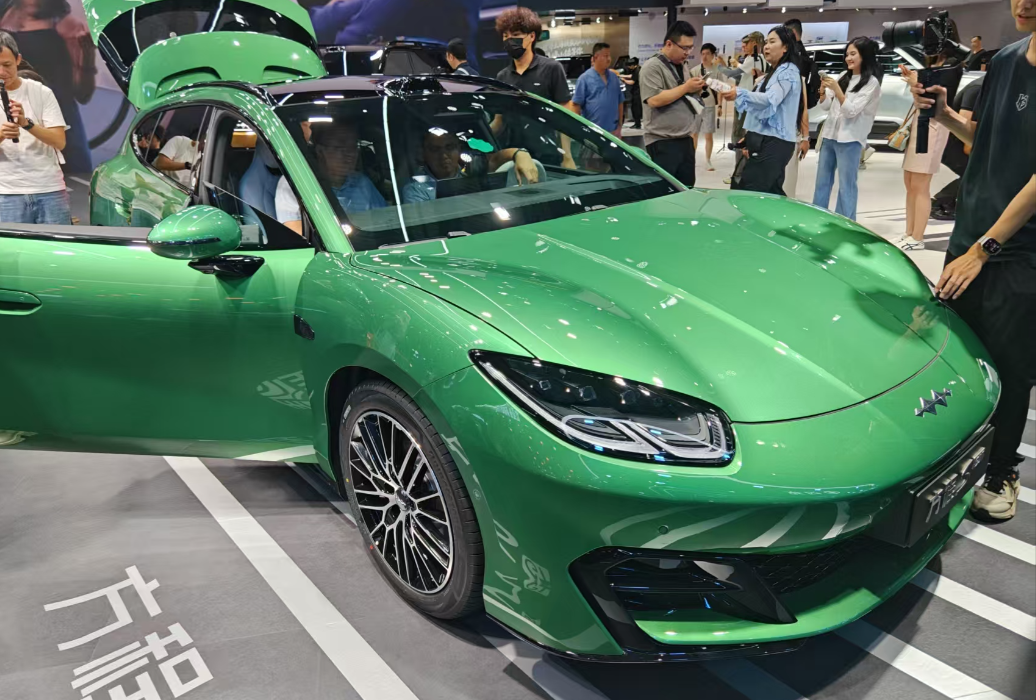
It’s worth noting that the Fangcheng S also comes in a GT version.
Chengdu offers maximum tolerance for such “mix-and-match.” The city’s consumer logic has never been “what car do I need,” but “what car do I want to drive.” Off-roaders, convertibles, shooting brakes, wagons—the more personalized, the better. The auto show is a concentrated reflection of the city’s DNA, and Chengdu’s reflection is a desire to “play.”
No matter how much an auto show is written off, it always finds its purpose. The abundance of off-roaders, wagons, and convertibles—that’s the southwest market’s answer.
03 Two Huaweis: The King of Suppliers
Half of Hall 3 belonged to Huawei’s Harmony Intelligent Mobility.
A massive dome hung above the entrance, looping videos of its five brands—Aito, Luxeed, Enjoyment, Zunjie, and Shangjie—with logos scattering like “celestial flowers.” Domes aren’t new—Toyota used one at an expo years ago—but Harmony Intelligent Mobility paired it with streaming dynamic visuals, instantly amplifying the tech vibe.
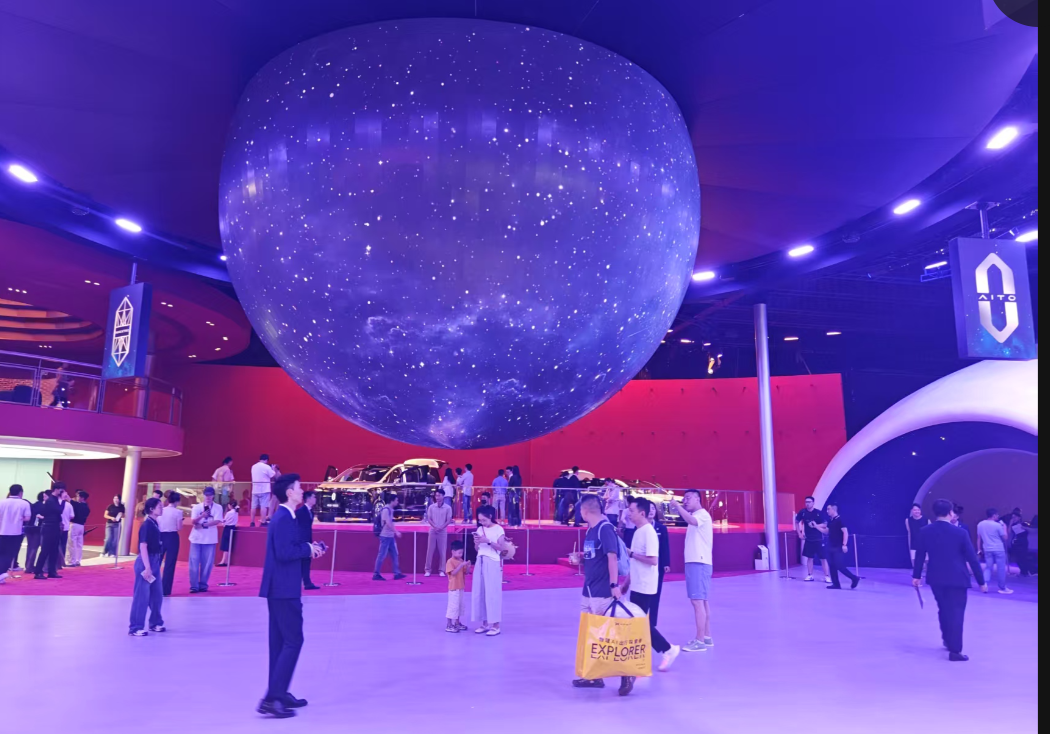
All “Five Realms” were present—Aito, Luxeed, Enjoyment, Zunjie, and Shangjie. Enjoyment and Shangjie flanked the ends, Zunjie and Luxeed the center, with Aito scattered throughout. Each realm had its own display area except Aito, which had no main booth—just an M9 Ultimate parked in a corner.
But that car needed no stage.
On the booth, a Harmony Intelligent Mobility salesperson rattled off details: “With all options selected, it’s about 740,000 yuan. The battery’s upgraded, along with other features like the seats and an oxygen generator.” The crowd inquiring about prices never thinned.
The biggest highlight from Harmony Intelligent Mobility at this show—perhaps the show’s most important new car—was the Enjoyment G9 luxury off-road SUV.
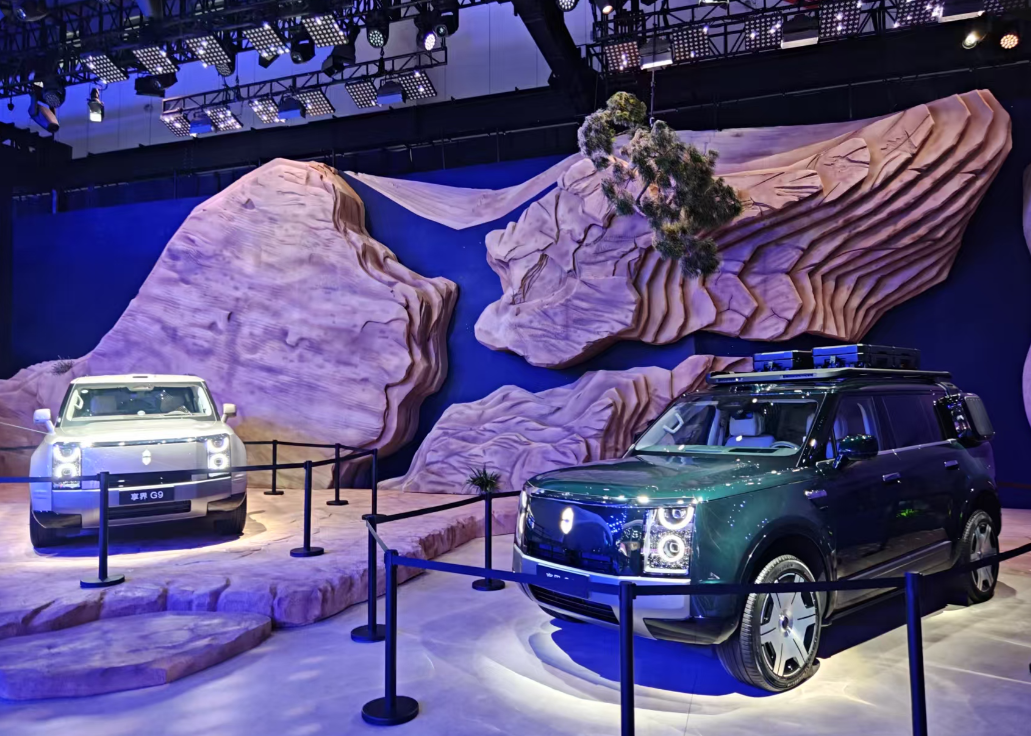
The car was displayed at both BAIC’s booth in Hall 1 and Harmony’s booth in Hall 3, but the latter’s presentation far outshone BAIC’s—two display cars backed by artificial rock and waterfall scenery, with one showcasing a rooftop tent. A peer joked that BAIC’s booth looked like a 4S store, while Harmony’s resembled a contemporary art gallery.
However, Hall 3 was just “one Huawei.”
Hall 10 hid “another Huawei”—key clients of Huawei’s Qiankun intelligent driving. Dongfeng Yiyi, GAC Qijing, and Voyah clustered together. The Yiyi 9X and Voyah Taishan felt like “budget alternatives to the Aito M9.”
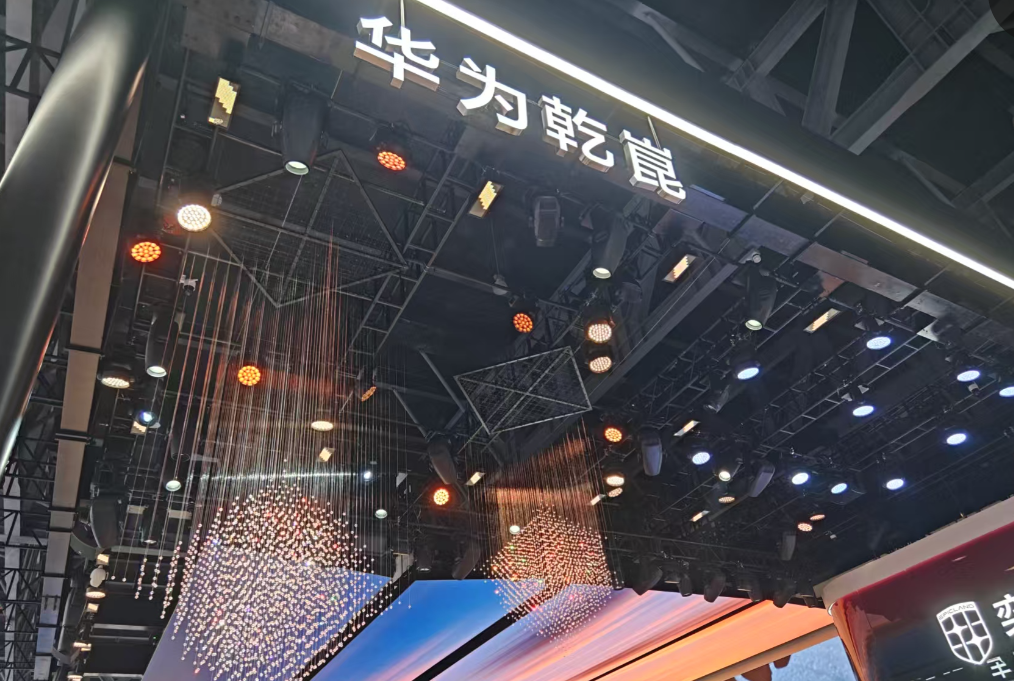
I asked several on-site shoppers, and their feedback was consistent: they wouldn’t abandon the Aito M9 for these two models, but if considering the M7 or M8, they’d hesitate—due to overlapping price ranges and larger sizes.
The current division of labor is clear: Harmony Intelligent Mobility targets the 300,000-yuan-plus segment, while the “Jing Series” focuses on below 300,000 yuan. There’s more differentiation than overlap, but boundaries will blur in the future.
No wonder Yu Chengdong emphasized at Harmony Intelligent Mobility’s August 20 launch event the “six unique technologies”—Turing platform, Megawhale battery platform, Zhiqing, bespoke Harmony cockpit, Galaxy communications, and ALPS five-star health cockpit—along with exclusive service experiences.
Even the strong have their worries. For “two Huaweis,” the challenge will be internal harmony while projecting strength externally.
Across the industry, Huawei epitomizes this wave of transformation. Ningde Times, absent from the show, was nonetheless highlighted on countless specs sheets—battery brands as selling points would have been unthinkable five years ago.
Suppliers are stepping from behind the scenes onto center stage. Whoever holds core technology dominates the exhibition narrative. The era of “OEMs call the shots” is being rewritten.
04 Nonchalance and the Chase
Some booths looked unchanged from previous years. Others had been transformed entirely.
Just as new energy players were once heavily bearish, joint ventures are now synonymous with weakness. Yet both nonchalance and the chase reflect underlying energy.
NIO’s booth layout mirrored past shows— attic -style displays with flagship models and rows of salespeople.
Leapmotor was similar—no grand product launches, no flashy interactive installations.
But a glance at Chengdu’s auto sales rankings reveals these brands are not lacking moves—they’re simply displaying the calm confidence of the strong .
Sales in Chengdu in July - Leapmotor ranked 6th with 1,633 units sold and NIO ranked 7th with 1,350 units sold - were sufficient to prove their presence without relying on volume. With good performance, being composed is reasonable.
As the new forces enter a composed state, joint venture brands are instead striving to catch up.
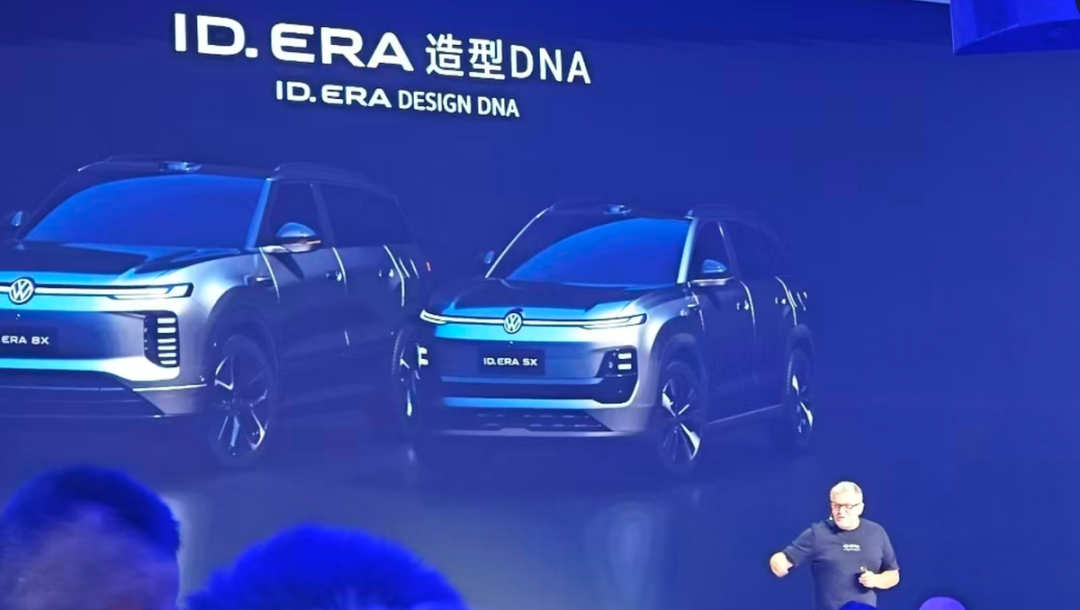
On the Volkswagen ERA series booth, a foreign designer explained the family design language, preserving some international flair for this year's Chengdu Auto Show. ID.ERA launched the 9X, 8X, and 5X all at once, humorously dubbed the "985 lineup" by the public.
ID was initially pure electric but now focuses on extended-range models. In terms of electrification pace, foreign brands are indeed a step behind domestic ones. However, Volkswagen has not given up and emphasizes the use of a "golden range extender."
The pre-sale price of the ERA 5S starts at 89,900 yuan - a price that would have been unimaginable for Volkswagen two years ago.
Beijing Hyundai in Hall 10 left me astounded: not a single gasoline car on display, only Ioniq 5 pure electrics. Even more shocking was the pre-sale price range of just 119,900-139,900 yuan.
This echoes the 89,900 yuan price of the Volkswagen ERA 5S - joint venture brands are using the same approach as when they made the Lavida and Elantra, carving out a new slice of the pie in the new energy sector.
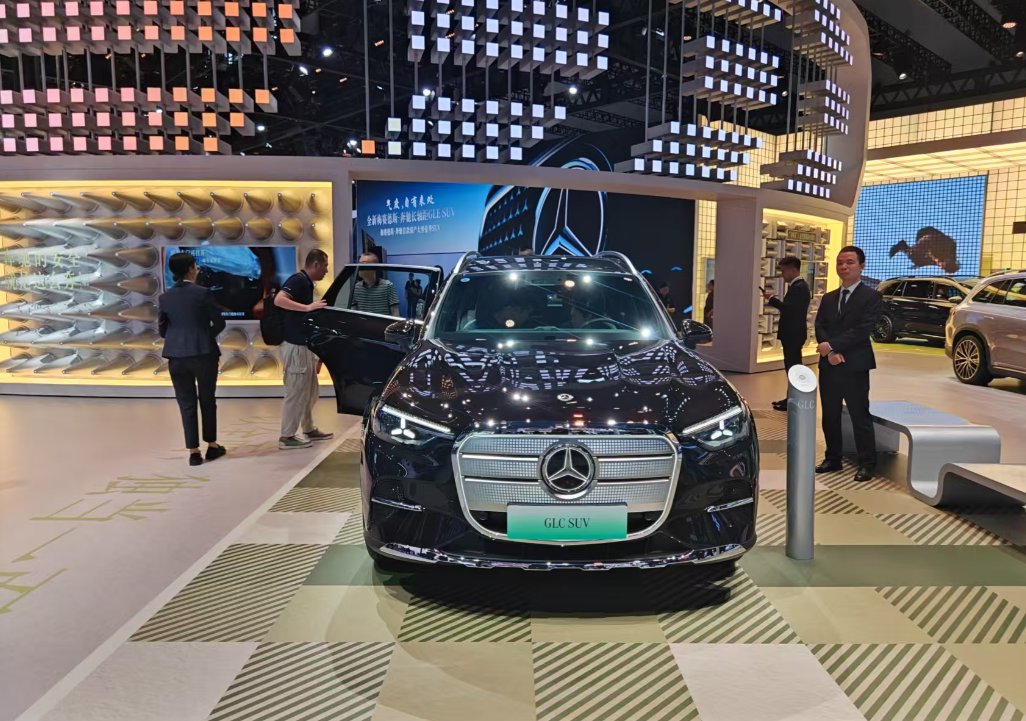
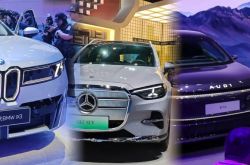
Just as Mercedes-Benz showcased both its main gasoline models and multiple electrified vehicles at the Star Ring booth, and BMW stunned the audience with the surprising price of the iX3L, all companies with remaining strength will make their move.
The weak among foreign brands choose to give up, while the strong persevere. Their pace may be slower, but their quality is undeniably good. Transformation is a marathon - there are strategies for both the fast and the slow. As long as they stay in the game, there's still a chance for a comeback.
05 After the Clear-Out, Intense Competition May Cease
Returning to the essence of the 2026 Chengdu Auto Show.
Over 20 brands were absent, foot traffic was thinner than usual, and salespeople appeared more anxious than visitors. The automotive market has seen a temporary slump, placing immense pressure on the industry - a "cold" reality felt by all.
Yet amid the quiet halls, BYD's submerged vehicle test drew massive crowds, Huawei's Harmony Intelligent Connected Sky Dome had long lines, Volkswagen's foreign designer enthusiastically explained the "985 lineup," and Beijing Hyundai declared its transformation commitment with an all-electric lineup.
The strong remain active, each with their unique personalities and strategies. The weak have exited quietly. While the clear-out process is brutal, the elimination of excess capacity and backward players (lagging players) is precisely the path to industry rationality.
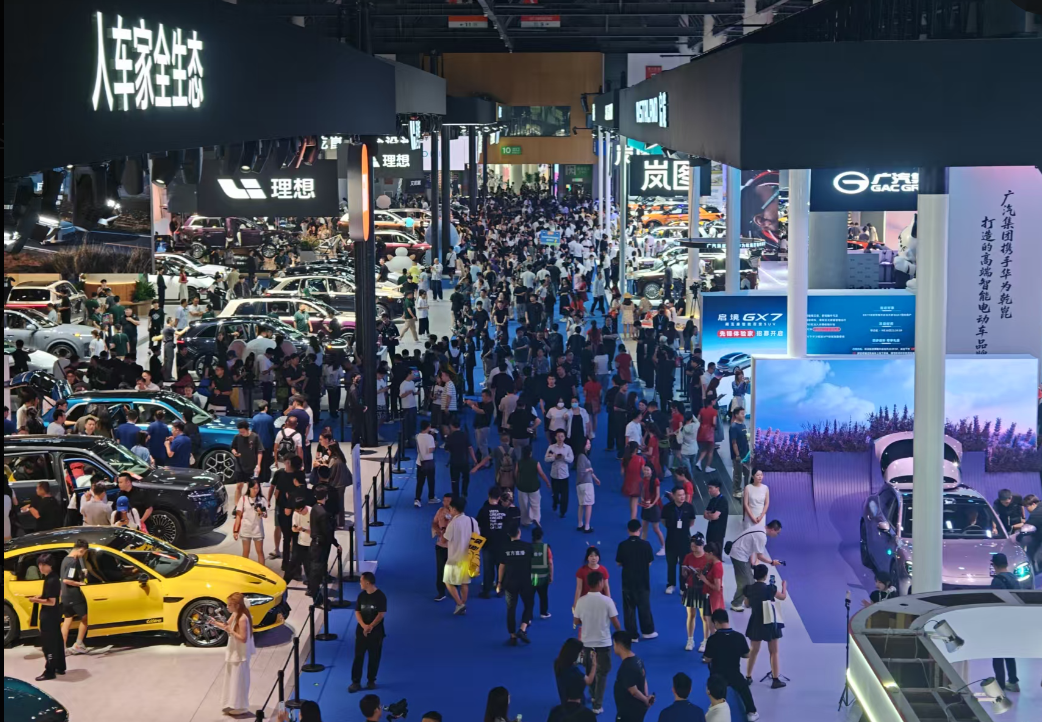
As the tide of intense competition recedes, car manufacturing must ultimately return to its fundamental logic. Technology, quality, and brand value - elements drowned out by price wars - are resurfacing. The 2026 Chengdu Auto Show is not a peak of prosperity but may mark a turning point - a shift from "competing on price" to "competing on value."
Standing on the spacious central corridor of the Western China International Expo City, to the left are dazzling display vehicles, and to the right, sparse crowds. Some yawn, some shoot videos, and some examine cars seriously. Coldness and liveliness, absence and persistence, anxiety and composure - all coexist within the 220,000-square-meter exhibition hall.
This is probably what a decisive showdown should look like.
Editor-in-Chief: Cao Jiadong Editor: Wang Yue

THE END
-
![]()
Can Domestic Autos Still Hold Their Own Against Joint Venture Brands?
-
![]()
Domestic Cars Priced Above 300,000 Yuan Are Gaining Ground in Chengdu
-
![]()
BBA Takes a Leap of Faith: No Sales, No Tomorrow
-
![]()
Chengdu Unfaded: BYD and Geely Vie for Championship While the Weak Exit
-
![]()
3X Salary Poaching, 40 Executives Depart: Autonomous Driving Talent is Batch-Producing Embodied AI Leaders
-
![]()
Apple’s Foldable iPhone and Huawei’s Straightened Pura X: Two Paths, One Vision
-
![]()
Dong Yuhui Departs with Traffic, Yet East Buy Crafts a Profit-Generating Engine
-
![]()
Did Alibaba Say AI Investments Would Pay Off in Three Years, Then Turn Around and Ask Shareholders for HK$80 Billion to 'Tide Over'?