From Elusive to Aggressively Priced: Lexus Sheds Its 'Standoffish' Image
 08/25 2026
 546
546
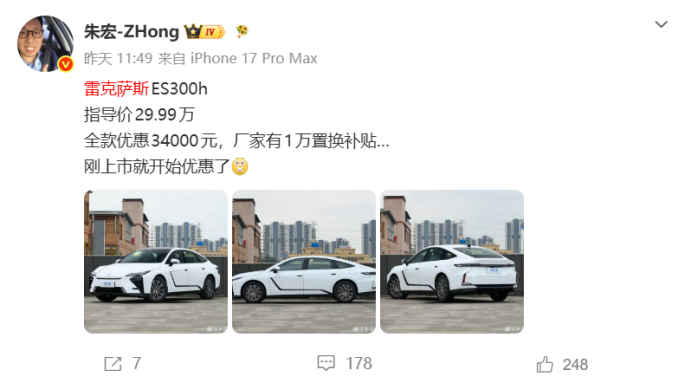
It has been reported that the 2026 Lexus ES 300h has further ramped up its terminal discounts, with cash rebates typically hovering around RMB 34,000. When coupled with the RMB 10,000 trade-in subsidy available in certain regions, the total savings can soar to as much as RMB 44,000, with some areas even offering prices starting as low as RMB 219,900.
Such price adjustments would have been nearly unthinkable a few years back. Back in the day, the Lexus ES was a hot commodity in the luxury car sector, with buyers often facing long waits for delivery and frequent price hikes due to its imported status, solid reputation, and brand allure. Now, however, terminal discounts are readily accessible, signaling a shift from buyers pursuing the car to the brand actively enticing them with price cuts. This transformation in market standing is indeed remarkable.
In truth, price reductions by luxury brands are not exclusive to Lexus. In recent times, traditional luxury marques like Mercedes-Benz, BMW, and Audi have also been boosting their terminal discounts, with prices for some models steadily declining. The notion of "snapping up a BMW or Audi for just over RMB 200,000" has now become a market reality. Behind these price slashes lies a shift in the competitive landscape of the entire automotive industry: the swift ascent of new energy models has reshaped consumers' car-buying preferences, exerting greater competitive pressure on traditional fuel-powered luxury vehicles. Luxury brands that once leaned on brand premiums to sustain their edge are now finding it tough to stay unscathed.
For Lexus, this market shift is directly mirrored in its sales figures. Over the past two years, Lexus has maintained a relatively steady performance in the Chinese market, with cumulative sales hitting 181,900 units in 2024 and 183,800 units in 2025, marking a slight year-on-year uptick. However, as 2026 unfolded, market pressures gradually surfaced. From January to June, Lexus's cumulative terminal retail sales stood at roughly 70,600 units, a year-on-year slump of 22.7%. In June alone, sales plummeted to just 10,300 units, a staggering 40.4% year-on-year drop, underscoring significant sales strain. Lexus, which once relied on its reputation and quality to captivate buyers, now must confront the pressures stemming from the luxury car market's reshuffle.
Yet, the automotive market is not a zero-sum game where one brand's decline spells doom for all. While some brands are under duress, others are seizing the chance to ascend. Amid the intensifying competition in the overall automotive arena, numerous new energy vehicle manufacturers continue to sustain their growth trajectory and showcase stronger competitiveness in specific market niches. New energy brands like BYD, boasting a more comprehensive product lineup and a user experience that closely aligns with consumer needs, are steadily expanding their market clout. Take BYD, for instance: from January to July 2026, its cumulative sales reached 350,200 units, maintaining a robust competitive edge in the new energy sector.
In the past, Lexus clung to its imported status, leveraging its "pure pedigree" to bolster brand recognition and relying on its reputation for quality and a sense of exclusivity to uphold brand premiums. This tactic was indeed fruitful in the bygone luxury car market, with buyers willing to shell out a premium for the imported status and brand cachet. However, today, the advantages that overseas brands once forged through imported allure and brand premiums are being reassessed amid the new energy surge.
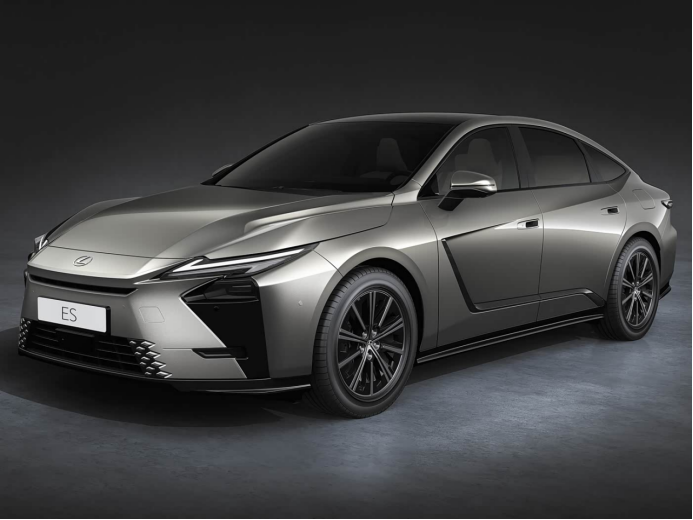
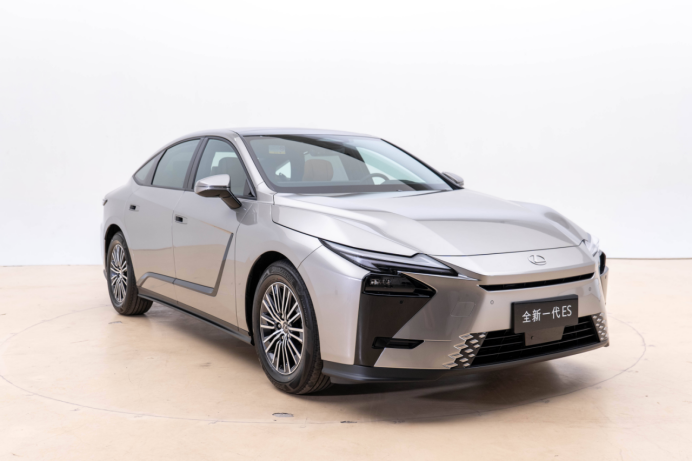
The market tides have shifted, and the environment brooks no delay. To stay relevant, brands must proactively tweak their strategies. Amid the new energy wave, Lexus has also embarked on an accelerated transition, planning to unveil a new generation ES battery electric version in the latter half of the year to further enhance its new energy product portfolio. Yet, upon entering the new energy arena, Lexus confronts altered rivals and competitive dynamics. Whether the new generation Lexus ES battery electric version can sustain its past market clout has become a focal point of external scrutiny. The performance of BBA's prior new energy models may offer some insights.
Although traditional luxury brands like Mercedes-Benz, BMW, and Audi have already ventured into the new energy market, their pure electric vehicle sales in China have fallen short of expectations. From January to July 2026, the cumulative sales of the Mercedes-Benz EQB and EQE stood at 1,961 units and 184 units, respectively; BMW i5 and i3 sold 1,977 units and 7,354 units, respectively. Audi Q4 e-tron sales reached 2,351 units. Compared to their market sway in the fuel car era, the allure of traditional luxury brands in the new energy realm has significantly diminished.
From Lexus's price slashes in pursuit of change to the sales pressures faced by BBA's new energy models, the transition path for traditional luxury brands is far from smooth sailing. The era when brands could garner applause solely by flaunting their logos is waning. Today, consumers place greater emphasis on intelligent experiences, product prowess, and new energy technological capabilities. In this market milieu, whether the new generation Lexus ES battery electric version can win over buyers remains to be seen, with the market serving as the ultimate arbiter.
(Image source: Internet. Remove if infringement occurs.)
-
![]()
Beyond APIs: Future-Oriented Strategies for AI Global Expansion
-
![]()
Behind the Daily Average of 140 Trillion Token Calls: Who Will Become China's Future New Three Major Operators?
-
![]()
How Many Zhipu Members Were Wrongly Banned?
-
![]()
Leapmotor Revises Profit Goal to 3 Billion Yuan: Targets 400,000 Overseas Sales in the Coming Year, Forges Symbiotic Alliance with FAW | MINGJINGpro
-
![]()
Behind the 140 Trillion Token Calls Per Day: Who Will Become China's New Big Three Operators in the Future?
-
![]()
DPCA Technology Launched, Pioneering a New Era for Joint Ventures: Taking 'Chinese Heritage' Global
-
![]()
Spring in the Rack: UCloud Rides High, Yet Fundamentals Impose Limits
-
![]()
Why Has the 'Urban Bulk Commodity Boom' Intensified Over the Past Two Years?