Auto Circle: Bold Claims Grab Attention, Fine Print Hides Risks – But Some See 'Genuine Intent'
 08/28 2026
 543
543
In the new energy vehicle sector, there's an unspoken rule: the real story in automaker promotions isn't found in the bold headlines but hidden in the fine print tucked away in the corners.
Industry-standard marketing tactics are deeply ingrained: bold text promotes explosive performance and core selling points to attract attention, while small, gray fine print in the corners quietly adds restrictions to avoid public criticism and compliance risks.
Yangwang U7’s latest extreme test video has broken this long-standing marketing tradition.
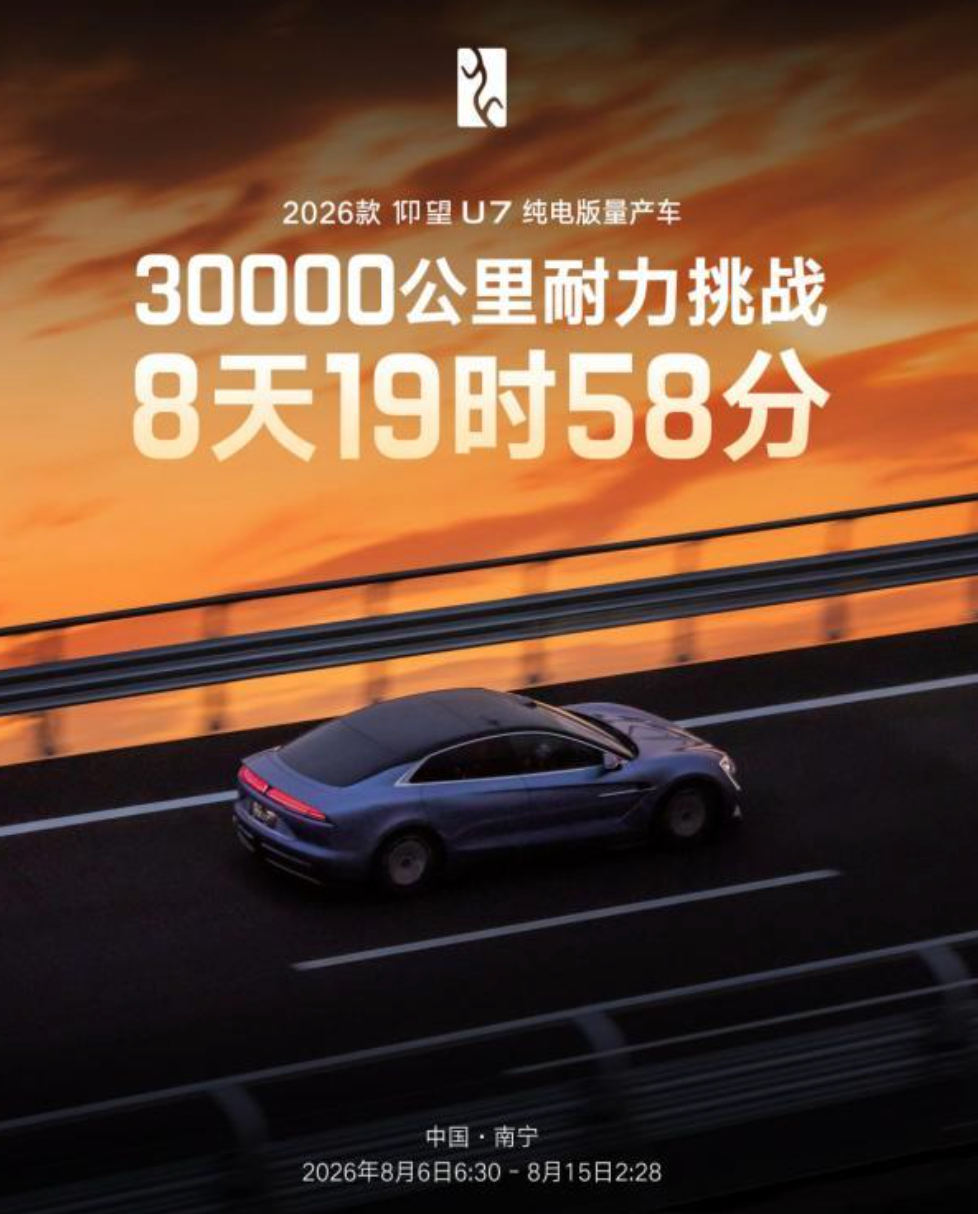
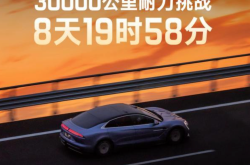
The video shows the U7 completing a non-stop 30,000km endurance trial in 8 days, 19 hours, and 58 minutes at an average speed of 240km/h without any failures. More groundbreaking than the feat itself was the humble disclaimer at the end: 'Mass-produced vehicle, no special tuning, no concept car, no AI-generated content. Replication and verification by all welcome.'
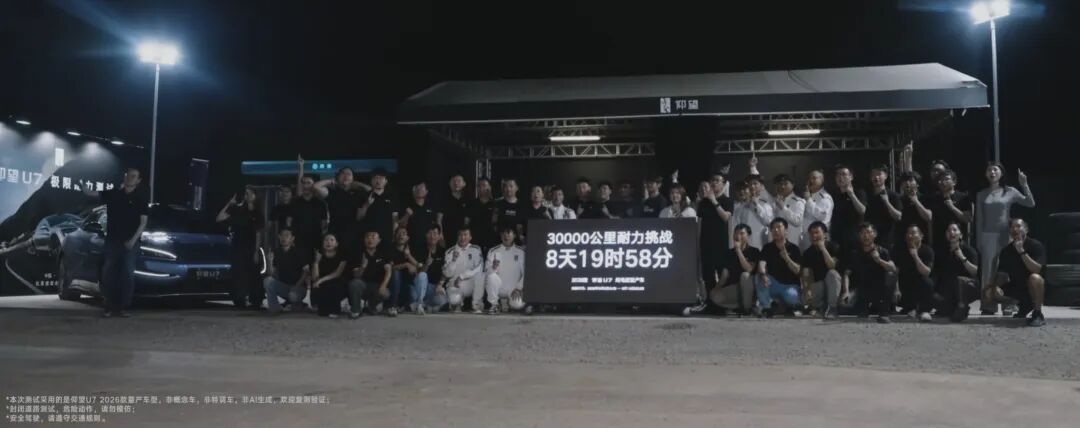 BYD Yangwang U7 Endurance Challenge; Source: Weibo
Insiders understand the significance of these words. Industry fine print has long served as brands’ 'liability shields,' uniformly stating 'for reference only, conditions apply, actual vehicle prevails' – timeless legal jargon.
Bold text creates visual illusions; fine print sets safety baselines. This attention-grabbing tactic is an open secret across the auto industry. Yet Yangwang reversed the approach: while others use fine print for retreats, Yangwang uses it as chains – no vague rhetoric, no escape clauses, openly showing cards and inviting public verification.
A single line of fine print starkly contrasts conventional marketing with top-tier product confidence.
I. Fine Print Chaos: An Industry-Wide Issue
Most recent controversies in the auto circle stem from information gaps created by fine print. This isn’t a brand-specific issue but a deep-rooted marketing problem.
Xiaomi first brought this unspoken rule to light. Its new car promotions used bold text to highlight hardcore specs like acceleration and body design, creating visual impact, while fine print hid disclaimers like 'design target, tentative status, starting time excluded.' Ordinary users were swayed by flashy data; insiders knew the results weren’t routine.
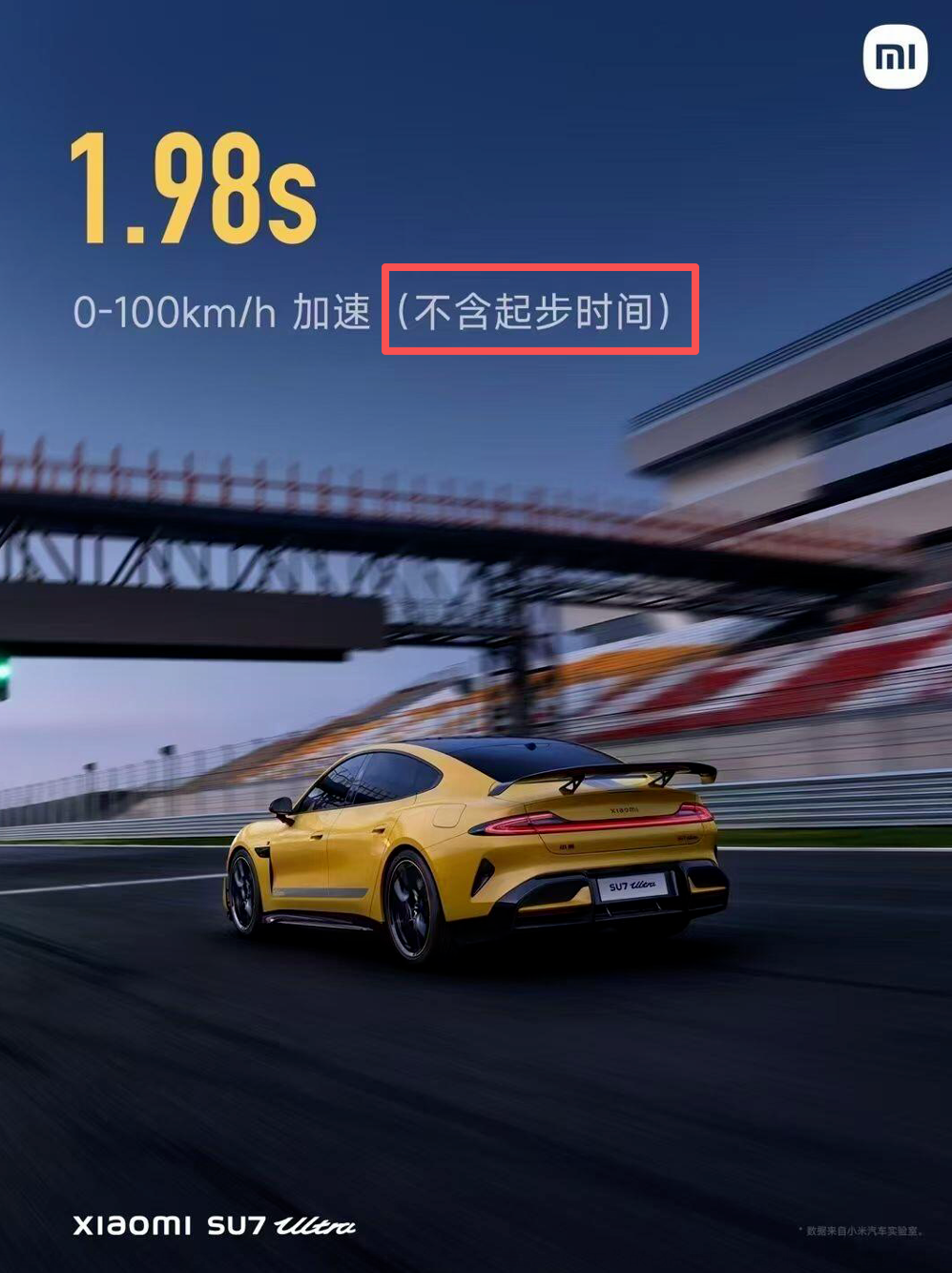
Source: Xiaomi Official
'Bold promises, fine print survival' quickly went viral, becoming an auto circle meme. After the backlash, Xiaomi proactively reformed, disclosing key restrictions upfront. Luo Yonghao briefly commented: 'This is a systemic issue across the tech-auto industry, not an isolated case.'
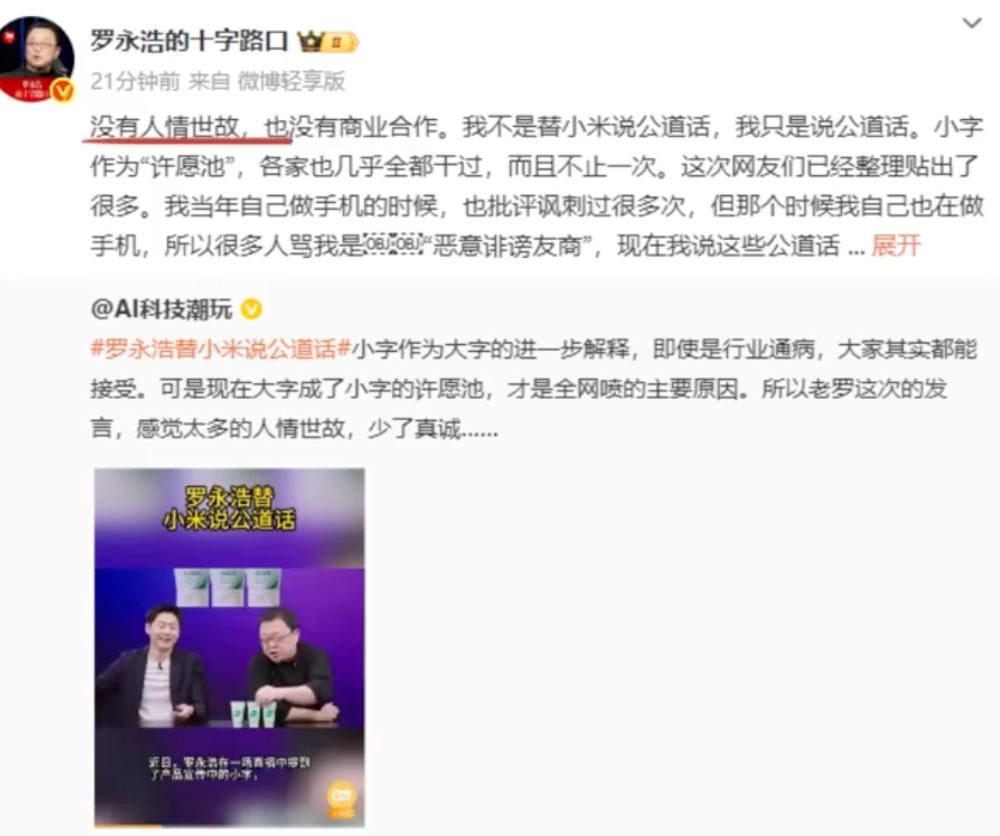
Source: Weibo
Huawei Intelligent Driving fell into the same trap. Its promo film showcased near-hands-free high-level driving, creating a self-driving illusion and drawing massive attention. But fine print clarified: 'Content is creative advertising, not actual vehicle function. Driver must remain engaged.'
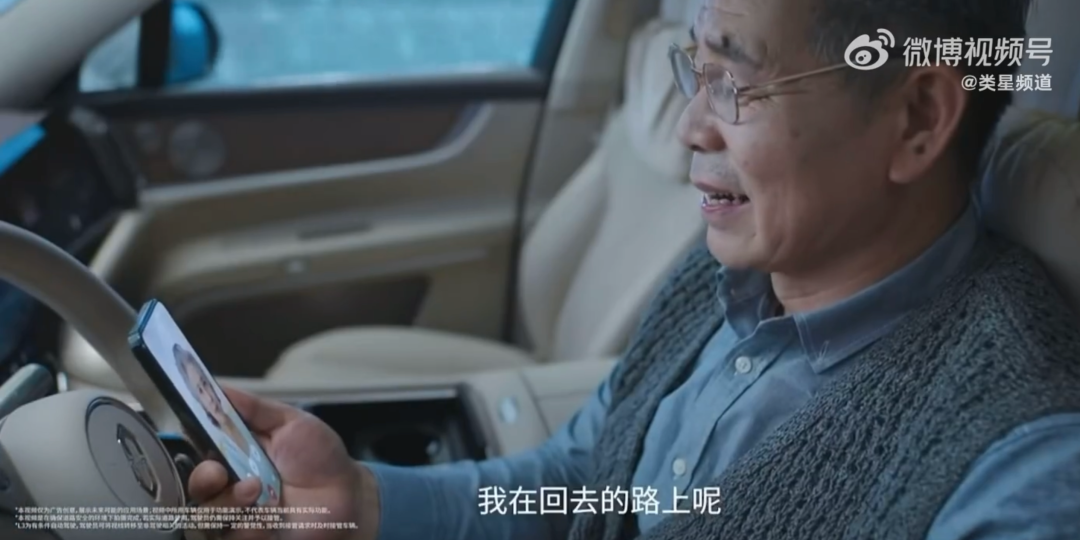 Huawei Qiankun Intelligent Driving; Source: Weibo
Cool visuals drove traffic; cold fine print absolved liability. The information gap misled users, leading to the video’s takedown and exposing trust crises in the AI-era auto industry.
Traditional luxury brands are equally adept. BMW’s rough-road test video exaggerated stability and handling with realistic visuals, only to reveal in fine print: 'This video is a virtual scenario simulation for entertainment only.' What seemed like real testing was all scripted effects.
Today, fine print tactics are standardized across the auto circle, covering range, warranty, intelligent driving, and performance – all with highly uniform tricks.
Range claims tout ultra-long distances but fine print limits tests to mild conditions, excluding extreme cold, high speeds, or constant heater use. Warranty promises shout 'lifetime coverage' but fine print adds restrictions like 'first owner only, designated maintenance, mileage caps,' drastically reducing core benefits. Intelligent driving promotes 'full-scene navigation, hands-free' but fine print clarifies it’s merely assistance, with full liability on owners. Performance specs uniformly cite lab ideal data, ignoring real-world conditions and long-term wear.
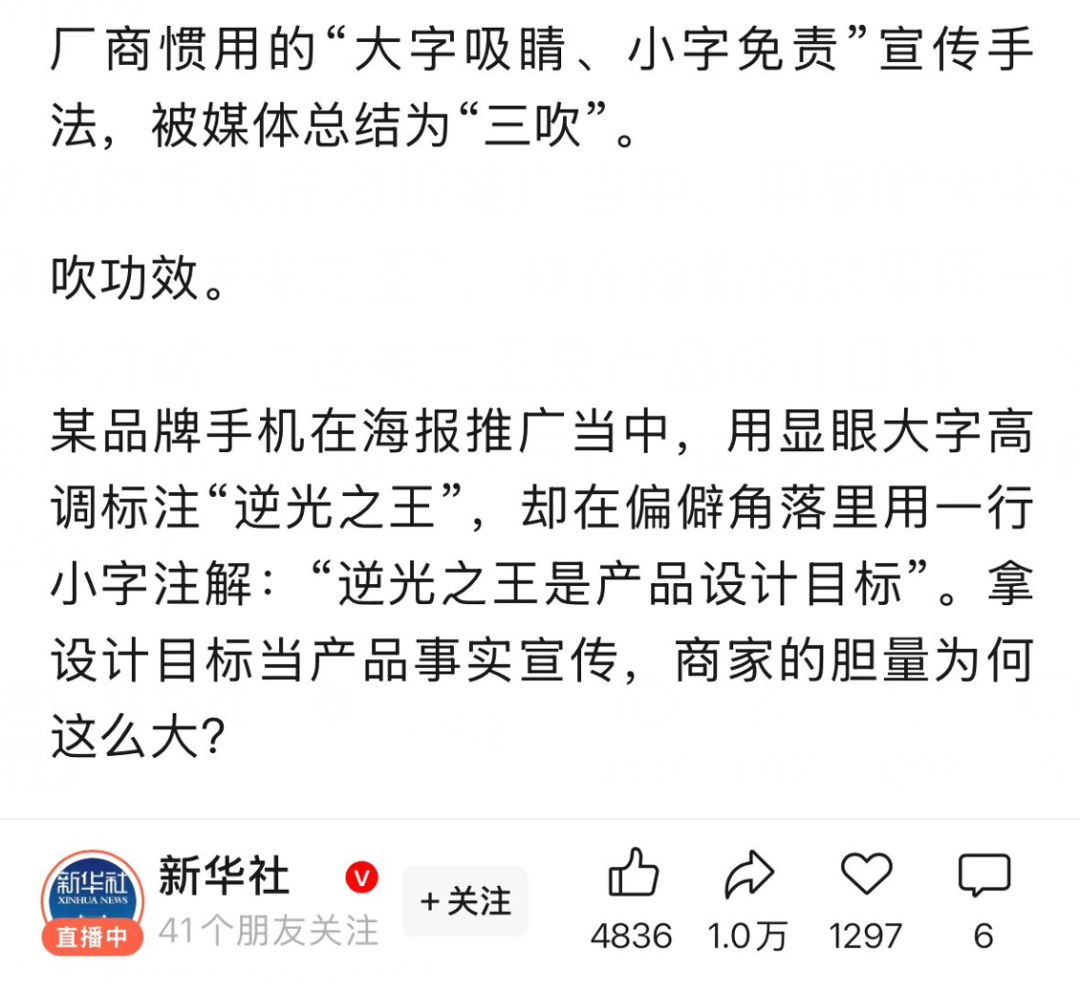 Source: Xinhua News
The logic is utterly utilitarian: amplify strengths, hide weaknesses, harvest goodwill through information gaps, and dodge risks with disclaimers. Over time, industry trust is exhausted. Audiences now view promotions through skeptical lenses – the more stunning the visuals, the more they suspect special tuning, AI synthesis, or scripted performances.
II. Yangwang’s Counterattack: Tearing Off Marketing Filters with Candor
While the entire industry refines fine print to avoid risks and hedge with rhetoric, Yangwang U7 chose the most hardcore disruption.
30,000km of non-stop high-speed endurance at a stable 240km/h with zero failures – any automaker would pile on disclaimers like 'closed course, lab test, for reference only.' But Yangwang broke free from industry inertia.
'No special tuning, no customization, no concept car, no AI. Replicable, verifiable.'
This single disclaimer erased all marketing buffers and retreats. It bluntly declared: The test vehicle was an ordinary mass-produced model – no modifications, no exclusive tuning, no scripted effects. The entire film was shot without AI rendering. Replication by any global organization or user is welcome.
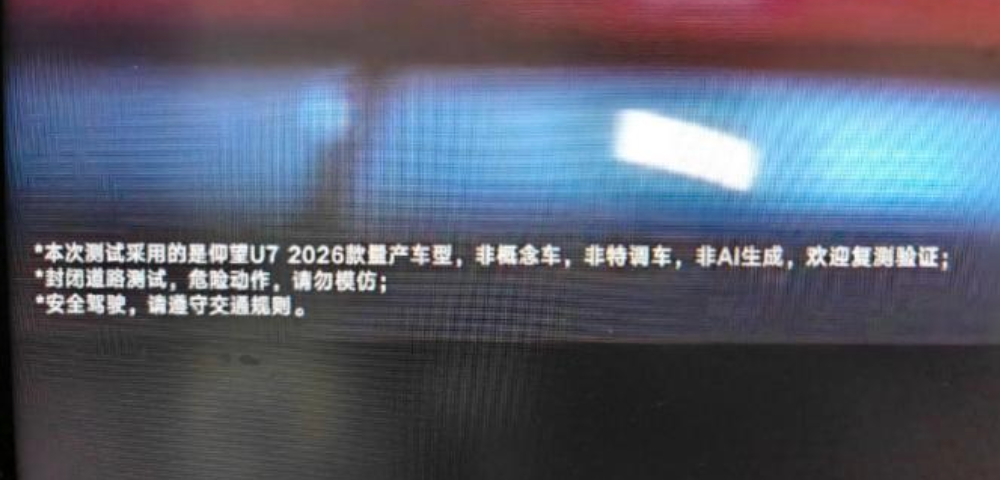
BYD Yangwang U7 Endurance Challenge Video Fine Print; Source: Weibo
While others use fine print as post-error liability shields, Yangwang uses it as a post-success public commitment. This isn’t mere wordplay but deep product confidence: The extreme performance in the promo isn’t a staged show for a one-off prototype but the real capability of every mass-produced vehicle delivered.
III. Polarized Public Opinion: Sincere Breakthrough or Advanced Marketing?
This unprecedented counterattack instantly split online sentiment, with praise and skepticism colliding as netizens flooded comments with memes.
Many netizens precisely mocked the industry’s duality:
'Other brands’ fine print: I can’t, I don’t count, don’t take it seriously. Yangwang’s fine print: I can, check me, bring it on.'
'Other automakers’ fine print is a liability waiver. Yangwang’s fine print is an invitation to a duel.'
'Used to spotting loopholes in automakers’ fine print. Now scrutinizing Yangwang’s video for flaws – and finding none.'
'Competitors’ fine print is all fluff. Yangwang’s fine print is all substance. The auto circle’s fine print has hit polar opposites.'
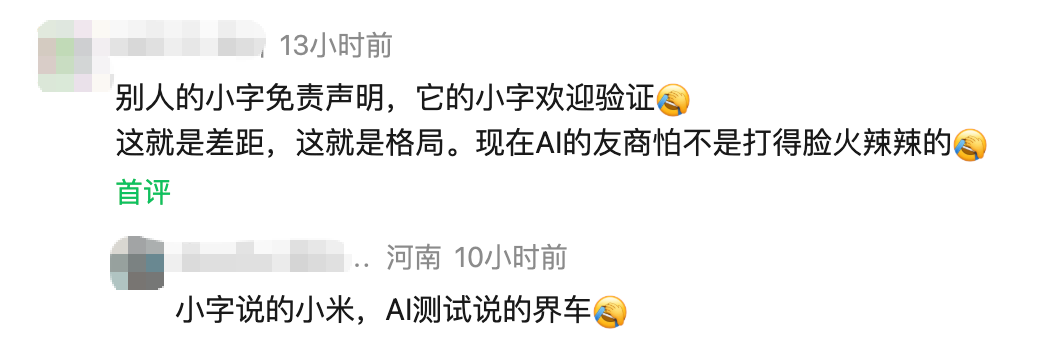 Source: Official Account
Applause came from those who argued that in an era of AI fraud, special tuning, and marketing gimmicks, Yangwang’s openness and willingness to accept public scrutiny far surpassed most industry players.
But rational critiques cut through: A noble stance doesn’t mean zero tactics. Ordinary owners lack closed tracks and professional support, making 240km/h ultra-endurance tests unreplicable. 'Welcome verification' is more a brand posture toward professional institutions than a practical call to average users. No need to deify it – just a difference in promotional logic.
Meanwhile, this hardcore commitment remains buried in fine print corners. In short-video scrolling mode, most users skip it entirely, failing to escape the limitations of fine print communication.
This controversy boils down to a clash of two marketing philosophies. Most automakers prioritize risk avoidance, seeking maximum traffic and minimum risk for steady compliance. Yangwang prioritizes trust, voluntarily abandoning marketing escape routes and adopting transparency to earn long-term user confidence.
IV. The Fine Print Debate’s Conclusion: The Industry Lacks Sincerity, Not Rhetoric
From Xiaomi’s spec gimmicks, Huawei’s AI disclaimers, and BMW’s virtual performances to the industry’s unified marketing templates and Yangwang’s counterattack, the core of this entire debate has never been about a single line of fine print.
 Source: Official Account
It’s about an industry trapped in a 'marketing-over-reality' cycle: automakers master traffic packaging and rhetorical embellishments but abandon candor and transparency with consumers. Users now play detective to dissect auto promotions word by word – the ultimate industry irony.
Most brands passively reform after public backlash, merely reining in tactics. Only Yangwang proactively left its comfort zone, self-imposing pressure and cutting off marketing retreats to reconstruct the foundation of automotive promotions.
Of course, posture must always be backed by capability. No amount of rhetoric can substitute for real-world results. Subsequent blind testing of mass-produced vehicles, third-party authoritative retests, and real-world performance will be Yangwang’s true foundation.
Fine print can innovate, but reputation relies on capability. The auto industry’s ultimate competition isn’t rhetorical cleverness but product solidity and brand sincerity.
The best product promotion isn’t a corner disclaimer patching loopholes but hard power proudly displayed and scrutinized by all.
Interactive Topic
Do you think Yangwang U7’s reversed fine print genuinely breaks industry tricks, or is it a more advanced marketing tactic? Share your thoughts in the comments.
Disclaimer: This article is solely a Zhi Caijing commentary and does not constitute investment advice. All corporate data and regulatory events mentioned are from public information, for reference only, and subject to official releases. Images sourced online; contact for copyright removal if needed.
-
![]()
September Sees Fierce Smartphone Market Competition: Will Foldable Phones Be Overshadowed?
-
![]()
Ideal's 'Revival'
-
![]()
AI Behemoth Spends $45 Billion Amassing Computing Power: A Battle Too Costly for Small Firms
-
![]()
Breaking News! IM Motors Unveils Car Without Steering Wheel, Sparks "China's Cybercab" Debate
-
![]()
Auto Circle: Bold Claims Grab Attention, Fine Print Hides Risks – But Some See 'Genuine Intent'
-
![]()
Enterprise AI Service Provider ArgaLabs Secures $10 Million in Seed Funding to Develop a 'Crash Test Lab' for AI Agents
-
Rich Sutton, the Pioneer of Reinforcement Learning, Shares Latest Insight: Large Models Caught in 'Local Optima,' AI Must Embrace Continuous Learning
-
Insta360 Semi-Annual Report: Net Profit Drops 94.15%, Q2 Sees Shift from Profit to Loss Amid Triple Challenges