Ideal's 'Revival'
 08/28 2026
 458
458
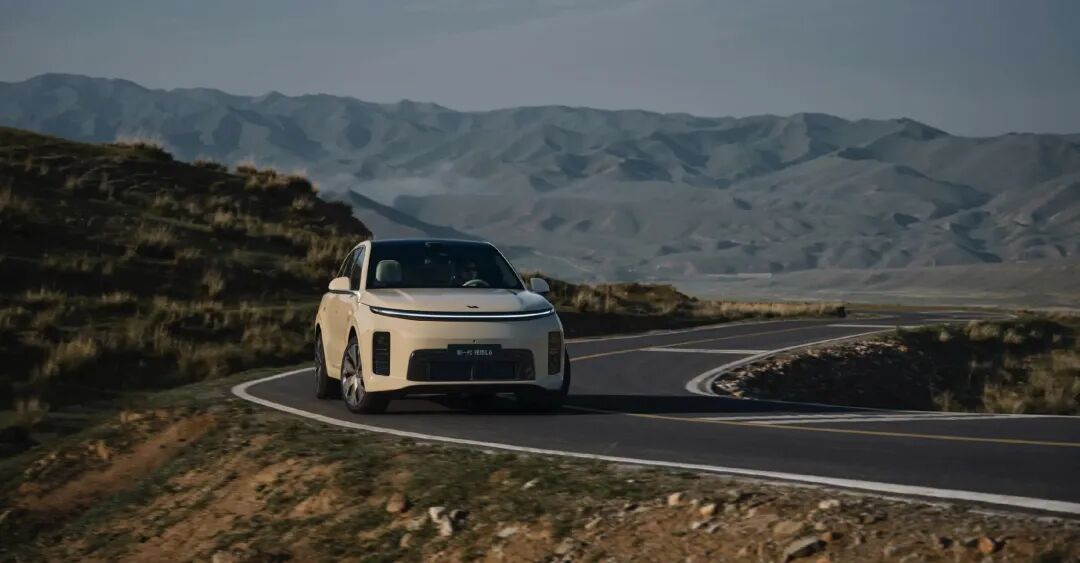
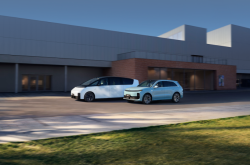
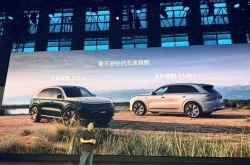
In May, the Li L9 began to be delivered; in June, the Li L8 received an update and was re-launched; in July, the new-generation Li L6 made its grand entrance; and on August 26, the financial results for the second quarter were unveiled... Having fully revamped its L series within a single summer, Li Auto also reported second-quarter revenue of RMB 25.67 billion, a sequential increase of 11.7%, slightly surpassing market expectations of RMB 24.96 billion.
Some view this as the dawn of Li Auto's revival, while others contend it's merely a technical rebound spurred by the concentrated launch of new models. However, amidst the external focus on 'transitioning from profit to loss,' at 10 AM on August 26, Li Xiang shared interior photos of the new-generation MEGA on social media, offering a sneak peek at its September 2 launch. Xu Jieyun from Xiaomi quickly reposted, simply stating, 'MEGA is an outstanding car.' During the earnings call on the evening of the second-quarter results announcement, Li Xiang set an even more ambitious goal: 'With the launch and ramp-up of new models in the second half, Li Auto is confident in securing a top-three position in sales across all brands in the Chinese passenger vehicle market priced above RMB 200,000.'
From a capital market perspective, Li Auto's first half of the year hasn't been flawless, but at least in the second quarter, it delivered a near-perfect 'problem-solving performance.' After all, when the first-quarter gross margin hit a low of 6.1% and operating cash flow turned negative at RMB 6.09 billion, signs of Li Auto's revival began to emerge in the second quarter. What truly matters is that tides rarely surge back abruptly—they first halt, then gather strength, and finally rise into waves.
Editor | Li Jiaqi
Image Source | Internet
1 Counter-Cyclical 'Management'
Let's revisit the 'three rises, one decline' quarterly results that best encapsulate Li Auto's transformations in the first half of the year.
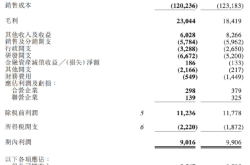
In Q2, Li Auto delivered 98,330 new vehicles, a sequential increase of 3.4%, ranking first in sales among Chinese brands in the new energy vehicle market priced above RMB 200,000. The overall gross margin rebounded by 3.1 percentage points from Q1, with the automotive gross margin recovering from 6.1% to 9.4%. The net loss narrowed significantly by 25.1% sequentially. Selling, general, and administrative expenses stood at RMB 2.3 billion, a year-on-year decrease of 16.2%, with the expense ratio compressed to 8.9%. Meanwhile, H1 R&D expenses reached RMB 5.498 billion, a year-on-year increase of 3.3%, with Q2 alone at RMB 2.776 billion, down just 1.23% year-on-year. 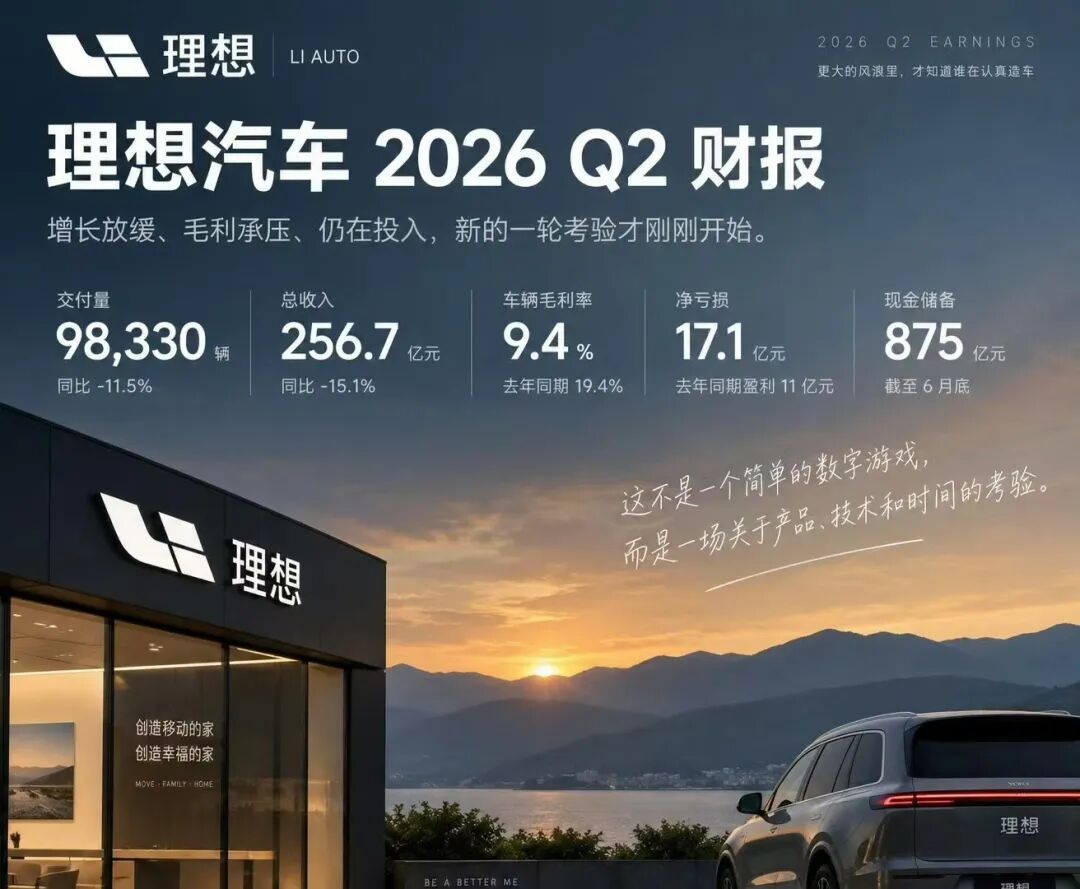
For a rational assessment of a company still in adjustment, three key figures often clarify specific issues!
Firstly, the average selling price (ASP) per vehicle rose from RMB 226,000 in Q1 to RMB 245,000, a sequential increase of approximately RMB 19,000. This indicates that the ASP recovery is driven by high-priced models like the new L9, rather than terminal price cuts—as disclosed at the earnings call, the Livis version of the new L9 accounted for ~85% of orders, with users willing to pay for features like a full line-control chassis, advanced intelligent driving, and self-developed chips. Price recovery, driven by product mix, reflects far higher operational quality than volume-for-price trade-offs by other firms. 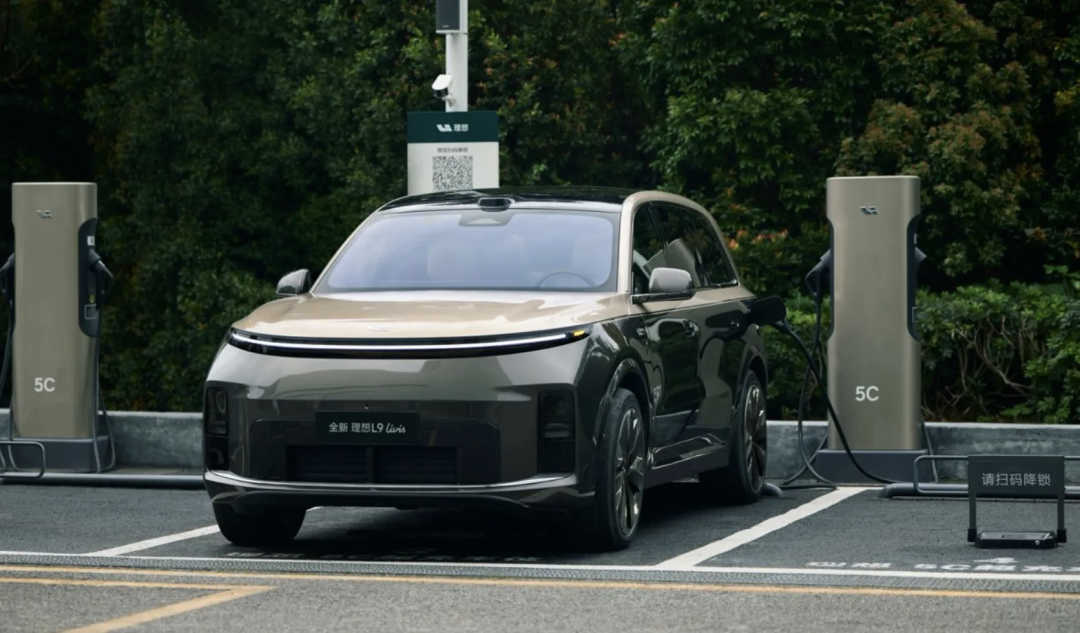
Secondly, Q2 operating cash flow turned positive at approximately RMB 15 million. Recall that Q1 saw a negative RMB 6.09 billion; Q2 free cash flow outflow also narrowed from RMB 7.388 billion to RMB 1.301 billion, an 82.4% reduction. If a company's growth is likened to tides, this signals that Li Auto's ebb has halted and is gradually surging back. For a company, such restoration of 'hematopoietic' capacity holds far greater signaling value than mere loss narrowing.
Thirdly, unlike most NEV startups that tighten their belts in tough times and loosen them in good times, Li Auto's approach to cost management reflects comprehensive reform: Q2 selling and administrative expenses fell 16.2% year-on-year, while R&D investment remained steady at nearly RMB 2.8 billion per quarter. Knowing when to prioritize reflects true control. 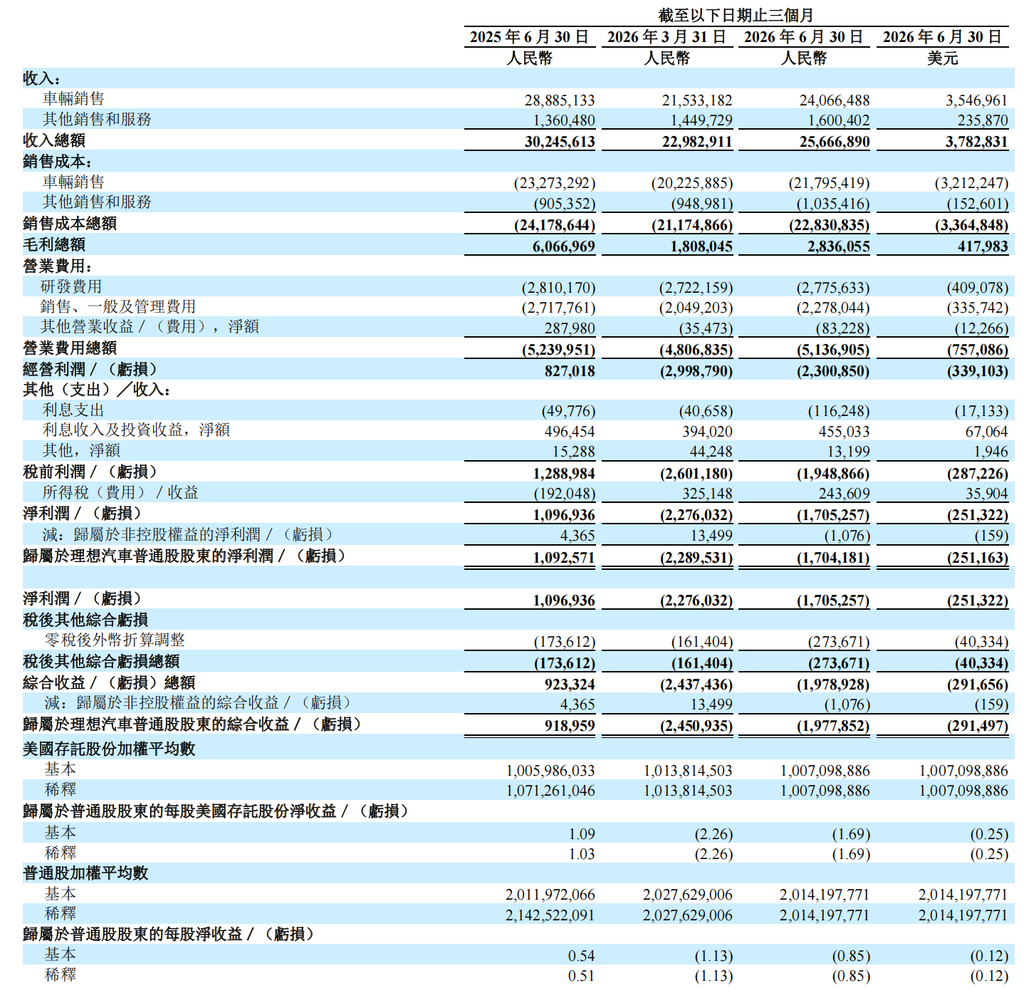
Financial management has smoothed business-end integration. On cost control, despite rising storage chip and PCB prices, Li Auto leveraged early volume locks and long-term procurement frameworks to keep price fluctuation impacts below industry averages. Self-developed batteries now cover cell, BMS, and Pack full-stack layouts: 'Starting this summer, Li Auto-branded batteries will be equipped across our full model lineup.' On pricing control, Li Xiang clarified that no cost increases will be passed to consumers in the current phase, opting for internal digestion through integrated design and supply chain capabilities, with long-term gross margin targets set at the 'healthy range' of 15%-20%. On pacing control, Li Auto's L9, L8, and L6 now cover the RMB 200,000-500,000 price band, with each model promoted only after the previous one stabilizes—neither overreaching nor underdelivering, showcasing an ideal product iteration rhythm.
2 Problem-Oriented Development Pace
In truth, such management is never innate. During the evening earnings call, Li Auto's management clearly prioritized problem-solving attitudes and processes over external concerns like 'when to turn profitable.' Unlike the market's focus on profit timing, Li Auto's leaders discussed the problems themselves more.
To outsiders, Li Auto's transition must be swift, but Ma Donghui clarified: During model refresh phases, operational pressure arises from old inventory clearance, new model ramp-ups, and policy transitions. 'We're optimizing related processes.' He didn't attribute Q2 recovery to luck—after all, a new model's launch to full production ramp-up inherently takes time. 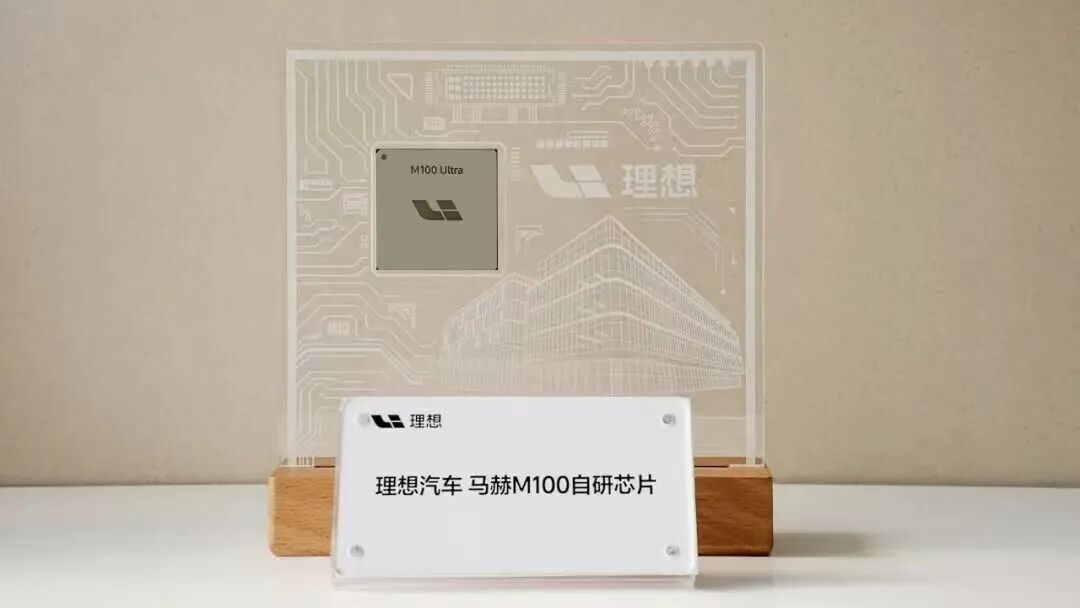
Internally, Li Auto's approach to cost issues is equally direct. Li Xiang calculated for the public: High product intelligence leads to greater semiconductor usage per vehicle than peers, making domestic chip price hikes more impactful. Yet the company refuses to pass costs to consumers, instead digesting them through integrated design, supply capabilities, cost management, and sales system efficiency. Short-term reliance on volume locks and refined operations, mid-to-long-term on scaled deployment of self-developed technologies—over 50,000 self-developed Mach M100 chips have now been delivered.
This explains why Li Auto breaks down execution issues into solvable nodes. The new L9, currently constrained by component supply, is still ramping up production toward a monthly target of 4,000-5,000 units in Q3. The new L8 has shown strong test-drive conversion rates post-launch, targeting high-end sales. The new L6 aims to build on the previous generation's cumulative deliveries exceeding 400,000 units, 'expected to stabilize at 10,000 monthly sales.' For the lower-margin i6, Li Xiang's positioning is clear: BEVs are currently in an investment phase, prioritizing user base and scale over short-term high margins—this BEV model has exceeded 180,000 cumulative deliveries as of August, ranking top three in sales among models priced above RMB 200,000 for six consecutive months. 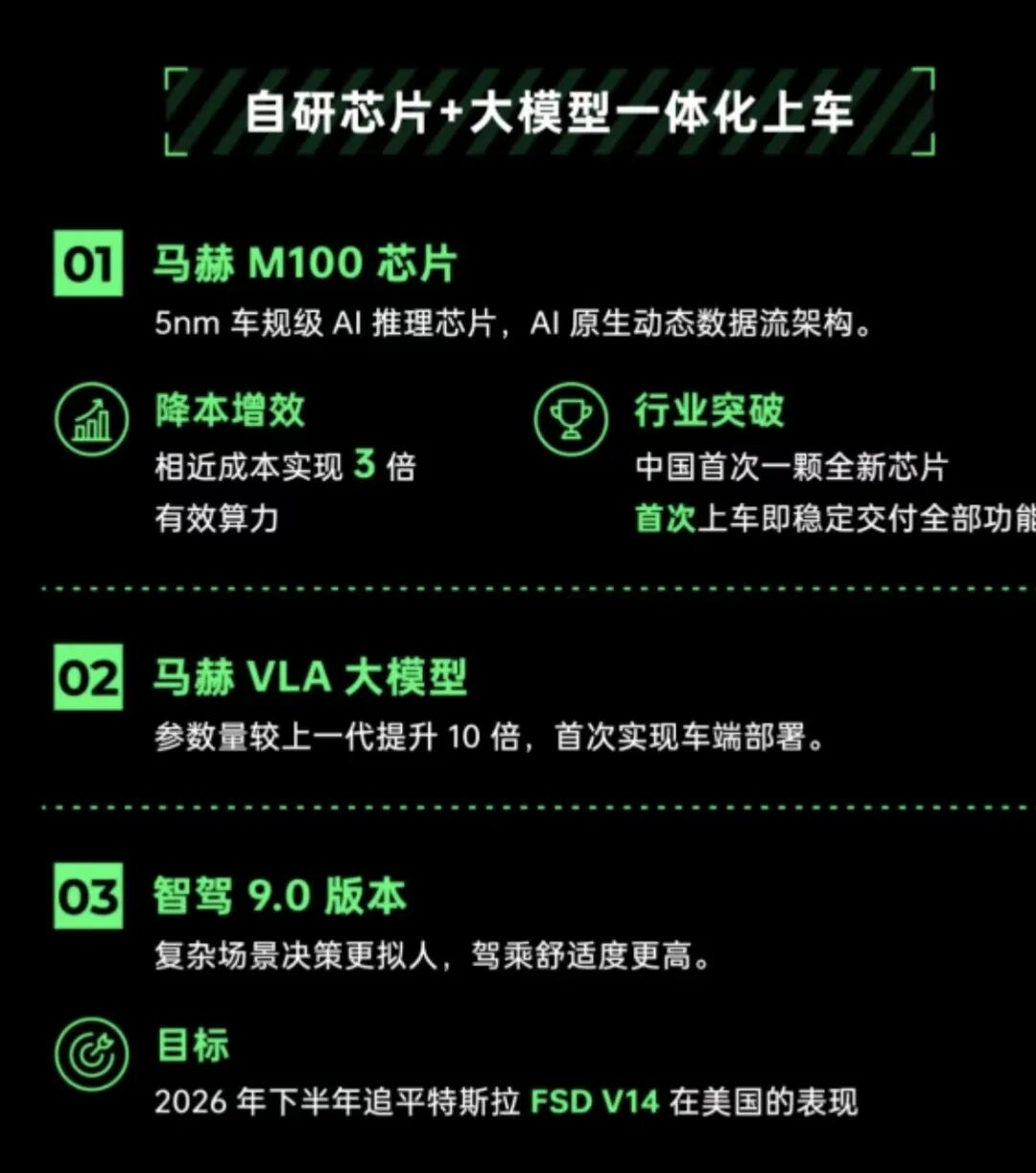
Currently, cash flow management follows the same discipline. CFO Li Tie stated: Starting Q3, with new models delivering, robust quarterly operating cash flow is expected; whether full-year operating and free cash flow turn positive 'depends more on Q4 sales volume.' Meanwhile, the USD 1 billion share repurchase program launched in March has executed over USD 630 million (~63% completion)—balancing hemorrhage control with low-price buybacks, two simultaneous uses of RMB 87.5 billion in cash reserves. 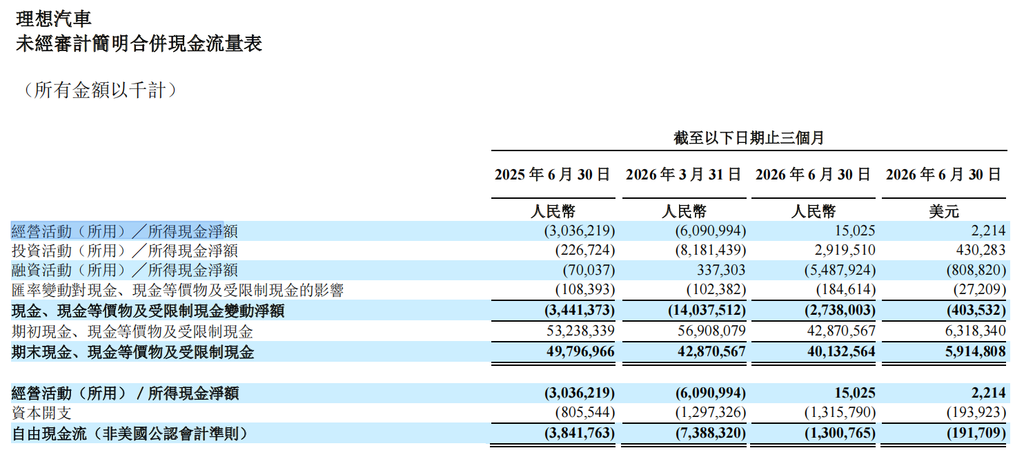
Traditional automakers' management focuses on cost-cutting and profit preservation during downturns—essentially contraction. Li Auto's management, however, is proactive: maintaining R&D, avoiding price wars, and accelerating moves. This isn't a startup's reckless abandon but disciplined adjustment under pressure. Unlike traditional defensive management, Li Auto's rhythm isn't about avoiding mistakes but pricing and resolving each issue systematically.
3 Why Q3 Marks Li Auto's True Revival?
Methodologies address 'what' and 'how,' but markets care more about when Li Auto's strategies will take effect. The key questions—product competitiveness, L series refresh ramp-up duration—all point to the same window: Q3 this year.
As planned, the new MEGA launches on September 2; the pure-electric flagship SUV Li i9 debuts in mid-September. Per Ma Donghui, the i9 (flagship SUV) and MEGA (flagship MPV) complement each other precisely in product matrix, jointly covering the premium multi-member family BEV market. For Li Auto, the signal value of pure-electric flagship entries will outweigh sales volume. 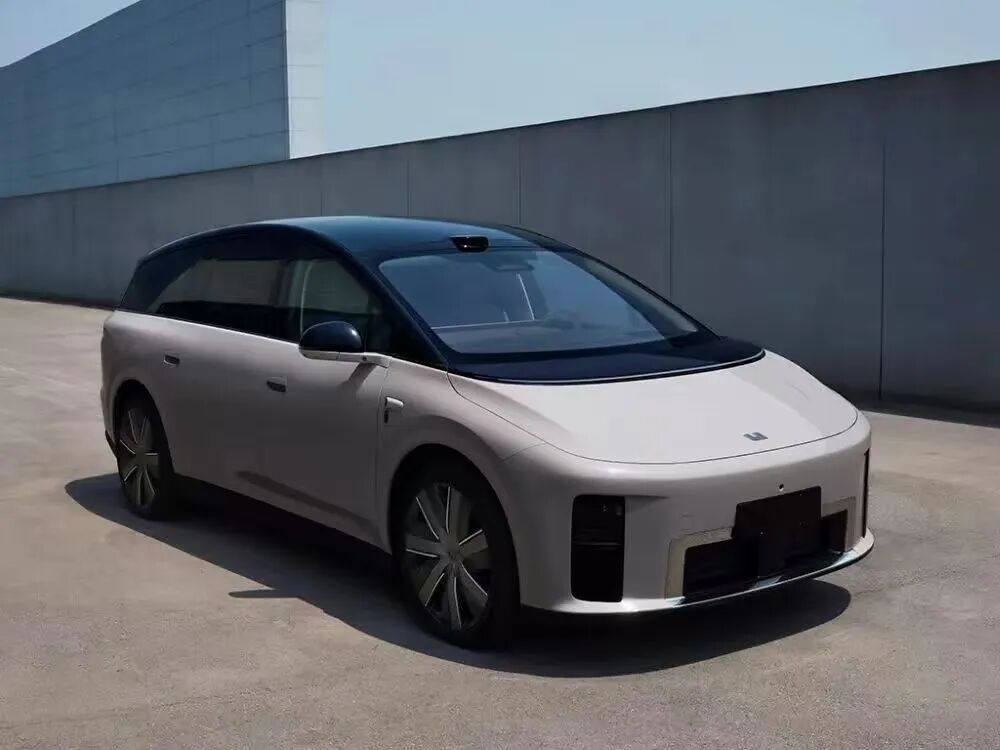
Products accelerate business, but operational structure drives momentum to the wheels. Li Xiang noted that orders for extended-range and BEV models now nearly split evenly, with BEV order share rising further post-new BEV launches. This indicates the market is already dismantling the old perception of 'Li Auto = extended-range,' a prerequisite for its revival.
Meanwhile, the L series has completed a full refresh, with L9, L8, and L6 all shifted to the new platform, fully covering the RMB 200,000-500,000 extended-range SUV price band. Each increase in high-end model share directly boosts ASP and vehicle gross margins. In fact, Q2 ASP rose ~RMB 19,000 sequentially and vehicle gross margin improved 3.3 percentage points, demonstrating this transmission chain's effectiveness. 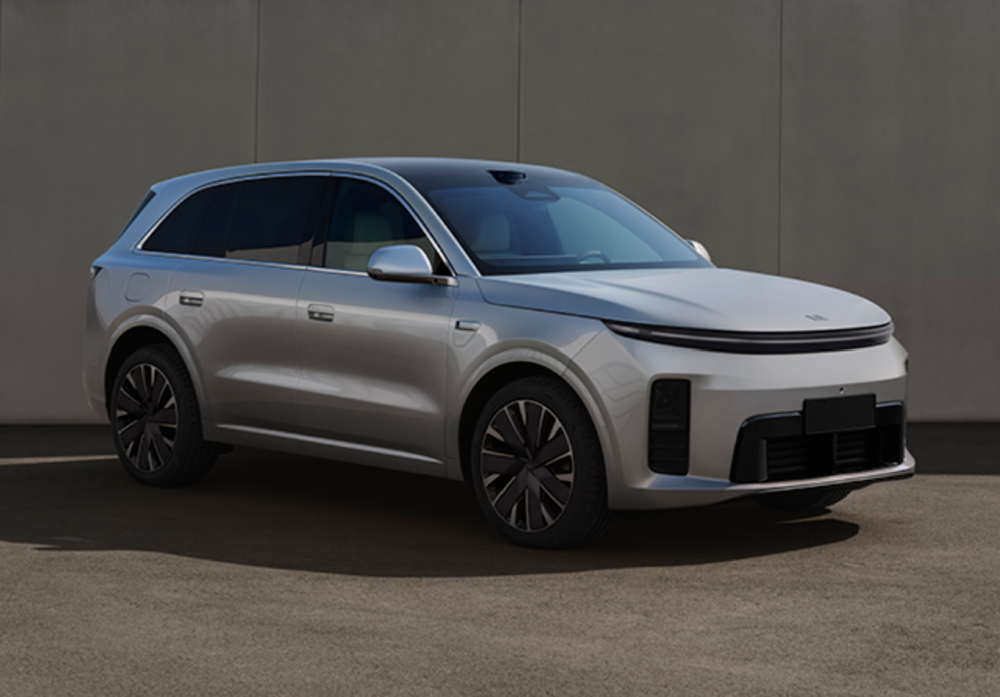
With products pulling demand and structure amplifying it, the financial system serves as Li Auto's final operational safeguard. Its RMB 87.5 billion in cash reserves provides ample 'ammunition' for new model ramp-ups, eliminating the need to choose between price cuts and losses during transitions. Meanwhile, the USD 1 billion repurchase stabilizes confidence and creates space for future growth.
The engagement sequence of these three gears is now clear. This justifies Li Auto's conservative Q3 guidance of 95,000-100,000 deliveries and RMB 26.6-28.0 billion in revenue: new models only launched in July, L9 production still ramping, with concentrated deliveries of new L6, L8, and L9 starting after September. The gap between this cautious guidance and the 'top-three sales' ambition needn't rush to a verdict. 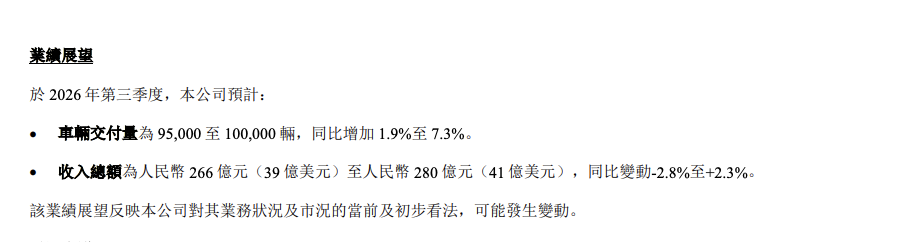
For one certainty remains: tides rise at their own pace—halting, surging, then truly flooding. Li Auto's process-oriented approach, more authentic than any alphabet-shaped recovery curve, reveals the true essence of business restoration. Thus, Li Auto's adjustment and revival aren't events but processes—maintaining rhythm amid volatility, turning variables into constants. This, perhaps, is the true allure of NEV startups.
End
With Insights & Knowledge 'Whoosh'—Let's Roll...
-
![]()
In the first half of this year, Chinese automakers went on a rampage overseas again.
-
![]()
This Year’s Joint Venture Pure Electric Models Adopt a More Pragmatic Pricing Strategy
-
![]()
Li Auto’s Q2 Performance: A Striking V-Shaped Rebound, Regaining Momentum Against All Odds
-
![]()
Collective Struggles for New Energy Players: Li Xiang Acknowledges Pricing Challenges
-
![]()
State Cracks Down Hard on Quick-built Cars
-
![]()
September Sees Fierce Smartphone Market Competition: Will Foldable Phones Be Overshadowed?
-
![]()
Ideal's 'Revival'
-
![]()
AI Behemoth Spends $45 Billion Amassing Computing Power: A Battle Too Costly for Small Firms