September Sees Fierce Smartphone Market Competition: Will Foldable Phones Be Overshadowed?
 08/28 2026
 484
484
Every September signals the annual 'clash of titans' in the smartphone arena.
The autumn new phone launches of 2026 are far more enthralling than in previous years. The industry has moved beyond minor incremental updates, with Huawei, Apple, Xiaomi, OPPO, vivo, and Honor all unveiling their annual flagships in quick succession. Both traditional straight-screen smartphones and innovative foldable models are making their debuts, fueling the popularity of the consumer electronics market in the latter half of the year.
Unlike past competitions centered solely on parameter comparisons and hardware stacking, this year's new phone race has taken a new direction. Smart experiences, cross-device ecosystems, and real-world daily usability have become the focal points of the competition.
The domestic smartphone market is now fully saturated, with users' inclination to upgrade their devices steadily declining. Amidst this backdrop of intense market competition, this wave of new phone releases represents not just a simple product refresh but a pivotal battle for domestic brands to challenge Apple's supremacy in the high-end market and redefine the industry's competitive dynamics.
1. Foldable Screens and AI Emerge as Key Highlights
The pace of new phone releases this September is notably brisk, with major brands seamlessly rolling out their latest models, encompassing both conventional straight-screen flagships and premium foldable screens. In contrast to previous years, this year's new phones eschew flashy parameter gimmicks, focusing instead on upgrades that better cater to the everyday needs of ordinary users.
Huawei leads the autumn new phone charge, launching the groundbreaking Mate XT 2 triple-folding smartphone on September 7, alongside a new iteration of the HarmonyOS. This triple-folding marvel optimizes the device's weight and form factor, addressing previous concerns about foldable screens being cumbersome and inconvenient to carry.
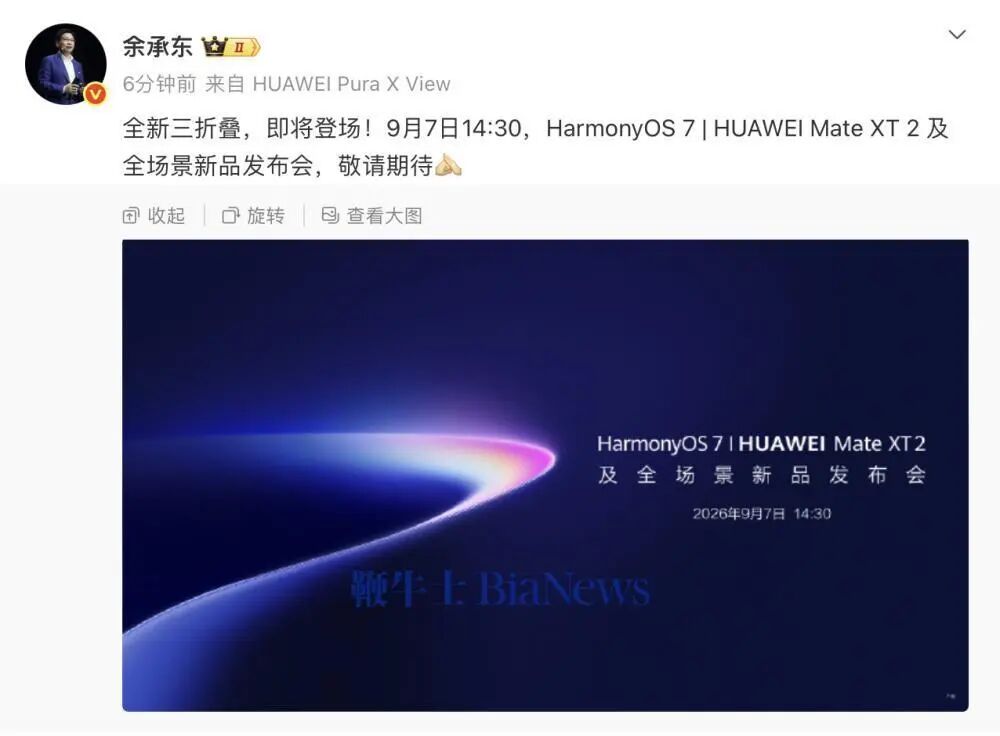
The new system prioritizes upgrading smart features and multi-device connectivity, ensuring seamless integration between smartphones, tablets, cars, and watches. Practical functions such as satellite communication and privacy protection have also been refined.
On September 23, Huawei unveiled the Mate 90 series of conventional flagships, powered by a new self-developed Kirin chip. The phone's smoothness, signal strength, battery life, and photography capabilities have all undergone comprehensive enhancements, with the high-end version continuing to target the ultra-high-end market priced at over 10,000 yuan.
Apple held its autumn event on September 10, introducing the iPhone 18 Pro series and unveiling the foldable iPhone Ultra for the first time, bridging the gap in its foldable screen offerings.
The new iPhones are equipped with a new chip, shifting focus from solely pursuing performance benchmarks to optimizing local smart features, photography effects, and daily battery life. Compared to the minor iterative updates of previous years, this year's upgrades are more substantial.
Domestic Android brands have moved away from their past tendency to follow Apple's lead and are now actively engaging in head-to-head competition with Apple.
The vivo X500 series, released on September 20, emphasizes portrait photography and daily smart creation, with significant improvements in screen quality, battery life, and fast charging experiences. The OPPO Find X10 series, unveiled on September 23, comprehensively optimizes the imaging effects of both front and rear cameras, with more mature imaging technology suitable for various scenarios such as daily photography and short video creation.
The Xiaomi 18 series was officially released on September 24, refining its system experience and focusing on smart services and the integration of whole-home smart and in-car devices, while also launching a new foldable smartphone.
The Honor Magic9 series, released as the grand finale on September 28, focuses on refining battery life, imaging, and multi-device connectivity, emphasizing a long-term smooth, stable, and durable user experience.
Overall, all flagship new phones this year share a common trait: they no longer compete solely on hardware specifications but instead prioritize user daily experiences. Smart features, seamless systems, user-friendly foldable forms, and balanced photography and battery life have become the core selling points of major new phones, indicating a profound transformation in the competitive logic of the smartphone industry.
2. Can Apple's Reign Be Challenged?
The most significant shift in this September's new phone battle is that domestic brands are no longer competing among themselves but are collectively benchmarking against Apple, reversing the competitive landscape in the high-end market.
Historically, the high-end market above 6,000 yuan in China was largely dominated by Apple, with domestic brands merely able to keep pace and deliberately avoiding scheduling their events during Apple's launch periods.
However, in the autumn of 2026, all leading domestic manufacturers, including Huawei, Xiaomi, and OPPO, have launched their top flagships to compete directly with the iPhone 18 series and the new foldable iPhone.
Among them, Apple's first foray into foldable screens is the industry's biggest highlight this year, with two key questions on everyone's mind: Can Apple's long-awaited foldable screen once again revolutionize the industry? Can continuously upgrading domestic high-end smartphones truly seize Apple's high-end market share?
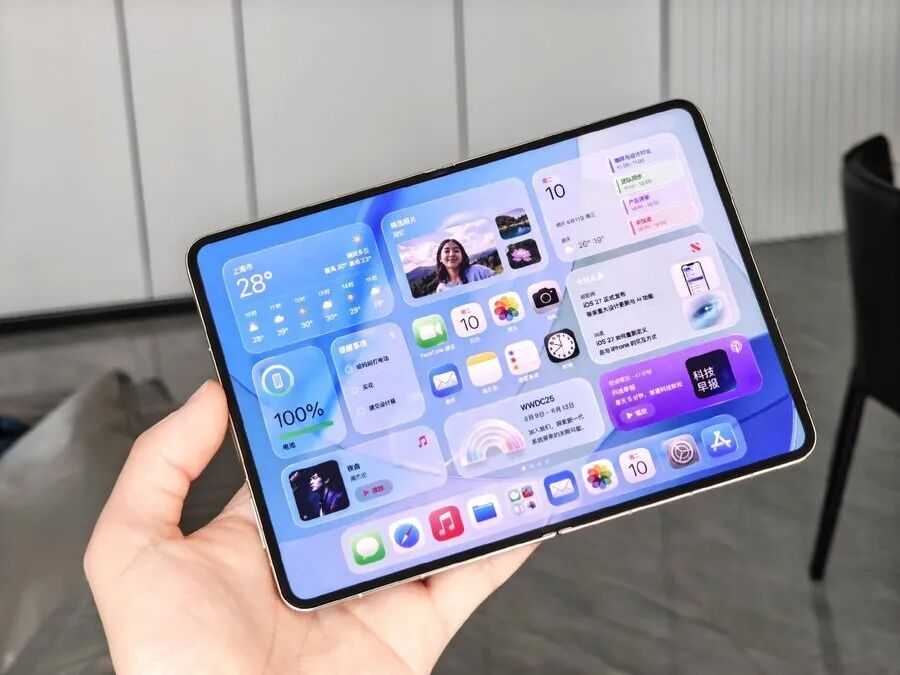
From the current product offerings, it is challenging for Apple's foldable screen to replicate its past disruptive advantage. Each time Apple launched a new phone in the past, it would redefine industry standards with overwhelming competitiveness.
However, the foldable screen market is no longer uncharted territory. After years of iteration, domestic manufacturers have thoroughly addressed issues such as bulkiness, visible creases, durability, and poor battery life in foldable screens.
Today, domestic foldable screens come in a variety of forms, including small folds, large folds, and triple folds, with mature technology and stable experiences. Apple's first foldable screen, on the other hand, is more about filling a gap in its product lineup, representing a follow-up upgrade without breakthrough innovations that set it apart from domestic models.
Its strengths still lie in Apple's seamless system, closed ecosystem, and strong brand reputation, with no notable highlights in hardware and functional innovation.
According to Counterpoint's market data, Apple's share of the domestic high-end smartphone market has continuously declined from its peak of over 60%, while the proportion of domestic high-end models has steadily increased.
Consumers no longer blindly believe that 'Apple is the best high-end phone.' The launch of Apple's foldable screen is more about defending its existing user base and is unlikely to monopolize the entire high-end market again.
Domestic flagships have now shed their past shortcomings of 'impressive parameters but mediocre experience.' Huawei, with its self-developed chips, mature triple-folding technology, and HarmonyOS ecosystem, firmly holds onto the ultra-high-end market priced at over 10,000 yuan, directly competing with Apple's top models. Xiaomi, OPPO, vivo, and Honor's annual flagships outperform Apple in terms of photography, localized smart features, device connectivity, and fast charging and battery life, better meeting the usage habits of domestic users and offering greater practicality.
Market data also provides direct evidence of this change. According to the China Academy of Information and Communications Technology, the average replacement cycle for domestic users has exceeded 40 months, with users becoming increasingly rational and no longer blindly chasing new models or believing in Apple's superiority.
In the past, users were willing to pay a premium for Apple phones primarily because of their seamless system, durability, and resale value. However, domestic flagships have now significantly narrowed the gap in terms of smoothness and durability, while also offering practical features such as fast charging, smart office capabilities, and all-scenario photography that Apple lacks, making them increasingly attractive to high-end users.
Of course, it remains a formidable challenge for domestic smartphones to completely replace Apple. Apple's core strengths lie not only in its hardware but also in its comprehensive device ecosystem, stable product reputation, and strong brand influence.
Many users own a full suite of Apple devices, with seamless connectivity between them, making it difficult to switch to the Android camp. Moreover, although Apple's product innovations are conservative, their experience is stable with almost no shortcomings, remaining the first choice for many high-end users seeking hassle-free and reliable devices.
Overall, the high-end new phone showdown in the autumn of 2026 marks a turning point in the industry landscape. Apple's foldable screen can no longer create industry advantages and can only defend its existing user base. Domestic flagships now have the strength to compete directly with Apple and are continuously seizing market share in the high-end segment.
IDC analysis points out that the domestic high-end smartphone market has bid farewell to Apple's dominance and entered a new phase of dual competition between leading domestic brands and Apple. The future will no longer be about brand premium but about actual user experience and ecosystem services.
3. The New Phone Rush Drives Industry Upgrades
This autumn's new phone melee is not just a product competition among brands but also drives a reshaping of the entire smartphone industry landscape, affecting every link from the supply chain to sales channels, steering the industry away from extensive material stacking competition towards refined and practical development.
The industry's competitive logic has undergone a profound transformation, bidding farewell to the era of low-price sales volume chases and shipment scale competitions. Now, the core goal of major brands is to seize the high-end market and build exclusive ecological barriers. Domestic manufacturers are no longer blindly following Apple but are competing head-on with Apple through self-developed technologies and localized experiences.
At the same time, Apple's entry into the foldable screen segment has further activated the domestic foldable screen market, forcing domestic manufacturers to continue optimizing device design, improving product durability, and controlling prices, gradually transforming foldable smartphones from niche high-end products into mainstream models that the general public can choose.
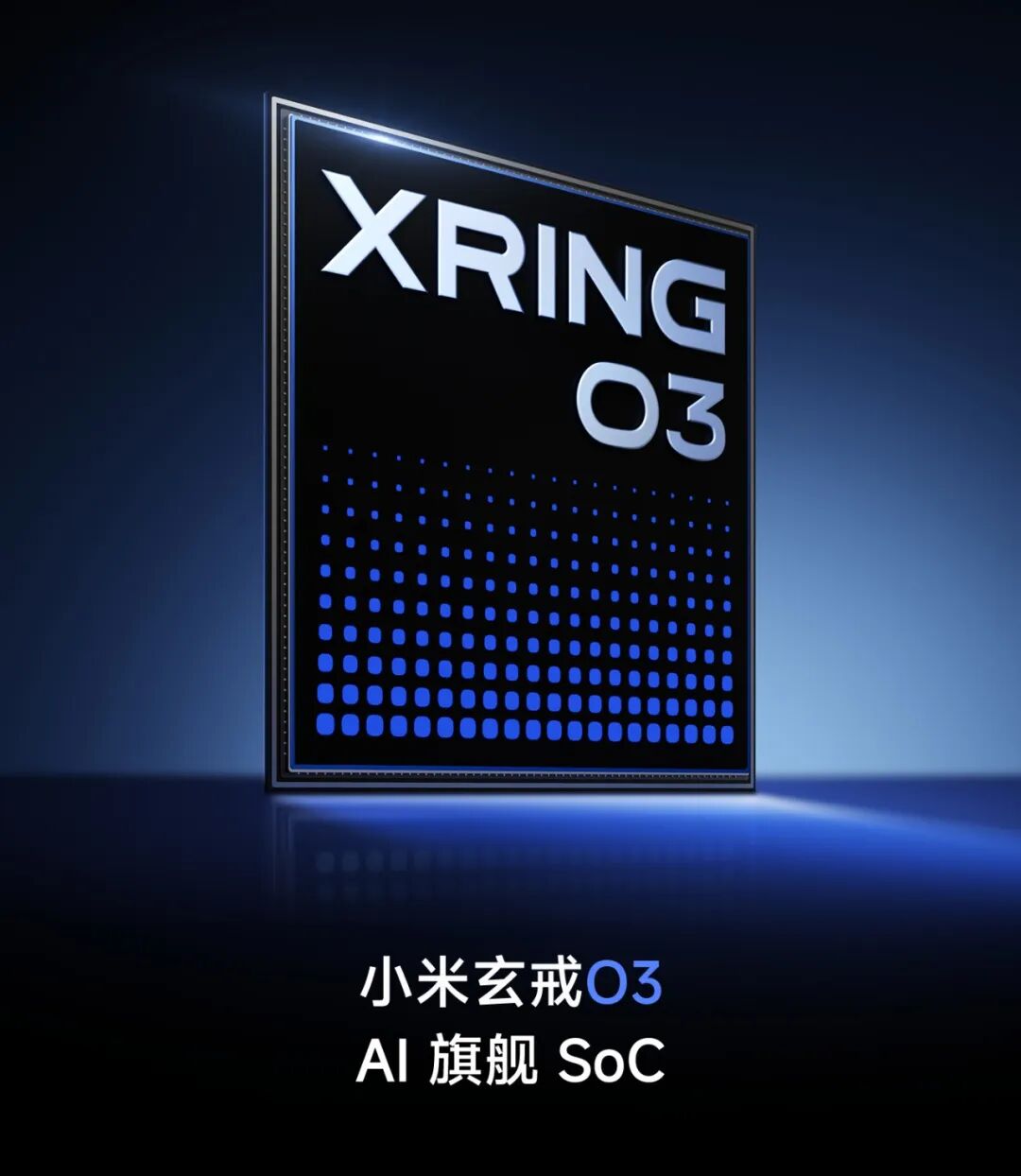
The importance of self-developed technologies is also becoming increasingly prominent. Huawei's Kirin chip, Xiaomi's Xuanjie chip, and OPPO's self-developed imaging technology have all been fully implemented in this year's new phones.
Faced with an unstable external supply chain environment, leading brands are increasing their investments in self-developed technologies, no longer solely relying on external generic hardware. They are creating product features through independent optimization, thoroughly breaking free from homogeneous internal competition and further widening the gap between leading brands and small and medium-sized brands.
For upstream supply chain enterprises, this wave of new phone releases presents both opportunities and challenges. According to TrendForce research, as smart features become standard in smartphones, the demand for high-end screens, high-definition lenses, large memory, and high-performance batteries continues to rise. Domestic high-quality supply chain enterprises have secured more cooperation orders, with the overall proportion of domestic supply chains continuously increasing.
However, the rising costs of high-end hardware and smart chips have also increased production costs for smartphone manufacturers. To balance quality and price, brands will prioritize suppliers with strong technology and stable quality.
Many small and medium-sized supply chain enterprises with outdated technology and low cost-effectiveness are gradually losing market share, with the upstream supply chain undergoing a new round of survival of the fittest.
The sales channel model downstream is also quietly changing. Online e-commerce will experience a short-term traffic surge for new phones, with a boom in new phone reviews and educational content. The sales logic in offline stores has also undergone a profound transformation. In the past, sales could be closed by explaining parameters and comparing configurations, but now consumers place greater emphasis on actual experiences. Stores now primarily rely on demonstrating smart features, photography effects, and device connectivity experiences to attract users, with pure parameter sales pitches no longer effective.
In addition, the concentrated launch of new phones has also revitalized the second-hand smartphone market. A large number of users are upgrading their devices, driving the rapid circulation of old phones. Official trade-in and second-hand trading businesses are becoming increasingly popular, becoming new growth points for the industry.
Operators have also adjusted their contract phone strategies, no longer relying on low-price subsidies to attract users but instead combining smart home and data services to bundle new phone sales, creating an integrated service model.
Overall, the current smartphone industry also has prominent shortcomings, with homogeneous internal competition becoming increasingly apparent. The upgrade directions of new phones from various brands are highly overlapping, with AI features, imaging systems, foldable forms, and ecological connectivity becoming common templates, making it difficult to create differentiated advantages that stand out.
The smart features offered by numerous brands often lean more toward being gimmicky rather than practical, exhibiting low rates of daily use and failing to deliver substantial enhancements to the user experience. Such superficial advancements within the industry are likely to lead to consumer aesthetic exhaustion, further dampening the already weak inclination to upgrade devices and intensifying competitive pressures throughout the entire sector.
For the entire smartphone industry, the flurry of new phone releases this September does not herald a celebration of incremental gains but rather signifies an elimination phase in an era of market saturation.
The age of simply piling on hardware features has come to an end. Whether for leading brands or for upstream and downstream supply chains, only by thoroughly exploring and enhancing genuine user experiences and by creating distinctive value can they maintain a solid footing amidst increasingly fierce market competition.
-
![]()
In the first half of this year, Chinese automakers went on a rampage overseas again.
-
![]()
This Year’s Joint Venture Pure Electric Models Adopt a More Pragmatic Pricing Strategy
-
![]()
Li Auto’s Q2 Performance: A Striking V-Shaped Rebound, Regaining Momentum Against All Odds
-
![]()
Collective Struggles for New Energy Players: Li Xiang Acknowledges Pricing Challenges
-
![]()
State Cracks Down Hard on Quick-built Cars
-
![]()
September Sees Fierce Smartphone Market Competition: Will Foldable Phones Be Overshadowed?
-
![]()
Ideal's 'Revival'
-
![]()
AI Behemoth Spends $45 Billion Amassing Computing Power: A Battle Too Costly for Small Firms