Ultrafast Nonlinear Optics: Nonlinear Compression of 10 mJ, 50 W Pulses from a Gas- and Bulk-Media-Based Ultrafast Thin-Disk Amplifier
 12/01 2025
 738
738
The rapid advancement of high-power ultrafast laser technology has made it essential to achieve ultrashort pulses while maintaining high average power and high repetition rates. This is crucial for progress in areas such as high-order harmonic generation, strong-field science, terahertz sources, laser acceleration, and ultrafast dynamics in materials. Ytterbium-doped thin-disk amplifiers can readily deliver millijoule-level pulse energies along with average powers ranging from tens to thousands of watts. However, their inherently narrow gain bandwidth typically restricts the output pulse width to several hundred femtoseconds. To break through this limitation, using a multi-pass cell (MPC) structure for nonlinear spectral broadening, followed by dispersion compensation to obtain shorter compressed pulses, has emerged as a major research focus in recent years. Reference [1] provides a systematic comparison of the nonlinear broadening strategies employed by gas-medium and solid-medium MPCs. This comparison is highly significant for the construction of compact, scalable, and highly stable high-energy femtosecond compression systems. As depicted in Figure 1, a 10 mJ, 50 W, 465 fs pulse is collimated by a telescope system and then enters an MPC consisting of 24 highly reflective curved mirrors, with the cavity filled with 280 mbar of argon gas. The focal spot diameter inside the cavity is approximately 0.33 mm, and each pass accumulates about 1.7 rad of the B-integral. After 25 reflections, significant spectral broadening is achieved. 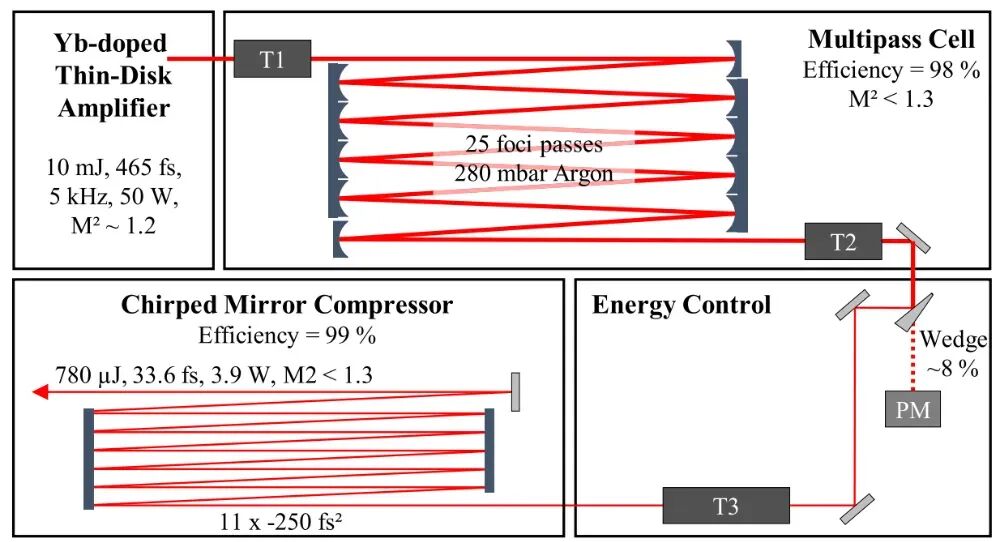
Figure 1 shows the experimental setup of the gas multi-pass cell [1]. Following dispersion compensation, the pulse width is successfully compressed to 33.6 fs (with a transform-limited pulse width of 32.9 fs), and the transmission efficiency reaches as high as 98% (as illustrated in Figure 2). 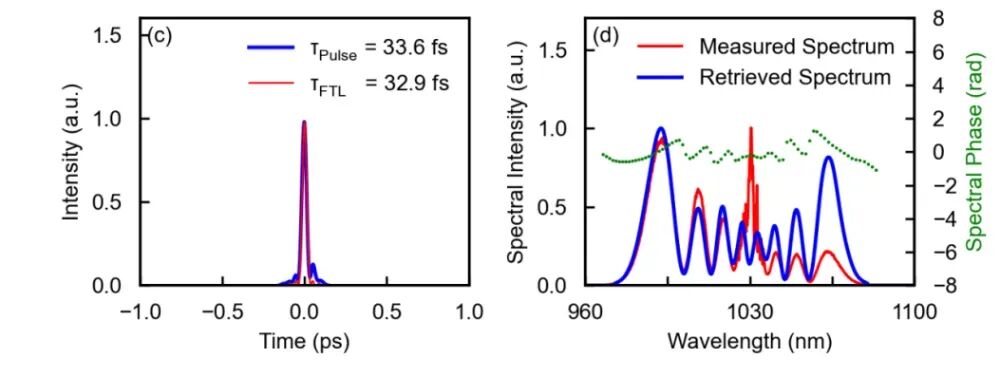 Figure 2 presents the compressed pulse and spectrum from the gas multi-pass cell [1]. Figure 3 showcases its excellent spatial quality (M² = 1.23 × 1.30) and over 90% spectral uniformity.
 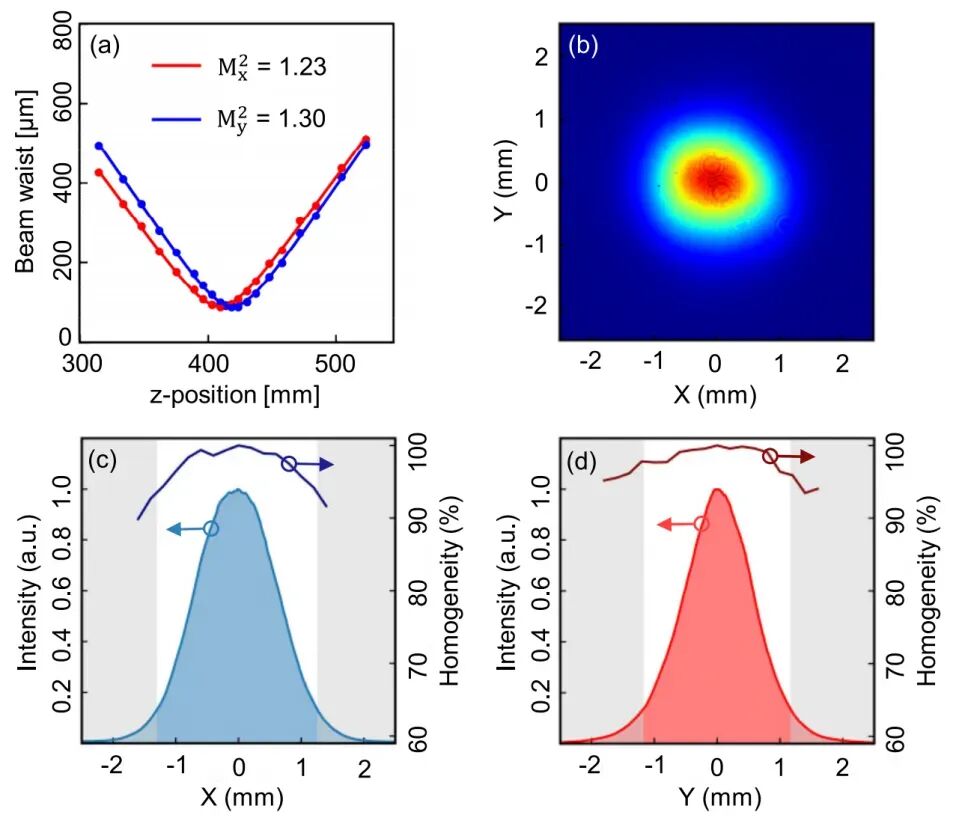 Figure 3 details the beam quality and spatial spectral uniformity of the gas multi-pass cell output [1].
Figure 4 reveals that the spectrum remains highly stable over 180 minutes of operation. The Fourier-transform-limited pulse width fluctuates only within the range of 32.6 ± 0.1 fs, with a peak-to-valley deviation of just 1.3 fs. This demonstrates the system's high reliability during extended operation, indicating that the gas-based scheme offers mature and reliable performance under high-energy conditions [1]. 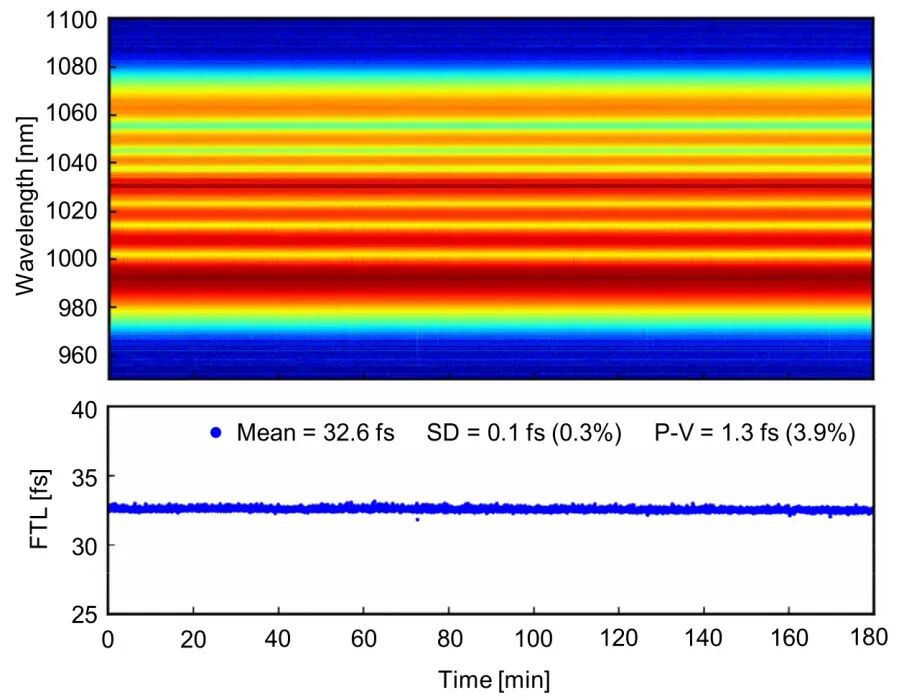
Figure 4 illustrates spectral stability [1]. To reduce the system's volume, avoid ionization limitations, and enhance scalability, the paper further proposes replacing the nonlinear medium in the MPC with solid-state fused silica thin plates. In the single-pass scheme depicted in Figure 5, 24 fused silica plates, each 0.8 mm thick, are placed, resulting in a total B-integral accumulation of approximately 16 rad. After compression, the pulse width is reduced to 83.6 fs (with a transform-limited pulse width of 82.2 fs), while maintaining a beam quality of M² = 1.33 × 1.37. 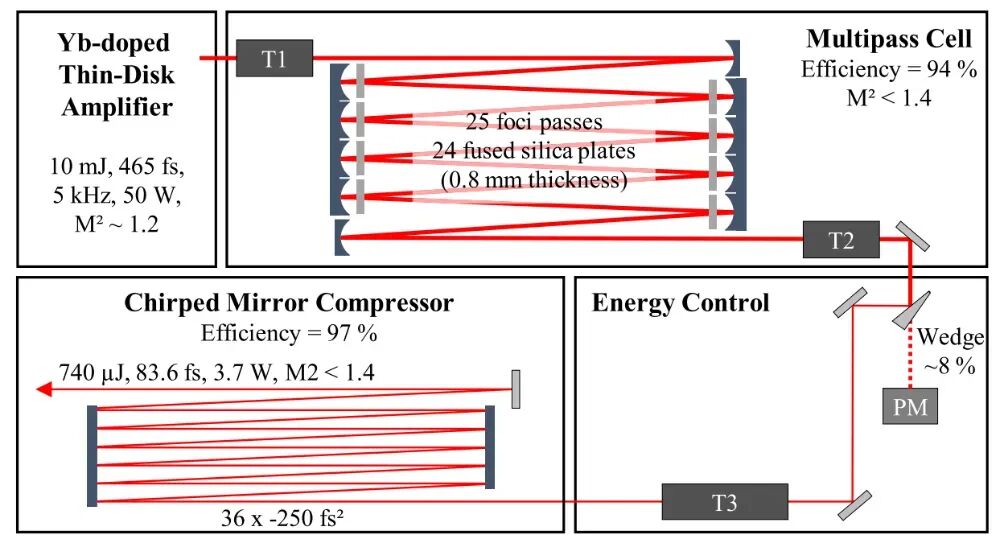
Figure 5 shows the experimental setup of the bulk single-pass solid multi-pass cell. Moreover, to further shorten the compressed pulse width, the paper constructs a double-pass bulk solid MPC as shown in Figure 6. This increases the number of focal spots to 53 and achieves a total B-integral of approximately 35.5 rad. The pulse width is ultimately compressed to 49.5 fs (with a transform-limited pulse width of 47.5 fs), and the output energy is 8.5 mJ, corresponding to an overall optical efficiency of approximately 85%. The spatial spectral uniformity of the beam remains above 90%, with a corresponding spatial quality of M² = 1.47 × 1.32. Additionally, the system exhibits good spectral stability during prolonged operation, with its Fourier-transform-limited pulse width showing only minor fluctuations of 49.5 ± 0.3 fs over several hours of monitoring and a peak-to-valley variation of approximately 2.4 fs. These results indicate that, despite some energy loss due to the increased number of passes, the bulk solid-based broadening strategy can still achieve high-quality, compressible broadband spectral output at the 10 mJ energy level. 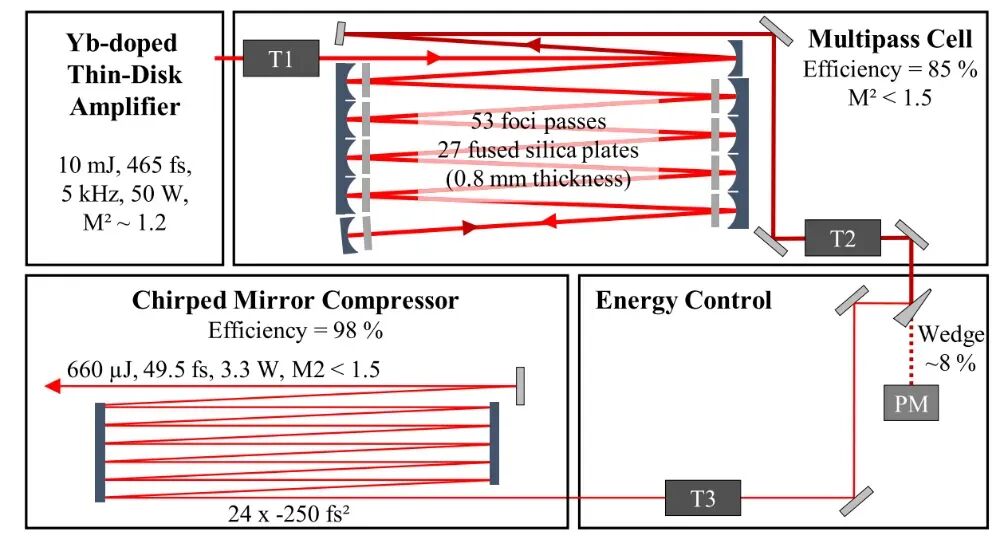
Figure 6 presents the experimental setup of the double-pass bulk solid multi-pass cell. The paper systematically presents and compares the performance of gas and solid-state MPCs in compressing 10 mJ high-energy femtosecond pulses. The gas MPC scheme offers extremely high broadening efficiency and excellent compression quality. The solid-state MPC scheme, on the other hand, supports high-energy compression at the multi-millijoule level and, through a double-pass design, achieves compression performance close to that of the gas scheme. The study demonstrates that solid-state MPCs have the potential to scale up further to hundred-millijoule-level compression systems, providing a viable path for the development of future compact high-energy femtosecond light sources. References: [1] Jonas Manz, Gaia Barbiero, Sandro Klingebiel, Michael Rampp, Catherine Y. Teisset, Haochuan Wang, Dominik Ertel, Ronak N. Shah, Martin Hoffmann, Clara J. Saraceno, and Thomas Metzger, "Gas- and bulk-based nonlinear pulse compression of 10 mJ and 50 W pulses of an ultrafast thin-disk amplifier," Opt. Express 33, 24413-24428 (2025)
-
On the Eve of Its IPO, Avatr Finds Itself Embroiled in a 'Farce of Controversy and Belittlement'
-
![]()
Yutong Optics' Japanese Subsidiary Unveiled in Tokyo, Shifting Strategic Focus to Technology-Driven Growth
-
![]()
Half-Year Revenue Outstrips Last Year’s Total! Zhongrun Optics Forecasts 80.2% H1 Revenue Growth
-
![]()
Why Does AI Competition Start with Computing Power?
-
![]()
Apple AI Finally Makes Its Debut in China, Yet iPhone's 'AI Autonomy' Faces Uncertainty
-
![]()
Apple AI and QianWen Make Up Lessons: Alibaba Has Its Own 'Doubao Phone'
-
![]()
QianWen Joins Apple, Signal for Large Models to ‘Fade into the Background’
-
![]()
The ‘Anchor’ Strategy of Google Hidden Behind the Bleeding Financial Report