Quark AI Glasses: Alibaba Equips the Physical World with a 'Search Box'
 12/04 2025
 832
832
In the second half of 2025, the wave of hardware revival surged more fiercely than expected.
However, unlike the frothy 'metaverse' frenzy of years past, this new round of hardware competition appears exceptionally calm and pragmatic. When OpenAI's GPT-4o began demonstrating its 'real-time video interaction' capabilities, tech giants suddenly realized that the next critical gateway for traffic might no longer be static app icons on phone screens but the real world continuously captured through cameras.
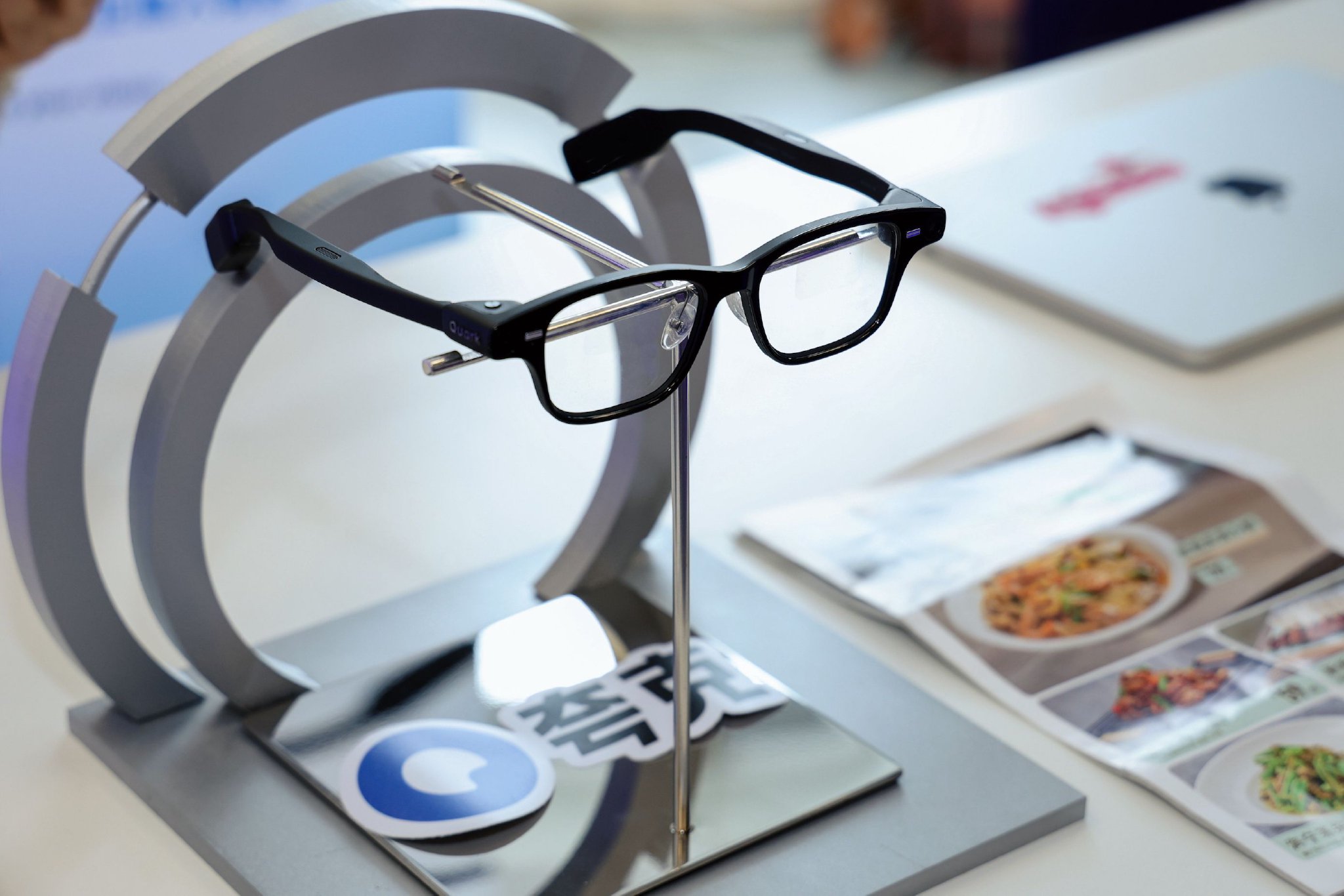
Quark's launch of the S1 and G1 series of AI glasses breaks the stereotype of internet companies being 'software-heavy, hardware-light.' By offering two series to cater to different user groups, Quark clearly hopes this hardware, dubbed the 'gateway to AI,' can reach as broad an audience as possible.
As one of Alibaba's low-key 'Four Little Dragons,' Quark has long existed as a 'utility player.' Yet, this practical positioning has made the glasses Alibaba's most stable move in its AI hardware layout (translation: 'strategy' or 'deployment').
Today, standalone apps are no longer the trendsetters of the era. In the second half of the AI large model competition, failing to secure an entry point for perceiving the physical world renders even the most advanced algorithms 'ethereal.'
Quark Glasses' strategic intent is both defensive and offensive: to occupy the position closest to vision before user habits are reshaped. Through them, Alibaba Search extends its reach from online data to offline objects. When a user gazes at a pair of sneakers, Quark Glasses invoke visual recognition and search, connecting to Taobao and Tmall's vast product ecosystem.
The ultimate form of search may be achieving seamless dialogue with the world itself. Quark Glasses are paving the way for Alibaba.
01. Breaking Through with 'Wearability'
The core logic of phones is 'ease of use,' while for glasses, it's 'ease of wear.'
The failure of Google Glass and the rise of Meta Glasses both stem from this: before becoming a powerful computing terminal, AI glasses must first be a competent pair of glasses. This reverence for 'wearability' even supersedes 'functionality.'
Yet, even as an industry benchmark, Ray-Ban Meta hasn't fully solved this challenge. To accommodate batteries and sensors, its core weight is concentrated on thick temples, causing either excessive clamping force ('head-pinching') or overloaded nose pads that leave sore red marks on the bridge of the nose.
Quark AI Glasses S1 tackles this with a 'systematic rationality' akin to MiniMax's Yan Junjie, seeking optimal solutions under strict physical constraints. Its standout 7.5mm temple achieves 'invisibility' in circuitry.
Through deep collaboration, Jia Lian Yi specially crafted a 7-layer FPC (flexible printed circuit) for Quark S1. This stacks seven layers of circuitry within the thickness of an A4 paper (0.1mm). Each layer handles a specific function—power, data, video signals—transmitting them at a microscopic level, thus compressing the circuit volume to its limit (translation: 'minimum') and successfully 'slimming down' the temple.
Freed from the constraints of the temple's front section, combined with a bionic curved design on the nose pad and ear bend contact surfaces, S1 creatively positions core components like chips and batteries at the temple's rear. This shift alters the device's mechanical structure, balancing the weight roughly 1:1 front to back, solving the industry-wide 'top-heavy' issue and keeping the glasses 'stable' on the face.
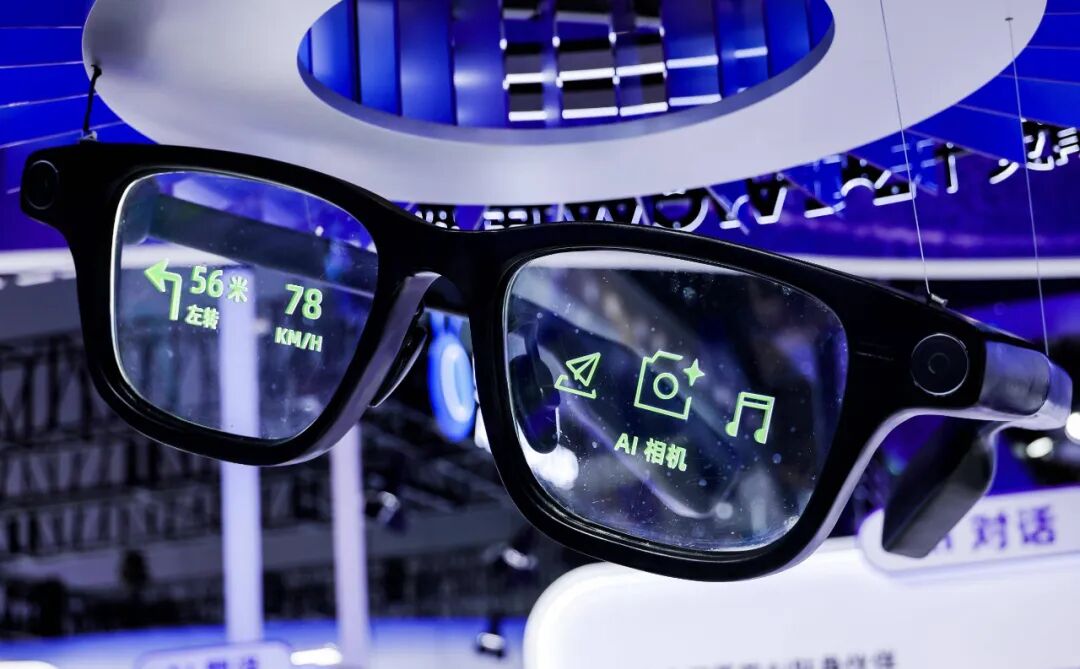
At the display and interaction level, S1 features dual flagship chips and a dual-optical engine binocular display scheme, with brightness soaring to 4000nits. This ensures clear visibility of Qianwen large model's interactive information (navigation, translation, etc.) even under intense outdoor sunlight.
For example, at checkout, users need only gaze at the merchant's payment code, whisper 'open payment code,' or lightly tap the temple to instantly capture payment intent. The integration of bone conduction voiceprint verification adds biological-level rigor to confirming 'you are you.'
Navigation, meant to assist driving and walking, often forces phone users into 'texting while walking' or frequent road glances—a counterintuitive practice. Leveraging Autonavi Maps' core capabilities, Quark S1 projects key information like road names, turn arrows, and remaining distance directly into the user's field of view, akin to AR-HUD in premium cars but more portable and personal.
Of course, as part of Alibaba's ecosystem, shopping scenarios remain its strongest moat.
Previously, curiosity about a stranger's sneakers or a digital product in a window often went unfulfilled. Now, Quark Glasses aim to capture these fleeting consumer impulses. By activating 'Quark Classmate' and taking a photo, the glasses' 'Snap Shop' database springs into action, identifying models, checking inventory, and comparing prices on Taobao in milliseconds.
These scenario-specific optimizations make Quark S1 a practical tool for enhancing daily efficiency.
Meanwhile, Quark also launched the G1 series with a distinct positioning. While retaining core hardware like chips, cameras, and acoustics identical to S1, G1 sacrifices near-eye display functionality, reducing the price to under 2299 RMB and directly competing with Xiaodu AI Glasses Pro and Xiaomi AI Glasses. The S1 series, preserving full visual interaction, is priced at 3999 RMB.
This 'high-low' strategy reflects Quark's market ambition: S1 sets the experience benchmark, while G1 drives mass adoption. In the race for perceptual entry points, whoever makes hardware feel more 'ordinary' seizes the Flow gate (translation: 'traffic gateway') and initiative to define next-gen interaction.
02. The 'Effortless' Evolution of Search
Without the disruption of large models, search behavior might have remained stuck in the old paradigm of 'users actively seeking information.' From keyword searches in the PC era to vertical searches within apps during the mobile internet era, users always had to initiate queries explicitly.
Past experiences were fraught with 'friction.' For instance, spotting an unfamiliar bird in a park or wanting to check the price of sneakers required a cumbersome process: take out the phone, unlock it, find and open a specific app, click search or camera, focus, shoot, and wait for results. This multi-second interaction cost often extinguished spontaneous curiosity or purchasing impulses.
The ideal state is capturing visual information naturally via cameras and receiving voice feedback through earphones, with users needing only a 'gaze' or 'fingertip tap' for information to flow proactively. This shift saves mere seconds but transforms search from a deliberate 'action' into an ambient 'state' surrounding the user.
In this logic, glasses' value becomes clear: they are the only devices capable of meeting this 'always-on' demand, filling the gap left by phones and making information acquisition intuitive again.
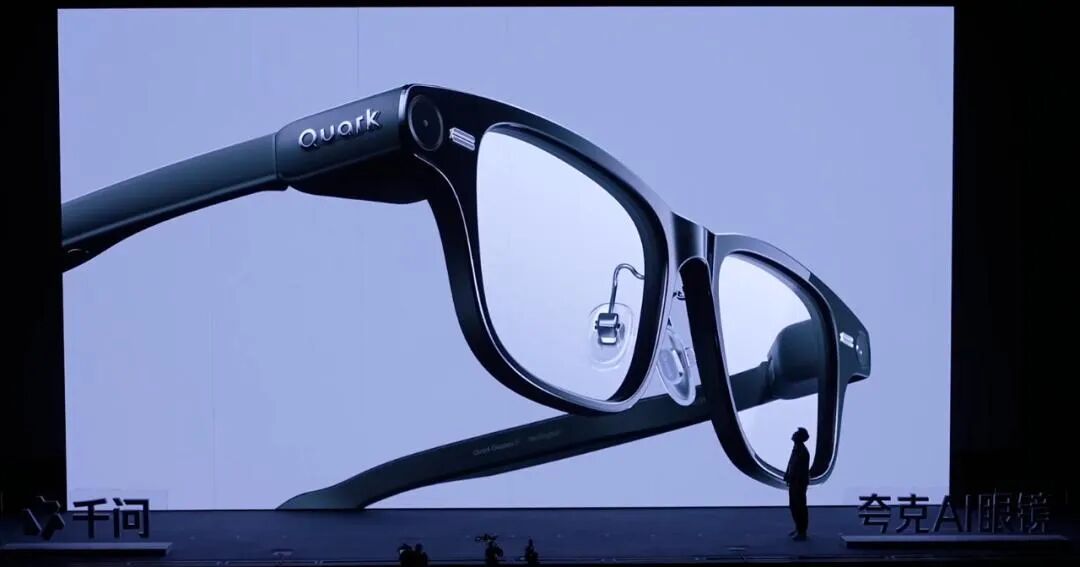
Hardware innovation, however, relies on scene (translation: 'scenarios') and ecology (translation: 'ecosystems'). Quark's AI glasses are designed around the 'all-scenario AI assistant' positioning, built on Alibaba's Qianwen large model for interaction and enriched by seamless integration of Alibaba's services. Identifying practical, high-frequency scenarios is key to preventing hardware from becoming a mere novelty.
Technically, Jin Xian, Quark AI Glasses' product lead, noted in an interview with Phoenix Weekly Finance that as a native AI company, Alibaba deeply understands how to adapt technology to real-world scenarios. Large model training depends heavily on data from terminal business scenarios, which most general-purpose models optimize for existing devices like phones and tablets.
Currently, Quark Glasses deeply integrate core services like Alipay, Autonavi, Taobao, and Fliggy. This 'software-hardware integration' transforms Quark from a standalone tool app into a 'shorter, sharper nerve' connecting Alibaba to the physical world. Expansions like voice song requests via QQ Music and NetEase Cloud Music, and real-time flight alerts via Flight Manager, further enrich its 'assistant' roles.
Unlike aggressive product pushes, Quark Glasses surface relevant information and services precisely when users pause and wonder. From this perspective, Quark Glasses are not just consumer electronics but a pragmatic 'software-hardware integration' attempt by Alibaba.
03. Alibaba's 'Crossover' Bet
For a time, Quark was seen within Alibaba as an experimental 'innovation business.' Its strategic importance rose significantly under Wu Yongming's leadership, for a simple reason: among Alibaba's businesses, Quark most resembles an 'AI Native' company.
Compared to Taobao and Tmall, burdened by a massive transaction ecosystem and legacy, or Ant Group, operating under strict regulations, Quark focuses sharply. Starting as a minimalist search engine, it won young users with an early 'ad-free' experience. By gradually adding cloud storage, scanning, and document processing tools, Quark evolved into a 'Swiss Army knife' for problem-solving.
This trajectory makes Quark's strategic narrative coherent: from a static search box to a visual interaction gateway, from information retrieval to dynamic real-time cognitive aid. The hardware shift is superficial; at its core lies a reflection on humanity's fundamental need to 'acquire and process information.'
Today, Alibaba is building a vast Agent ecosystem. If DingTalk is the Agent for work scenarios and Taobao for shopping, Quark embodies the 'cognition scenario' Agent. Quark Glasses are its physical manifestation in the real world.
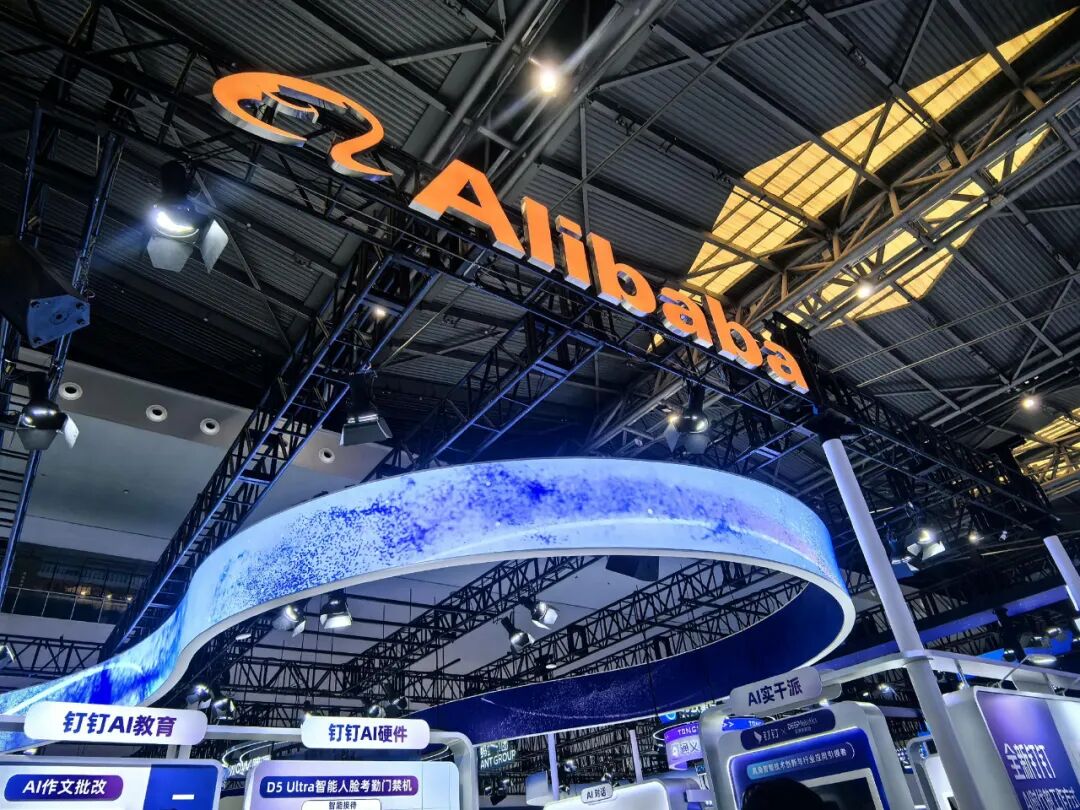
Unlike the 'forceful saturation' tactics common among tech giants, Alibaba's hardware strategy resembles 'silent nurturing,' grounded in calculated moves from its capability and platform precipitate (translation: 'accumulation').
This explains Alibaba's unusual tactical freedom granted to Quark. While other majors debate how to apply large models to B2B markets, Quark dived into C2B hardware. Its four-month productization from July debut to November launch explicitly executes Alibaba's 'user-first, AI-driven' strategy.
Yet, the path is fraught with rivals. ByteDance acquired Pico; Meta's Ray-Ban smart glasses have iterated for generations; Apple's Vision Pro, though differently positioned, redefines spatial computing; startups like Rokid go all-in.
Rokid founder Zhu Mingming Speak frankly (translation: 'bluntly stated') that their edge lies in this singular focus: 'Rokid's greatest strength is that [AI glasses] are our only choice... so we must go all out.' He argues that while big companies have ecosystems and funds, smart glasses aren't their core. Startups, betting everything on this field, naturally invest with greater density and focus.
However, isn't Alibaba also 'all-in'? Since adopting 'user-first, AI-driven' as its strategic core, Alibaba has launched unprecedented investments. CEO Wu Yongming even stated at the latest earnings call that the previously announced '380 billion RMB over three years' plan might still be insufficient. Quark AI Glasses' rapid journey from unveiling to market reflects this strategic resolve in action.
For Quark and Alibaba in 2025, daring to enter this promising yet uncertain hardware arena is already a victory. This mature internet giant is voluntarily stepping out of its software comfort zone to 'venture invest' in the most unpredictable hardware frontier with a startup's spirit.
04. Epilogue
Just as the Wubi input method unlocked the interaction between Chinese characters and computers, the smart glasses perched on our noses today might be the key to digitizing the physical world.
Before the future fully materializes, no one can predict who will become the 'Sogou Input Method' of the visual interaction era. What's certain is that Alibaba, through Quark, has declared its 'unwavering presence.'
In New Perspective's view, Quark follows a core axis: 'Qianwen large model as the intelligent engine, browser and glasses as strategic wings.' Qianwen serves as the unified technical foundation and ecological hub. The browser, leveraging its existing user base (especially young college students), 'wins the present,' while the glasses 'bet on the future,' seizing the next interaction paradigm and traffic gateway.
Admittedly, Quark Glasses may not generate significant GMV shortly, and as first-gen products, they face compromises like dependency on a dedicated charging clip. Yet, their deeper value lies in securing Alibaba a ticket to the post-smartphone era.
In tech's protracted game, 'being present' matters more than immediate wins. This unassuming, everyday-integrated glasses might embody Alibaba's 'soft landing' in the AI era: not seeking overnight success but steady, grounded progress.
*Featured image and illustrations sourced from the internet.
-
On the Eve of Its IPO, Avatr Finds Itself Embroiled in a 'Farce of Controversy and Belittlement'
-
![]()
Yutong Optics' Japanese Subsidiary Unveiled in Tokyo, Shifting Strategic Focus to Technology-Driven Growth
-
![]()
Half-Year Revenue Outstrips Last Year’s Total! Zhongrun Optics Forecasts 80.2% H1 Revenue Growth
-
![]()
Why Does AI Competition Start with Computing Power?
-
![]()
Apple AI Finally Makes Its Debut in China, Yet iPhone's 'AI Autonomy' Faces Uncertainty
-
![]()
Apple AI and QianWen Make Up Lessons: Alibaba Has Its Own 'Doubao Phone'
-
![]()
QianWen Joins Apple, Signal for Large Models to ‘Fade into the Background’
-
![]()
The ‘Anchor’ Strategy of Google Hidden Behind the Bleeding Financial Report