CES 2026: A Holistic Guide to Smart Glasses Exhibitors, Products, and Four Future Trends
 01/09 2026
 648
648
On January 6th (U.S. time), the annual Consumer Electronics Show (CES)—the world's largest, most authoritative, and influential tech event—kicked off with great fanfare in Las Vegas.
Since the last edition, smart glasses have unquestionably emerged as one of the major highlights. At this year's show, RUNTO's on-site data revealed that over 50 companies in this sector showcased their latest technologies and products.
Key Smart Glasses Products Displayed at CES 2026
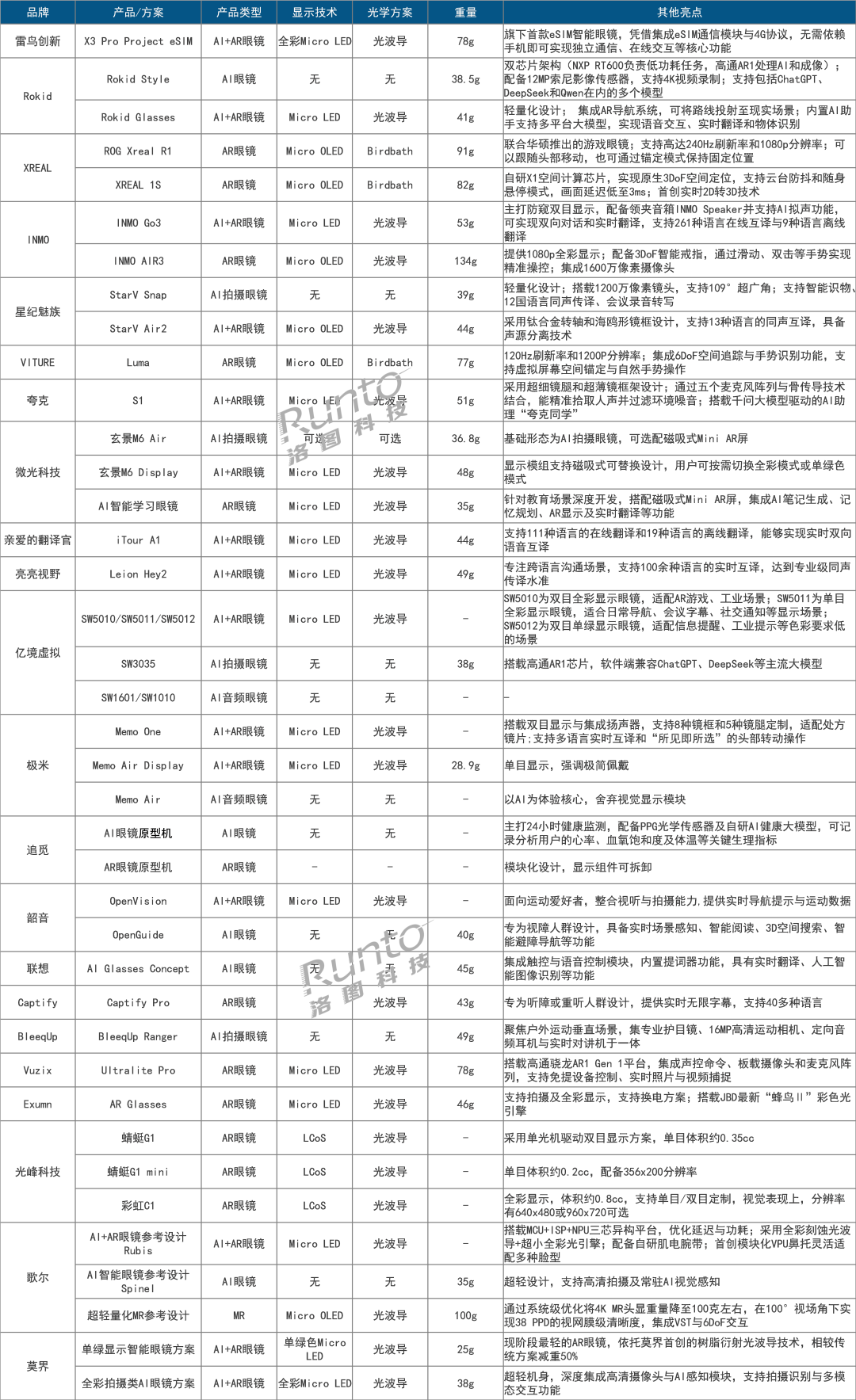
Source: Compiled by RUNTO
The market's enthusiasm for smart glasses is not without reason. As 2026 begins, two significant developments have emerged in the smart glasses markets of China and the United States: Firstly, China's new national subsidy policy has standardized subsidy categories nationwide, eliminating six categories, including kitchen appliances and small home appliances, while adding smart glasses as a truly emerging category. Secondly, Meta announced that due to "unprecedented demand and limited inventory," it would pause the launch of Ray-Ban Display smart glasses in the UK and other markets, prioritizing the fulfillment of U.S. market orders.
Indeed, this enthusiasm is grounded in solid data. According to RUNTO, global shipments of smart head-mounted devices—including VR/MR and smart glasses (encompassing AR glasses, audio glasses, and camera-equipped glasses)—are expected to exceed 11 million units in 2025. Among them, smart glasses shipments are projected to reach approximately 6.3 million units, marking a significant 2.7-fold increase from 2024.
Global Smart Glasses Market Shipment Volume (2021-2025)
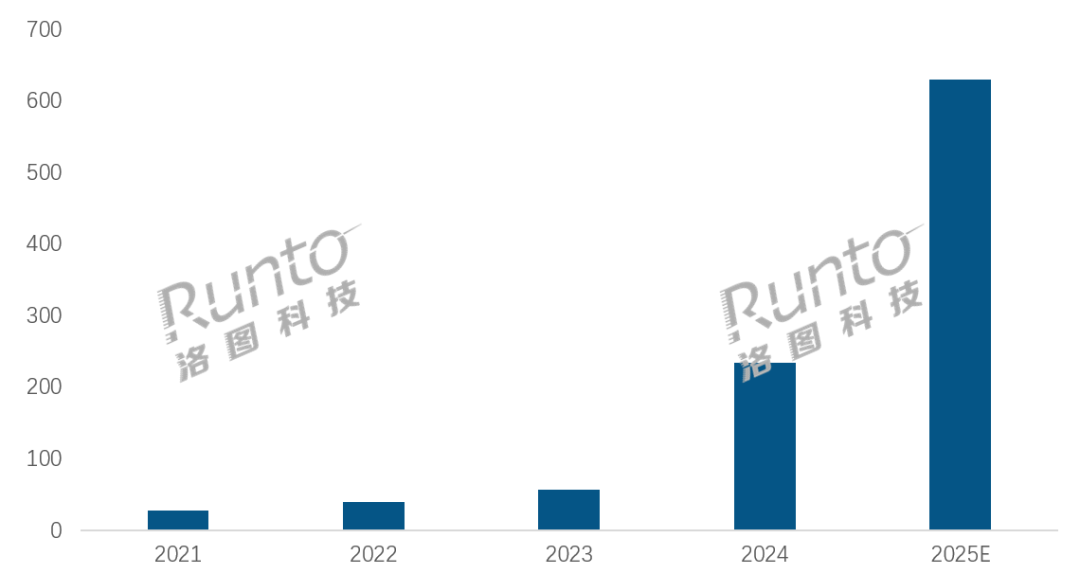
Data Source: RUNTO (in ten thousand units)
Chinese Companies Lead the Charge, Expanding Their Reach
Chinese firms have emerged as the primary drivers in the global smart glasses sector. RUNTO statistics indicate that among CES exhibitors related to smart glasses, Chinese brands account for over 60%, covering the entire industry chain from core components to finished products.
Companies such as Thunderbird Innovation, XREAL, INMO, Rokid, Starry Mercury, Alibaba, Appotronics, and Goertek made a strong showing, unveiling not only multiple consumer-grade new products but also core technology solutions like waveguide modules and micro-optical engines. This underscores China's full-chain innovation capabilities in the smart glasses field.
Since 2025, the Chinese market has seen entries from brands across various sectors, including Xiaomi, Lenovo, Hisense, Liweike, 360, Alibaba, Xiaodu, Li Auto, Lao Feng Xiang, KTC Kangguan, and Sharge. At this exhibition, projector manufacturer XGIMI introduced smart glasses with portability and display advantages, while Dreame, a leader in the cleaning sector, showcased two prototype models: an AI glasses and an AR glasses.
Overall, RUNTO has identified four key development directions for the industry:
① Design: Lightweight Innovations, Modularity Enhances Flexibility
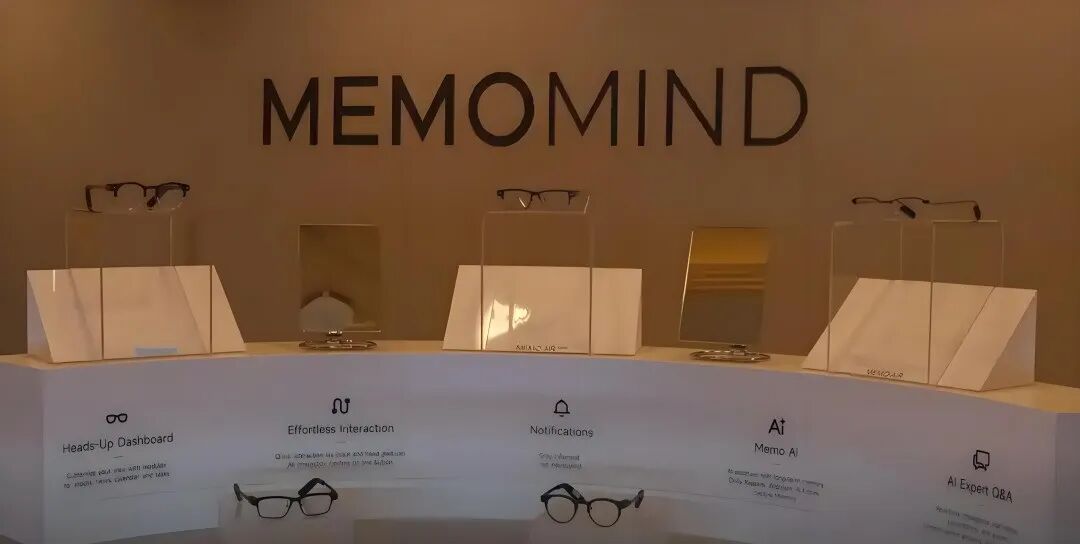
Lightweight design has become a core consensus in smart glasses product design and a key direction for achieving all-day wearability. The industry has now entered the "gram-level competition" phase, with leading companies launching smart glasses products weighing as low as 40g. Mojie showcased a 25g single-green display smart glasses solution; XGIMI's Memo Air Display weighs 28.9g; while Goertek's AI smart glasses reference design, Spinel, weighs 35g.
Another emerging trend is modular design, which enhances product adaptability for diverse scenarios. Weiguang Technology's M6 series and its AI smart learning glasses, co-developed with Nanobox, innovatively feature a magnetic Mini AR screen, allowing users to switch between full-color and single-green modes as needed. Dreame's AR glasses also offer a detachable display module.
② Products: Display and Optical Technology Advancements, Breakthroughs in Independent Terminal Capabilities
In terms of display technology, solutions like Micro OLED, Micro LED, and LCoS are thriving, particularly Micro LED, with 17 products/solutions featuring this technology. All three LCoS solutions come from Appotronics, which is also the technology provider for Meta's first AR glasses, Ray-Ban Meta Display.
According to RUNTO's online data (including Tmall, JD.com, Douyin, etc.), Micro LED's sales share in the Chinese AR glasses online market was approximately 22% in 2025, a significant increase of about 10 percentage points from 2024.
In terms of optical solutions, waveguides are gradually becoming standard in mid-to-high-end AR glasses products, with over 20 products/solutions adopting this technology.
According to RUNTO's online data, waveguides accounted for approximately 23% of sales in the AR glasses online market in 2025, a 7 percentage point increase from 2024.
Sales Share and Changes of Display Technologies and Optical Solutions in the Chinese AR Glasses Online Market (2025)
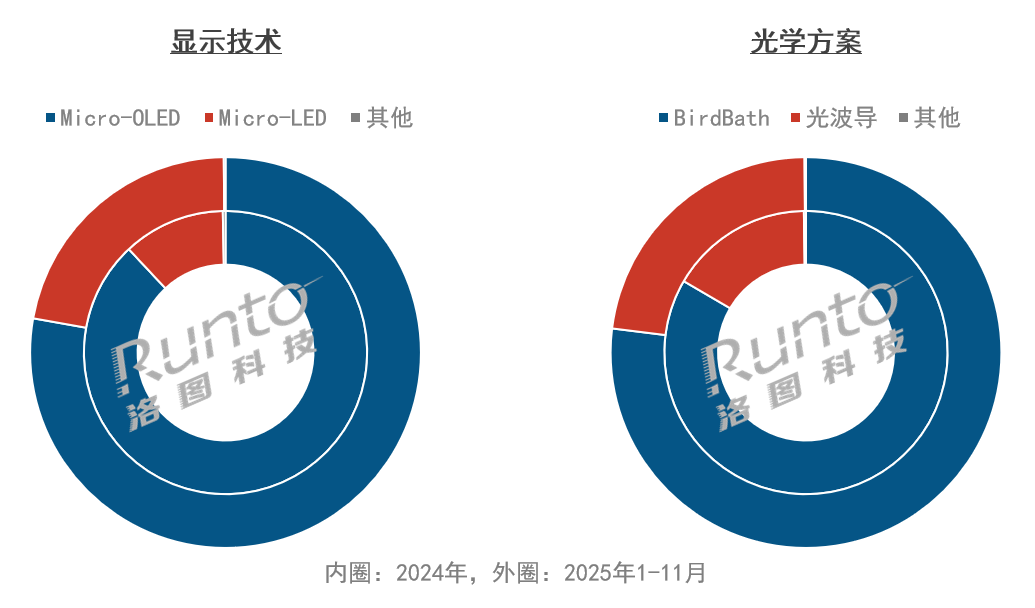
Data Source: RUNTO's online data (in %)
More notably, there has been a breakthrough in smart glasses' capabilities as independent terminals. Thunderbird Innovation showcased its first AR smart glasses equipped with eSIM, the "Thunderbird X3 Pro Project eSIM," at this CES. Integrating an eSIM communication module and 4G protocol support, it enables functions like making and receiving calls, multimodal AI dialogue, and high-quality AI real-time translation without relying on a smartphone, becoming a truly independent communication-capable consumer-grade AR smart glasses. On January 5th, Thunderbird Innovation announced the completion of a new funding round exceeding 1 billion yuan, led by China Mobile and participated in by China Unicom.
③ Scenarios: Moving Beyond All-in-One Positioning, Breaking into Vertical Applications
Furthermore, smart glasses products are entering a phase of deep cultivation in vertical scenarios. From the exhibited products, both industry-specific and consumer-grade segmentation scenarios have achieved breakthrough progress, with significantly enhanced functional adaptability across different scenarios.
In industry-specific sectors, Vuzix's LX1 smart glasses, designed for harsh environments, can operate continuously at -20°C, paired with a high-definition head-up display, suitable for industrial and defense special scenarios. Yijing Virtual's SW5010 binocular full-color display glasses are tailored for industrial scenarios' immersion needs, improving operational efficiency through precise display.
In consumer-grade scenarios, besides audio-visual entertainment and information display, various sectors like gaming, sports, health, office, and learning have all seen targeted new product launches.
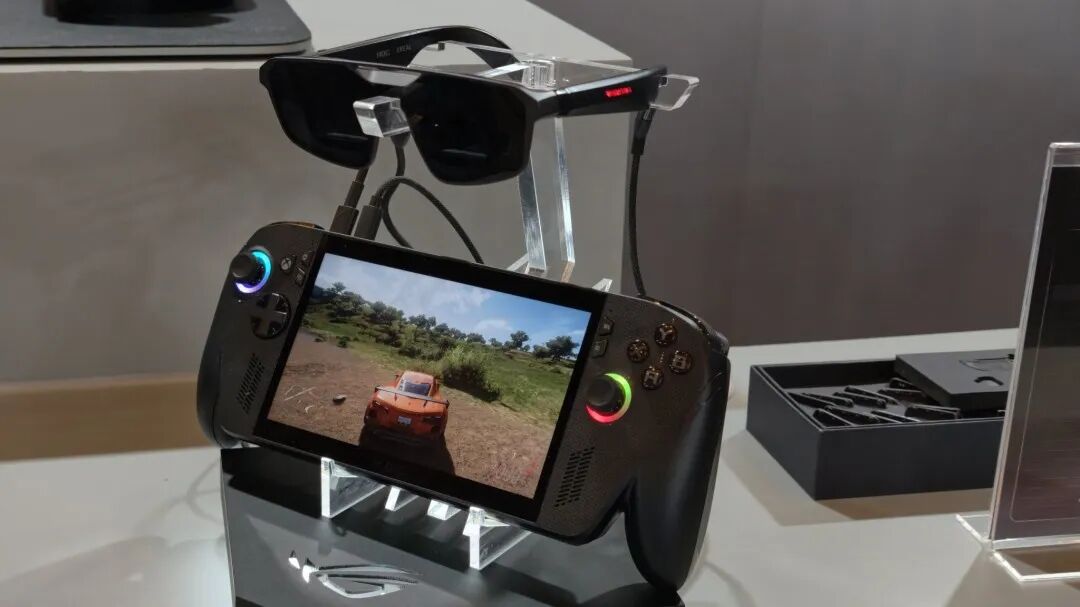
In the gaming scenario, XREAL and ASUS jointly launched the ROG XREAL R1 gaming smart glasses, supporting a 240Hz high refresh rate and a 57-degree field of view, capable of presenting a 171-inch giant screen at a 4-meter virtual distance. Paired with 3DoF spatial anchoring technology, it allows users to freely "place" virtual screens in the real environment, significantly reducing dizziness. Electrochromic lenses can automatically adjust light transmittance, balancing immersion and environmental perception.
In the sports scenario, BleeqUp Ranger 4-in-1 AI sports shooting glasses from Tribute to the Unknown's sports technology brand BleeqUp integrate professional sports goggles, an AI sports camera, open Bluetooth headphones, and a real-time intercom system. Shokz's OpenVision targets sports enthusiasts, providing real-time navigation prompts and sports data.
In the health scenario, Dreame's AI health glasses, equipped with PPG optical sensors and a self-developed AI health model, can record and analyze key physiological indicators like heart rate, blood oxygen saturation, and body temperature. Shokz's OpenGuide is designed for visually impaired individuals, featuring real-time scene perception, intelligent reading, 3D spatial search, and intelligent obstacle avoidance navigation.
The office scenario focuses on cross-language communication, with INMO GO3 supporting various modes like photo translation, offline translation, and simultaneous interpretation. LLVision Leion Hey2 supports real-time mutual translation in over 100 languages, reaching professional-level simultaneous interpretation standards. Dear Translator A1 supports online translation in 111 languages and offline translation in 19 languages. Additionally, Starry Mercury StarV Snap supports simultaneous interpretation in 12 languages, on-site recording transcription to text, and AI-generated meeting minutes.
In the learning scenario, the AI smart learning glasses co-developed by Weiguang Technology and educational brand Nanobox feature functions like photo recording of questions, intelligent Q&A, and AI object recognition analysis. This deeply integrates large model capabilities into the entire learning process, precisely addressing pain points like homework assistance and knowledge expansion.
④ Deep AI Integration
The ecosystem construction centered on deep AI integration is accelerating significantly, with mainstream exhibited products all equipped with AI chips and integrating large models. According to RUNTO's online data, the penetration rate of AI large models in the Chinese smart glasses market (excluding VR/MR) increased from 17% in 2024 to over 40% in 2025.
At the software and service level, INMO AIR3 supports Google Play, directly accessing the Google application ecosystem. Quark AI Glasses S1 relies on the Alibaba ecosystem to achieve multi-scenario service closure. Thunderbird X3 Pro Project eSIM integrates 4G communication capabilities, further strengthening collaboration between communication companies and hardware manufacturers, all accelerating the enrichment of ecological content.
Looking ahead, with the continuous iteration of core technologies and cost reductions, RUNTO predicts that global smart glasses shipments will exceed 11 million units in 2026. Competition among participating brands, technological innovation, and scenario expansion will become more diverse and intense, ushering the smart glasses industry into a golden development cycle.

-
On the Eve of Its IPO, Avatr Finds Itself Embroiled in a 'Farce of Controversy and Belittlement'
-
![]()
Yutong Optics' Japanese Subsidiary Unveiled in Tokyo, Shifting Strategic Focus to Technology-Driven Growth
-
![]()
Half-Year Revenue Outstrips Last Year’s Total! Zhongrun Optics Forecasts 80.2% H1 Revenue Growth
-
![]()
Why Does AI Competition Start with Computing Power?
-
![]()
Apple AI Finally Makes Its Debut in China, Yet iPhone's 'AI Autonomy' Faces Uncertainty
-
![]()
Apple AI and QianWen Make Up Lessons: Alibaba Has Its Own 'Doubao Phone'
-
![]()
QianWen Joins Apple, Signal for Large Models to ‘Fade into the Background’
-
![]()
The ‘Anchor’ Strategy of Google Hidden Behind the Bleeding Financial Report