The Surge of "Chips" Amidst the AI Glasses Boom
 01/16 2026
 747
747
Dancing with Constraints: The Emergence of the "ISP" from the Trilemma / Written by Ran Qixing, VR Gyroscope
Looking back at the industry from the perspective of 2026, 2025 stands out as a pivotal year for the explosive growth of AI glasses.
According to the latest data from IDC and other research institutions, the global market for AI glasses is witnessing an unprecedented surge in shipments. IDC's figures reveal that in the third quarter of 2025, global smart glasses shipments reached 4.296 million units, marking a year-on-year increase of 74.1%.
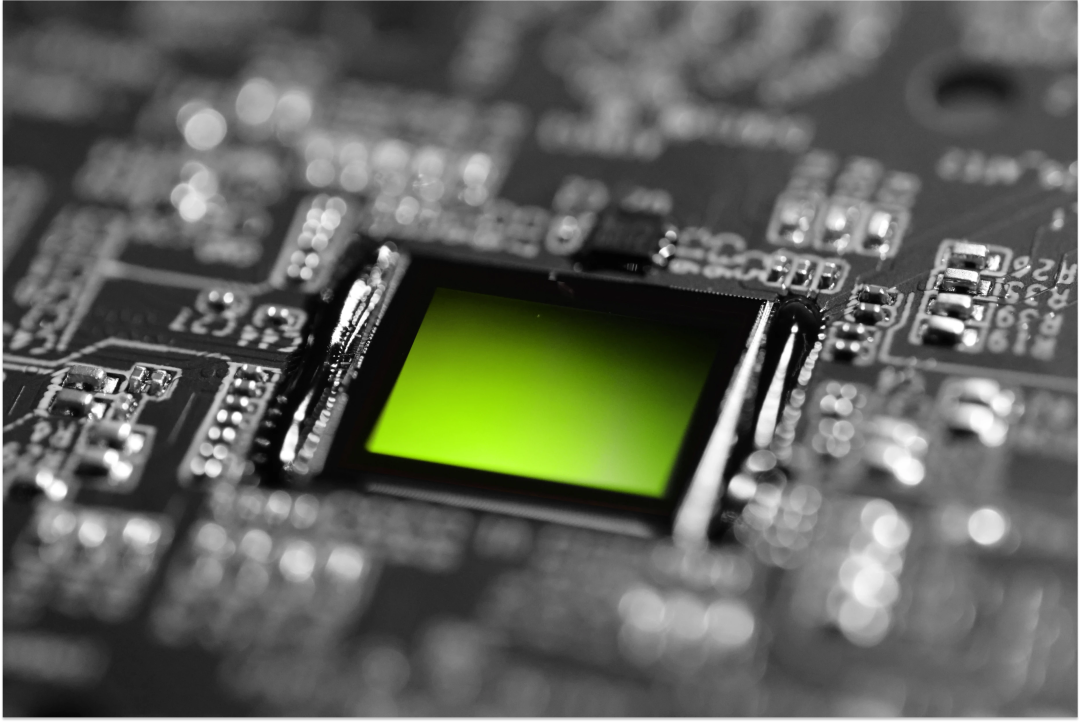
From the global phenomenon of Ray-Ban Meta to the entry of domestic tech giants like Xiaomi, Baidu, and Alibaba, and even the cross-industry move by automaker Li Auto, smart glasses are undergoing a profound industry transformation and experiencing a market explosion. Amidst this hardware reshaping, a hidden yet crucial component is taking center stage – the standalone ISP (Image Signal Processor) chip.
01
Diverse Architectures in AI Glasses: Balancing Trade-offs for Optimal Solutions
In the absence of a perfect, one-size-fits-all chip solution, the AI glasses market in 2024-2025 has embraced a pragmatic approach, akin to "letting a hundred flowers bloom." Each player leverages its unique strengths, balancing factors such as weight, volume, shooting performance, battery life, and power management. Consequently, various combinations have emerged for AI glasses, including system-level SoCs, SoC+MCU, and MCU+ISP.
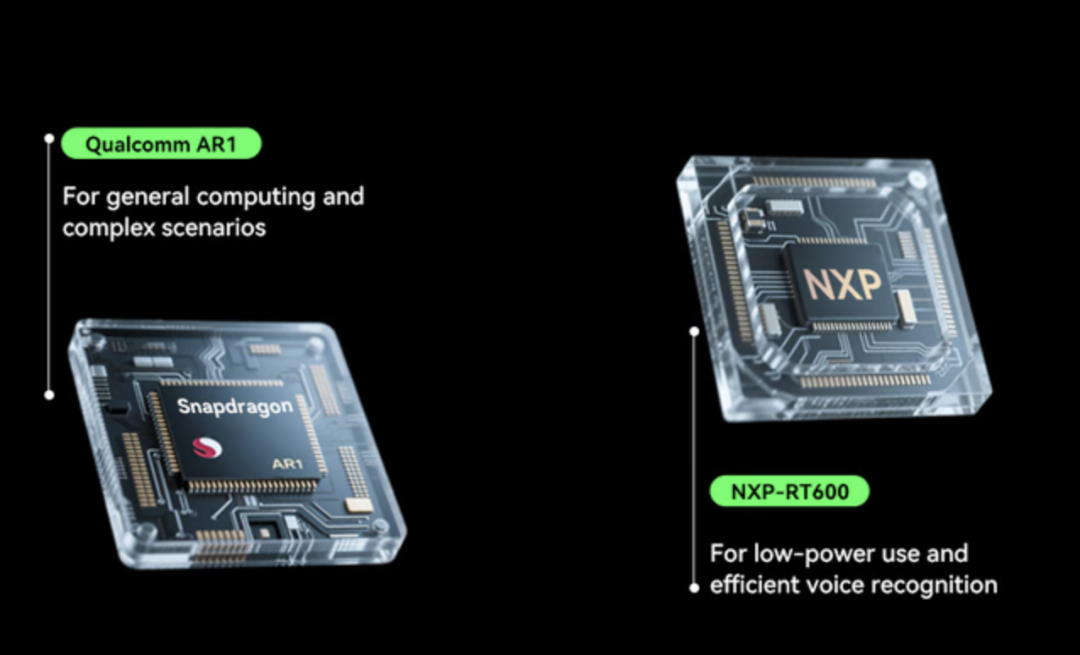
For instance, the Thunderbird X3 Pro employs the Qualcomm Snapdragon AR1 platform to meet its demanding full-color display and application needs. This represents a typical system-level SoC solution, offering robust computing capabilities and mature algorithms for a high-quality imaging experience. However, it poses significant challenges in terms of power consumption control.
As an industry pioneer, Ray-Ban Meta's first-generation product utilized the Qualcomm 4100, while the second generation upgraded to the Qualcomm Snapdragon AR1, specifically designed for AI glasses. Although the second-generation Ray-Ban Meta employs a standalone SoC solution, it also integrates NXP's application coprocessor to reduce SoC power consumption and ensure extended battery life. Consequently, the second-generation Ray-Ban Meta glasses achieve approximately 8 hours of battery life per charge (under mixed use/audio playback conditions). Rokid Glasses also adopt a similar architectural design.
Xiaomi's AI glasses, launched in 2025, opt for a "dual-core architecture" comprising SoC + MCU. Powered by the Qualcomm AR1 as the main computing unit for complex visual perception and high-definition shooting, they are paired with a BES2700 chip from Bestechnic as a coprocessor for low-power audio and all-day standby. Although this architecture delivers robust performance, it also increases costs and leads to resource waste – Xiaomi's AI glasses start at 1999 yuan and weigh 44.7g (with lenses).
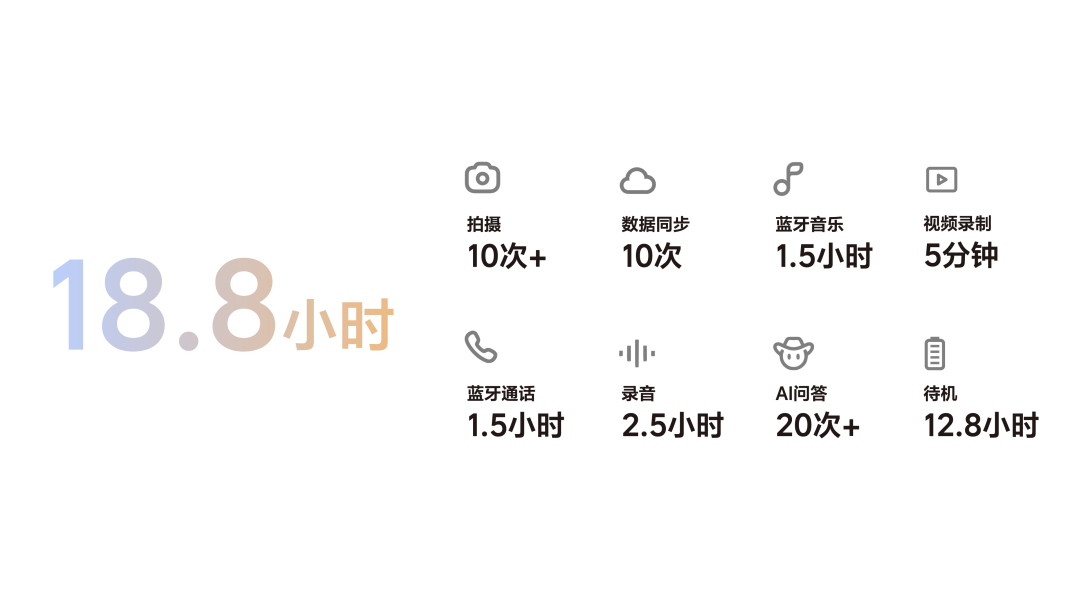
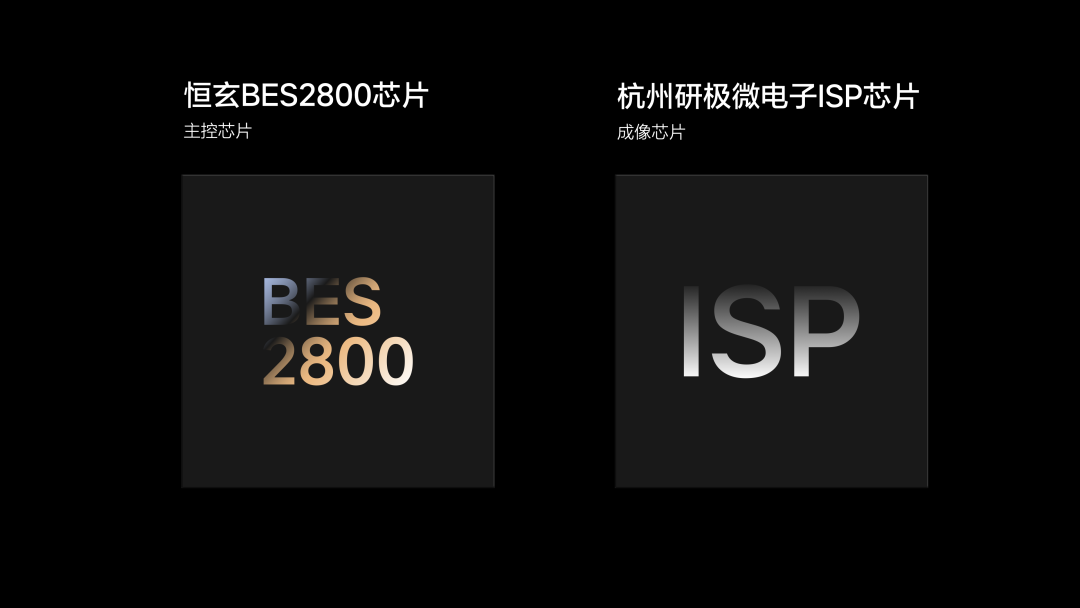
Additionally, Li Auto's latest Livis glasses showcase another approach – MCU+standalone ISP. To achieve ultimate wearing comfort (36g) and battery stability (18.8 hours), Li Auto abandoned the general-purpose high-computing SoC and instead adopted the low-power BES2800 from Bestechnic as the main controller, supplemented by a standalone ISP chip from YANJIWEI. This solution significantly reduces unnecessary computing redundancy and costs, enabling the Livis glasses to be priced at 1699 yuan.
At CES 2026, Infinix, a brand under Transsion Holdings, showcased the Infinix AI Glasses Pro, featuring the Bestechnic 2800 + YANJIWEI ISP chip solution. L’Atitude 52°N also integrates the Bestechnic BES2800 + YANJIWEI ISP solution. Goertek unveiled the Rubis full-color display multimodal AR glasses reference design, which optimizes the mainstream design direction by incorporating an NPU module, achieving a MCU+ISP+NPU three-chip heterogeneous solution.
02
Dancing with Constraints: The "ISP" Born from the Trilemma
Why hasn't the market uniformly adopted smartphone chips, leading to the emergence of so many "add-on" solutions? For product managers, every aspect of AI glasses development feels like dancing with constraints.
AI glasses face a harsh "trilemma": How to fit an all-day battery, a high-definition camera, and a computing motherboard into a frame weighing less than 40 grams? Under the current technological architecture, traditional general-purpose chip solutions have encountered a severe "power wall."
Historically, ISPs have typically been integrated as a submodule within large SoCs. However, under the new standards of pursuing ultimate thinness, long battery life, and cost control, this "overkill" model has become inadequate. Consequently, the market began calling for a dedicated chip with extremely low power consumption, support for high-resolution shooting, and rapid startup capabilities.
In terms of capabilities, traditional Bluetooth MCUs, while mature in watch and earphone applications, have limited capabilities in processing image data.
From a usage perspective, "shooting" has become the highest-frequency scenario for AI glasses and is crucial for capturing high-quality content.
Driven by this pain point, the "dual-chip architecture" has gradually become the industry standard, with standalone ISP chips stepping into the spotlight as a key variable for balancing performance and power consumption.
It's worth noting that most standalone ISP chips on the market currently cater to To B scenarios like security monitoring. These scenarios prioritize "clearly capturing key information" over "high-quality image presentation." Consequently, chips in this category have not been optimized for performance dimensions strongly related to image quality, such as color reproduction, dynamic range, and noise control.
As consumer-grade smart devices, AI glasses have much higher user expectations for shooting capabilities, requiring diverse image quality needs for daily recording and scenario-based creation. This limits the practical shooting effectiveness of AI glasses using traditional To B ISP chips, potentially necessitating greater investment in image algorithms by manufacturers. Furthermore, according to VR Gyroscope, integrating standalone ISPs with Bluetooth MCUs is not straightforward, with numerous interface and ecosystem obstacles leading to significantly prolonged development cycles for some manufacturers.
03
Standalone ISP Chips for AI Wearables Step into the Spotlight
With architectural shifts and industry development, a group of domestic chip manufacturers has been thrust into the spotlight, including YANJIWEI, GravityXR, Yaoyu Vision Chip, and Beijing Junzheng.
In October 2025, Beijing Junzheng officially unveiled three ISP chips for wearable devices. These include the next-generation wearable ISP chip CW080, scheduled for launch in Q1 2026. Featuring SiP packaging and a compact size of 7mm*9mm, it integrates 128MB DDR3 memory and supports 12-megapixel photography and 4K video recording.
Additionally, Beijing Junzheng offers wearable ISP products like CW020 and CW240. The CW020, with an ultra-compact 2mm package, supports dual cameras and boasts ultra-low power consumption and wide peripheral features, making it a dedicated image processing solution for extreme wearable scenarios, scheduled for release in Q2 2026. The CW240, utilizing an 8nm advanced process, features a small package, supports higher resolutions and multi-camera setups, and offers ultra-low power consumption, high computing power, EIS, and stitching technology, representing the latest generation of image processors, scheduled for release in Q4 2026.
Beyond traditional chip manufacturers, GravityXR emerges as another significant new force. With a core team from Apple and Meta, bringing profound spatial computing expertise, GravityXR introduced its ISP chip for AI glasses – the G-VX100 – in November 2025.

The G-VX100 features a 4.2mm ultra-narrow package, easily fitting into the narrowest parts of glasses, such as the nose bridge or temple, significantly liberating industrial design. In terms of performance, it supports 16-megapixel photography and 4K 30fps video recording, with recording power consumption as low as 260mW. Furthermore, GravityXR has developed what it claims to be the world's first "MMA (Multimodal Awakening)" technology, supporting a hierarchical awakening mechanism – only waking high-power modules when detecting key events, truly achieving all-day low-power perception.
In an earlier interview with VR Gyroscope ("Exclusive | XR Chip Manufacturer Yaoyu Vision Chip Completes Series A Financing, Orders Reach Hundreds of Thousands"), Yaoyu Vision Chip's founder and CEO, Du Fengbo, revealed that its second-generation chip would also incorporate technical solutions tailored for AI glasses' shooting needs, with the ISP potentially being sold separately.
With growing demand from the supply chain, more standalone ISP chips tailored for AI glasses are emerging, aiming to maximize the imaging capabilities of a single camera within limited technological constraints.
Epilogue
The chip industry has long adhered to the principle of "separation after long unity, unity after long separation." The combination of Bluetooth MCU and standalone ISP may represent the core architecture for resolving the trilemma in current AI shooting glasses. However, with advancements in chip manufacturing processes and integration technologies, and even revolutions in battery materials, SoCs may once again become the mainstream solution, leveraging their higher integration and lower development costs.
-
On the Eve of Its IPO, Avatr Finds Itself Embroiled in a 'Farce of Controversy and Belittlement'
-
![]()
Yutong Optics' Japanese Subsidiary Unveiled in Tokyo, Shifting Strategic Focus to Technology-Driven Growth
-
![]()
Half-Year Revenue Outstrips Last Year’s Total! Zhongrun Optics Forecasts 80.2% H1 Revenue Growth
-
![]()
Why Does AI Competition Start with Computing Power?
-
![]()
Apple AI Finally Makes Its Debut in China, Yet iPhone's 'AI Autonomy' Faces Uncertainty
-
![]()
Apple AI and QianWen Make Up Lessons: Alibaba Has Its Own 'Doubao Phone'
-
![]()
QianWen Joins Apple, Signal for Large Models to ‘Fade into the Background’
-
![]()
The ‘Anchor’ Strategy of Google Hidden Behind the Bleeding Financial Report