Amid Stagnant Specs and Shrinking Parameters, Is Mobile Imaging Stepping into the 'Post-Production' Era?
 06/23 2026
 582
582
No matter how skillfully you capture a moment, it should always shine brighter after some editing magic.
The mobile imaging landscape is witnessing a growing convergence in parameters.
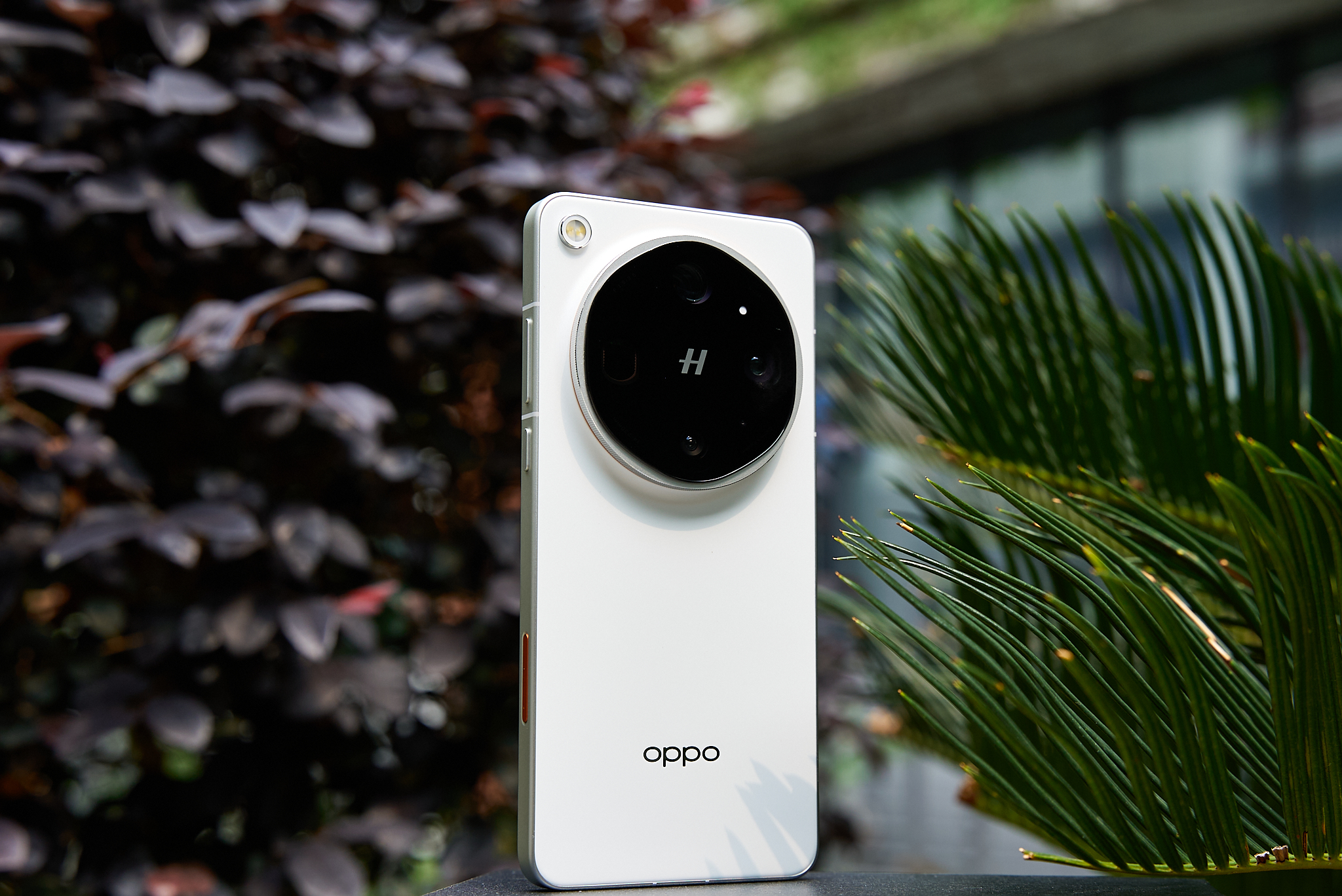
Whether you're browsing mid-range or high-end flagship devices, a cursory look at the specs reveals a familiar pattern: an 'XX-megapixel main + XX-megapixel telephoto + XX-megapixel ultra-wide' lens setup. Features like 200-megapixel sensors, periscope telephoto lenses, and large-sensor designs—once exclusive to premium flagships priced above ¥5,000—are now making their way into mid-range models priced between ¥2,000-3,000.
(Image source: Leitech)
Leitech (ID: leitech) isn't suggesting these specs are subpar—the enhanced experience from hardware upgrades is undeniable. However, for consumers, differentiating between devices with nearly identical performance, features, and imaging parameters has become a daunting task.
This year's imaging flagships are collectively 'cooling off': Most manufacturers are opting for more balanced solutions, stepping back from the one-inch sensor race to adopt moderately sized main cameras while upgrading telephoto, ultra-wide, and color sensors. This shift isn't a technological regression but a realization that a well-rounded system outperforms a single, highly optimized lens.
But here's the crux: If hardware can no longer serve as a differentiator, where will the innovation come from?
The answer is straightforward: Post-production.
Post-Production: The New Frontier in Mobile Imaging
If mobile imaging competition a few years ago revolved around 'how well it shoots,' manufacturers now prioritize 'what users can do after shooting.'
The rationale is simple: Modern smartphones can capture decent photos in most scenarios, but user demands remain unmet. They crave more vibrant colors, cleaner images, and richer modes—precisely what post-production features can deliver.

(Image source: vivo official)
More importantly, post-production features require significantly lower investment and technical barriers compared to hardware upgrades.
Improving sensors and lenses demands substantial R&D spending, with diminishing returns due to physical limitations. Post-production, however, relies primarily on algorithms and AI, enabling continuous iteration through software updates at a relatively low cost. It also allows for greater differentiation in visual style and user experience—the same hardware paired with different algorithms can produce vastly different results.
Take the booming AI photo editing trend this year, which has evolved from a hidden album tool to a key selling point for many smartphones.
Previous AI editing tools, despite their name, merely adjusted brightness, saturation, and contrast before applying filters—hardly 'AI' or user-friendly. Today's AI editing permeates every stage of photography. For instance, OPPO's 'One-Sentence Editing' lets users instruct the Xiao Bu AI assistant with commands like 'Brighten the lighting in this photo.' The system automatically optimizes the image and supports AI portrait lighting—a simple 'AI lighting' command triggers automatic face recognition and lighting enhancement, transforming ordinary photos into professional-looking portraits.

(Image source: OPPO official)
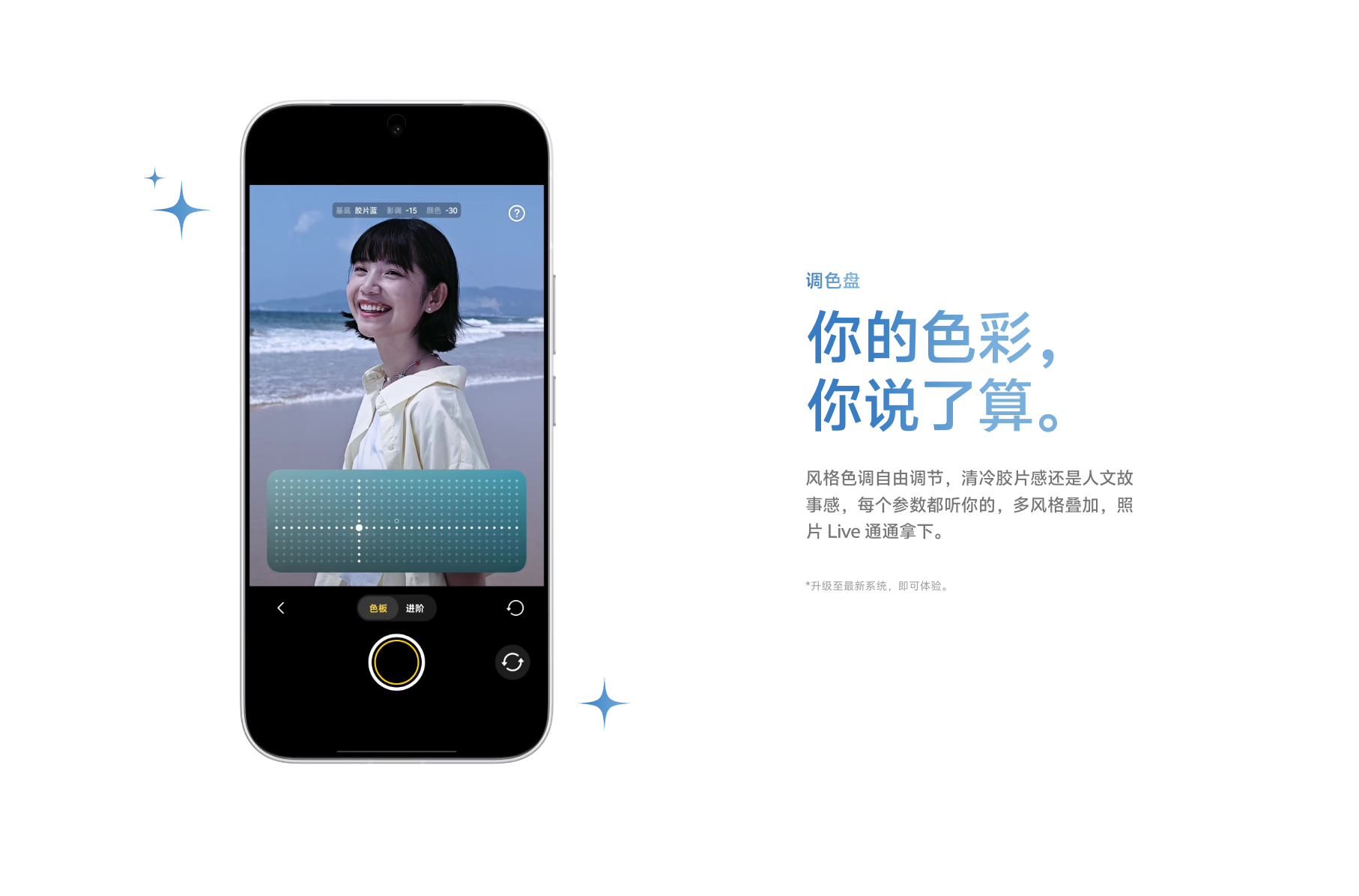
HONOR took a different approach with its 'AI Color Pursuit' feature, claiming to accurately recognize 16.77 million colors while offering style presets like Blue Tone, Sunset, and Autumn Hues. Imagine capturing a beach photo with dull-looking water. Previously, this required manual adjustments in Lightroom for white balance, hue, and saturation while preserving subject colors. Now, AI Color Pursuit lets users select the 'Blue Tone' preset for instantly vibrant, transparent waters.
These features may seem less impactful than pixel counts or sensor sizes, but they empower even novice photographers to transform mundane shots into stunning 'masterpieces.'

(Image source: Huawei official)
More intriguingly, AI editing is revolutionizing mobile photography workflows. The traditional process—shooting, importing into an editing app, adjusting, exporting, and posting—took far longer than shooting itself, not to mention the confusion many users faced with parameters. Now, these steps can be completed entirely within the phone's gallery, making professional-grade editing accessible to all.
While AI editing breaks through static photography limits, manufacturers' innovations around LivePhoto are redefining dynamic content creation.
Once an iPhone-exclusive novelty, LivePhoto has become mainstream after gaining support from WeChat and short video platforms, evolving into a new form of daily documentation.
However, LivePhoto editing has long been an industry challenge. A dynamic photo with intrusive passersby was previously impossible to fix. Now, vivo leads with its LivePhoto AI Pedestrian Removal feature.

(Image source: vivo official)
Simply frame the unwanted subject, and the system analyzes each frame to remove them while intelligently reconstructing the background. Given that LivePhoto is essentially a short video, removing elements is exponentially harder than with static images—yet vivo achieves this with impressive results, even preserving dynamic effects after removal.
Beyond pedestrian removal, manufacturers are introducing LivePhoto innovations: collage creation, dynamic filters, smart frame selection, and more. A single shutter press now prepares static photos, dynamic clips, and editing materials simultaneously.

(Image source: OPPO official)
The rise of LivePhoto reflects mobile imaging's shift from 'shooting well' to 'using well.' Hardware specs like pixel count, sensor size, and aperture once defined imaging capabilities. Now, users prioritize: Can I post directly to Moments? Can I remove passersby with one tap? Can I achieve my desired color style?
The rise of post-production features is redefining mobile imaging boundaries.
Color Management: The New Battleground
Beyond post-production, color management is what I find most fascinating.
Why? Because color is the 'soul' of photography. The same scene shot in warm, cool, or vintage tones evokes completely different feelings. Yet color management is also the most challenging field, requiring precise algorithms, massive training data, and an understanding of aesthetic preferences—difficult even for camera manufacturers, let alone smartphone makers.
In recent years, brands have emphasized their unique 'flavor': Xiaomi with Leica, Huawei with Red maple (Red maple might refer to a specific technology or collaboration), OPPO with Hasselblad, and vivo with Zeiss. Users could instantly recognize which brand shot a photo—a clear differentiator.

(Image source: Leitech)
But this approach had side effects: The same phone produced inconsistent skin tones under indoor warm light, street lamps, or cloudy daylight. Color discrepancies between main, telephoto, and ultra-wide lenses made stitched images appear as if taken by three different devices.
Over time, users complained: Why are my skin tones always yellow? Why do beach photos look dull? Why do main and telephoto colors differ so much?
What users want isn't 'brand flavor' but 'attractiveness.'
Starting in 2025, imaging flagships began prioritizing 'color authenticity.' Huawei pioneered multispectral imaging technology ('Red maple Original Color Imaging'), using multispectral sensors to stabilize white balance and skin tones, particularly in low light or mixed lighting. vivo and OPPO followed with original color lenses and multispectral systems, employing cleaner optical stacking before sensors and finer white balance algorithms to align tones across main, telephoto, and ultra-wide lenses.
Achieving 'authenticity' before 'beauty' is the correct evolution for color management.
(Image source: vivo official)
Yet 'authentic' and 'beautiful' rarely align perfectly. Authentic colors—gray skies on cloudy days, yellowish indoor lighting—may be true to life but unappealing.
Thus, modern color management goes beyond mere 'realism.' Manufacturers now overlay AI-driven optimizations: The system automatically adjusts warmth/coolness and saturation based on scene recognition. A beach photo triggers cooler blues for the sea; a sunset photo enhances warm tones in the sky.

(Image source: Leitech)
This is why I consider color management the 'ultimate expression' of post-production capabilities. It's not just a filter or color grading tool but a holistic solution spanning hardware, software, shooting, and editing. It demands precise algorithms, extensive training data, aesthetic understanding, and deep hardware integration.
Only manufacturers mastering this can claim true authority in color management.
Mobile Imaging: Beyond the Hardware Arms Race
If I had to summarize mobile imaging trends over the past two years, it's that the industry has finally moved past its 'hardware anxiety' phase.
Manufacturers now realize users care less about 'how far you can shoot' and more about 'how consistent and reliable everyday shots look.' Hardware homogenization isn't frightening—lack of differentiation is. Post-production features have become the key experience differentiator.
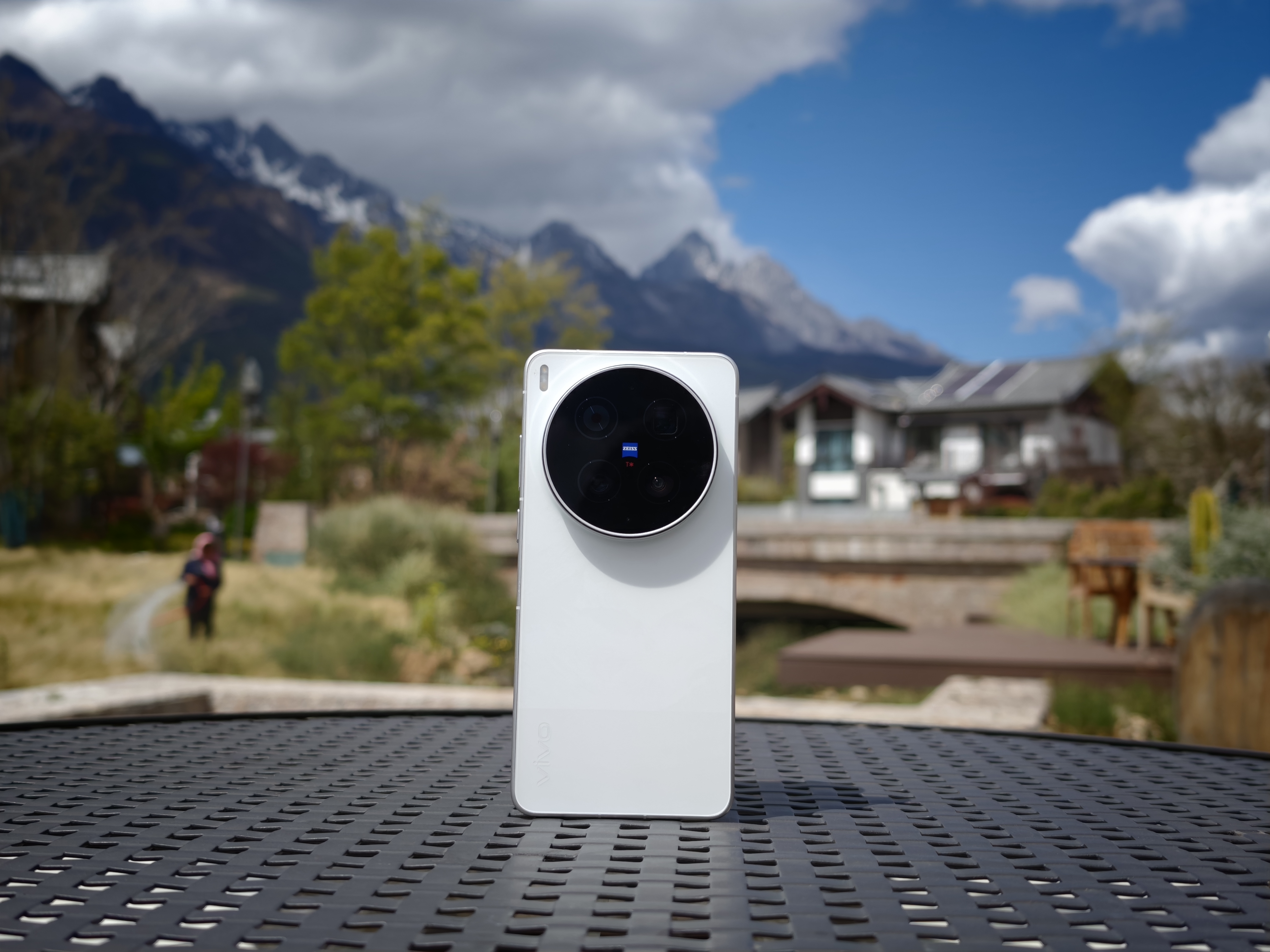
(Image source: Leitech)
For average users, this is fantastic news. You no longer need to worry about lighting conditions or carry multiple cameras while traveling. No more switching between modes and parameters—just point, shoot, and let the system handle the rest.
The mobile imaging battleground is shifting, but this isn't regression—it's evolution.
Future mobile imaging competitions will focus not just on 'shooting quality' but on 'what can be done after shooting.' Manufacturers excelling in post-production will dominate this imaging war.
OPPO, Xiaomi, vivo, Huawei, mobile imaging
Source: Leitech
Images sourced from 123RF royalty-free library. Source: Leitech
-
![]()
Samsung Galaxy Z Fold 8 Review: Ultra-Slim Dual Design Shines, but Telephoto Absence is a Bummer
-
![]()
Dongfeng VOYAH’s New Car Makes a Splash, Targeting More Than Just the 30s and 40s Crowd
-
![]()
Annual Salary of 700 Million Fails to Retain Him! AI Genius Jiahui Yu Departs Meta to Launch His Own Startup
-
Qianwen Seeks to Move Beyond Its 'Alibaba Identity'
-
![]()
How Can We Comprehensively Resolve Ctrip's Monopoly Issue?
-
![]()
From Computing Power Supply-Demand Dynamics to Capital Integration: Jin Jing New Energy Embarks on a New Business Phase
-
![]()
Top Domestic Computing Power Supplier Exceeds Net Profit Forecasts for First Half of the Year
-
![]()
Wanwei Advanced Materials Plans to Raise 2.3 Billion Yuan through Private Placement to Boost PVA Optical Film Production!