Can L1, the Shargeek AI Glasses That Once Stopped Production Voluntarily, Make a Resurgence? A Firsthand Account
 08/19 2026
 557
557
On August 18th in Wuhan, Shargeek hosted the launch event for its loomos L1 AI glasses, themed "Too Good-Looking to Be AI Glasses." VRAR Planet was among the invitees and had the opportunity to experience the product firsthand.
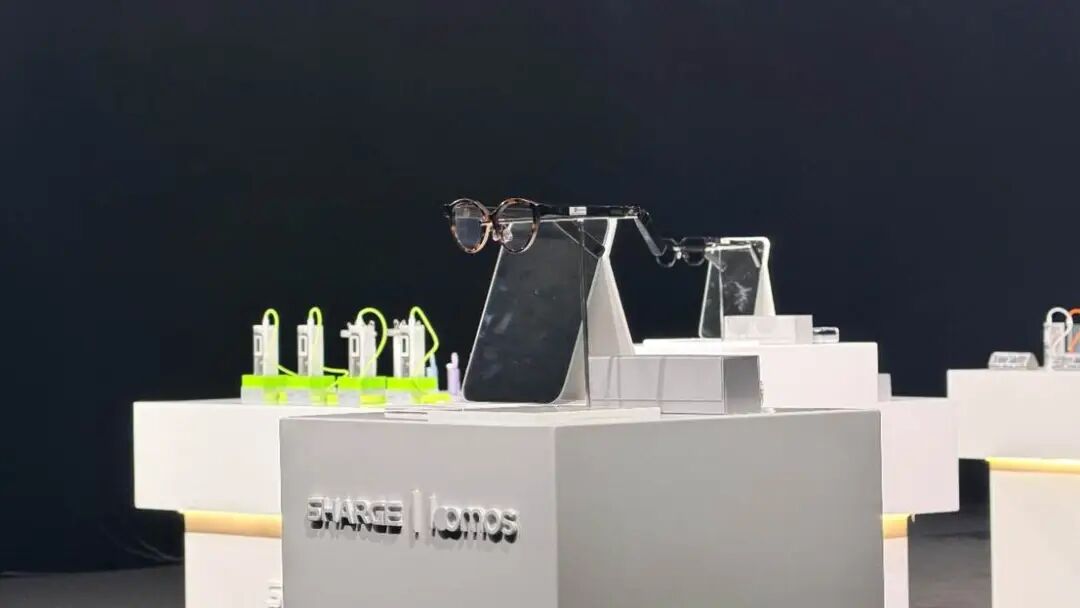
Image Source: VRAR Planet
The event's theme is thought-provoking, shedding light on a longstanding dilemma in the AI glasses industry: many products boast an array of features, yet their design and wearability often fall short for everyday use. Zhang Bo, the founder of Shargeek, once remarked, "AI glasses should first and foremost be aesthetically pleasing and comfortable as daily eyewear, not just a tech gadget strapped to your face." This statement encapsulates the core philosophy behind the loomos L1.
The event featured a fashion runway where professional models showcased various frame styles of the loomos L1. The venue was adorned with a dual X-ray security machine and a thousand-layer mirror photo booth, creating an atmosphere that felt more akin to a fashion show than a traditional tech product launch.

A year ago, Shargeek made the bold decision to discontinue its first AI glasses, the A1, and issued full refunds to all pre-order customers. Zhang Bo penned an open letter at the time, stating, "We will rise from where we fell." The loomos L1, released a year later, represents Shargeek's second foray into the AI glasses market.
Wearing Experience: Alleviating Nose Pressure
Most AI glasses currently available are modeled after sunglasses, with an average daily wear time of around 3 hours. However, the loomos L1 is designed for optical glasses users who wear them for over 16 hours a day, making comfort a top priority.
In terms of materials, the L1 eschews the industry-standard engineered plastic injection molding process. Instead, it features an aerospace-grade titanium alloy front frame paired with natural cellulose acetate panels. Titanium alloy offers high strength and light weight, while cellulose acetate is known for its gentle, skin-friendly properties, making it ideal for prolonged skin contact.
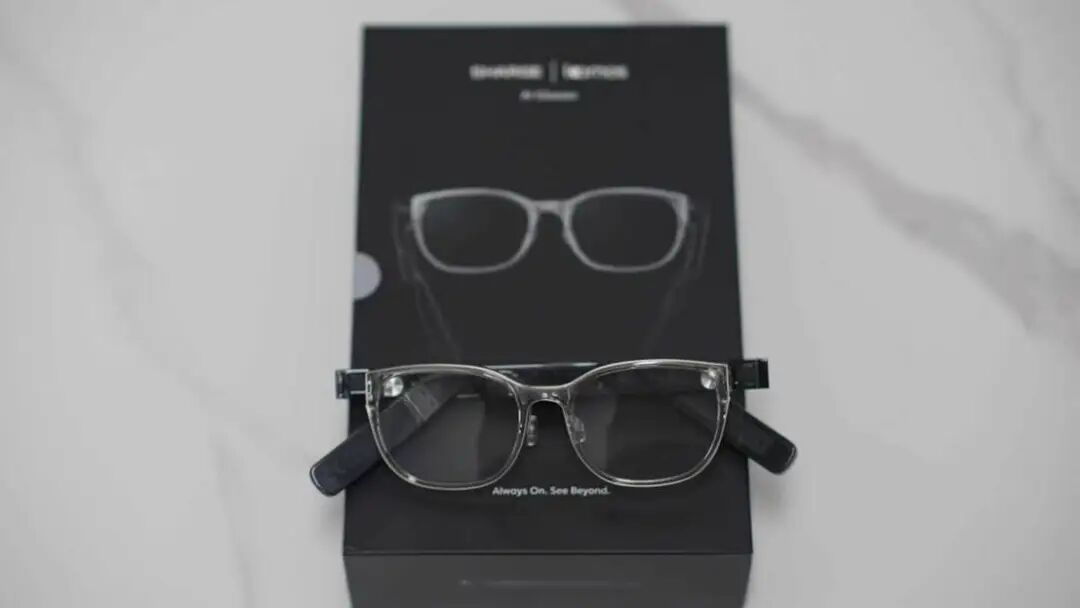
Image Source: VRAR Planet
It is widely acknowledged that hinges are a common weak point in glasses. To address this, the L1 employs a proprietary spiral hinge with an aerospace-grade titanium alloy flexible shaft, replacing the traditional spring structure. This design allows for adjustable width and maintains a precise damping feel after 10,000 open-close cycles, with cables fully concealed within the hinge.
Regarding temple design, the L1 relocates major components such as the camera, battery, and motherboard to the temple section, shifting the center of gravity backward to behind the ears. The lightest version of the device weighs 43 grams, with the front frame feeling like it weighs only 19 grams. The manufacturer claims that the pressure on the nose is 50% less than that of mainstream products.
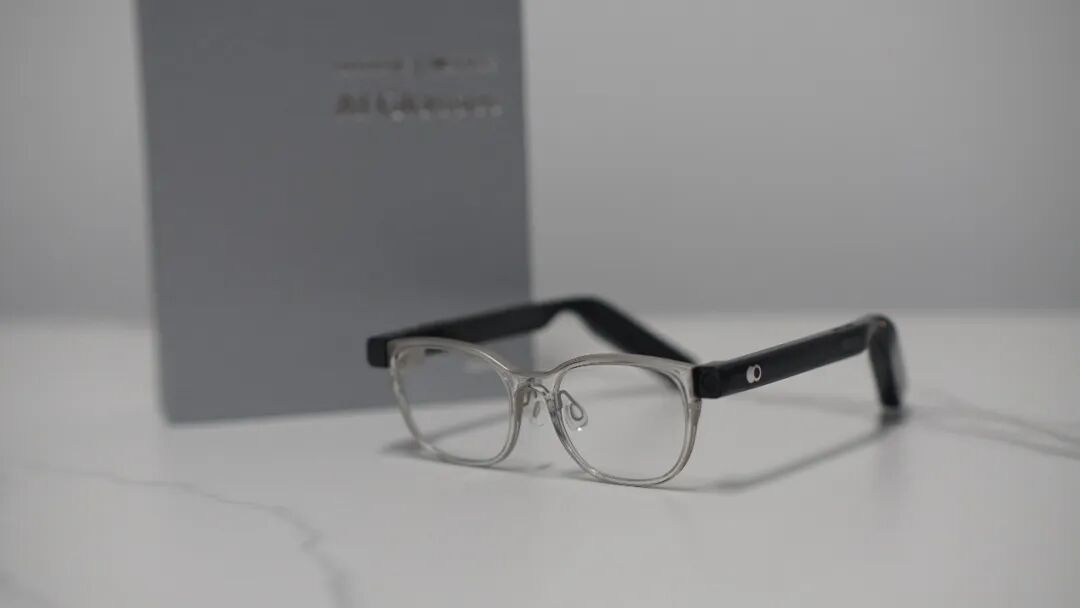
Image Source: VRAR Planet
However, VRAR Planet's actual wearing experience revealed some discrepancies between real-world performance and the stated specifications. Due to the concentration of components like the camera and battery in the temples, the L1's temples are longer and relatively heavier than those of typical smart glasses. While the front frame is indeed very light, this "front-light, back-heavy" weight distribution can cause some instability during actual wear. In simpler terms, while the pressure on the nose has decreased, the temples have become more noticeable. Whether users will accept this trade-off may vary.
In terms of appearance, the L1 offers four frame styles—Boston, Wellington D-frame, Cat-eye, and Classic Sunglasses—in five colors, with multiple sizes such as M/L available. The temple width is reduced to 10mm. This multi-frame, multi-size strategy is relatively uncommon in the AI glasses market.
AI Features: The Vision and Reality of Proactive Memory
The L1's core selling point is its "proactive memory" AI system. According to the official introduction, this system comprises several components:
The first is multi-scenario integrated recording, capable of capturing conversations in real-world environments as well as collecting sound in virtual scenarios like listening to music or watching videos. Additionally, the L1 is the first in the industry to feature one-touch AI calendar integration, combining recording files with schedule management. The entire system runs on LoomOS 2.0 and was developed in collaboration with the memories.ai team to create an AI memory engine.

However, VRAR Planet's actual experience revealed that the so-called "proactive" aspect is mainly reflected in continuous background recording. User-perceptible interactions still need to be triggered via buttons, and there is no obvious sense of "always-on, proactively online" at present.
This assessment is fairly objective, as the industry has yet to reach a consensus on how to define AI "proactivity" or what kind of "proactive" experience users truly desire.
In terms of privacy, the L1 is equipped with a physical magnetic lens cover that can shield the lens when not in use. The flash is also very noticeable during operation, meeting users' privacy needs.
Photography: Impressive Photos, but Video Falls Short
In terms of imaging, the loomos L1 features a custom 12-megapixel, 111-degree ultra-wide-angle, f/2.2 aperture camera module with a Sony IMX681 sensor, supporting AI image enhancement and EIS electronic image stabilization.
How does it perform in real-world shooting? VRAR Planet believes that the photo quality exceeds expectations. Colors are accurately reproduced, details are well-preserved, and the dynamic range is quite impressive for a module of this size. When viewed on a large computer screen, it's hard to distinguish whether the photos were taken with glasses or a smartphone.


These images were captured using the loomos L1 AI glasses. Image Source: VRAR Planet
However, video recording performance is relatively weaker. Image stability is average, and noise control under low-light conditions is not ideal. The gap in quality between photo and video is quite noticeable. This may be related to computational power and heat dissipation, as continuously processing video streams in such a compact form factor is significantly more challenging than taking single photos.
Interaction and Battery Life: Physical Buttons and Battery Swapping
In terms of interaction, the L1 eschews voice wake-up in favor of a physical button on the right temple. A light press activates the AI for conversation. This design considers the potential embarrassment of voice wake-up in public places, eliminating the need to shout "Hello XXX" at the glasses, making the interaction more natural.
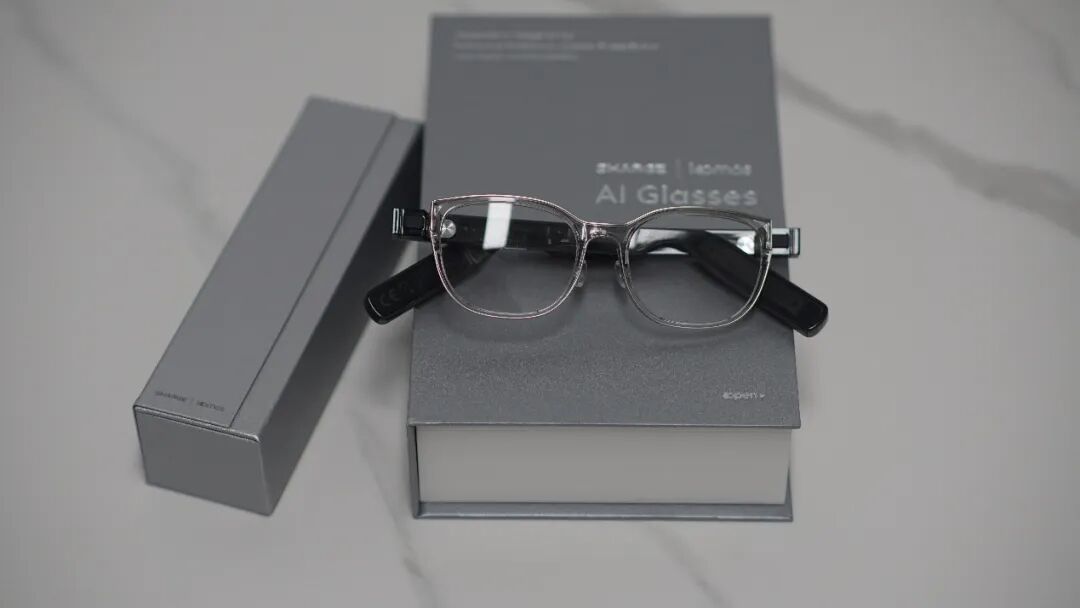
Image Source: VRAR Planet
For battery life, the L1's solution is battery swapping. It uses a 258mAh replaceable battery, which the manufacturer claims is one of the larger capacities in the AI glasses industry as of August 2026. Replacement takes about 5 seconds, and with a portable charging case, it can provide 3 to 4 additional charges.
This solution is not flashy but practical. Without breakthroughs in current battery technology, battery swapping at least ensures the device won't run out of power unexpectedly during the day. The charging case is compact and foldable, making it relatively convenient to carry.
Pricing
The loomos L1 is priced between 2699 and 2999 yuan. The initial release includes a one-year AI membership (valued at 999 yuan) and Essilor 1.67 optical lenses. Existing A1 users can purchase it at an exclusive price of 1999 yuan.
This pricing places the L1 in the mid-to-lower range of the current AI glasses market, offering some competitiveness. Additionally, Shargeek has opened a global flagship store at Wuhan MixC, providing offline experiences and precise fitting services. For products like glasses that require trying on, the value of offline channels cannot be overstated.
Summary
Overall, several aspects of the loomos L1 require further evaluation over time.
First, the practical effectiveness of "proactive memory" in real-world scenarios remains to be seen. The event's demonstrations were more conceptual, and the extent to which users will actually utilize these features after launch needs ongoing observation.
Second, whether the instability caused by the heavier temples will affect daily wearing comfort. While the total weight of 43 grams is impressive, if the weight distribution is unreasonable, it may cause discomfort during prolonged wear.
Third, whether the weaker video capabilities will impact the overall product evaluation. Users purchasing an "AI photography glasses" may feel disappointed if they find that it only excels in photos while video quality is subpar.
Fourth, since AI memory functions involve the collection and storage of large amounts of personal data, Shargeek did not elaborate much on specific measures for data security and privacy protection during the event.
Currently, the loomos L1's strategic direction is relatively clear: it does not pursue display capabilities, stack parameters, or incorporate complex AR overlays. Instead, it attempts to address the fundamental issue of "making people willing to wear it for extended periods" by improving wearing comfort and battery life through material selection, structural design, and battery swapping.
After last year's setback, this pragmatic approach deserves recognition. However, the AI glasses market has become increasingly crowded in 2026, with giants like ByteDance, Samsung, and Apple preparing to enter. Whether the L1 can help Shargeek establish a foothold in this fiercely competitive market may only be answered by ordinary users' actual experiences after the product's official delivery at the end of the year.
By Fuku
-
![]()
Surpassing the 'Storage Storm': Xiaomi’s Pivotal Moment
-
![]()
2026 China Auto Market: A 'Major Reshuffle' — Small Cars Decline, Large Cars Flourish, Is the Era of Fuel Vehicles Over?
-
![]()
Non-Recurring Items-Adjusted Net Profit Soars by 72.59%! Dongtianwei Records 502 Million Yuan in Revenue
-
![]()
Securing 2 Billion Yuan in Financing and Supplying Inno-Light: This Optical Device Company Launches Its IPO!
-
![]()
Farewell to 'Card Stacking': 2026 Marks China's Computing Power Shift to 'Token Value Output' Era
-
![]()
Xiaomi Weathers Storage Price Surge, Q2 2026 Revenue Tops 100 Billion Yuan Again
-
![]()
Geely Bids Farewell to the 'Li Shufu Era': A Historic Power Transition in China's Auto Industry | Auto Circle
-
![]()
Baidu Prepares for Inclusion in Southbound Trading: Wall Street Reassesses the Value of 'AI ETF'