Even Sues XGIMI in U.S. Court: $1.2 Million ‘AI Glasses’ Crowdfunding Campaign Abruptly Stops!
 08/27 2026
 347
347
AI Glasses Patent Dispute Escalates
By VR Pinduoduo
On August 27, Reddit users reported that the crowdfunding campaign for MemoMind One—an AI glasses project by projection device manufacturer XGIMI Technology, which had launched on Kickstarter in June—was suspended. Kickstarter officially notified supporters via email, stating that previously paid contributions had been automatically canceled and no funds would be deducted.
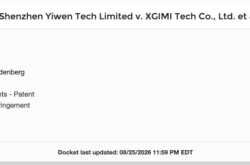
According to VR Pinduoduo’s investigation, public case records from the U.S. District Court for the Eastern District of New York reveal that on August 24, Shenzhen Yiwen Tech Limited, the company behind Even Realities, formally filed a patent infringement lawsuit against XGIMI Technology and related entities under case number 1:26-cv-05220. The defendants include XGIMI Tech Co., Ltd., XGIMI Innovation Technology (Hong Kong) Limited, Shenzhen Qinglai Innovation Intelligent Technology Co., Ltd. (responsible for MemoMind operations), and the crowdfunding platform Kickstarter.
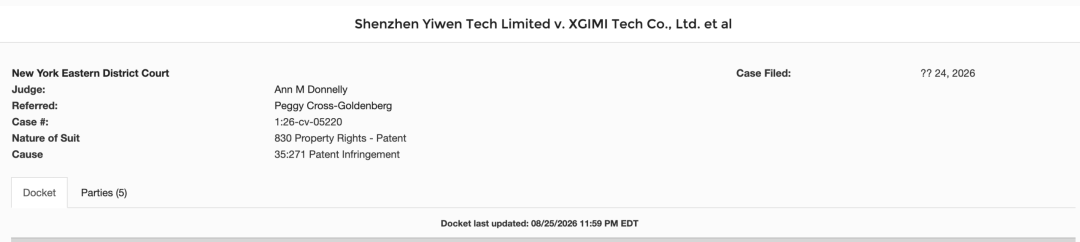
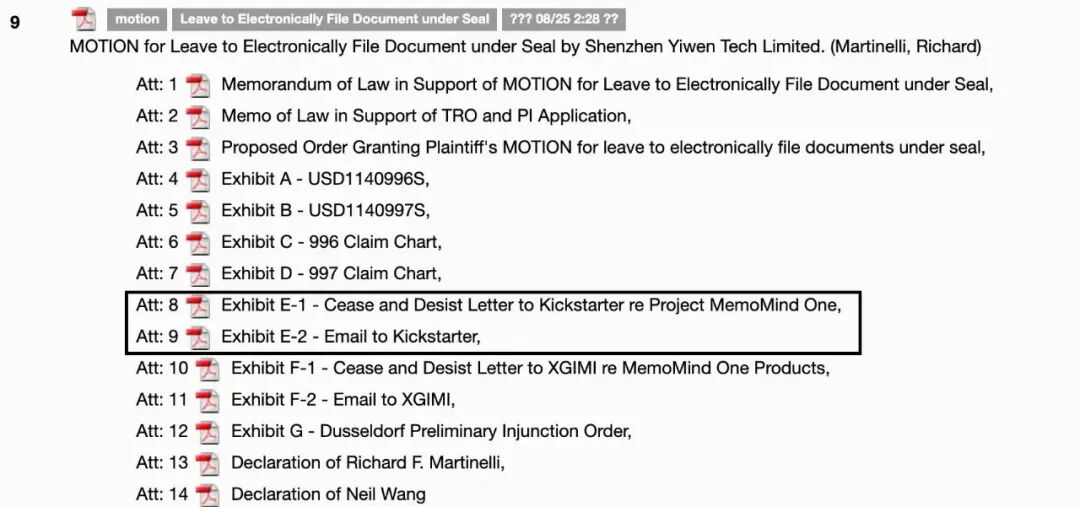
The lawsuit’s timing is particularly notable. On August 11, the two U.S. design patents at the center of the case were granted; on August 20, Even sent cease-and-desist letters to XGIMI-related companies and Kickstarter; on August 24, the formal complaint was filed; and August 27 was originally set as the end date for MemoMind One’s crowdfunding campaign. From patent issuance to lawsuit submission, only 13 days elapsed.
01
From “Familiarity” to Formal Lawsuit: Even’s Public Dissatisfaction
The conflict between Even Realities and MemoMind did not emerge overnight.
At CES 2026 in January, XGIMI unveiled its new AI hardware brand, MemoMind, and introduced products like MemoMind One. According to XGIMI, MemoMind represents a strategic expansion of the company’s decade-plus expertise in optics and industrial design into AI wearables.
Shortly after MemoMind One’s debut, Even Realities posted on social media: “It’s great to see our vision shaping the category. We just didn’t expect it to look quite so... familiar.”
The underlying message: “We’re pleased to see our vision influence the market, but the resemblance is striking.”
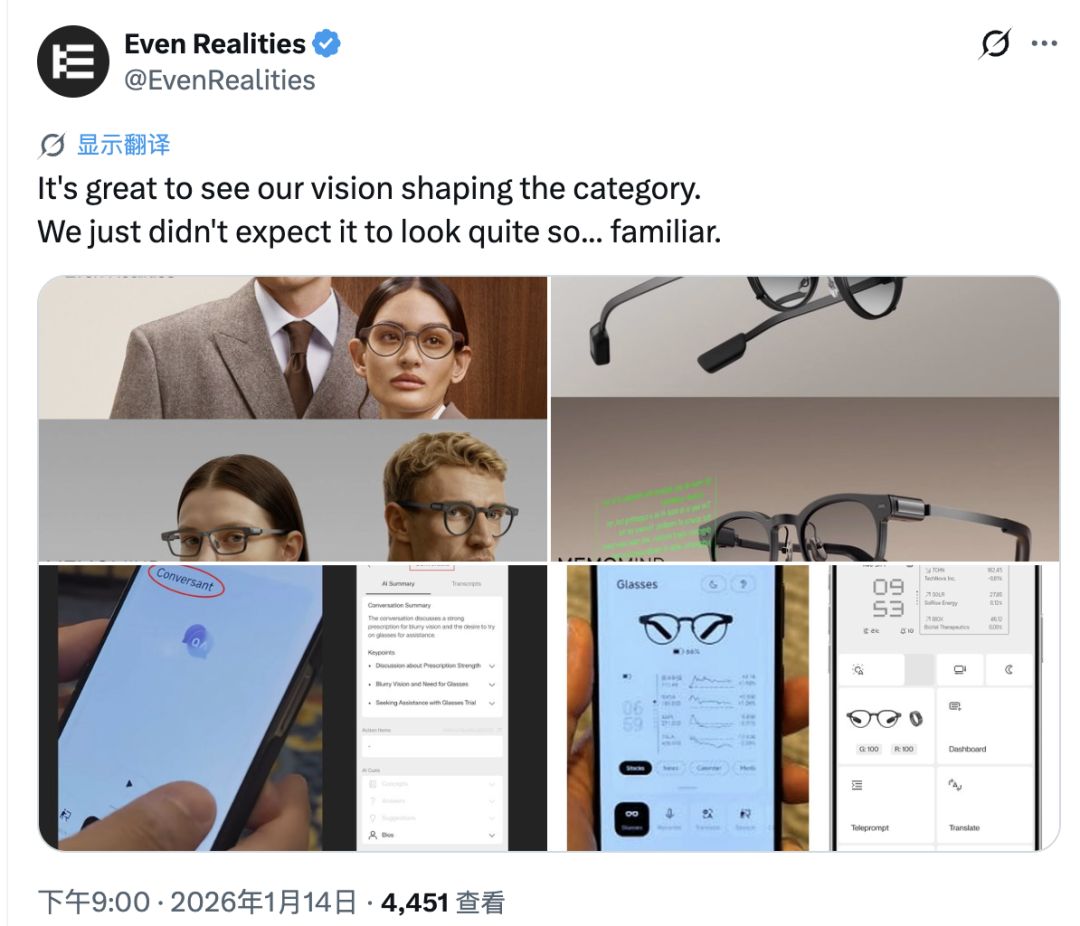
Even included side-by-side comparisons of product designs, promotional materials, and app interfaces from both companies, implying significant similarities. From a product standpoint, the resemblance is evident.
Both Even Realities G2 and MemoMind One adopt the relatively uncommon “camera-free + binocular display” design, using Micro-LED and optical waveguides to project text information onto lenses. Both emphasize all-day wearability, real-time translation, notifications, and AI assistants.
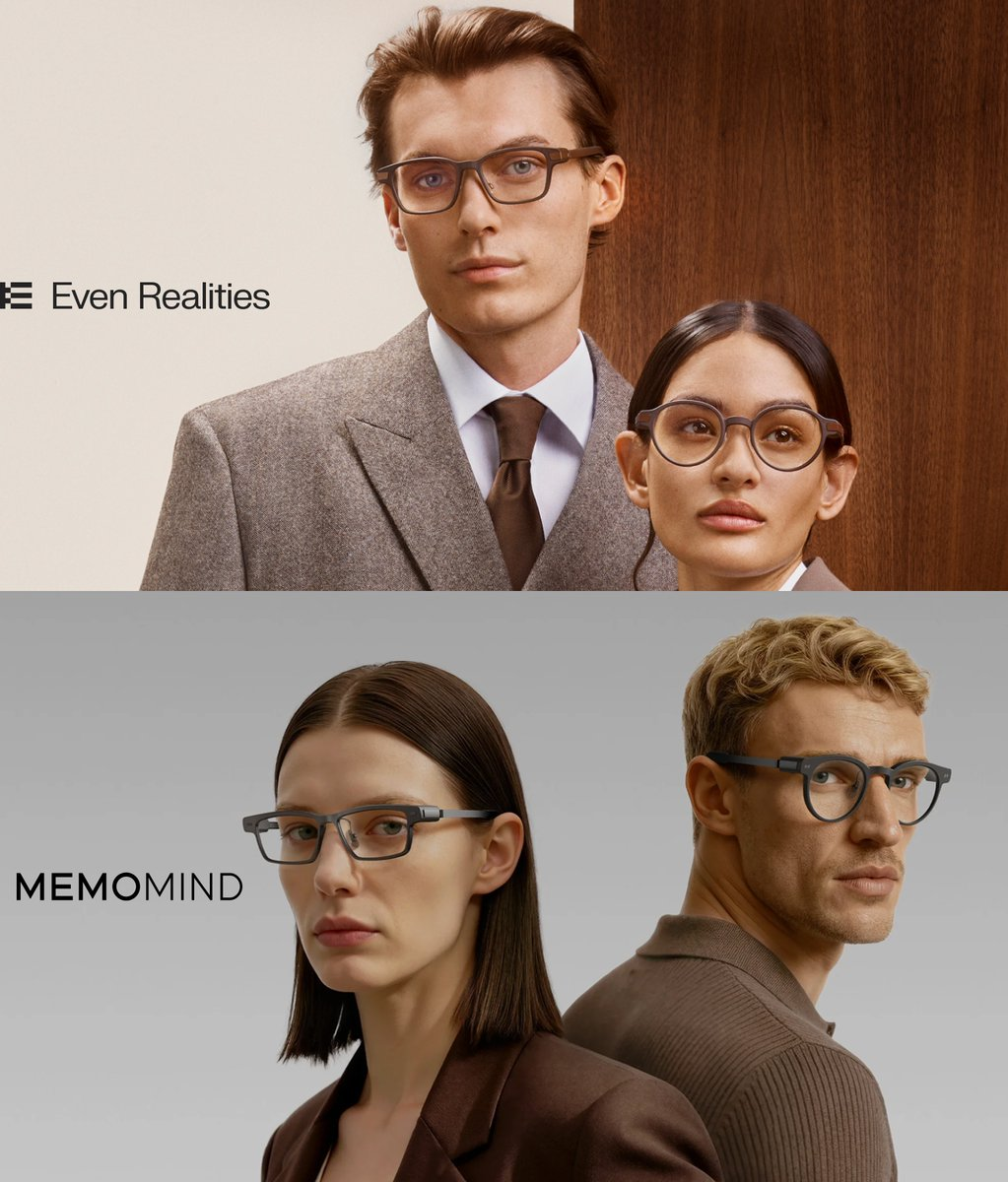
The companies also offered strikingly similar design philosophies: minimizing electronic product attributes to make the devices resemble ordinary glasses. MemoMind One offers three frame styles—Archive (rounded), Nomad, and Gotham (square/Wayfarer-inspired)—while Even G2 includes round and square frame options.
At the software level, both companies employ similar HUD information cards, translation tools, teleprompters, and AI interaction methods. This resemblance drew attention from overseas media at CES. 9to5Google, after testing MemoMind One, directly commented that its design was “incredibly similar” to Even’s product. MemoMind responded by stating that the two companies did not share manufacturing systems, that MemoMind had its own design, production, and waveguide solutions, and that significant differences existed in temple structure, speakers, buttons, and internal components.
Six months later, this debate over “how similar they are” has moved from social media to the courts.
02
Two Design Patents: All Three MemoMind Frame Styles Implicated
The core of Even’s lawsuit against XGIMI revolves around two U.S. design patents.
The patents in question are US D1,140,996 and US D1,140,997, both titled “Smart glasses.”
D’996 covers a round-frame design, while D’997 features a square-rectangular frame. Both patents were officially granted on August 11, 2026. D’996 was filed in the U.S. on January 10, 2025, and D’997 on March 13, 2026; the complaint states that both patents have a priority date of September 11, 2024.
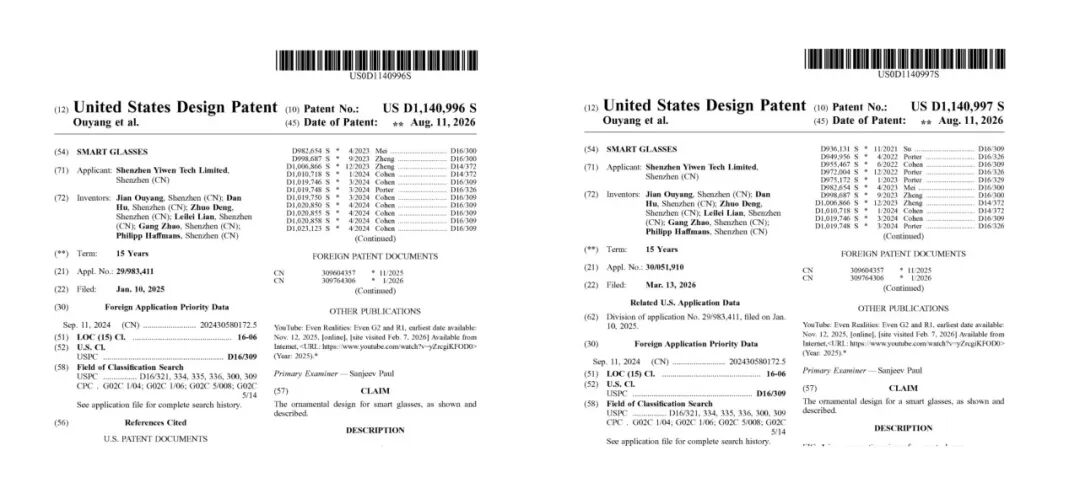
Unlike invention patents, which include detailed technical claims, U.S. design patents have concise claims. D’996’s sole core description is: “The ornamental design for smart glasses, as shown and described.” This means it protects the visual design depicted in the patent drawings.
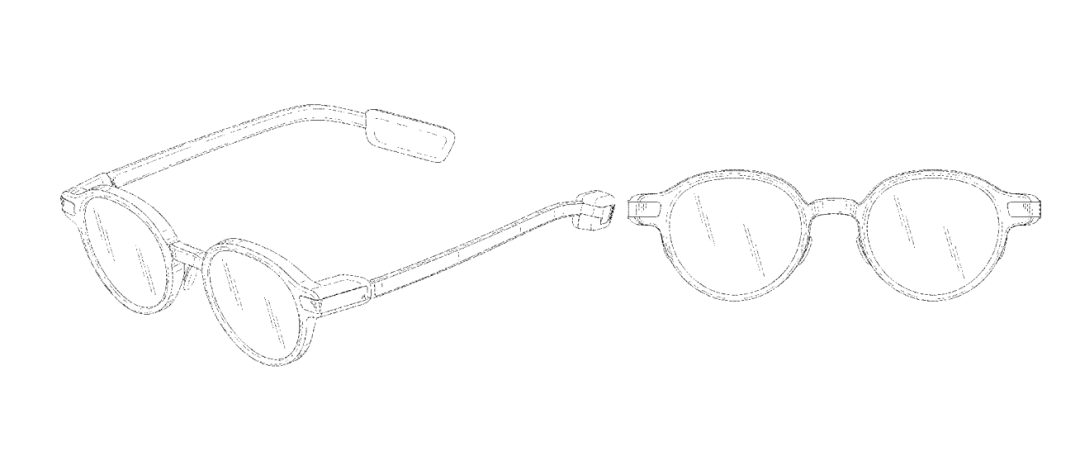
Even: US D1,140,996
Thus, the crux of this case is not the technical components (e.g., optical engines, waveguides, chips, or AI models) but whether the two products’ overall visual impressions are sufficiently similar to an average consumer.
In the complaint, Even lists all three MemoMind frame styles as infringing products: the round-framed MemoMind One Archive allegedly infringes D’996, while the square-framed Gotham and Nomad allegedly infringe D’997.
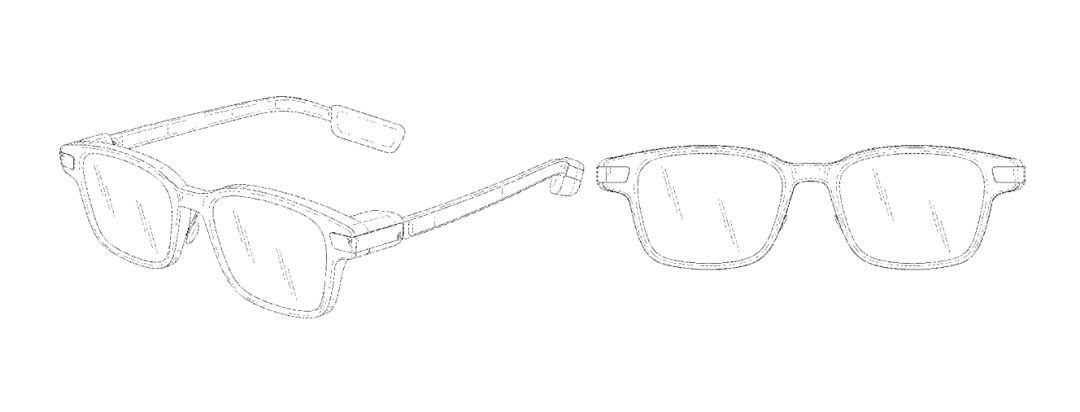
MemoMind: US D1,140,997
Even includes numerous side-by-side comparisons of patent drawings and MemoMind product photos in the complaint, focusing on frame contours, lens shapes, temple-to-frame connections, and overall proportions.
Even’s accusations extend beyond product design. The complaint argues that MemoMind imitated Even’s “public-facing persona,” including promotional photography, brand visuals, and marketing strategies. Even also cites consumer comments on the products’ visual similarities and materials showing MemoMind actively compared its product to Even G2, attempting to prove the resemblance was intentional.
It’s important to note that these remain Even’s claims in the lawsuit. Whether infringement occurred will be determined by the court based on patent scope, product designs, and prior art.
03
Why Is Kickstarter a Defendant? The $1.2 Million Crowdfunding Factor
This case’s unusual aspect is Kickstarter’s inclusion as a defendant.
This likely explains why Even’s lawsuit swiftly impacted MemoMind. According to the complaint, Kickstarter did not merely host a passive webpage. MemoMind One received Kickstarter’s “Project We Love” endorsement, and the platform actively promoted the project, facilitated transactions, and derived commercial benefits from the campaign.
Thus, Even alleges direct infringement, inducing infringement, and contributory infringement, arguing that Kickstarter played an active role in promoting and selling the accused products.
A practical issue also arises: the crowdfunding funds. According to the complaint, MemoMind One had raised over $1.27 million from 2,670 backers by the filing date, with Kickstarter originally planning to end the campaign on August 27.
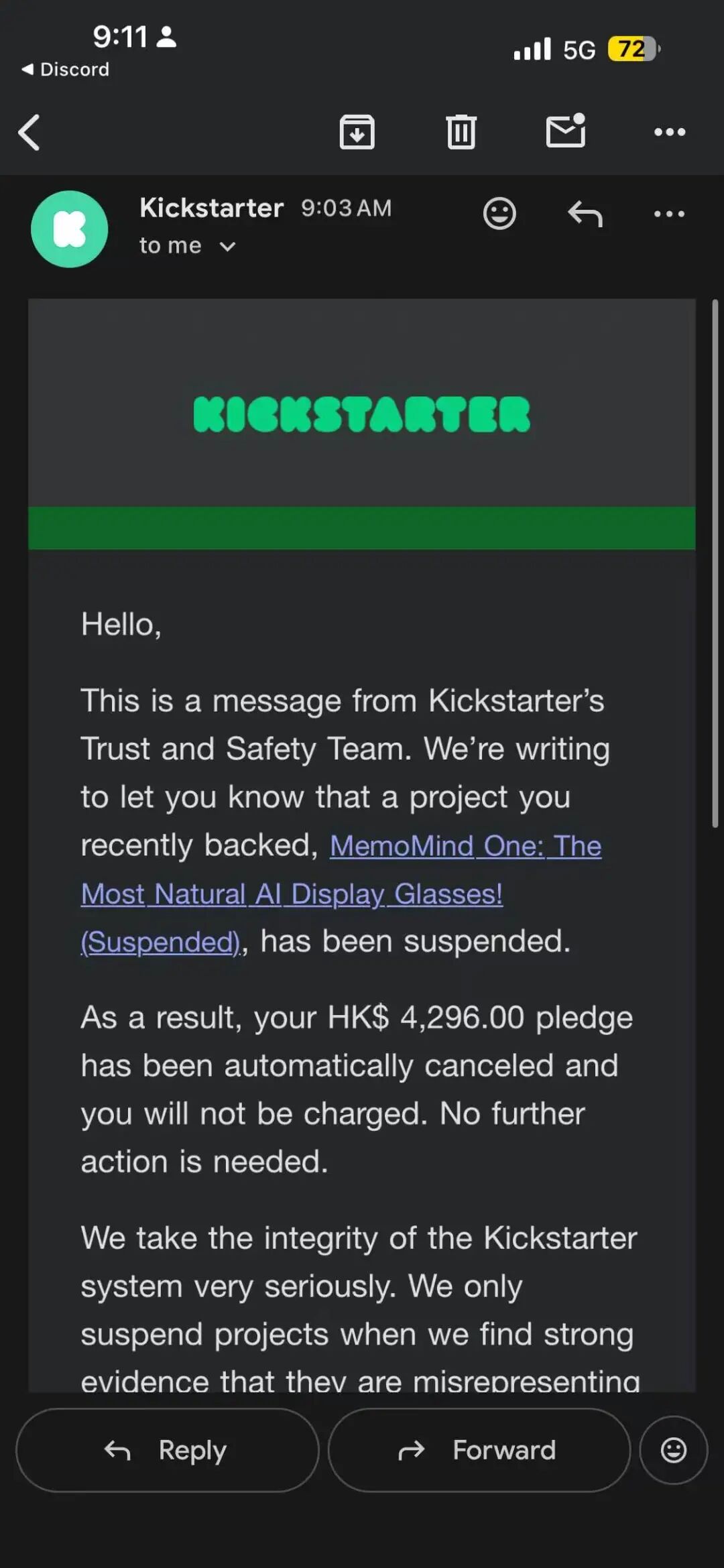
Typically, once a crowdfunding campaign concludes, the platform processes payments, settles funds, and initiates production and shipping. MemoMind’s August 20 “Final Countdown” announcement confirmed this timeline: after the August 27 deadline, payment processing, order verification, and production would begin.
Even, however, acted swiftly. On August 20, it sent cease-and-desist letters to XGIMI-related companies and Kickstarter; four days later, it filed the lawsuit and simultaneously sought a temporary restraining order (TRO) and preliminary injunction to prevent Kickstarter from releasing funds to MemoMind.
The sequence of events was rapid: patent grant → cease-and-desist letter → formal lawsuit → crowdfunding deadline.
Ultimately, the campaign did not reach its August 27 end date.
The Kickstarter project was suspended prematurely. Commercially, even though the court has not yet ruled on patent infringement, the lawsuit has already disrupted MemoMind’s sales and delivery plans.
Under Kickstarter’s policies, a suspended project halts crowdfunding, cancels all pledges, and cannot be reinstated.
In other words, even if MemoMind sells the product later, the Kickstarter campaign—which raised over $1.2 million—cannot proceed as originally planned.
It’s crucial to clarify: Kickstarter’s suspension does not imply court-confirmed infringement.
The platform’s action responds to intellectual property disputes, while a court must review patent validity, scope, and the accused product’s design to determine infringement. The two are distinct.
-
![]()
ARR in August Surges Past $800 Million, MiniMax's Darkest Hour May Be Over
-
![]()
Major Changes in the Mobile Phone Industry: From 'Small Profits and High Sales Volume' to 'High-Priced Game of One Phone per Person'
-
![]()
Even Sues XGIMI in U.S. Court: $1.2 Million ‘AI Glasses’ Crowdfunding Campaign Abruptly Stops!
-
![]()
The world's third largest mobile operating system was born in China! Installed on over 1.3 billion devices
-
![]()
Chinese Home Appliance Giants Face Collective Awkward Phase | WaveTide
-
![]()
Is 18 Months Truly Adequate for a Vehicle to Go from Design to Market?
-
![]()
Li Auto Reports Q2 Net Loss of 1.7 Billion Yuan
-
![]()
Zhao Changjiang: ZHIJIE RX Stands Unrivaled