The capital city of Hunan Province is set to make a major move! The 'Changsha Autonomous Vehicle Development Regulations' have been released. Will we be able to ride in driverless cars by 2026?
 12/29 2025
 653
653
Introduction
On December 28, 2025, the 'Changsha Autonomous Vehicle Development Regulations' were officially announced and will come into effect on April 1, 2026.
This is not just 'another local regulation' in the conventional sense but a significant milestone in the history of China's autonomous driving industry.
The introduction of these regulations signifies that Changsha is upgrading the management of autonomous vehicles from 'policy pilots' to 'legal norms,' shifting from 'industry self-regulation' to the 'rule of law.'
The driverless cars are coming! (WeChat Official Account: The Driverless Cars Are Coming) Let's discuss this with everyone! (For further reading, please click: 'Backed by Five National Licenses, Changsha Leads the Way: Is Driverless Driving About to Go Mainstream? How Beneficial Is Autonomous Driving Legislation?!') 
I. Legislative Breakthrough: From 'Unconventional Approaches' to 'Regular Forces'
Changsha's 'Regulations' address the most pressing concern for all autonomous driving companies—how to obtain the legal permit for road use.
According to the regulations, Changsha will designate road sections and areas for autonomous vehicle testing and demonstration applications based on the principle of 'from simple to complex, low-risk to high-risk.' This means autonomous driving companies now have a clear technological development path and commercial application roadmap. More notably, the 'Regulations' explicitly state that during demonstration application activities, autonomous vehicles may carry personnel or goods necessary for exploring business models in accordance with relevant regulations. This clause directly clears the path for commercialization.
Previously, autonomous driving tests in many cities remained stuck at the 'technology verification' stage, struggling to form business models. Changsha's legislative breakthrough makes it possible for autonomous driving to move from the laboratory to the market. (For further reading, please click: 'Ahead of the 2025 Internet Yuelu Summit, Changsha Pushes Forward in Autonomous Driving: Legislation Leads, Scenarios Break Through, Aiming to Be the Top Smart Connected City in Central China?') 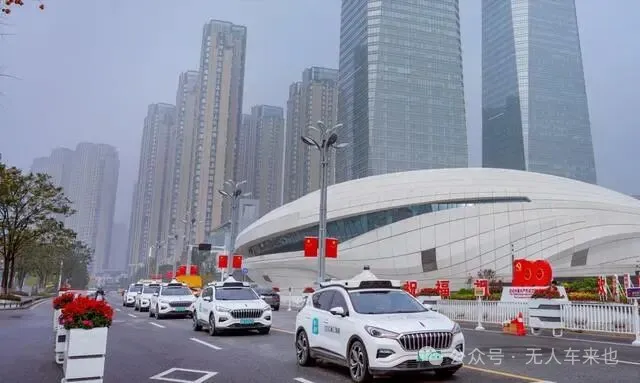
This legislative approach is closely tied to Changsha's industrial foundation.
Changsha holds five national licenses in the autonomous driving sector and has formed a complete industrial chain covering intelligent connected vehicle manufacturing, sensing equipment, autonomous driving algorithms, vehicle-road-cloud operations, and more.
II. Industrial Landscape: The Ambition Behind 1,107 Kilometers of Test Roads
Changsha's autonomous driving industry layout has long been a national leader.
As of February 2025, the total mileage of intelligent connected vehicle test roads in Changsha has reached 1,107.1 kilometers, ranking among the top in the country. (For further reading, please click: 'Changsha: Intelligent Connected Vehicle Test Roads Exceed 1,000 Kilometers, Leading the Nation! Autonomous Vehicles Can Now Reach Airports and High-Speed Rail Stations') 
This figure did not emerge out of thin air but is the result of the gradual accumulation of five phases of open test roads.
Notably, in the fifth phase, 732.55 kilometers of new test roads were added, including 'two stations and one airport' (Changsha Railway Station, Changsha South High-Speed Rail Station, and Huanghua Airport) for the first time.
This means autonomous vehicles can now be tested in the city's most complex traffic environments—from stations to airports, from main roads to side streets, covering nearly all daily travel scenarios.
More forward-looking is that Changsha's autonomous driving test roads are not simply 'fenced off' but are tightly integrated with the urban transportation network.
The newly added roads connect key areas such as the Malanshan District and the Changsha Economic and Technological Development Zone, providing a physical foundation for the application of 'vehicle-road-cloud integration' pilot scenarios.
It is worth mentioning that Changsha's test roads also include 56.1 kilometers of highway test roads, achieving seamless connectivity between urban roads and highways.
This opens up possibilities for business models such as autonomous driving for long-distance freight.
III. Business Models: The Reality of 200 Driverless Cars and 121 Licenses
Legislation is just the starting point; commercial implementation is key. Changsha's autonomous driving industry has entered the stage of large-scale operations.
In June 2025, the Xiangjiang New Area issued a second batch of 86 functional driverless vehicle codes to four companies, including WeRide, Zoomlion Environment, 91 Zhinen, and Cainiao Chuancheng.
This brings the total number of functional driverless vehicle codes in the region to 121. (For further reading, please click: 'Hunan Xiangjiang New Area: 69 Neolix Autonomous Delivery Vehicles Set to Begin Operations, Improving Delivery Efficiency by 30% and Reducing Costs by 25%') 
More importantly, Changsha has set a clear commercial goal for 2025: to achieve large-scale operations of 200 functional driverless vehicles in the city.
(For further reading, please click: 'Neolix Partners with Zhixinyuntu, a Subsidiary of Xiangjiang Intelligence: Plans to Achieve Large-Scale Operations of 200 Driverless Vehicles in Changsha This Year, Creating a Nationally Leading Driverless Vehicle Application Model')
Behind this figure lies a clear business logic—the transition from testing to application.
'Logistics companies are eager to embrace new technologies and explore new innovations to reduce operational costs with functional driverless vehicles,' said a representative from the Changsha Express Delivery Industry Association. The use of functional driverless vehicles in last-mile delivery has gained widespread industry recognition, with their standardized and intelligent delivery models emerging as innovative solutions to address labor shortages.
From policy to practice, Changsha has formed a complete industrial closed loop (closed loop).
IV. Technological Support: A Cloud Control Platform for Nearly 3,000 Vehicles
Autonomous driving requires not only vehicles and roads but also robust backend support.
Changsha is equally ahead in this regard.
Xiangjiang Intelligence has established an intelligent connected vehicle cloud control platform and built a regional branch of the Ministry of Industry and Information Technology's Intelligent Connected Vehicle Data Center, along with a driverless vehicle regulatory system.
This platform can provide intelligent connected vehicle regulatory services across the province.
Currently, the platform has connected nearly 3,000 intelligent connected vehicles, enabling real-time monitoring of vehicle operational status, traffic incidents, and network security, while simultaneously completing data statistics and accident data storage, achieving 24/7 automatic supervision.
(For further reading, please click: 'Hunan Xiangjiang New Area: Releases New Policies for Intelligent Connected Vehicles, Providing a 'Roadmap' for Autonomous Driving Demonstration Operations and Driverless Vehicles on the Road! The Total Number of Functional Driverless Vehicle Codes in the New Area Reaches 121') 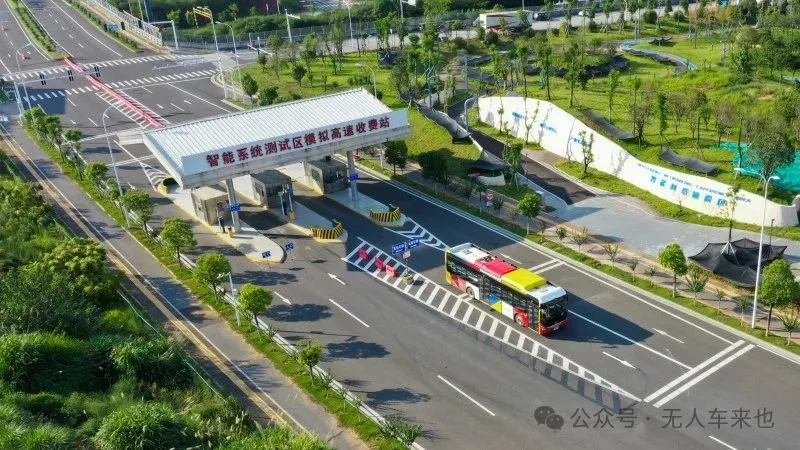
This means Changsha has established a regulatory system covering the entire lifecycle of vehicles, building a technological defense line for the safe and standardized operation of driverless vehicles.
This technological support system not only serves local companies but also provides a model for autonomous driving regulation nationwide.
(For further reading, please click: 'A National First! Hunan Xiangjiang New Area: Intelligent Assisted Driving and Autonomous Driving Welcome a Dedicated Testing Ground with Support for Closed Test Field Maps')
Changsha's cloud control platform can monitor vehicle operational status, traffic incidents, and network security in real time, ensuring that every autonomous vehicle on the road operates within a controlled framework.
V. Liability Division: A Key Breakthrough in Accident Liability
When an autonomous vehicle is involved in an accident, how is liability determined? This is a challenge that all legislators must face.
Changsha's 'Regulations' provide a clear answer in this regard.
Article 26 of the 'Regulations' states:
'If an autonomous vehicle commits a road traffic safety violation, and the responsibility lies with the driver or safety officer's operations, the public security traffic management department shall handle the driver or safety officer in accordance with the law. If the violation is caused by the autonomous driving system, the public security traffic management department shall handle the relevant entities of the autonomous vehicle in accordance with the law.' 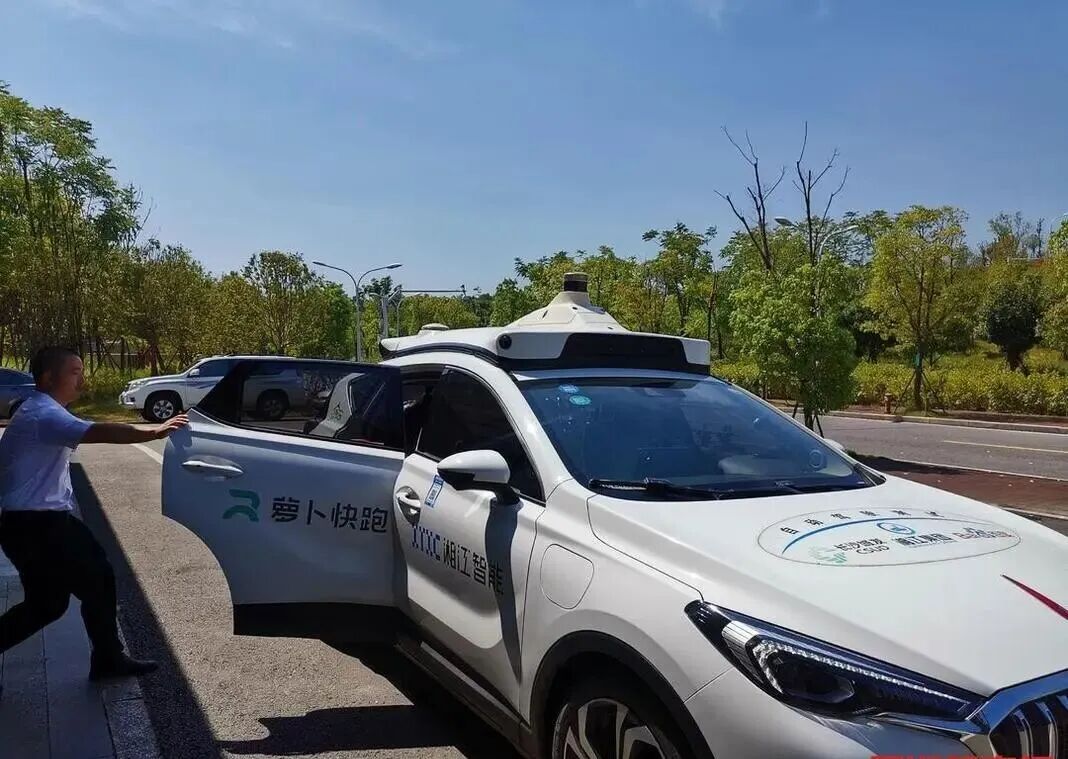
This provision clarifies the liable party—when issues arise with the autonomous driving system, the responsibility does not fall on the driver but on the relevant entities of the autonomous vehicle (such as production enterprises, algorithm providers, etc.).
This approach to liability division provides legal protection for corporate innovation.
At the same time, the 'Regulations' also offer protection for consumers.
Producers and sellers of autonomous vehicles shall fulfill their product quality and safety responsibilities, providing timely and comprehensive technical support and rescue services in the event of major failures or emergencies that may endanger personal or property safety.
This approach to liability division not only protects consumer rights but also sets boundaries for corporate innovation, achieving a balance between safety and innovation.
VI. Future Vision: From 'Vehicle-Road-Cloud Integration' to Smart Cities
Changsha's autonomous driving layout is not limited to the vehicles themselves but is an integral part of building a smart city.
Article 17 of the 'Regulations' explicitly states: 'Municipal and county (city, district) people's governments shall support the deep integration of autonomous vehicles with smart transportation and smart cities, constructing an operational management system for real-time dynamic perception, collaborative decision-making and planning, and remote control and management.'
This vision is already reflected in Changsha's construction of a 'vehicle-road-cloud integration' pilot zone.
In March 2025, Changsha launched the construction of a 'vehicle-road-cloud integration' pilot zone, issuing functional driverless vehicle road operation codes to four ecological enterprises.

The pilot zone will promote deep integration of vehicles, roads, and clouds through measures such as fully open testing, infrastructure upgrades, and scenario innovations. This integration is not limited to the transportation sector but will extend to multiple scenarios, including cultural tourism and logistics.
The Xiangjiang New Area plans to create more application scenarios around two main directions: smart transportation and 'intelligent connected + cultural tourism.'
In the cultural tourism sector, plans include launching intelligent connected sightseeing routes, driverless retail services, and more in areas such as Xiangjiang Science City and Meixi Lake to promote the development of the smart cultural tourism industry. This approach of deeply integrating autonomous driving with urban development makes Changsha's autonomous driving industry not just a technological innovation but also an important engine for urban transformation and upgrading.
Changsha's autonomous driving industry is undergoing a transformation from a 'testing ground' to an 'application city.' With the formal implementation of the 'Regulations,' autonomous vehicles will no longer be mere experimental products but intelligent tools truly integrated into the urban transportation system. Most excitingly, Article 34 of the 'Regulations' states: 'The promotion and use of functional driverless equipment for specialized operations such as delivery, inspection, retail, and sanitation shall be governed by reference to these Regulations.' This means that the application scenarios for autonomous driving will extend far beyond passenger vehicles, penetrating into all aspects of urban services.
In conclusion, The Driverless Cars Are Coming (WeChat Official Account: The Driverless Cars Are Coming) believes that when autonomous driving shifts from the question of 'whether it can go on the road' to the topic of 'how to better serve the city,' a true era of intelligent mobility begins. Changsha is already standing at the starting point of this era.
What do you think? #TheDriverlessCarsAreComing #DriverlessDriving #AutonomousDriving #DriverlessVehicles
-
![]()
How Can Embodied AI Overcome the Data Challenge of 'Being Able to Work'? Solutions from Five Leading Players
-
![]()
Half-Year Pre-Tax Loss Hits 4.5 Billion, Full-Year Net Cash Outflow Reaches 16.2 Billion! GAC Incurs 8,000 Yuan Loss per Vehicle Sold
-
![]()
In a Bid to Propel Towards a $10 Billion IPO, Jieyue Xingchen Weaves a Hardware Fairy Tale: A 'Chinese Version of Apple + OpenAI'?
-
![]()
REDMI Note 17 Pro First Impressions: Built to Last and Waterproof, Who Cares About Cost-Effectiveness?
-
![]()
MiHoYo’s AI Companion BSide is Here! I Tried It Out—Great Aesthetics, But Needs Work
-
![]()
A Token Cloud Drifting in the Winds of Change
-
![]()
A Token Cloud Looms on the Horizon
-
![]()
Qualcomm, NVIDIA, and Horizon Robotics: Pioneering Similar Paths in Automotive Tech