Hainan's Customs Closure: An Opportunity List Benefiting Everyone
 01/04 2026
 685
685
A Tax-Free Haven Sparks a Consumption Boom and Business Opportunities
Original Content by Dian Shu · Digital Economy Studio
Author | You Shu
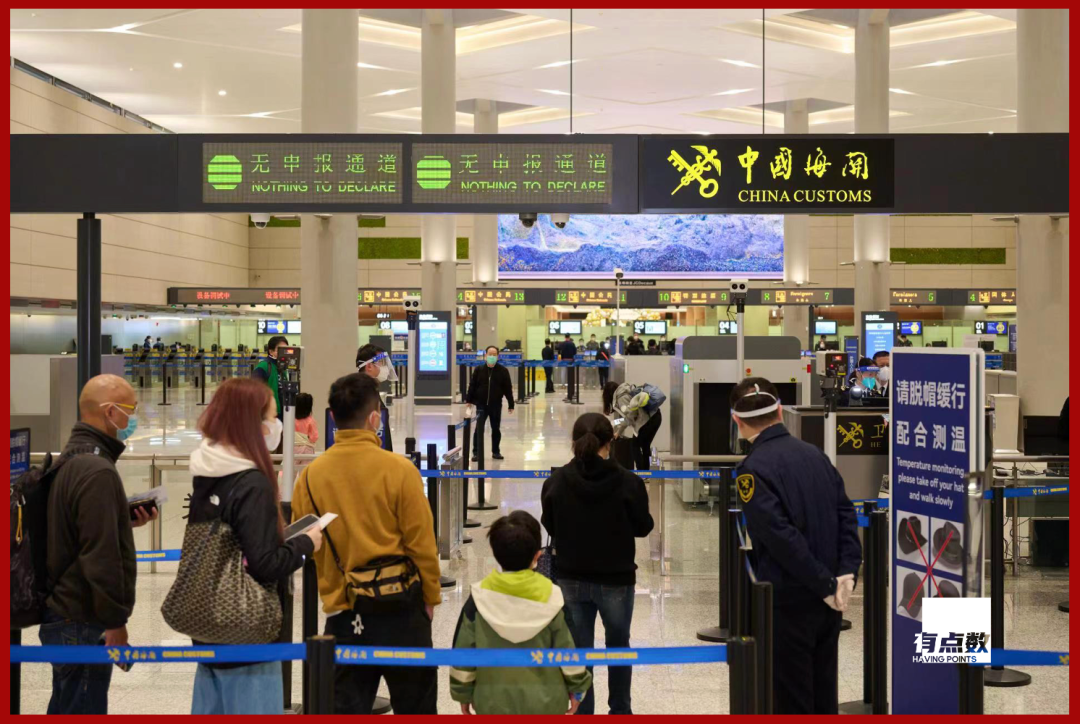
On December 18, 2025, the Hainan Free Trade Port officially commenced full-island customs closure operations. While the term "customs closure" might evoke thoughts of "isolation" for some, it, in fact, represents a fresh impetus for Hainan's rapid development. The transformation in consumption patterns and industrial structures will transition from policy blueprints into tangible realities in factories, logistics hubs, duty-free stores, and every facet of residents' daily lives. Hainan's customs closure will not only profoundly impact the province itself but also draw more tourists and talent to Hainan, while presenting a plethora of development opportunities for mainland enterprises.
Surprise Savings at Duty-Free Stores Post-Customs Closure
Since the full-island customs closure in Hainan, the cdf Haikou International Duty-Free City has been teeming with shoppers for days. Ms. Feng, a tourist from northern China who took her annual leave to visit Hainan, initially paid little heed to the customs closure policy. However, during her shopping spree, she was pleasantly surprised by substantial discounts, truly experiencing the perks of this historic initiative for ordinary consumers.
She first set her sights on a handbag she had long coveted. The official flagship store price stood at 20,500 yuan, whereas the duty-free price was 18,600 yuan. During the initial days of customs closure, the brand and the duty-free store jointly rolled out promotional activities, enabling her to purchase it for 17,000 yuan in cash and earn 1,400 points (1 point = 1 yuan) for future duty-free store purchases. "It's like saving nearly 5,000 yuan, enough to cover my round-trip airfare, accommodation, and dining expenses," Ms. Feng remarked with a smile. "The store staff mentioned that some of these discounts were introduced post-customs closure. I feel this trip was truly worthwhile."
The gold jewelry counter witnessed a steady stream of customers, emerging as a major highlight of the consumption boom. "The more you buy, the more you save," a staff member at a gold brand counter explained, crunching numbers on a calculator. "Take a 40-gram gold ornament, for instance. Our store's price per gram today is 1,184 yuan, while the mainland price is 1,353 yuan, saving 169 yuan per gram, totaling 6,760 yuan for 40 grams. Additionally, our store offers a 500 yuan discount for every 10,000 yuan spent. For 40 grams, costing over 40,000 yuan, you can save 2,000 yuan. Combined, you've already saved over 8,000 yuan. If you can secure government consumer coupons, you can save even more."
In Sanya's duty-free city, the newly released iPhone 17 series became a hot commodity, dubbed a "Sanya specialty" by tourists. Through a combination of duty-free "store subsidies" and local Sanya mobile phone subsidies, purchasing a mobile phone at the duty-free store can be 200-800 yuan cheaper than at mainland Apple stores.
The enhanced duty-free shopping experience stands as one of the core benefits of the customs closure policy for tourists. For ordinary consumers, customs closure means the entire island functions as a duty-free mall, with the range of duty-free products expanding from over 1,900 categories in the past to over 6,000 now, significantly broadening choices.
In fact, starting from November this year, prior to the official customs closure, the categories of duty-free goods increased from 45 major categories to 47, adding pet supplies, portable musical instruments, and expanding 15 specific products in categories like small home appliances and electronic consumer goods. Domestic products were introduced to off-island duty-free stores for the first time, covering six categories such as clothing, footwear, and ceramic products. The policy coverage extended to departing travelers, with their shopping amounts included in the annual 100,000 yuan duty-free quota without limit on the number of purchases.
According to Haikou Customs statistics, during the first week of customs closure, off-island duty-free shopping amounted to 1.1 billion yuan, with 775,000 items purchased by 165,000 shoppers, representing increases of 54.9%, 11.8%, and 34.1%, respectively, compared to the same period in 2024. The customs closure operations significantly boosted the consumer market.
Personal Income Tax Capped at 15%, Compared to 45% on the Mainland
While duty-free consumption offers substantial benefits, it also comes with certain restrictions. For instance, precious metal products like gold and silver are only available to travelers leaving the island but not the country and cannot be purchased and taken immediately. They must be packaged by the duty-free store and collected by the traveler at the airport's self-collection point upon departure. "It makes sense; it's about 'managing the second line,'" said a traveler, who, after arriving in Haikou, gained a deeper understanding of Hainan's full-island customs closure operations.
"Opening the first line, managing the second line, and ensuring freedom within the island" represents Hainan's new regulatory framework for customs closure. Simply put, for "people," Hainan remains within the country, allowing domestic residents to travel freely with their ID cards. For "goods," Hainan is outside the customs territory, with products enjoying duty-free or low-tax policies.
The core of "opening the first line" is tariffs. After customs closure, the management approach shifts from a "positive list" (specifying what is exempt) to a "negative list" (specifying what is taxed). This change significantly increases the proportion of "zero-tariff" goods from about 21% to 74%. From diapers and baby formula to cars and yachts, a wide range of products now qualifies for tariff exemptions. This means that, in the future, duty-free will become the "default state" for goods in Hainan.
"Managing the second line" focuses on value-added. This policy aims to encourage the development of the real economy in Hainan. According to regulations, goods processed locally in Hainan and with a value-added of over 30% can enter the mainland market duty-free. This requires genuine investment in production and research and development by enterprises to enjoy these policy benefits.
"Freedom within the island" emphasizes circulation. In addition to the free flow of goods, capital and talent will also circulate freely. Besides "zero tariffs," the "dual 15%" income tax incentives have garnered significant attention. On one hand, encouraged industry enterprises are subject to a 15% corporate income tax rate, compared to 25% on the mainland and 16.5% in Hong Kong for amounts exceeding HK$2 million. On the other hand, eligible high-end and in-demand talent have their personal income tax capped at a maximum rate of 15%, far lower than the mainland's top rate of 45%. For enterprises, this means higher profits; for high-income talent, it translates to significantly more take-home pay.
After the full-island customs closure of the Hainan Free Trade Port, the "dual 15%" policy will remain in effect until December 31, 2027. Subsequently, according to the "Overall Plan for the Construction of the Hainan Free Trade Port," individuals who have resided in the Hainan Free Trade Port for a cumulative 183 days within a tax year will have their comprehensive income and business income derived from within the Hainan Free Trade Port subject to personal income tax at progressive rates of 3%, 10%, and 15%. This represents lower personal income tax rates compared to the mainland.
Since the implementation of the "One Million Talents to Hainan" action plan in 2018, Hainan has attracted a total of 1.03 million talents of various types by the end of November 2025, achieving its target ahead of schedule. In early December this year, Hainan launched the "One Million Elite Talents to Revitalize Hainan" action plan. In the future, it will focus on the "45432" industrial development framework, creating a more attractive talent policy system and career development platform to promote the deep integration of the talent chain, innovation chain, and industrial chain.
Reducing Business Costs by 9%, Hainan's "Cost Advantage" Emerges
For mainland enterprises, investing and establishing factories in Hainan offers direct cost benefits through the "zero-tariff" policy. After customs closure, raw materials and equipment imported from overseas into Hainan are exempt from tariffs, significantly reducing production costs for "Made in Hainan" products. More attractively, the "value-added processing exceeding 30% for duty-free sales in the mainland" policy allows products manufactured by mainland enterprises in Hainan to enter the mainland market duty-free as long as the local processing value-added ratio meets the standard. This not only avoids "middleman" arbitrage but also encourages enterprises to focus on the real economy. Data shows that the "zero-tariff" policy can save import equipment enterprises about 20% in tax costs, providing favorable conditions for industrial upgrading.
Take a mainland pharmaceutical company's subsidiary in Hainan as an example. Leveraging the policy of duty-free sales in the mainland for products with over 30% value-added processing, it has achieved domestic sales worth 285 million yuan, opening up the "Made in Hainan - Mainland Market" channel. Benefiting from the Free Trade Port's tax incentives, the company has accumulated tax savings of 28.3134 million yuan across its projects to date. This money will be fully reinvested in research and development and capacity upgrades, forming a virtuous cycle of "policy dividends - innovation investment - quality improvement."
Trade companies can also calculate profitability. A Hainan-based meat trading company sources raw meat from the EU, South America, and Russia, processes it into cooked and refined food products in its Hainan factory, and then sells the finished products to the vast mainland market using the value-added processing duty-free policy. Calculations show that for every 10,000 metric tons of imported raw meat, the comprehensive cost savings are approximately 9%.
This 9% directly comes from tariff reductions. Combined with corporate income tax and personal income tax incentives for high-end talent, it creates a significant "cost advantage" effect. For profit-sensitive food processing and manufacturing industries, this is undoubtedly a critical lever for reshaping competitiveness.
For enterprises engaged in cross-border trade, they will also have access to the new EF account (Hainan Free Trade Port Multi-Functional Free Trade Account), enjoying conveniences similar to offshore accounts. Cross-border transaction efficiency can be shortened from one or two days in the past to two or three hours, greatly enhancing transaction efficiency.
Full-island customs closure operations mark not the end of policy implementation for Hainan but a new starting point for high-quality development. Mainland enterprises can leverage Hainan's platform to import advanced global technologies and products duty-free, absorb and innovate upon them, and then feed back into local (domestic) industrial upgrading. They can also radiate "Made in China's" high-quality production capacity to Southeast Asia and the global market through Hainan, achieving a closed loop of "mainland R&D + Hainan transformation + global sales."
THE END
-
![]()
Net Profit Surges 13.65% Year-on-Year! Yutong Optics Reports RMB 1.782 Billion in H1 Revenue
-
![]()
Q2 Net Profit Slashes Losses by 80%! Has Costar Emerged from Its Darkest Hour?
-
AI Agents: The Paradigm Shift from 'Conversation' to 'Execution'
-
NVIDIA Takes Bold Strides to Lead in Both Hardware and Software Realms
-
![]()
It's Hard to Build Cars, Even Harder to Build Humans, and XPENG is Doing Both
-
![]()
Valuation Soars by $57 Billion: Three Entrepreneurs Born in the 1980s Forge an AI Unicorn Now Suddenly on the Market
-
![]()
How Can We Achieve the Goal of 100,000 Hydrogen Vehicles by 2030?
-
![]()
July Online Market for Consumer-Grade Sports Cameras: Robust Double-Digit Growth in Sales Volume and Value, Mid-Range Products Fuel Market Expansion